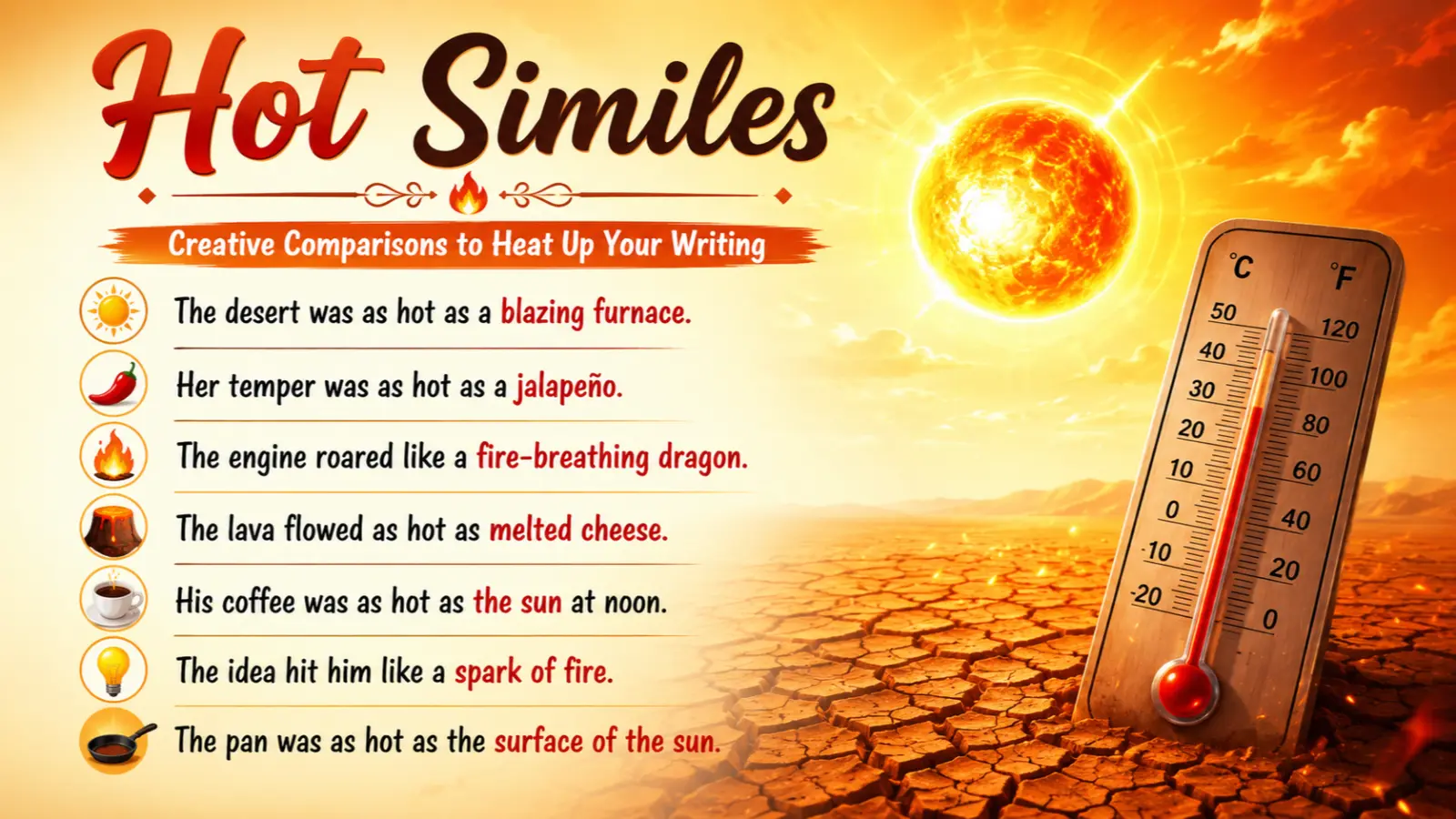
Hot similes bring warmth, intensity, energy, and emotion to writing. Whether you’re describing blazing weather, spicy food, powerful emotions, or a passionate personality, the right comparison can transform an ordinary sentence into one readers remember. In this guide, you’ll discover fresh hot similes, learn why they work, explore practical examples, and pick up techniques professional writers use to create stronger imagery.
What Are Hot Similes?
A simile compares two different things using like or as.
A hot simile specifically compares something to heat, fire, sunlight, or anything that creates the feeling of warmth or intensity.
For example:
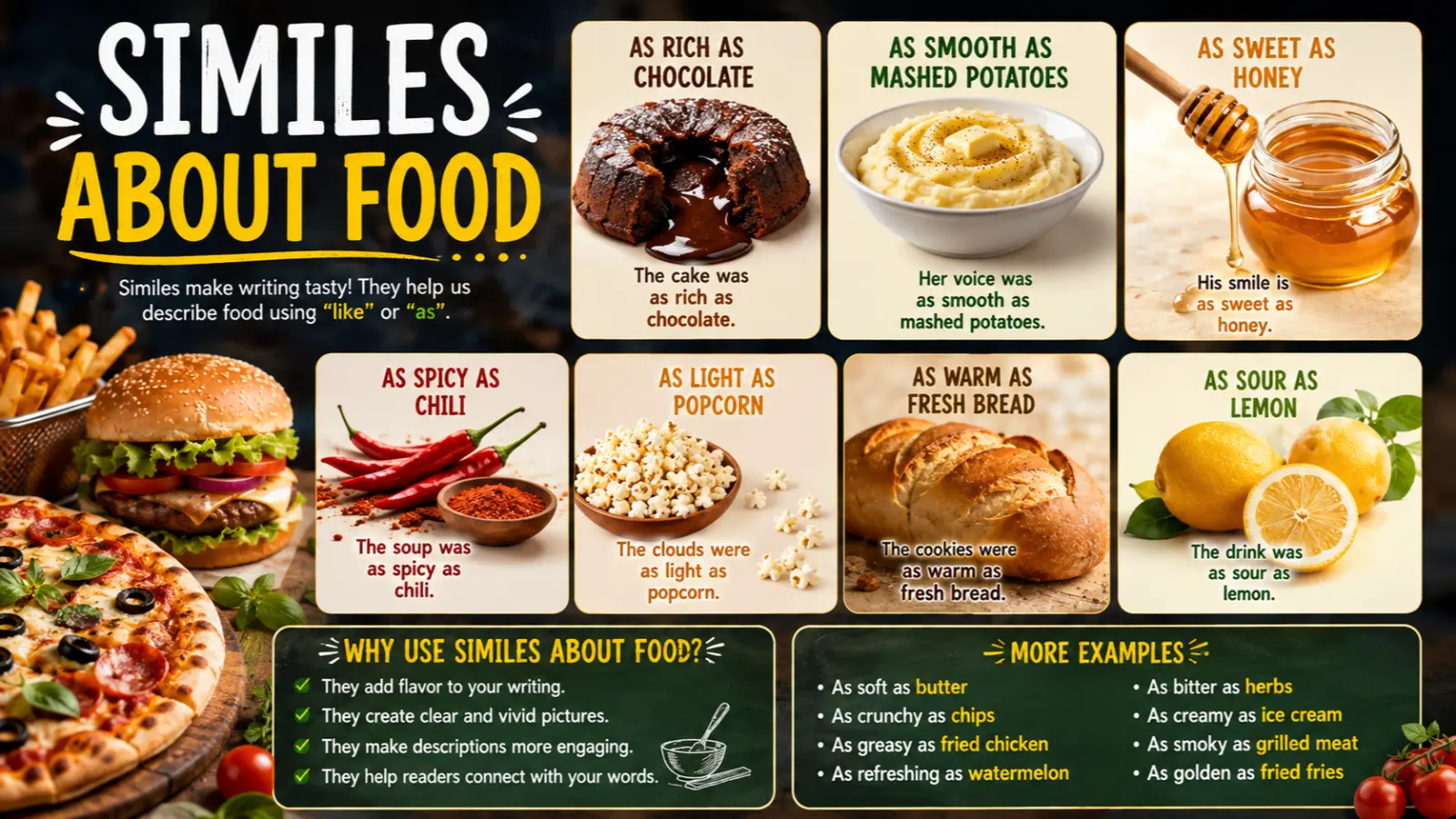
The soup was as warm as fresh bread.
Instead of simply saying something is hot, a simile helps readers feel the experience through comparison.
Why Writers Use Hot Similes
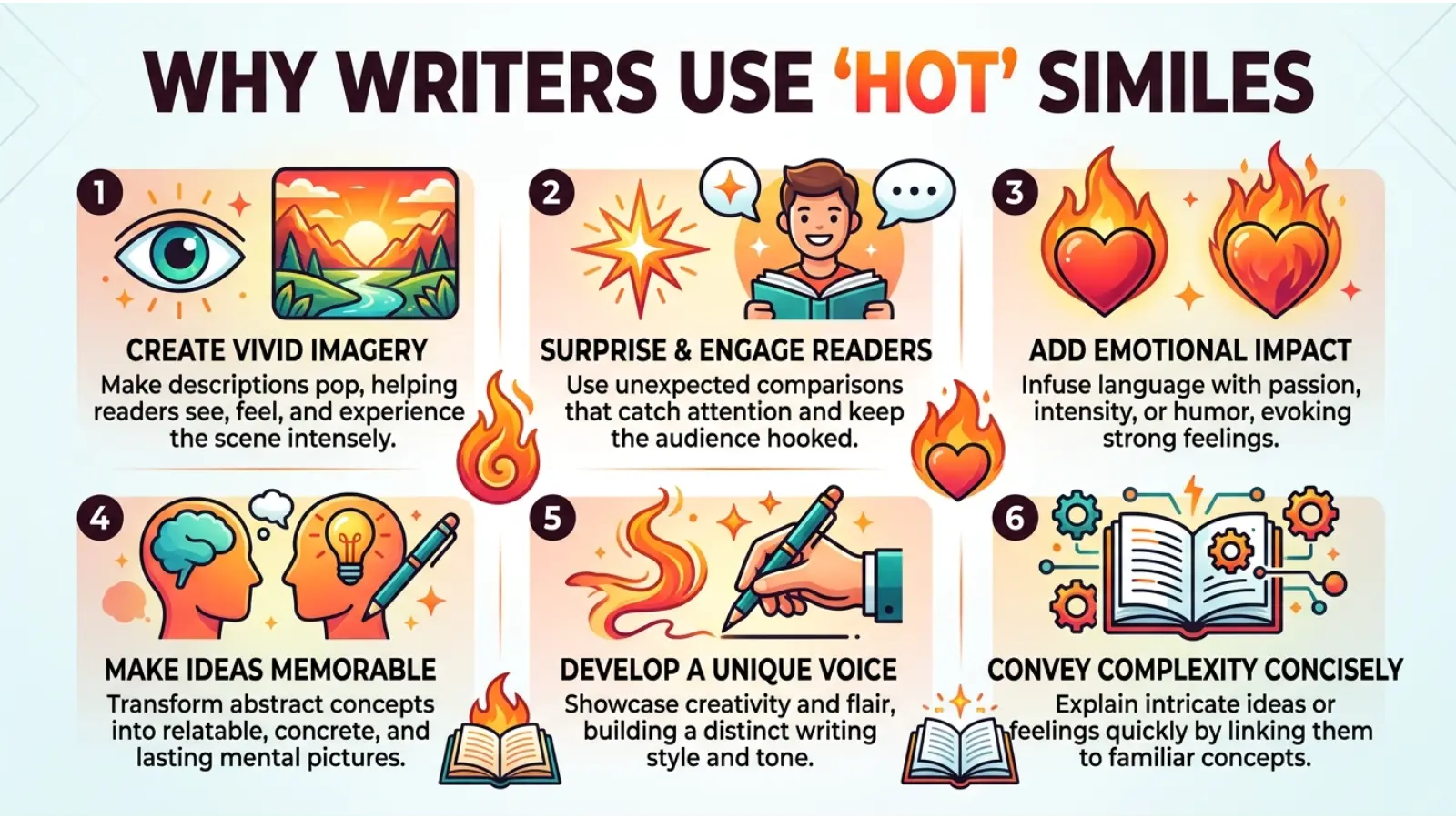
Hot similes are useful because they can describe far more than temperature.
They help writers express:
- Summer weather
- Food and drinks
- Strong emotions
- Passion
- Anger
- Energy
- Crowded places
- Bright sunlight
- Fast action
- Exciting moments
A thoughtful comparison creates an image readers can immediately picture.
30 Original Hot Similes
1. As hot as a rooftop at noon
Meaning: Extremely hot.
Example Sentences
- The sidewalk was as hot as a rooftop at noon.
- My coffee stayed as hot as a rooftop at noon.
Writing Purpose
Works well for weather and outdoor scenes.
Conversation
“It feels as hot as a rooftop at noon today.”
Writing Tip
Use this when describing summer settings.
2. Like a blanket fresh from the dryer
Meaning: Comfortably warm.
Examples
- Her hug felt like a blanket fresh from the dryer.
- The cabin was like a blanket fresh from the dryer.
Emotional Effect
Creates feelings of comfort and safety.
3. As hot as glowing bricks
Meaning: Radiating intense heat.
Examples
- The patio stones were as hot as glowing bricks.
- The car roof felt as hot as glowing bricks.
Best Context
Outdoor descriptions.
4. Like steam rising from fresh tea
Meaning: Warm with gentle heat.
Examples
- His breath floated like steam rising from fresh tea.
- The soup curled upward like steam rising from fresh tea.
Poetry Example
“The morning whispered like steam rising from fresh tea.”
5. As hot as a desert road in July
Meaning: Extremely hot.
Examples
- The parking lot became as hot as a desert road in July.
- My shoes nearly melted on the pavement.
Writing Tip
Great for travel writing.
6. Like sunshine trapped inside glass
Meaning: Warm and bright.
Examples
- The greenhouse felt like sunshine trapped inside glass.
- Her smile was like sunshine trapped inside glass.
7. As hot as fresh cinnamon rolls
Meaning: Warm and inviting.
Examples
- Breakfast arrived as hot as fresh cinnamon rolls.
- The bread smelled wonderful.
Best Context
Food writing.
8. Like sparks dancing in dry grass
Meaning: Quickly spreading heat or excitement.
Examples
- The excitement spread like sparks dancing in dry grass.
- Laughter moved through the crowd.
9. As hot as the first step onto beach sand
Meaning: Suddenly very hot.
Examples
- The sidewalk felt as hot as the first step onto beach sand.
- The driveway burned under the afternoon sun.
10. Like a campfire waking after dark
Meaning: Warm and comforting.
Examples
- Their conversation grew like a campfire waking after dark.
- The room slowly became welcoming.
11. As hot as fresh pizza from the oven
Meaning: Very hot.
Examples
- Don’t touch it—it’s as hot as fresh pizza from the oven.
- The cheese bubbled brightly.
12. Like melted amber in sunlight
Meaning: Warm with golden beauty.
Examples
- Her hair shimmered like melted amber in sunlight.
- The lake reflected the evening glow.
13. As hot as a black mailbox in August
Meaning: Intensely hot.
Examples
- The metal railing felt as hot as a black mailbox in August.
- We couldn’t hold it for long.
14. Like glowing honey
Meaning: Rich, warm, and inviting.
Examples
- The sunset spread like glowing honey.
- The room filled with soft light.
15. As hot as fresh lava bread
Meaning: Surprisingly hot inside.
Examples
- The pastry was as hot as fresh lava bread.
- I had to wait before taking another bite.
16. Like warm rain after sunrise
Meaning: Gentle warmth.
Examples
- The breeze felt like warm rain after sunrise.
- The air wrapped around us softly.
17. As hot as polished copper under the sun
Meaning: Bright and intensely warm.
Examples
- The statue became as hot as polished copper under the sun.
- Even the bench felt too warm.
18. Like glowing coals beneath ash
Meaning: Hidden but powerful warmth.
Examples
- His determination stayed like glowing coals beneath ash.
- Her confidence quietly returned.
19. As hot as a crowded subway in summer
Meaning: Uncomfortably hot.
Examples
- The elevator became as hot as a crowded subway in summer.
- Everyone wanted fresh air.
20. Like warm syrup pouring slowly
Meaning: Smooth and comforting.
Examples
- Her voice flowed like warm syrup pouring slowly.
- The melody filled the room.
21. As hot as sunlight on a metal fence
Meaning: Burning hot.
Examples
- The gate felt as hot as sunlight on a metal fence.
- We opened it carefully.
22. Like toasted maple leaves
Meaning: Soft autumn warmth.
Examples
- The evening glowed like toasted maple leaves.
- The hills looked peaceful.
23. As hot as fresh popcorn from the kettle
Meaning: Very warm.
Examples
- The bowl arrived as hot as fresh popcorn from the kettle.
- We waited before eating.
24. Like warm butter on fresh bread
Meaning: Smooth and comforting.
Examples
- The music spread like warm butter on fresh bread.
- Everyone relaxed.
25. As hot as sunlight on brick walls
Meaning: Heated by the afternoon sun.
Examples
- The alley was as hot as sunlight on brick walls.
- Even the air shimmered.
26. Like a fireplace on a snowy evening
Meaning: Comfortably warm.
Examples
- The café welcomed us like a fireplace on a snowy evening.
- Everyone smiled.
27. As hot as fresh cookies leaving the oven
Meaning: Freshly baked and very warm.
Examples
- The tray was as hot as fresh cookies leaving the oven.
- We let them cool.
28. Like sunlight wrapped in silk
Meaning: Soft, elegant warmth.
Examples
- The afternoon light settled like sunlight wrapped in silk.
- The room glowed gently.
29. As hot as summer air inside a greenhouse
Meaning: Heavy, humid heat.
Examples
- The shed became as hot as summer air inside a greenhouse.
- We opened every window.
30. Like glowing embers beneath twilight
Meaning: Warm, calm, and quietly powerful.
Examples
- Hope remained like glowing embers beneath twilight.
- Their friendship never faded.
Writing Tip
Excellent for emotional or reflective scenes.
Why These Similes Work
Strong similes do more than compare two things. They connect readers to familiar experiences.
Notice how the comparisons above rely on everyday moments—warm bread, beach sand, fireplaces, rooftops, sunlight, and tea. Readers can easily imagine these scenes, making the writing more vivid and believable.
Professional writers often choose comparisons that engage multiple senses, allowing readers to see, feel, or even smell the description.
Create Your Own Hot Similes
Writing original similes becomes much easier when you follow a simple process.
Step 1: Identify the Kind of Heat
Ask yourself:
- Is it comfortable?
- Is it dangerous?
- Is it emotional?
- Is it exciting?
- Is it peaceful?
Step 2: Think of a Familiar Experience
Choose something your readers know.
Examples include:
- Fresh bread
- Campfires
- Greenhouses
- Summer sidewalks
- Warm blankets
- Sunlit windows
Step 3: Match the Feeling
Instead of comparing only temperature, compare the mood.
For example:
Warm friendship → like sunlight through a kitchen window.
Excitement → like sparks chasing each other across dry leaves.
Creative Exercise
Write five hot similes by describing:
- A summer afternoon
- A cup of coffee
- A smiling person
- A crowded room
- A hopeful moment
Try to avoid comparisons you’ve heard before. Originality makes your writing stand out.
Common Mistakes When Writing Hot Similes
Using Overused Comparisons
Phrases like “as hot as fire” or “as hot as the sun” are familiar but rarely memorable. Look for fresh, specific images instead.
Mixing Different Images
Don’t combine unrelated comparisons.
Weak example:
The soup was as hot as the sun and flowed like an airplane.
The images don’t work together.
Confusing Similes with Metaphors
A simile uses like or as.
- Simile: The room was as warm as fresh bread.
- Metaphor: The room was a warm embrace.
Choosing Comparisons Readers Can’t Imagine
The best similes rely on experiences many people recognize. If readers can’t picture the comparison, its impact is reduced.
Comparing Everything
Not every sentence needs a simile. Use them where they add emotion, clarity, or imagery rather than in every description.
Related Literary Devices
Metaphor
A metaphor compares two things directly without using like or as. It often creates a stronger, more immediate image.
Imagery
Imagery appeals to the senses. Hot similes strengthen imagery by helping readers feel warmth, texture, and atmosphere.
Personification
Personification gives human qualities to non-human things. Pairing it with a hot simile can make scenes feel more alive.
Hyperbole
Hyperbole uses deliberate exaggeration. While it can add humor or drama, a realistic simile usually creates a more believable image.
Symbolism
Heat can symbolize passion, determination, danger, comfort, or transformation. A carefully chosen hot simile can reinforce these deeper meanings.
Frequently Asked Questions
What is a hot simile?
A hot simile compares something to a source of heat or warmth using like or as to create vivid imagery.
What makes a hot simile effective?
The best hot similes are original, easy to imagine, and closely match the emotion or scene you’re describing.
Can hot similes describe emotions?
Yes. Heat often represents passion, excitement, anger, determination, or affection, making it useful for emotional writing.
Are hot similes suitable for children?
Absolutely. Simple comparisons based on familiar experiences—such as warm blankets or fresh cookies—are engaging and easy for young readers to understand.
Should I avoid common hot similes?
Not always, but fresh comparisons are more memorable. Aim for images that feel familiar without sounding overused.
What’s the difference between a hot simile and a metaphor?
A hot simile uses like or as, while a metaphor states that one thing is another without those comparison words.
Conclusion
Hot similes do far more than describe temperature. They add emotion, atmosphere, and personality to your writing, helping readers experience a scene instead of merely reading about it. By drawing on familiar moments—whether it’s the warmth of fresh bread, the glow of evening embers, or the heat of a summer rooftop—you can create comparisons that feel fresh and memorable. Keep experimenting with your own ideas, observe the world around you, and don’t be afraid to replace ordinary descriptions with vivid, original comparisons. The more you practice crafting thoughtful similes, the more naturally your writing will capture your readers’ imagination.

I am Helena Frost, a writer captivated by the beauty of language and the art of comparison. Through my words, I explore the world by turning ordinary moments into vivid similes and reflections. I enjoy crafting phrases that spark imagination, evoke emotion, and linger in the mind. My writing celebrates the subtle connections between people, nature, and the stories we live. For me, every sentence is an opportunity to reveal the extraordinary in the everyday.