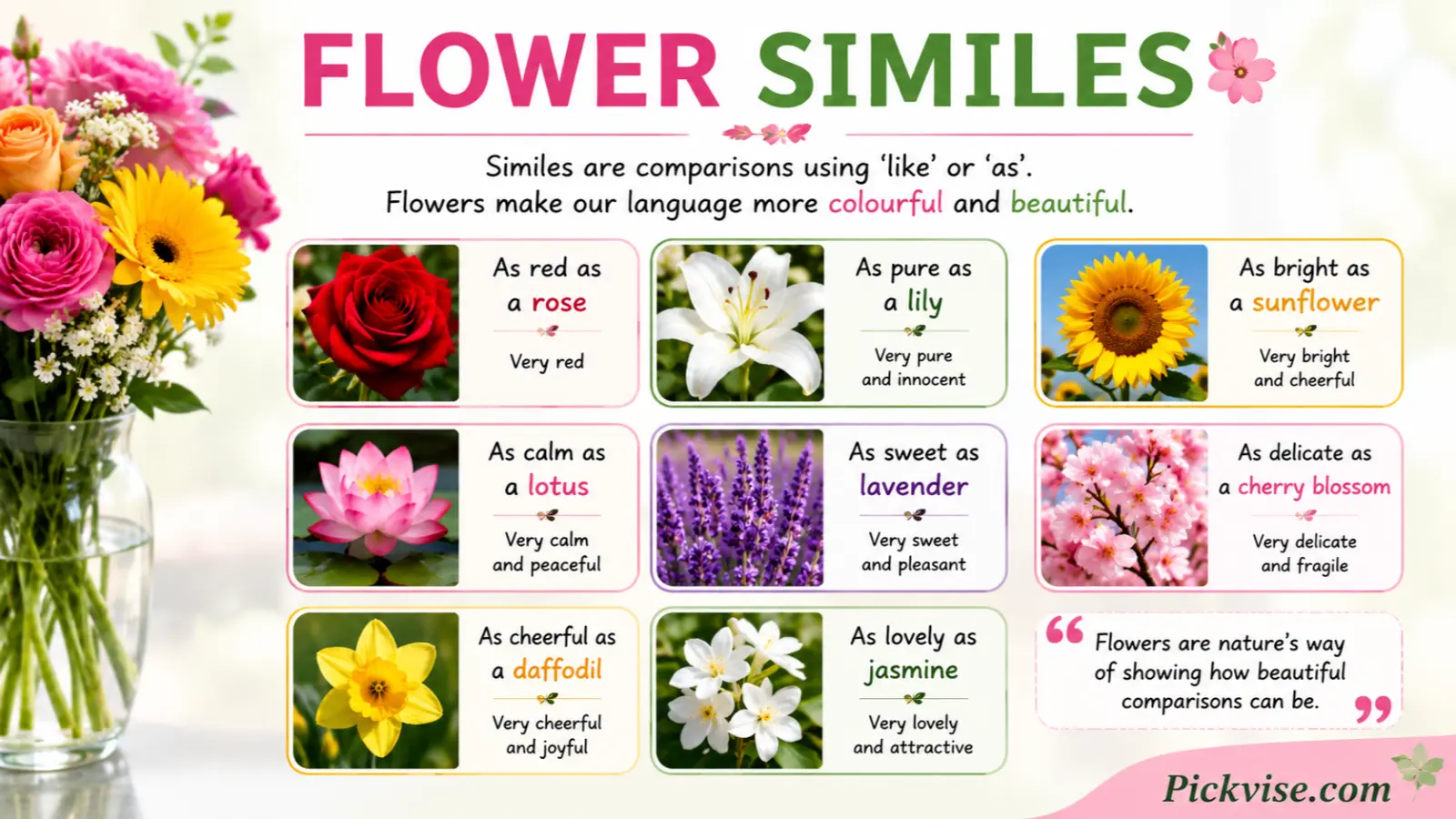
Flowers have inspired writers for centuries because they naturally symbolize beauty, growth, hope, change, and even fragility. One of the easiest ways to bring those qualities into your writing is through similes. A simile compares two different things using the words “like” or “as.” Instead of simply saying someone is kind, you might compare their kindness to a blooming flower. The comparison paints a clearer picture and helps readers feel the emotion behind the words. Whether you’re writing poetry, stories, speeches, journal entries, or classroom assignments, flower similes can make ordinary descriptions feel fresh and memorable. This guide explores original flower similes, explains why they work, and shows you how to create your own.
What Are Flower Similes?
Flower similes compare a person, feeling, object, or situation to flowers or their characteristics using like or as.
These comparisons can express:
- Beauty
- Gentleness
- Growth
- Hope
- Grace
- Delicacy
- Strength hidden beneath softness
- Fresh beginnings
Unlike simple descriptions, flower similes encourage readers to imagine colors, scents, movement, and emotions all at once.
Why Writers Love Flower Similes
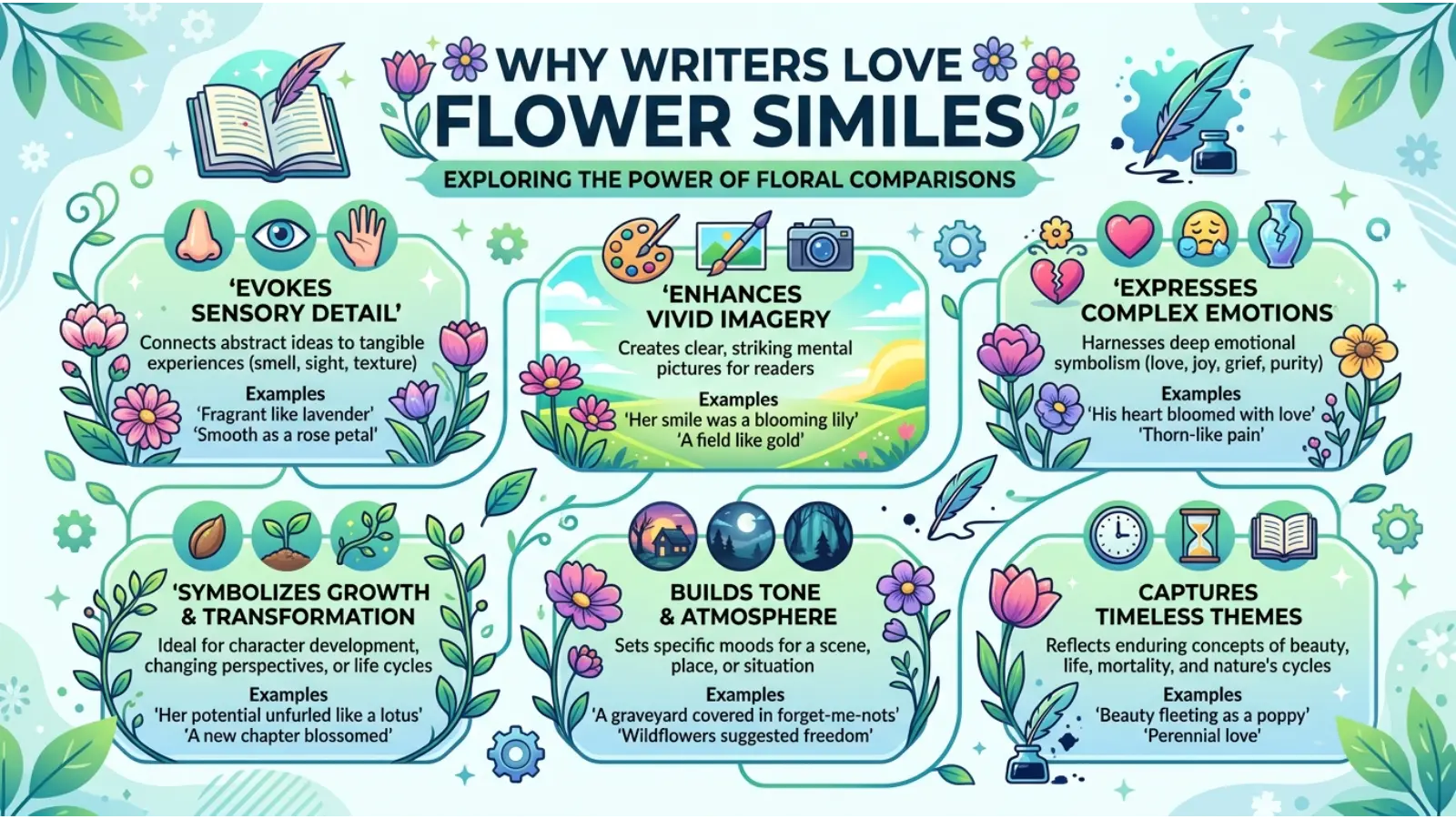
Flowers naturally appeal to multiple senses.
A single comparison can suggest:
- Color
- Texture
- Fragrance
- Emotion
- Season
- Mood
- Symbolism
Instead of explaining every detail, a well-crafted simile allows readers to build the image themselves.
30 Original Flower Similes
1. As cheerful as a sunflower turning toward morning
Meaning
Someone who naturally looks for positivity.
Examples
- She stayed as cheerful as a sunflower turning toward morning.
- Even after losing the game, he remained optimistic.
Writing Tip
Perfect for hopeful characters.
2. Like a wildflower growing through cracked stone
Meaning
Unexpected strength despite hardship.
Examples
- Her confidence grew like a wildflower through cracked stone.
- Hope returned after difficult times.
Best Context
Inspirational writing and personal stories.
3. As gentle as petals floating on a quiet pond
Meaning
Softness and calmness.
Examples
- His voice was as gentle as petals floating on a quiet pond.
- The teacher answered every question kindly.
4. Like a rose opening after rain
Meaning
Growing stronger after challenges.
Examples
- She smiled like a rose opening after rain.
- His confidence returned after failure.
Storytelling Use
Character transformation.
5. As colorful as a spring garden in full bloom
Meaning
Full of energy and life.
Examples
- Her artwork looked as colorful as a spring garden.
- The festival felt alive with excitement.
6. Like lavender calming a restless evening
Meaning
Bringing peace and comfort.
Examples
- Her words settled everyone’s worries.
- His presence eased the tension.
7. As graceful as lilies dancing in the breeze
Meaning
Elegant movement.
Examples
- She crossed the stage gracefully.
- The dancers moved beautifully.
8. Like a daisy smiling beneath blue skies
Meaning
Simple happiness.
Examples
- The little girl laughed like a daisy beneath blue skies.
- His attitude brightened the room.
9. As delicate as fresh cherry blossoms
Meaning
Fragile beauty.
Examples
- The decoration looked delicate.
- Her handwriting seemed beautifully refined.
10. Like jasmine filling the evening air
Meaning
Quietly unforgettable.
Examples
- Her kindness spread naturally.
- The memory stayed with him.
11. As bright as marigolds after sunrise
Meaning
Radiant happiness.
Examples
- His smile filled the classroom.
- The children looked excited.
12. Like tulips welcoming spring
Meaning
Fresh beginnings.
Examples
- Their friendship blossomed.
- The new project started confidently.
13. As refreshing as flowers after morning dew
Meaning
Feeling renewed.
Examples
- Her ideas inspired everyone.
- The vacation restored his energy.
14. Like orchids blooming in silence
Meaning
Quiet elegance.
Examples
- She impressed everyone without seeking attention.
- His talent spoke for itself.
15. As soft as rose petals in spring
Meaning
Gentle touch or personality.
Examples
- The blanket felt wonderfully soft.
- Her voice comforted the child.
16. Like blossoms carried by a warm breeze
Meaning
Moving naturally and freely.
Examples
- The dancers flowed across the stage.
- His thoughts wandered peacefully.
17. As hopeful as the first bloom of spring
Meaning
New opportunities.
Examples
- Graduation filled them with hope.
- Every sunrise felt like another chance.
18. Like a bouquet brightening a quiet room
Meaning
Someone who lifts everyone’s mood.
Examples
- Her laughter changed the atmosphere.
- His arrival energized the meeting.
19. As fresh as newly opened blossoms
Meaning
Original and energetic.
Examples
- The design looked modern.
- Her ideas impressed the team.
20. Like petals catching golden sunlight
Meaning
Glowing with happiness.
Examples
- Her eyes sparkled.
- The children celebrated joyfully.
21. As elegant as a white lily at dawn
Meaning
Refined beauty.
Examples
- Her dress suited the occasion perfectly.
- The ballroom looked timeless.
22. Like violets hiding beneath green leaves
Meaning
Quiet talent.
Examples
- His abilities surprised everyone.
- She preferred working behind the scenes.
23. As vibrant as a field of poppies
Meaning
Energetic and exciting.
Examples
- The marketplace buzzed with activity.
- Their celebration felt unforgettable.
24. Like petals unfolding one by one
Meaning
Gradual personal growth.
Examples
- Confidence developed slowly.
- The friendship deepened over time.
25. As welcoming as flowers by a garden gate
Meaning
Friendly and inviting.
Examples
- The host greeted every guest warmly.
- The café felt comfortable immediately.
26. Like blooming roses after winter
Meaning
Renewal after difficult times.
Examples
- Business improved steadily.
- The family found happiness again.
27. As peaceful as a meadow filled with wildflowers
Meaning
Complete tranquility.
Examples
- The countryside felt peaceful.
- Meditation calmed her mind.
28. Like petals painted by the sunrise
Meaning
Exceptionally beautiful.
Examples
- The sky glowed brilliantly.
- Her artwork captured everyone’s attention.
29. As lively as blossoms dancing with butterflies
Meaning
Playful excitement.
Examples
- The playground buzzed with laughter.
- The party stayed energetic all evening.
30. Like flowers reaching for the sun
Meaning
Always striving to improve.
Examples
- She pursued every opportunity.
- The young athlete kept learning.
Writing Purpose
Excellent for motivational writing, graduation speeches, and inspirational stories.
How to Make Flower Similes Feel Original
Many flower comparisons have been used so often that they no longer surprise readers. Instead of comparing everything to a rose, think about what makes each flower unique.
Ask yourself:
- How does it grow?
- When does it bloom?
- What colors stand out?
- What emotion does it naturally suggest?
- Does it thrive in difficult conditions?
Specific details create memorable similes.
Instead of writing:
She was as pretty as a flower.
Try:
She smiled like a sunflower welcoming the first light of dawn.
The second comparison paints a richer picture.
Literary Devices That Pair Well with Flower Similes
Imagery
Flower similes naturally create vivid sensory descriptions through color, fragrance, movement, and texture.
Example
“The garden shimmered like thousands of tiny blossoms catching morning light.”
Personification
Flowers can be given human qualities to deepen emotion.
Example
“The daisies nodded like friends greeting old companions.”
Symbolism
Different flowers often represent different ideas.
- Rose — love
- Lily — purity
- Sunflower — optimism
- Lavender — peace
- Wildflower — freedom
- Cherry blossom — fleeting beauty
Knowing these associations helps your similes carry deeper meaning.
Alliteration
Pairing flower similes with repeated sounds creates smoother sentences.
Example
“Soft sunflowers swayed like smiling friends.”
How to Create Your Own Flower Similes
Creating original comparisons becomes easier with practice.
Step 1
Choose a flower.
Step 2
Write three characteristics.
For example:
Sunflower
- Tall
- Bright
- Always facing sunlight
Step 3
Think about what those qualities remind you of.
Perhaps optimism, resilience, or confidence.
Step 4
Build your comparison using like or as.
Example:
“As hopeful as a sunflower greeting the sunrise.”
Creative Exercise
Choose any five flowers and write one simile for each that expresses a different emotion. Challenge yourself to avoid using the words beautiful, pretty, or nice. Focus on actions, colors, textures, or seasons instead.
Common Mistakes When Writing Flower Similes
Using Overused Comparisons
Readers have seen phrases like “as pretty as a rose” countless times. Look for fresh angles instead.
Mixing Images
Avoid combining unrelated comparisons in the same sentence.
Confusing:
“She bloomed like a rose while roaring like thunder.”
Keep the imagery consistent unless the contrast is intentional.
Forgetting the Purpose
Every simile should strengthen the message, not simply decorate it.
Ask whether the comparison adds clarity or emotion.
Confusing Similes with Metaphors
A simile uses like or as.
- Simile: “She shined like a sunflower.”
- Metaphor: “She was a sunflower.”
Both are useful, but they work differently.
Choosing Random Flowers
The flower should match the emotion you’re describing. A peaceful moment may suit lavender, while resilience may be better expressed through a wildflower growing in difficult conditions.
Frequently Asked Questions
What are flower similes?
Flower similes compare people, emotions, or objects to flowers using like or as to create vivid imagery.
Why are flower similes effective?
They combine visual beauty with emotional symbolism, making descriptions more memorable and engaging.
Can flower similes be used in professional writing?
Yes. They work well in speeches, creative essays, blogs, marketing, and storytelling when used thoughtfully.
Are flower similes only for poetry?
No. They can strengthen fiction, personal narratives, children’s writing, journal entries, and even inspirational articles.
How do I avoid cliché flower similes?
Focus on unique traits of individual flowers instead of relying on common comparisons like “pretty as a rose.”
Which flowers symbolize hope?
Sunflowers, tulips, wildflowers, and blossoms appearing in spring are often associated with hope and renewal.
What’s the difference between a flower simile and a flower metaphor?
A simile uses like or as, while a metaphor states that something is the flower without those comparison words.
Conclusion
Flower similes do far more than describe appearance. They can suggest resilience, joy, tenderness, renewal, courage, or quiet strength in just a few carefully chosen words. By observing how different flowers grow, bloom, and survive, you can create comparisons that feel authentic rather than predictable. The best flower similes come from close observation and imagination. Experiment with different blooms, seasons, and emotions, and don’t be afraid to revise your comparisons until they feel natural. With practice, you’ll discover that your writing can bloom just as beautifully as the flowers that inspire it.
I am Helena Frost, a writer captivated by the beauty of language and the art of comparison. Through my words, I explore the world by turning ordinary moments into vivid similes and reflections. I enjoy crafting phrases that spark imagination, evoke emotion, and linger in the mind. My writing celebrates the subtle connections between people, nature, and the stories we live. For me, every sentence is an opportunity to reveal the extraordinary in the everyday.