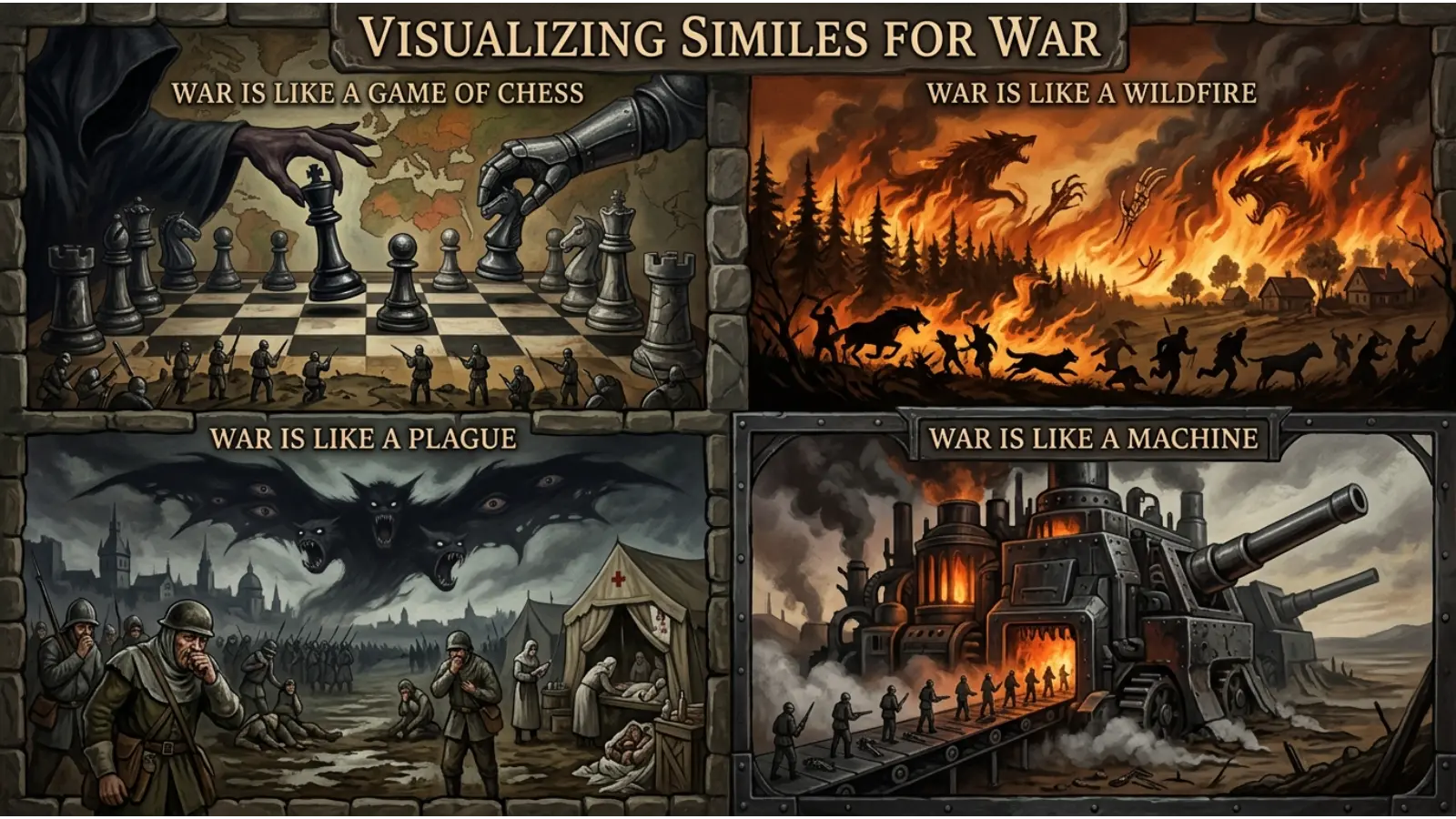
Similes for War is difficult to describe because its reality contains many conflicting emotions: fear and courage, chaos and silence, destruction and hope. A well-chosen simile can help readers understand those emotions by connecting something unfamiliar or overwhelming to something they can imagine.
A simile compares two different things using words such as like or as. In war writing, comparisons can make a battlefield feel tense, a soldier’s fear more understandable, or the aftermath of conflict more emotionally powerful.
The best similes for war do more than make a sentence sound dramatic. They give readers a specific image and help them feel the atmosphere of a scene without explaining every emotion directly.
This collection focuses on original comparisons for creative writing, poetry, fiction, essays, speeches, and storytelling. Along the way, you’ll learn how to create stronger similes of your own.
What Are Similes for War?
War similes compare aspects of conflict—such as battles, fear, weapons, silence, courage, destruction, or recovery—to familiar images.
For example:
The battlefield was as restless as a storm-tossed sea.
The comparison connects a battlefield with turbulent water. Instead of simply saying that the battlefield was chaotic, the writer gives the reader a moving visual image.
A useful war simile should have a purpose. It might establish danger, reveal a character’s emotions, slow down a dramatic moment, or show the consequences of conflict.
30 Powerful Similes for War
1. The battlefield was like a storm trapped beneath a dark sky.
Meaning: This compares the battlefield to a powerful, contained storm.
Why it works: Storms suggest unpredictability, movement, and danger without requiring graphic description.
Example:
The battlefield was like a storm trapped beneath a dark sky, restless and impossible to predict.
Best context: Fiction, descriptive essays, and dramatic storytelling.
2. Fear spread through the camp like ink through water.
Meaning: Fear moves quickly and gradually affects everyone.
Why it works: Ink spreading through water creates a strong image of something impossible to contain once it begins.
Example:
Fear spread through the camp like ink through water.
This works especially well when you want to show that fear is becoming shared rather than remaining inside one person’s mind.
3. The soldiers stood as still as statues beneath the morning sky.
This comparison emphasizes tension and anticipation.
Instead of telling readers that the soldiers were nervous, the simile shows their physical stillness. The contrast between a quiet moment and the possibility of conflict creates suspense.
Writing tip: Physical behavior often makes emotional similes stronger because readers can visualize the scene.
4. The distant thunder sounded like a warning whispered across the hills.
Meaning: The sound is presented as an ominous message.
Emotional effect: It creates anticipation without directly stating that danger is coming.
Best context: A scene immediately before a battle or during a tense pause.
5. The army moved like a river finding its way through narrow valleys.
This simile focuses on movement rather than violence.
The image of a river suggests continuous motion and a large group moving together. It can be useful when describing troops traveling through difficult terrain.
6. His courage burned like a small lantern in a room without windows.
Meaning: Courage exists even when circumstances feel hopeless.
Why it works: The small lantern is important. It doesn’t overpower the darkness; it simply continues to provide light.
Best context: Character development, reflective fiction, and poetry.
7. The silence after the battle was as heavy as wet earth.
This comparison turns silence into something almost physical.
It is particularly effective for scenes about aftermath and reflection because the reader can imagine weight, dampness, and stillness at the same time.
8. The battlefield stretched like a scar across the valley.
Meaning: The landscape has been permanently changed by conflict.
Emotional effect: The word scar suggests lasting consequences rather than only temporary damage.
Writing purpose: Use this when the focus is on how war changes places and memories.
9. The troops marched like a long shadow beneath the afternoon sun.
The comparison creates an image of a large group moving steadily across the landscape.
It also introduces a subtle emotional contrast: sunlight suggests openness, while a shadow can suggest uncertainty or sadness.
10. His memories returned like birds startled from a quiet tree.
This simile works well for writing about veterans, survivors, or characters remembering conflict.
Rather than saying he suddenly remembered the war, the comparison shows memories arriving unexpectedly and disturbing an otherwise peaceful moment.
11. The battlefield looked as cold as an abandoned house.
Meaning: The scene feels empty, lifeless, and emotionally distant.
This is especially useful when writing about the aftermath rather than the action of war.
12. Hope flickered like a candle in a restless wind.
Hope is presented as fragile but persistent.
The candle does not eliminate the wind. It simply continues burning despite it. That makes the comparison useful for stories about endurance.
13. The enemy’s approach was like winter moving over a field.
This simile creates a sense of gradual, unavoidable change.
Winter is not necessarily violent, but its arrival can transform an entire landscape. The comparison therefore works when you want tension without graphic imagery.
14. The commander’s voice was as sharp as a bell in the frozen air.
Meaning: The voice is clear, forceful, and impossible to ignore.
Best context: Military fiction, historical storytelling, and dramatic scenes.
15. Grief settled over the village like evening fog.
This comparison focuses on emotional aftermath.
Fog gradually covers a landscape, making familiar surroundings harder to see. Likewise, grief can affect an entire community and change how ordinary life feels.
16. The soldiers’ footsteps sounded like a clock counting toward dawn.
Meaning: Their movement creates a feeling of approaching time and inevitable change.
Why it works: A clock suggests that something is getting closer, even when the reader doesn’t know exactly what will happen.
17. The battlefield was as restless as waves beneath a rising wind.
The comparison emphasizes constant movement and instability.
It works particularly well in prose where you want the environment itself to seem unsettled.
18. Her determination stood like a tree rooted in stone.
This simile presents determination as unusually strong and difficult to move.
The unusual image of a tree rooted in stone makes the comparison feel more memorable than simply saying she was very determined.
19. The empty streets were like pages after the final chapter.
Meaning: The streets feel abandoned, and something important has ended.
Best context: War aftermath, historical fiction, reflective writing, and poetry.
This is a useful example of how an abstract comparison can create emotional depth without describing destruction directly.
20. Panic raced through the crowd like sparks across dry grass.
This comparison shows how quickly panic can spread from person to person.
The image is especially effective in scenes where one person’s reaction causes many others to become frightened.
21. The flag moved like a lone bird above the quiet field.
The comparison creates a feeling of isolation and dignity.
It can work in scenes of remembrance, mourning, or reflection.
22. The young recruit’s first night felt as long as an endless winter.
This simile exaggerates the character’s perception of time.
It is useful because fear can make a short period feel much longer than it really is.
23. The news arrived like a stone dropped into still water.
The image suggests that one piece of information can disturb an entire community.
The ripples can represent the emotional consequences that continue long after the initial news.
24. The commander watched the horizon as carefully as a sailor watches an approaching storm.
This comparison creates anticipation.
It also reveals the commander’s awareness without requiring the writer to explain every thought.
25. Their friendship remained like a bridge over a widening river.
Meaning: Their relationship continues despite growing distance and difficulty.
This is especially effective when war separates friends, families, or communities.
26. The old photograph was as fragile as a leaf in winter.
The simile works well when a character discovers a photograph connected to someone lost during conflict.
It emphasizes both physical delicacy and emotional importance.
27. The town waited like a theater before the curtain rose.
This creates suspense through stillness.
A theater audience knows something is about to happen, making the comparison useful for a scene immediately before an important event.
28. His anger moved through him like a train with no station.
The comparison suggests powerful emotion that seems difficult to stop.
It is useful when writing about anger, frustration, or emotional pressure without resorting to repetitive descriptions.
29. Peace returned as quietly as snow settling on rooftops.
This is a softer comparison for the transition from conflict to peace.
The quiet movement of snow suggests that peace does not always arrive dramatically. Sometimes it develops gradually.
30. The survivors carried their memories like stones in their pockets.
Meaning: Memories remain with them and feel like a continuing burden.
Why it works: Stones are ordinary objects, but their weight becomes meaningful through context.
Best context: Reflective fiction, poetry, historical writing, and essays about the effects of war.
How to Make War Similes More Powerful
A strong simile usually begins with a specific quality rather than a random object.
Suppose you want to describe fear. Don’t immediately search for something “scary.” Ask what fear actually does.
Does it spread? Then you might compare it to ink in water.
Does it make time feel slower? Compare it to an endless winter.
Does it arrive suddenly? Compare it to a door slamming in a quiet room.
This approach produces more precise imagery because the comparison is based on a shared characteristic.
Focus on One Main Quality
Weak:
The battle was like a big, scary monster.
The comparison is vague because almost everything about the scene is represented by one general idea.
Stronger:
The battlefield was like a storm trapped beneath a dark sky.
The second version emphasizes chaos, movement, and danger.
A simile becomes more effective when the reader can quickly identify the connection between the two things being compared.
Avoid Clichés in War Writing
War writing can easily fall into familiar comparisons involving fire, hell, monsters, or thunder. Those images can sometimes work, but using them repeatedly makes writing predictable.
Instead of asking:
“What is a dramatic thing I can compare this to?”
ask:
“What ordinary experience has the same emotional quality?”
For example, fear might resemble:
- ink spreading through water
- a clock counting toward dawn
- birds suddenly leaving a tree
- fog covering a familiar street
Unexpected but believable comparisons often stay in a reader’s mind longer.
Use Similes to Show Emotion Instead of Naming It
One of the most useful techniques in creative writing is showing emotion through imagery.
Instead of:
He was terrified.
Try:
Fear moved through him like cold water.
The simile gives the emotion a physical quality.
You can apply the same principle to courage, grief, anger, loneliness, hope, and uncertainty.
However, don’t remove emotional words completely. Sometimes direct language is stronger. The goal is balance, not turning every sentence into a comparison.
Similes for Different Stages of a War Story
Different parts of a story need different kinds of imagery.
Before Conflict
Use comparisons that build anticipation.
The town waited like a theater before the curtain rose.
These similes create tension without immediately describing action.
During Conflict
Movement-based comparisons can help create urgency.
The army moved like a river finding its way through narrow valleys.
The focus remains on motion and atmosphere.
After Conflict
Quieter imagery often becomes more effective.
Grief settled over the village like evening fog.
The language slows down and allows readers to consider consequences.
During Recovery
Use images associated with rebuilding, light, growth, or returning seasons.
Peace returned as quietly as snow settling on rooftops.
This gives the ending a different emotional texture from the beginning.
War Similes for Poetry
Poetry often benefits from shorter, more concentrated comparisons.
Examples include:
Fear spread like ink.
Hope flickered like a lantern.
Silence lay like wet earth.
Memories stayed like stones.
Notice how these versions remove unnecessary explanation. Poetry often depends on compression: a few carefully selected words can suggest an entire emotional landscape.
A poet can also extend one comparison across several lines. If you begin with a river image, continue developing ideas such as current, shore, distance, and bridges instead of suddenly switching to fire or storms.
How Professional Writers Build Better Comparisons
Experienced writers don’t simply look for two things that are vaguely similar. They consider why the similarity matters.
For instance, comparing a soldier’s courage to a lantern is effective because a lantern provides light while surrounded by darkness. The comparison therefore communicates both courage and difficulty.
That second layer is what gives a simile depth.
Before keeping a simile, ask:
- What two things am I comparing?
- What exact quality do they share?
- Does the comparison reveal something about the character or setting?
- Does it fit the mood?
- Have readers seen this comparison too many times?
- Could I make the image more specific?
If you can’t answer the second question, the simile may not be doing enough work.
Simile vs. Metaphor in War Writing
A simile makes a comparison using words such as like or as.
The battlefield was like a storm.
A metaphor makes the comparison directly.
The battlefield was a storm.
Both can create strong imagery, but they produce slightly different effects.
The simile leaves a little distance between the two ideas. The metaphor makes the identification more immediate and forceful.
Choose the form that matches your sentence’s purpose rather than using one simply because it sounds more literary.
Other Literary Devices That Work With War Similes
Imagery
Imagery uses sensory details to help readers experience a scene.
A simile is one tool for creating imagery, but strong writing can combine it with sounds, textures, smells, movement, and visual details.
Personification
Personification gives human qualities to nonhuman things.
For example:
The exhausted road seemed to remember every passing army.
Combined with a simile, personification can make a setting feel emotionally significant.
Symbolism
Objects such as flags, photographs, bridges, candles, or empty houses can carry symbolic meanings depending on the story.
A simile can introduce that symbolism naturally.
Hyperbole
Hyperbole deliberately exaggerates something for emphasis.
For example:
The night seemed to last a thousand years.
In serious war writing, use exaggeration carefully. Too much can make an emotionally important scene feel unrealistic.
How to Create Your Own Similes for War
You don’t need to start with the word war. Start with the specific moment you want to describe.
Step 1: Identify the emotion
Is the scene about:
- fear?
- courage?
- grief?
- confusion?
- hope?
- anger?
- loneliness?
- relief?
Step 2: Identify the physical quality
Ask what the emotion feels like.
Fear might be sudden, spreading, cold, heavy, or unpredictable.
Hope might be small, persistent, bright, fragile, or growing.
Step 3: Find an ordinary image
Look beyond typical battlefield imagery.
Think about:
- weather
- household objects
- animals
- roads
- music
- water
- seasons
- clocks
- books
- plants
- light
Step 4: Connect the two
For example:
Emotion: grief
Quality: slowly covering everything
Image: fog
Simile: Grief settled over the village like evening fog.
Step 5: Test the comparison
Read it aloud.
If the image sounds forced, replace it. If it creates a clear picture and fits the scene’s emotional tone, keep it.
Creative Exercises for Writers
Exercise 1: Five Emotions
Choose five emotions associated with a character in a war story. Create one original simile for each.
Don’t use the words fire, storm, hell, or monster.
This forces you to search for less predictable imagery.
Exercise 2: One Object, Three Emotions
Choose an object such as a clock.
Write three comparisons:
- one for fear
- one for hope
- one for grief
You’ll discover that the same object can create completely different meanings depending on context.
Exercise 3: Rewrite a Flat Sentence
Start with:
The town was afraid.
Now write three versions using different similes.
One should focus on sound, one on movement, and one on silence.
This exercise teaches you how imagery can change the emotional experience of the same basic idea.
Common Mistakes When Using War Similes
Using Too Many Similes
If every sentence contains a comparison, none of them gets enough attention.
Let your strongest images breathe.
Mixing Images
Avoid starting with one comparison and suddenly switching to another unrelated image.
For example, don’t build a paragraph around a river and then abruptly describe the same character as a burning mountain unless the change is intentional.
Choosing Drama Over Precision
A dramatic comparison isn’t automatically a good one.
Ask whether the image actually describes the character, setting, or emotion.
Explaining the Simile Too Much
If the comparison is clear, you usually don’t need several sentences explaining it.
Trust the reader to make the connection.
Repeating Familiar Comparisons
Expressions involving storms, fire, darkness, and monsters can become predictable when overused.
Originality often comes from looking at ordinary things differently.
Frequently Asked Questions
What are some good similes for war?
Good war similes connect conflict with recognizable experiences or images. Examples include comparing fear to ink spreading through water, hope to a lantern in darkness, or grief to evening fog.
How do you describe war using a simile?
Choose one specific aspect of war—such as fear, movement, silence, courage, or aftermath—and compare it with something that shares that quality. This produces a more precise image than simply calling war “terrible.”
What is a simile for a battlefield?
One example is: The battlefield stretched like a scar across the valley. This emphasizes the lasting effect of conflict on the landscape.
What is a simile for a soldier’s courage?
You could write: His courage burned like a small lantern in a room without windows. The comparison suggests that courage can remain present even in difficult circumstances.
What is a simile for fear in war?
A useful example is: Fear spread through the camp like ink through water. It shows how fear can move quickly from one person to another.
How can I make war similes less cliché?
Focus on a specific emotional or physical quality and search for an unexpected but believable image. Ordinary objects, weather, nature, and familiar experiences can produce fresh comparisons.
Are similes appropriate for war poems?
Yes. Similes can make war poetry more vivid by compressing complex emotions into memorable images. Use them selectively so the strongest comparisons stand out.
Conclusion
The strongest similes for war don’t simply make conflict sound dramatic. They help readers understand what characters experience before, during, and after conflict. A good comparison can turn fear into something visible, make courage feel fragile but powerful, or show how memories remain long after an event has ended. When creating your own similes, begin with the emotion or quality you want readers to experience. Then search for an image that carries the same feeling. The more specific and purposeful the connection, the more memorable your writing becomes. Experiment with unusual comparisons, revise anything that feels predictable, and remember that a quiet image can sometimes say more than a dramatic one.
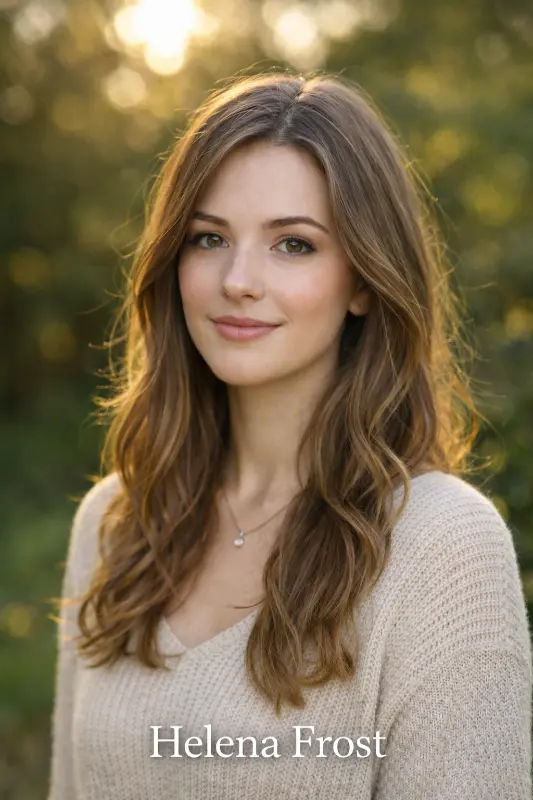
I am Helena Frost, a writer captivated by the beauty of language and the art of comparison. Through my words, I explore the world by turning ordinary moments into vivid similes and reflections. I enjoy crafting phrases that spark imagination, evoke emotion, and linger in the mind. My writing celebrates the subtle connections between people, nature, and the stories we live. For me, every sentence is an opportunity to reveal the extraordinary in the everyday.