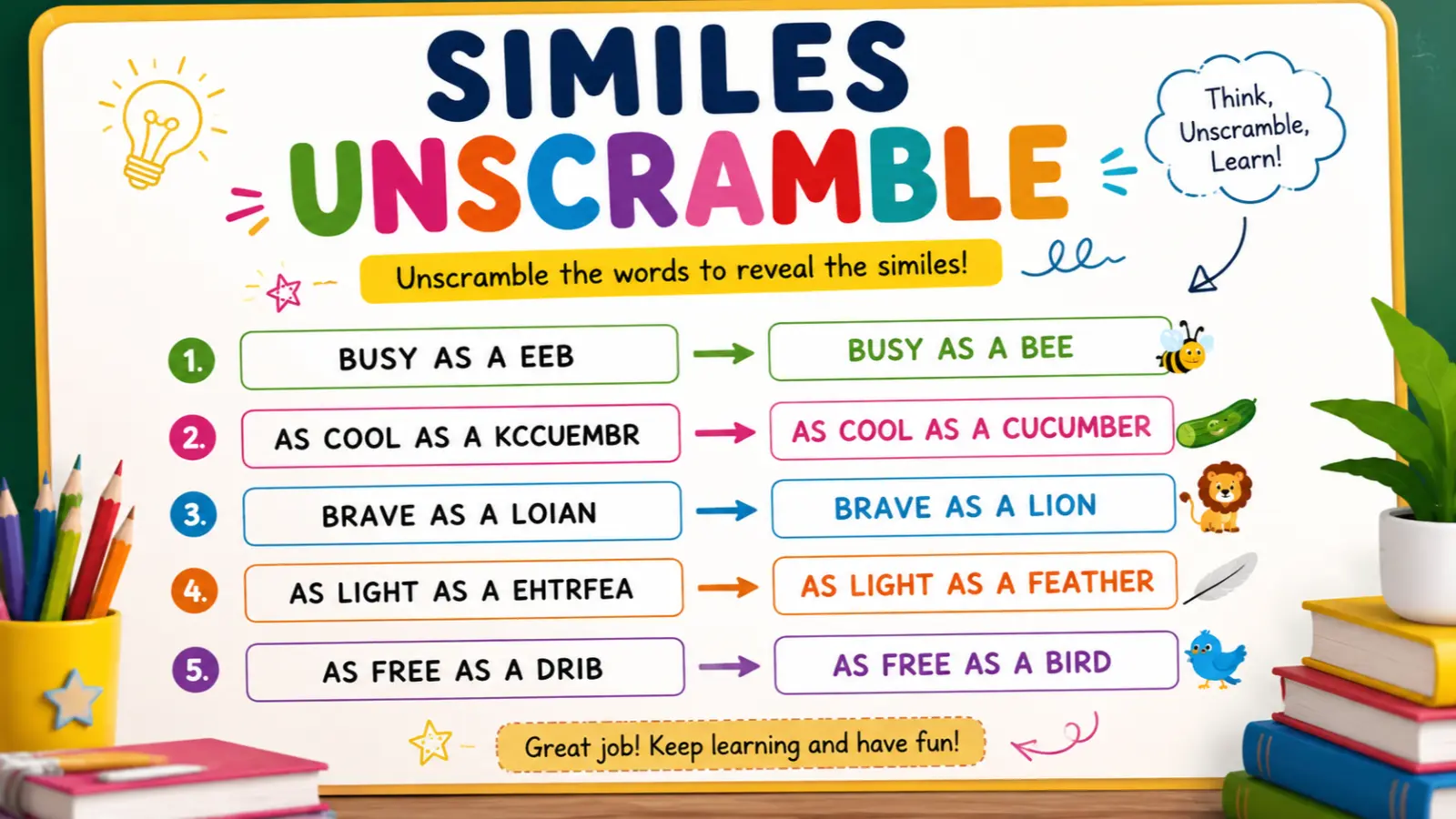
Similes Unscramble make writing more vivid by comparing one thing to another using words such as like or as. They help readers picture an idea, understand an emotion, or feel the mood of a scene.
A similes unscramble activity takes that idea one step further. Instead of simply reading a comparison, readers rearrange mixed-up words to discover the complete simile. This makes Similes Unscramble practice useful for students, teachers, writers, and anyone learning how comparisons work.
For example, the words “like / a / silver / ribbon / the / river / shone” can be rearranged into:
The river shone like a silver ribbon.
The Similes Unscramble goal is not only to solve the puzzle. Unscrambling similes can also teach sentence structure, word order, imagery, and creative expression.
What Is a Simile Unscramble?
A simile unscramble is a language activity in which the words of a Similes Unscramble or sentence are deliberately placed in the wrong order. The reader rearranges them to create a meaningful comparison.
Unscrambled example:
Mixed words: like / a / lantern / her / smile / glowed
Answer:
Her smile glowed like a lantern.
The comparison Similes Unscramble makes the Similes Unscramble easier to visualize. It suggests warmth, brightness, and comfort rather than simply saying that the person smiled.
Why Unscrambling Similes Helps Writers
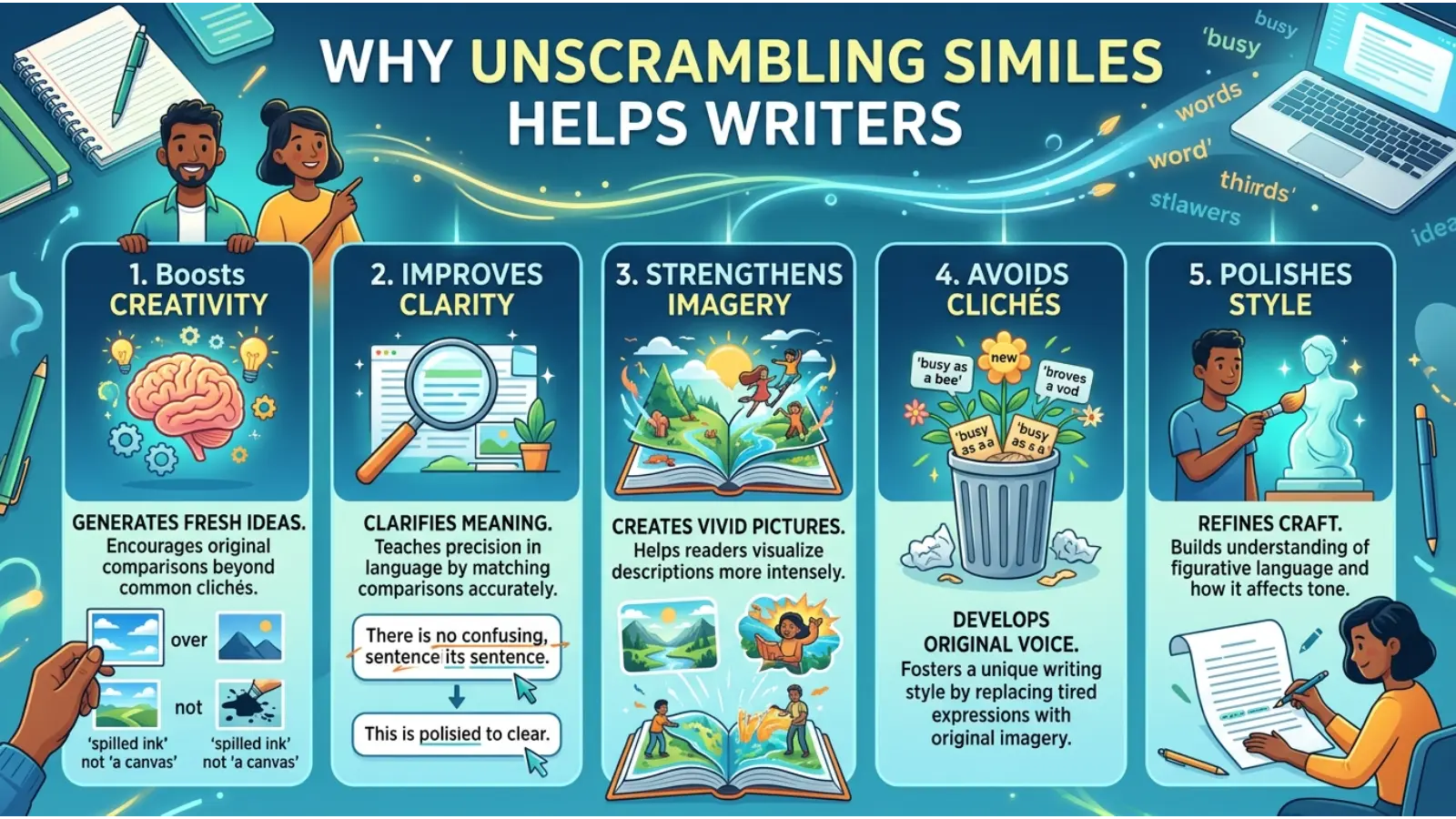
Similes Unscramble is more than a vocabulary game. It makes readers pay attention to how a sentence is constructed.
A learner has to identify:
- The main subject
- The action or description
- The comparison
- The object being compared
- The correct grammatical order
That process develops sentence awareness while reinforcing the basic structure of a simile.
It also shows an important writing lesson: a strong comparison needs a clear relationship between the two things being compared.
25 Similes Unscramble Examples
The following examples move from simple comparisons to more imaginative ones. Try solving each one before checking the answer.
1. Like a Candle
Unscramble:
like / a / candle / her / voice / flickered
Answer:
Her voice flickered like a candle.
This comparison gives the voice a delicate, unsteady quality. It works particularly well when describing nervous or uncertain speech.
2. As Bright as Morning
Unscramble:
as / morning / bright / the / room / was / as
Answer:
The room was as bright as morning.
The comparison creates a fresh, cheerful atmosphere.
Writing tip: Use familiar images when you want a simile to be understood immediately.
3. Like a Drumbeat
Unscramble:
like / a / drumbeat / his / footsteps / echoed
Answer:
His footsteps echoed like a drumbeat.
The comparison emphasizes rhythm and repetition, making the scene easier to hear in the reader’s imagination.
4. As Quiet as Falling Snow
Unscramble:
as / falling / snow / quiet / the / garden / was / as
Answer:
The garden was as quiet as falling snow.
This creates a peaceful atmosphere without simply using the word quiet.
5. Like a Kite in the Wind
Unscramble:
like / a / kite / in / the / wind / her / thoughts / drifted
Answer:
Her thoughts drifted like a kite in the wind.
The comparison suggests thoughts that are wandering and difficult to control.
6. As Cold as a Window
Unscramble:
as / a / window / cold / the / glass / was / as
Answer:
The glass was as cold as a window.
This example is grammatically correct but not especially imaginative, which makes it useful for teaching.
A stronger version might be:
The glass felt as cold as winter air.
Writing lesson: A grammatical simile is not automatically an effective simile.
7. Like a Silver Thread
Unscramble:
like / a / silver / thread / the / moonlight / stretched / across / the / floor
Answer:
The moonlight stretched across the floor like a silver thread.
The image gives moonlight a thin, delicate shap
8. As Restless as a River
Unscramble:
as / a / river / restless / he / was / as
Answer:
He was as restless as a river.
The comparison suggests constant movement and difficulty staying still.
9. Like Sparks from a Fire
Unscramble:
like / sparks / from / a / fire / her / ideas / flew
Answer:
Her ideas flew like sparks from a fire.
This is useful when describing someone whose imagination produces ideas quickl
10. As Gentle as Rain
Unscramble:
as / rain / gentle / her / touch / was / as
Answer:
Her touch was as gentle as rain.
The comparison creates a soft and calming feeling.
11. Like a Door Opening
Unscramble:
like / a / door / opening / the / new / idea / felt
Answer:
The new idea felt like a door opening.
This simile turns an abstract feeling into a physical experience.
12. As Sharp as Winter Light
Unscramble:
as / winter / light / sharp / his / words / were / as
Answer:
His words were as sharp as winter light.
The comparison can suggest words that feel clear, cold, or uncomfortable.
13. Like Leaves on Water
Unscramble:
like / leaves / on / water / the / memories / drifted
Answer:
The memories drifted like leaves on water.
This works well in reflective storytelling because the image suggests memories moving gently through the mind.
14. As Busy as a Beehive
Unscramble:
as / a / beehive / busy / the / market / was / as
Answer:
The market was as busy as a beehive.
This familiar comparison quickly communicates noise, movement, and activity.
15. Like a Clock Running Fast
Unscramble:
like / a / clock / running / fast / the / afternoon / disappeared
Answer:
The afternoon disappeared like a clock running fast.
The unusual comparison makes time feel active rather than passive.
16. As Fragile as Thin Ice
Unscramble:
as / thin / ice / fragile / their / agreement / was / as
Answer:
Their agreement was as fragile as thin ice.
The image suggests something that could easily break.
17. Like Thunder Behind the Hills
Unscramble:
like / thunder / behind / the / hills / the / argument / grew
Answer:
The argument grew like thunder behind the hills.
This comparison creates suspense because thunder often signals that something bigger is approaching.
18. As Warm as a Kitchen Light
Unscramble:
as / a / kitchen / light / warm / the / room / felt / as
Answer:
The room felt as warm as a kitchen light.
The comparison focuses on emotional warmth as well as physical comfort.
19. Like Ink in Water
Unscramble:
like / ink / in / water / the / sadness / spread
Answer:
The sadness spread like ink in water.
This creates an image of an emotion gradually affecting everything around it.
20. As Quick as a Flash
Unscramble:
as / a / flash / quick / the / decision / was / as
Answer:
The decision was as quick as a flash.
The simile emphasizes speed and immediacy.
21. Like a Lantern in Fog
Unscramble:
like / a / lantern / in / fog / her / advice / appeared
Answer:
Her advice appeared like a lantern in fog.
This comparison suggests guidance during uncertainty.
22. As Heavy as a Locked Door
Unscramble:
as / a / locked / door / heavy / his / silence / was / as
Answer:
His silence was as heavy as a locked door.
This is an example of using a physical object to represent an emotional experience.
23. Like Birds at Dawn
Unscramble:
like / birds / at / dawn / the / children / scattered
Answer:
The children scattered like birds at dawn.
The comparison gives the scene energy and movement.
24. As Steady as a Lighthouse
Unscramble:
as / a / lighthouse / steady / her / hope / was / as
Answer:
Her hope was as steady as a lighthouse.
The lighthouse suggests reliability even when the surrounding conditions are uncertain.
25. Like Rain on a Roof
Unscramble:
like / rain / on / a / roof / the / music / sounded
Answer:
The music sounded like rain on a roof.
This simile appeals to the sense of hearing and creates a relaxed, rhythmic mood.
How to Make a Simile More Vivid
A weak simile often compares something to an object without explaining what quality connects them.
For example:
The car was like an animal.
The reader may wonder: What kind of animal? Why?
A more precise comparison gives the reader something useful:
The car prowled through the empty street like a fox searching for shelter.
Now the comparison communicates movement, caution, and atmosphere.
Choose the Quality Before the Comparison
Before writing a simile, ask:
What exactly am I trying to show?
Is the subject:
- Fast?
- Fragile?
- Noisy?
- Lonely?
- Warm?
- Confusing?
- Energetic?
- Unpredictable?
Once you identify the quality, search for an image that naturally expresses it.
This produces stronger writing than randomly adding like or as to a sentence.
How to Create Your Own Similes
You can build an original simile with a simple four-step process.
Step 1: Identify the Subject
Choose something you want to describe.
The old house…
Step 2: Identify Its Strongest Quality
Maybe the house is silent, abandoned, mysterious, or unstable.
The old house was silent…
Step 3: Find an Unexpected but Believable Image
Instead of using an obvious comparison such as a graveyard, consider something more specific.
The old house was silent like a classroom after the final bell.
Step 4: Read It Aloud
Ask whether the comparison sounds natural.
A good simile should add meaning, not merely decorate a sentenc
Similes for Happiness
Happiness becomes more memorable when it is shown through movement, light, sound, or physical sensation.
Here are some fresh examples:
Her happiness rose like sunlight through an open window.
His grin spread like paint across a blank wall.
The good news bounced through her mind like a bright rubber ball.
Their laughter sparkled like coins tossed into a fountain.
These comparisons work because they turn an abstract emotion into something readers can see or hear.
Similes for Friendship
Strong friendship can be described through ideas such as trust, comfort, reliability, and shared history.
Their friendship was like a well-worn path through the woods.
Her advice was like a compass when he could not choose a direction.
Their laughter returned like a song they both remembered.
His friendship stood beside her like a porch light on a dark evening.
Notice that these comparisons focus on what friendship does. That usually creates more meaningful imagery than simply calling friendship “strong.”
Similes for Rain
Rain provides excellent material for sensory writing because it can sound, move, reflect light, and change the atmosphere.
Rain tapped the windows like impatient fingertips.
The streets glittered like scattered pieces of glass.
The storm rolled across the town like a dark curtain.
Tiny drops clung to the leaves like beads on green thread.
The best choice depends on the mood. Gentle rain may call for soft imagery, while a storm benefits from heavier, more forceful comparisons.
Similes for Love
Love can be difficult to describe because it is abstract. Concrete images make it easier for readers to experience.
Her kindness felt like a blanket on a cold evening.
Their love grew like roots beneath an old tree.
His presence was like a familiar song in a crowded room.
Their trust held firm like a bridge built stone by stone.
These comparisons avoid simply saying that love is “strong” or “beautiful.” Instead, they demonstrate what the feeling provides.
Similes for Anger
Anger often involves heat, pressure, noise, and sudden movement, making those qualities useful sources of imagery.
His anger rose like steam from a sealed kettle.
Her words snapped like dry branches underfoot.
The frustration gathered like clouds before a storm.
His temper flared like a match in a dark room.
When writing about anger, avoid piling several dramatic comparisons into one paragraph. One carefully chosen image is usually stronger than five competing ones.
Similes in Music and Songwriting
Similes can make music more memorable because they connect sound or emotion with familiar images.
A songwriter might describe a voice as:
A voice that moves like smoke through an empty room.
Or describe a rhythm as:
A beat that rolls like wheels over a midnight road.
Or describe a melody as:
A melody that floats like a paper boat on a quiet stream.
In songwriting, rhythm matters as much as meaning. A comparison may look excellent on paper but feel awkward when spoken or sung. Writers should therefore read similes aloud and pay attention to syllables, stress, and flow
Common Similes You Will Recognize
Some similes are so familiar that readers recognize them instantly:
- As busy as a bee
- As quiet as a mouse
- As light as a feather
- As cold as ice
- As brave as a lion
- Like a needle in a haystack
These can be useful in everyday conversation, teaching, and beginner writing. However, creative writers should use familiar comparisons carefully.
A common simile is not automatically bad. It becomes a problem when a piece of writing depends on familiar phrases when a more specific image would make the scene distinctive.
Funny Similes That Add Personality
Humor often comes from an unexpected comparison.
He ran like a shopping cart with one broken wheel.
She stared at the homework like it had personally offended her.
The puppy attacked the blanket like a tiny pirate boarding a ship.
My alarm sounded like a robot demanding rent.
Funny similes work best when the comparison is specific enough for the reader to imagine immediately.
The trick is to exaggerate the image without making the sentence impossible to understand.
Simile vs. Metaphor: What Is the Difference?
A simile makes a comparison using words such as like or as.
The moon looked like a silver coin.
A metaphor makes the comparison directly.
The moon was a silver coin in the sky.
Both devices create imagery, but they produce slightly different effects.
Similes often feel more conversational because they openly signal the comparison. Metaphors can feel more direct and compressed.
Simile, Imagery, and Personification
Similes are closely connected to other literary techniques.
Imagery uses descriptive language to create sensory experiences.
The rain sounded like pebbles against the roof.
This is a simile that also creates sound imagery.
Personification gives human qualities to nonhuman things.
The wind whispered through the trees.
A writer can combine techniques:
The impatient wind rattled the windows like a child knocking on a locked door.
Here, impatient is personification, while the comparison after like is a simile.
Common Mistakes When Writing Similes
Using a Comparison That Says Nothing New
The water was wet like water.
The comparison adds no useful information.
Instead, identify a specific quality:
The water flashed like broken glass beneath the sun.
Mixing Two Comparisons
Avoid sentences such as:
Her voice was like a storm and a glowing candle that exploded across the room.
The images compete with each other.
Choose one central picture and develop it.
Choosing a Random Comparison
A surprising simile is not necessarily a good simile. The two things should share a meaningful quality.
Explaining the Simile Too Much
Once a strong image has been created, trust the reader.
The hallway was as silent as an empty theater, which means it was very, very quiet.
The second explanation weakens the first.
Using Too Many Similes
A paragraph filled with comparisons can become exhausting.
Good descriptive writing usually balances figurative language with straightforward sentences.
A Simple Simile Unscramble Exercise
Try solving these without looking at the answers.
Puzzle 1
like / a / feather / the / leaf / fell
Puzzle 2
as / sunlight / warm / her / smile / was / as
Puzzle 3
like / a / drum / the / rain / roof / struck / the
Puzzle 4
like / stars / the / children / laughter / scattered
Puzzle 5
as / a / mountain / steady / his / voice / was / as
Answers
- The leaf fell like a feather.
- Her smile was as warm as sunlight.
- The rain struck the roof like a drum.
- The children’s laughter scattered like stars.
- His voice was as steady as a mountain.
After solving them, try changing one word in each comparison. This turns a grammar exercise into a creative-writing exercise.
How to Practice Similes Without Making Them Sound Forced
Start with ordinary observations.
Instead of immediately trying to write something dramatic, notice small details:
- How does a crowded hallway sound?
- How does sunlight move across a wall?
- What does a nervous person do with their hands?
- How does a quiet room feel?
- What does a sudden idea feel like?
Then compare the observation to something concrete.
For example:
The hallway hummed like a refrigerator full of restless bees.
The comparison works because both images communicate constant, low-level activit
Frequently Asked Questions
What is a simile in simple words?
A simile compares two different things, usually with like or as, to make a description clearer or more vivid.
What does “similes unscramble” mean?
It refers to an activity where the words in a simile are mixed up and the reader rearranges them into the correct sentence.
What is an example of an easy simile?
The moon looked like a silver coin. It compares the moon with a coin using the word like.
How do you make a simile more interesting?
Choose a specific quality and compare it with an image that expresses that quality clearly. Avoid comparisons that readers have heard too many times.
Can a simile be funny?
Yes. Funny similes often use unexpected but recognizable comparisons, such as describing someone running like a shopping cart with a broken wheel.
What is the difference between a simile and a metaphor?
A simile usually signals its comparison with like or as, while a metaphor makes the comparison directly.
Why are similes useful in creative writing?
They turn abstract ideas and ordinary descriptions into concrete images, helping readers visualize scenes and connect with emotions.
Can similes be used in songs?
Yes. Songwriters frequently use comparisons to express feelings, describe sounds, establish mood, and create memorable imagery. The comparison should also fit the rhythm and tone of the song.
Conclusion
A good simile does more than make a sentence prettier. It gives readers a way to see, hear, feel, or understand something that might otherwise remain abstract. Similes unscramble exercises are a simple way to learn how these comparisons are built. Once you understand the structure, move beyond rearranging words and begin creating your own images. Start with an ordinary observation. Identify its strongest quality. Find a fresh comparison that shares that quality. Then read the sentence aloud and remove anything that feels unnecessary. The goal is not to use the most complicated comparison. The goal is to find the right image—one that makes the reader pause for a moment and see the idea in a new way.
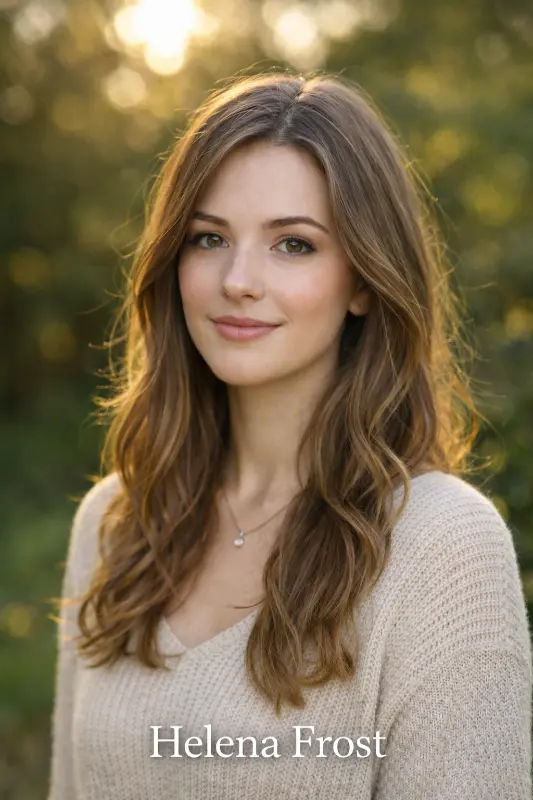
I am Helena Frost, a writer captivated by the beauty of language and the art of comparison. Through my words, I explore the world by turning ordinary moments into vivid similes and reflections. I enjoy crafting phrases that spark imagination, evoke emotion, and linger in the mind. My writing celebrates the subtle connections between people, nature, and the stories we live. For me, every sentence is an opportunity to reveal the extraordinary in the everyday.