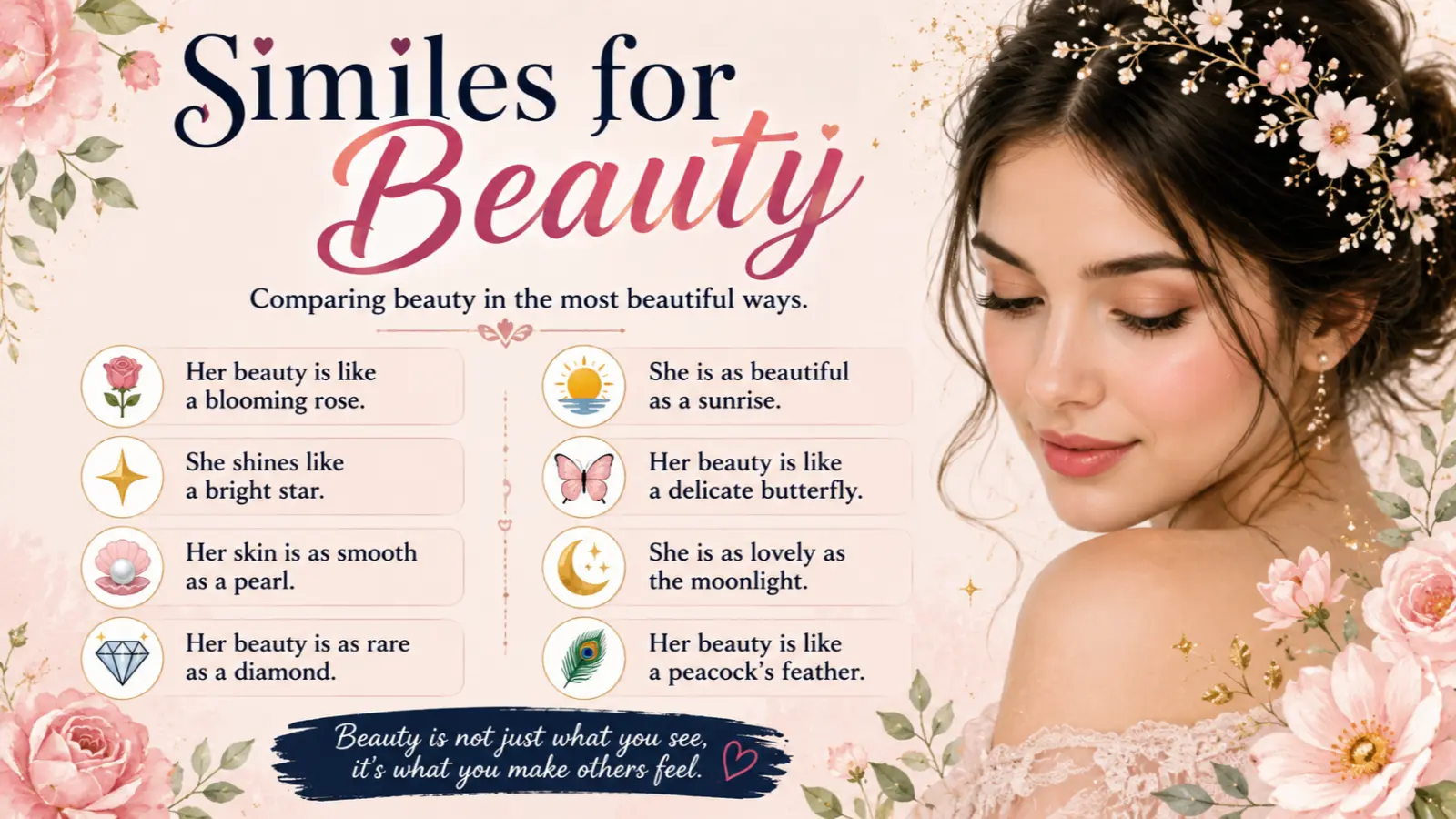
Similes for Beauty belongs to creative writing, poetry, description, and storytelling. When writers want readers to see more than a simple statement such as “She was beautiful,” a well-chosen simile can turn that description into an image readers can almost picture.
A simile compares two different things using words such as like or as. Instead of saying that a garden is beautiful, you might describe it as “like a painting after rain.” The comparison gives the reader something familiar to imagine.
The best similes for beauty do more than say something looks attractive. They can suggest warmth, elegance, mystery, delicacy, brightness, calmness, or even a kind of beauty that feels unusual and difficult to explain.
This collection offers original examples, explains why they work, and shows how to build your own comparisons without falling into clichés.
What Is a Simile for Beauty?
A simile for beauty is a comparison that describes something attractive by connecting it to another image, object, place, person, sound, or experience.
For example:
“The garden looked like a secret painted in spring colors.”
The garden is not literally a secret or a painting. The comparison gives its beauty a sense of mystery and color.
A strong beauty simile should add information. It should help the reader understand what kind of beauty you mean rather than simply replacing the word “beautiful.”
30 Original Similes for Beauty
1. Beautiful Like Sunlight Through a Window
“Her smile was like sunlight slipping through a quiet window.”
This comparison creates a feeling of warmth and gentleness. It works especially well when beauty is connected with kindness rather than appearance alone.
Best context: Character descriptions, romance, reflective writing.
Writing tip: Use sunlight when you want beauty to feel comforting or hopeful.
2. Bright as a Newly Lit Lantern
“His eyes were as bright as a newly lit lantern.”
The lantern suggests warmth and illumination, making this stronger than simply saying someone had bright eyes.
Effect: Warm, lively, welcoming.
Example:
“The child looked at the stars, his eyes as bright as newly lit lanterns.”
3. Like a Painting Still Being Finished
“The mountain valley looked like a painting still being finished by a careful artist.”
This simile presents natural beauty as something detailed and almost deliberately created.
Best context: Travel writing, nature descriptions, novels.
4. Soft as a Cloud at Dawn
“The morning light was as soft as a cloud at dawn.”
This comparison gives beauty a delicate quality. It is useful when the scene should feel peaceful rather than dramatic.
Writing purpose: Creating a calm atmosphere.
5. Like a Pearl Hidden in Blue Water
“The little island looked like a pearl hidden in blue water.”
The pearl suggests rarity and value, while the water gives the image scale and color.
Best context: Ocean scenes, travel writing, poetry.
6. As Graceful as a Bird Turning in Flight
“She moved across the stage as gracefully as a bird turning in flight.”
This simile focuses on movement instead of facial appearance. That makes the description more active.
Writing lesson: Beauty can come from how something moves, not only how it looks.
7. Like a Garden Waking After Rain
“Her laughter was like a garden waking after rain.”
This is an unusual comparison because laughter is connected with renewal and freshness.
Effect: Joyful, refreshing, lively.
Best context: Character writing and emotional scenes.
8. Clear as a Star on a Winter Night
“The lake was as clear as a star on a winter night.”
The comparison blends clarity with the quiet beauty of a night sky.
Writing tip: When creating a simile, choose an image that contributes more than one quality.
9. Like Gold Spread Across the Horizon
“The sunset looked like gold spread across the horizon.”
This gives the scene richness and movement.
Best context: Landscape descriptions, poetry, travel writing.
10. Delicate as Frost on a Leaf
“The flower was as delicate as frost resting on a leaf.”
The frost suggests something beautiful but fragile.
Effect: Delicate, temporary, graceful.
Best context: Flowers, clothing, artwork, fragile objects.
11. Like a Secret Garden Behind an Old Wall
“Her beauty was like a secret garden behind an old wall.”
This comparison suggests that beauty becomes more interesting when it contains mystery.
Writing lesson: A simile can describe personality and atmosphere, not just physical appearance.
12. As Warm as Candlelight
“The room felt as warm as candlelight.”
Although candlelight is not literally warm in the same way as a heated room, it creates an emotional association with comfort.
Best context: Cozy settings, family scenes, quiet moments.
13. Like Silver Thread in Dark Fabric
“Moonlight stretched across the street like silver thread in dark fabric.”
This simile makes the moonlight feel thin, precise, and elegant.
Effect: Elegant and atmospheric.
Writing tip: Contrasting light and darkness often creates stronger imagery
14. Beautiful as a Story You Never Want to End
“The old village was beautiful as a story you never want to end.”
Here, beauty is connected with emotional attachment rather than appearance.
Best context: Nostalgic writing, travel essays, storytelling.
15. Like Music Floating Through an Open Door
“The garden was like music floating through an open door.”
This is an example of sensory crossover. A visual experience is described through sound.
Why it works: It encourages readers to experience beauty emotionally rather than visually alone.
16. As Elegant as Ink on Fresh Paper
“The handwritten invitation looked as elegant as ink on fresh paper.”
The comparison is simple and refined.
Best context: Formal writing, descriptions of letters, artwork, stationery, or clothing.
17. Like a Flame That Refused to Flicker
“Her confidence made her presence like a flame that refused to flicker.”
This moves beyond physical beauty and describes an attractive quality of character.
Writing lesson: Some of the strongest beauty descriptions reveal inner qualities.
18. Fresh as the First Page of a New Book
“The room felt as fresh as the first page of a new book.”
This comparison creates a sensory and emotional impression of freshness.
Best context: New beginnings, homes, classrooms, creative spaces.
19. Like Blue Glass Under Morning Light
“The lake shimmered like blue glass under morning light.”
The glass comparison emphasizes smoothness and reflection.
Effect: Clean, polished, peaceful.
20. As Radiant as a Window Full of Morning
“The room became as radiant as a window full of morning.”
This gives brightness an almost physical presence.
Best context: Sunrise scenes and hopeful moments.
21. Like a Handwritten Letter in a Digital World
“Her old-fashioned dress stood out like a handwritten letter in a digital world.”
This simile creates beauty through contrast.
Writing lesson: Something can seem beautiful because it is unusual or different from its surroundings.
22. Quiet as a Snow-Covered Garden
“The courtyard was as beautiful and quiet as a snow-covered garden.”
The comparison combines visual beauty with silence.
Best context: Winter scenes, peaceful settings, reflective prose.
23. Like a Mosaic Made From Morning Colors
“The city skyline looked like a mosaic made from morning colors.”
A mosaic suggests many small pieces creating one larger image.
Effect: Colorful, complex, energetic.
24. As Gentle as Rain on Leaves
“Her voice was as gentle as rain on leaves.”
The comparison connects sound with softness and nature.
Best context: Dialogue, character descriptions, emotional scenes.
25. Like a Firefly in a Field at Dusk
“The tiny lights looked like fireflies scattered across a field at dusk.”
The image gives ordinary lights a magical quality.
Writing tip: Small objects can become visually powerful when placed against a contrasting background.
26. As Precious as a Memory Kept in a Wooden Box
“The photograph was as precious as a memory kept in a wooden box.”
This simile describes emotional value rather than physical appearance.
Best context: Family stories, nostalgia, personal essays.
27. Like a Rainbow Reflected in Still Water
“The stained-glass window was like a rainbow reflected in still water.”
Both parts of the comparison emphasize color and reflection.
Effect: Dreamlike and vivid.
28. As Striking as a Red Flower in a White Field
“The red scarf was as striking as a red flower in a white field.”
The contrast makes the subject memorable.
Writing lesson: Beauty often becomes stronger when surrounded by something visually different.
29. Like a Melody Written in Light
“The dancer moved like a melody written in light.”
This is an intentionally imaginative comparison that combines movement, music, and brightness.
Best context: Poetry, artistic writing, dance descriptions.
30. As Unforgettable as the First View of the Ocean
“The coastline was as unforgettable as the first view of the ocean.”
This comparison connects beauty with memory.
Effect: Emotional, expansive, memorable.
Why Do Similes Make Beauty Descriptions Stronger?
The word beautiful tells readers what to think. A good simile gives them material from which to form their own impression.
Compare:
Plain:
“The garden was beautiful.”
With a simile:
“The garden looked like a secret painted in spring colors.”
The second sentence gives readers color, mystery, and a visual structure.
That is the central advantage of figurative language: it turns an abstract quality into an experience.
How to Describe Different Kinds of Beauty
Not every beautiful thing should be described in the same way. Before choosing a simile, decide what quality you want readers to notice.
For Gentle Beauty
Use images associated with softness, quietness, light, or delicate nature.
Examples include:
- morning light
- soft rain
- clouds
- leaves
- candlelight
- quiet gardens
Instead of:
“The room was beautiful.”
Try:
“The room was as gentle as candlelight.”
For Dramatic Beauty
Choose powerful images with strong contrast.
Think about:
- lightning
- fire
- storms
- mountains
- oceans
- dramatic skies
A dramatic simile should have energy rather than simply sounding decorative.
For Elegant Beauty
Look for precise, refined images.
Useful comparison sources include:
- silk
- polished glass
- ink
- silver
- carefully crafted objects
- classical architecture
Elegance often comes from simplicity and control.
For Natural Beauty
Nature provides an enormous vocabulary of visual comparisons.
You can draw from:
- flowers
- forests
- rivers
- clouds
- stars
- birds
- sunlight
- seasons
The key is specificity. “Beautiful as nature” is too broad. A particular natural image creates a clearer picture.
For Inner Beauty
Don’t limit similes to appearance.
A person’s:
- kindness
- courage
- patience
- confidence
- generosity
- humor
- wisdom
can all be described through comparison.
For example:
“Her kindness was like a lamp left burning for anyone who came home late.”
This describes a character trait through an image of dependable warmth.
How to Create Your Own Similes for Beauty
You don’t need a huge vocabulary to write memorable similes. You need a strong observation.
Start With the Exact Quality
Ask:
What kind of beauty am I describing?
Is it:
- soft?
- bright?
- mysterious?
- elegant?
- energetic?
- fragile?
- peaceful?
- unforgettable?
The answer gives you a direction.
Choose an Image With the Same Quality
If your subject is peaceful, don’t randomly choose something spectacular. Search your imagination for peaceful things.
For example:
Quality: peaceful
Possible images: still water, early morning, quiet snow, sleeping gardens
Then build the comparison:
“The lake was as peaceful as a garden before anyone entered it.”
Add a Specific Detail
Specificity makes a simile feel less generic.
Instead of:
“Her eyes were like stars.”
Try identifying what you actually mean:
“Her eyes were like two small windows catching the last light of evening.”
The second comparison gives readers more to visualize.
Test the Simile in Context
A simile that works beautifully in a poem might sound unnatural in casual dialogue.
Read the sentence aloud.
Ask:
Would this character actually say it?
If not, simplify it.
Good writing isn’t about making every sentence sound poetic. It’s about choosing the right level of imagery for the situation.
How Writers Avoid Cliché Beauty Similes
Some comparisons become clichés because they are used so frequently that readers barely notice them.
Common examples include comparisons involving:
- stars
- roses
- angels
- diamonds
- heaven
These images aren’t forbidden. The problem is predictability.
If you use a familiar comparison, give it a fresh detail.
Instead of:
“Her eyes were like stars.”
Try asking:
What did the eyes actually do?
Maybe they reflected a nearby window, caught the afternoon light, or seemed brighter when the person laughed.
The more closely you observe your subject, the less likely your writing will sound generic.
The Secret to More Vivid Similes
A vivid simile usually contains a shared quality between the two things being compared.
Consider:
“The lake was like glass.”
The connection is clear: both can appear smooth and reflective.
Now consider:
“The lake was like an old library.”
Unless the surrounding context explains the connection, the comparison may confuse the reader.
Before keeping a simile, ask:
What exactly do these two things have in common?
If you cannot answer, the comparison may need revision.
Similes Can Use More Than Sight
Visual comparisons are common, but beauty can also be described through other senses.
Sound
“Her voice was like rain tapping gently on a roof.”
Touch
“The fabric felt as soft as a cloud warmed by sunlight.”
Smell
“The garden smelled like fresh earth after a summer storm.”
Movement
“The dancer moved like a ribbon carried by a steady breeze.”
Emotion
“The memory felt like a warm light returning to a dark room.”
Using different senses can make descriptions feel more immersive.
Simile vs. Metaphor: What’s the Difference?
Both devices create comparisons, but they do so differently.
A simile usually uses words such as like or as:
“The moon looked like a silver coin.”
A metaphor makes the comparison directly:
“The moon was a silver coin.”
Neither is automatically better.
Similes often make the comparison more explicit, while metaphors can sound more immediate and forceful.
Simile, Imagery, and Personification
Beauty writing often becomes stronger when several literary techniques work together.
Imagery creates sensory details:
“Blue light spilled across the quiet lake.”
A simile adds comparison:
“The lake shone like blue glass.”
Personification gives something nonhuman a human quality:
“The lake held the morning light in its arms.”
Used carefully, these devices can build a richer scene without making every sentence figurative.
Common Mistakes When Writing Beauty Similes
Using Too Many Similes
A paragraph filled with comparisons can become exhausting.
One strong image is often more effective than five average ones.
Mixing Unrelated Images
Avoid jumping from flowers to fire to oceans to machines in one sentence unless the unusual combination is deliberate.
Readers need a clear imaginative path.
Choosing Beauty Without Meaning
Don’t choose an image simply because it sounds poetic.
Ask what the comparison contributes.
Does it show:
- color?
- movement?
- emotion?
- texture?
- atmosphere?
- personality?
If it contributes nothing new, remove it.
Making the Comparison Too Complicated
A simile should generally be easy to understand.
If readers have to stop and decode it, the image may be doing too much.
Describing Everyone as Beautiful in the Same Way
Different characters should have different kinds of beauty.
One person might have a calm presence. Another might have an energetic smile. Another might be compelling because of courage or humor.
Specificity creates memorable characterization.
Creative Exercises for Writing Better Similes
Exercise 1: Five Senses
Choose one beautiful object.
Describe it using:
- sight
- sound
- touch
- smell
- emotion
Then create one simile from each description.
Exercise 2: Replace “Beautiful”
Write five sentences without using the word beautiful.
Instead, describe what makes the subject attractive.
For example:
“The old building caught the sunset until every window looked lit from within.”
The reader understands its beauty without being directly told.
Exercise 3: Use an Unexpected Source
Choose something ordinary:
- a cup
- a key
- a notebook
- a streetlight
- a window
- a backpack
Now compare something beautiful to it.
The goal is not to create a strange comparison simply for originality. Find a genuine connection.
Exercise 4: Change the Emotion
Take one simile and rewrite it three times.
Make the first version feel:
- peaceful
- mysterious
- joyful
Notice how changing the comparison changes the emotional effect.
Questions Writers Often Ask About Similes for Beauty
What are some good similes for beauty?
Good beauty similes compare an attractive subject with a specific image that shares a quality such as brightness, elegance, softness, mystery, warmth, or rarity. Examples include “like sunlight through a window” and “like a pearl hidden in blue water.”
How do you describe beauty without saying beautiful?
Focus on what creates the beauty. Describe light, color, movement, texture, atmosphere, expression, or emotion. Specific details usually create a stronger impression than the adjective “beautiful.”
What is a simile for a beautiful person?
You could write, “Her smile was like sunlight slipping through a quiet window.” For inner beauty, try a comparison based on kindness, courage, patience, or warmth instead of appearance.
What are some unique similes for beauty?
Unique similes often come from unexpected but believable comparisons. For example, “The dancer moved like a melody written in light” combines movement, music, and brightness to create a distinctive image.
Can similes describe inner beauty?
Absolutely. Similes can describe kindness, confidence, courage, generosity, humor, and other qualities. For example, “His patience was like a steady lamp during a long night” focuses on character rather than appearance.
How can I make my beauty similes less cliché?
Start with close observation. Instead of automatically comparing beauty with stars, roses, or diamonds, identify the exact quality you want to show and find a less predictable image that expresses it.
Should I use similes in formal writing?
Use them when they serve the purpose of the writing. Similes can work well in essays, speeches, descriptive writing, and creative nonfiction, but academic writing usually benefits from restraint and precision.
Conclusion
The strongest similes for beauty don’t simply make writing sound prettier. They help readers see, hear, feel, and understand what the writer has noticed. When you create a comparison, don’t begin by searching for the most poetic object you can think of. Begin with observation. Decide what makes the subject beautiful, find an image that shares that quality, and make the connection specific. A fresh simile can turn an ordinary description into something readers remember. The goal isn’t to decorate every sentence. It’s to find the one comparison that makes the image clearer, the emotion stronger, and the writing more distinctly yours.
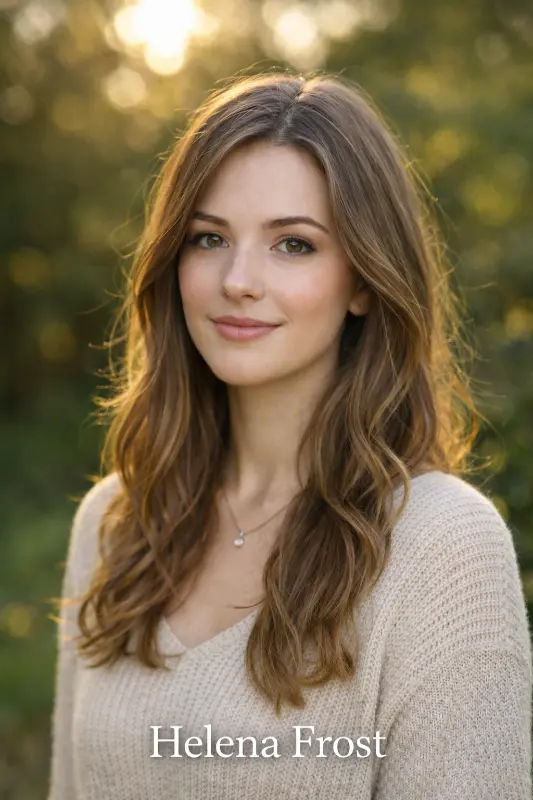
I am Helena Frost, a writer captivated by the beauty of language and the art of comparison. Through my words, I explore the world by turning ordinary moments into vivid similes and reflections. I enjoy crafting phrases that spark imagination, evoke emotion, and linger in the mind. My writing celebrates the subtle connections between people, nature, and the stories we live. For me, every sentence is an opportunity to reveal the extraordinary in the everyday.