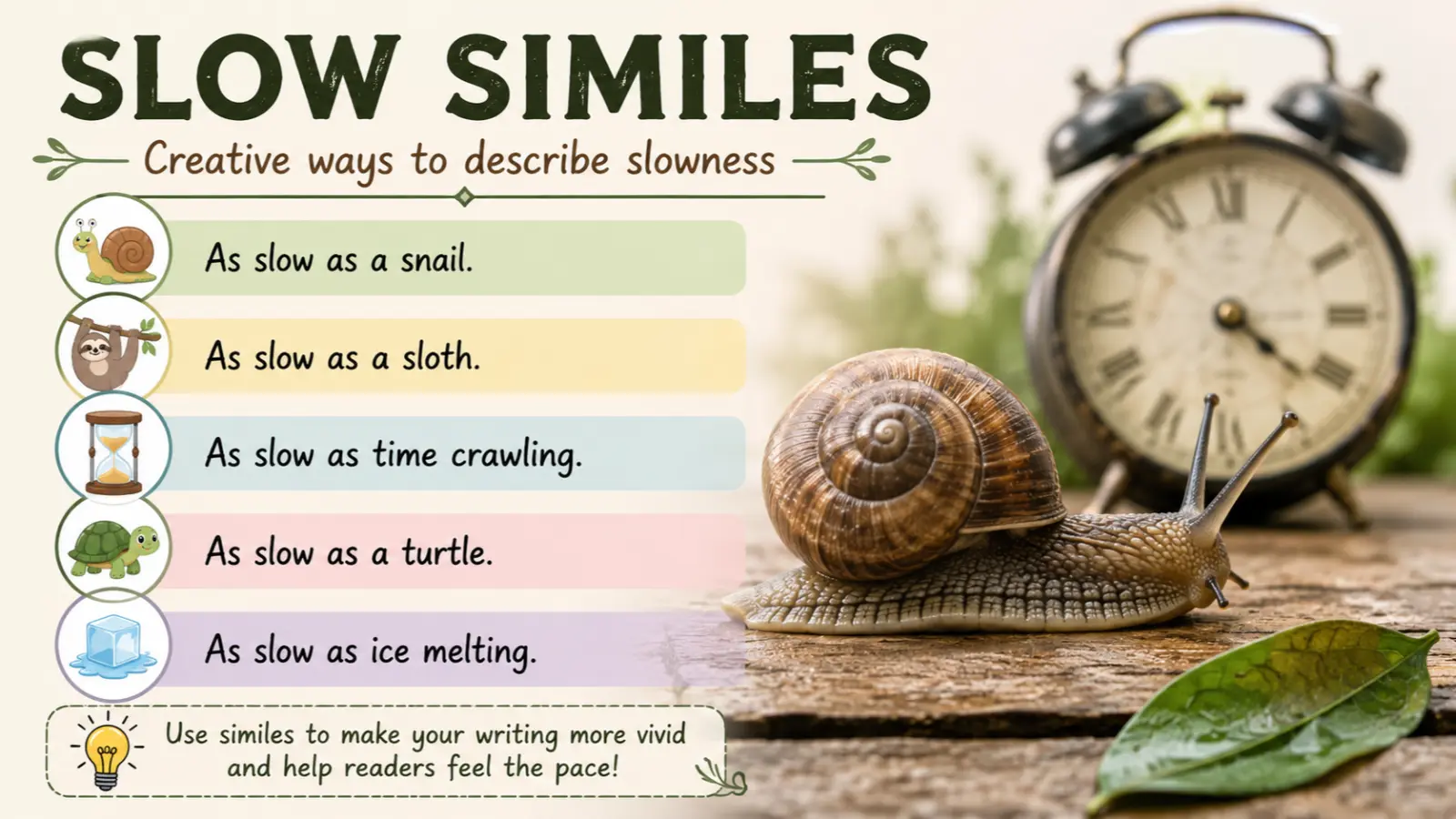
Every great writer knows that strong descriptions help readers see, hear, and feel a story. One of the easiest ways to create vivid imagery is by using similes. A simile compares two different things using words like “like” or “as,” making ordinary descriptions more interesting and memorable. Cool similes are especially useful because they add personality to your writing. Whether you’re writing a story, poem, speech, essay, or social media caption, an original simile can transform a simple sentence into one readers remember. In this guide, you’ll discover original cool similes, learn why they work, avoid common mistakes, and practice creating your own imaginative comparisons.
Quick Answer
Cool similes are creative comparisons that use “like” or “as” to make descriptions more vivid. Instead of relying on overused expressions, they paint fresh mental pictures that help readers connect with emotions, actions, or scenes.
What Makes a Simile Feel Cool?
A cool simile surprises the reader while still making sense. It connects two ideas in an unexpected but believable way.
For example:
- Weak: Fast as lightning.
- Better: Fast like a skateboard racing downhill.
The second comparison creates a clearer picture because it’s more specific.
Why Writers Love Cool Similes
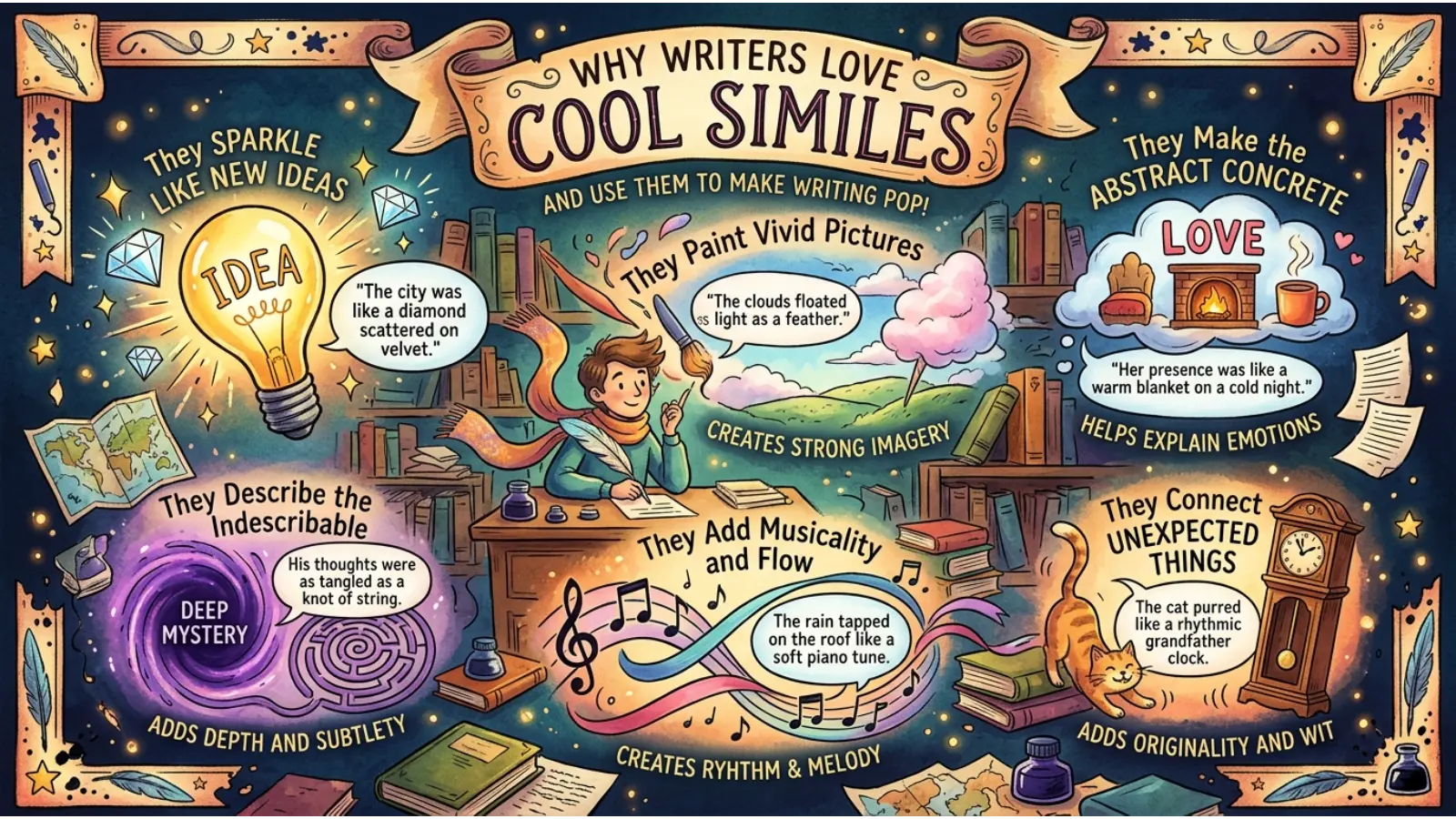
Good similes help readers:
- Visualize scenes more clearly
- Feel stronger emotions
- Remember descriptions longer
- Develop unique writing styles
- Avoid boring repetition
Professional writers often search for comparisons people haven’t heard hundreds of times before.
30 Original Cool Similes
1. As cool as moonlight on glass
Meaning: Calm, stylish, and peaceful.
Examples
- She stayed as cool as moonlight on glass during the interview.
- His voice remained as cool as moonlight on glass despite the argument.
Best Use: Calm characters, confidence.
Writing Tip: Use when describing emotional control.
2. Like a skateboard gliding over fresh pavement
Meaning: Smooth and effortless.
Examples
- His presentation flowed like a skateboard gliding over fresh pavement.
- She walked through the crowd like a skateboard gliding over fresh pavement.
Storytelling: Great for movement scenes.
3. As bright as neon after sunset
Meaning: Eye-catching.
Examples
- Her ideas were as bright as neon after sunset.
- The jacket looked as bright as neon after sunset.
Effect: Creates modern imagery.
4. Like a breeze finding an open window
Meaning: Natural and effortless.
Examples
- Inspiration arrived like a breeze finding an open window.
- His laughter spread like a breeze finding an open window.
5. As fearless as a kite above the storm
Meaning: Brave despite challenges.
Examples
- She stood as fearless as a kite above the storm.
- The young athlete looked as fearless as a kite above the storm.
6. Like stars waking up one by one
Meaning: Gradually becoming brighter.
Examples
- Ideas appeared like stars waking up one by one.
- Hope returned like stars waking up one by one.
7. As steady as an old lighthouse
Meaning: Reliable and dependable.
Examples
- His advice stayed as steady as an old lighthouse.
- She remained as steady as an old lighthouse.
8. Like coffee warming cold hands
Meaning: Comforting.
Examples
- Her words felt like coffee warming cold hands.
- The reunion was like coffee warming cold hands.
9. As sharp as fresh mountain air
Meaning: Intelligent or clear.
Examples
- His thinking was as sharp as fresh mountain air.
- Her memory stayed as sharp as fresh mountain air.
10. Like sunlight dancing on water
Meaning: Beautiful and lively.
Examples
- Her smile sparkled like sunlight dancing on water.
- The celebration felt like sunlight dancing on water.
11. As bold as street art on a gray wall
Meaning: Confident and expressive.
Examples
- His fashion sense was as bold as street art on a gray wall.
- The speech sounded as bold as street art on a gray wall.
12. Like a compass pointing north
Meaning: Focused.
Examples
- She remained like a compass pointing north.
- His goals stayed like a compass pointing north.
13. As refreshing as rain after dust
Meaning: Pleasant relief.
Examples
- The vacation felt as refreshing as rain after dust.
- Her honesty was as refreshing as rain after dust.
14. Like a melody finding its rhythm
Meaning: Becoming natural.
Examples
- Their teamwork grew like a melody finding its rhythm.
- His confidence developed like a melody finding its rhythm.
15. As smooth as polished stone
Meaning: Refined and elegant.
Examples
- Her speech was as smooth as polished stone.
- The performance felt as smooth as polished stone.
16. Like an eagle catching the wind
Meaning: Confident and free.
Examples
- He moved like an eagle catching the wind.
- The project took off like an eagle catching the wind.
17. As lively as fireworks over a lake
Meaning: Full of excitement.
Examples
- The festival became as lively as fireworks over a lake.
- Her imagination stayed as lively as fireworks over a lake.
18. Like fresh snow covering footprints
Meaning: A fresh beginning.
Examples
- Graduation felt like fresh snow covering footprints.
- The new job arrived like fresh snow covering footprints.
19. As clear as polished crystal
Meaning: Easy to understand.
Examples
- His explanation was as clear as polished crystal.
- The instructions remained as clear as polished crystal.
20. Like a river finding the sea
Meaning: Moving toward a purpose.
Examples
- Her dreams flowed like a river finding the sea.
- Success came like a river finding the sea.
21. As colorful as a painted festival
Meaning: Vibrant.
Examples
- The market was as colorful as a painted festival.
- Her personality was as colorful as a painted festival.
22. Like lightning behind distant clouds
Meaning: Hidden potential.
Examples
- His talent was like lightning behind distant clouds.
- Opportunity appeared like lightning behind distant clouds.
23. As gentle as leaves floating downstream
Meaning: Soft and peaceful.
Examples
- Her touch was as gentle as leaves floating downstream.
- The conversation remained as gentle as leaves floating downstream.
24. Like waves polishing seashells
Meaning: Improving over time.
Examples
- Practice shaped him like waves polishing seashells.
- Experience works like waves polishing seashells.
25. As quiet as winter sunlight
Meaning: Peaceful silence.
Examples
- The room became as quiet as winter sunlight.
- The library felt as quiet as winter sunlight.
26. Like a rocket chasing tomorrow
Meaning: Ambitious.
Examples
- The startup grew like a rocket chasing tomorrow.
- She learned like a rocket chasing tomorrow.
27. As flexible as young bamboo
Meaning: Adaptable.
Examples
- He stayed as flexible as young bamboo.
- Good leaders remain as flexible as young bamboo.
28. Like a painter discovering new colors
Meaning: Creative.
Examples
- She wrote like a painter discovering new colors.
- The designer worked like a painter discovering new colors.
29. As confident as sunrise
Meaning: Certain and dependable.
Examples
- He spoke as confident as sunrise.
- Her answer sounded as confident as sunrise.
30. Like the first spark of a campfire
Meaning: The exciting beginning of something.
Examples
- Their friendship began like the first spark of a campfire.
- The idea arrived like the first spark of a campfire.
How to Write Better Similes
Strong similes don’t appear by accident. They come from careful observation.
Look Beyond the Obvious
Instead of comparing speed to lightning, think about everyday experiences.
Ask yourself:
- What does this remind me of?
- What feeling am I trying to create?
- Can readers picture it instantly?
Specific images often make stronger comparisons.
Focus on One Shared Quality
Every simile should compare one clear characteristic.
For example:
- Confidence
- Brightness
- Silence
- Strength
- Joy
Trying to compare too many qualities at once usually weakens the image.
Choose Fresh Details
Readers notice comparisons they’ve never seen before.
Instead of copying familiar expressions, observe nature, cities, sports, music, technology, food, or daily life for inspiration.
Related Literary Devices
Metaphor
A metaphor says one thing is another.
- Simile: She smiled like sunrise.
- Metaphor: She was sunrise.
Imagery
Imagery uses sensory details to help readers experience a scene. Similes often strengthen imagery by making descriptions easier to picture.
Personification
Personification gives human qualities to non-human things.
Example:
The wind whispered through the trees.
It works well alongside similes.
Hyperbole
Hyperbole intentionally exaggerates.
Example:
He ran faster than the wind.
Combining careful hyperbole with similes can increase dramatic effect.
Symbolism
Objects sometimes represent larger ideas.
For example, a lighthouse may symbolize hope or guidance, making it a meaningful choice in a simile.
Create Your Own Cool Similes
Try this simple method.
Step 1
Choose something you want to describe.
Example:
- Smile
- Rain
- Success
- Fear
- Confidence
Step 2
Think about its strongest quality.
Example:
Confidence = calm.
Step 3
Look for something that naturally shares that quality.
Confidence → mountain → lighthouse → sunrise.
Step 4
Write the comparison.
“As confident as sunrise.”
Practice Exercise
Create similes for:
- Happiness
- Curiosity
- Determination
- Friendship
- Creativity
Then rewrite each one to make it more specific and surprising.
Common Mistakes to Avoid
Using Overused Comparisons
Expressions like busy as a bee or cold as ice are familiar but often lack originality. Fresh images leave a stronger impression.
Mixing Imagery
Avoid combining unrelated comparisons in the same sentence.
Example:
“He floated like a feather while roaring like thunder.”
Unless carefully written, mixed images can confuse readers.
Forcing a Comparison
If the connection feels unnatural, readers will notice. A simile should sound believable, even when it’s imaginative.
Confusing Similes and Metaphors
Remember:
- Similes use like or as.
- Metaphors make direct comparisons without those words.
Adding Similes Everywhere
Too many comparisons can overwhelm your writing. Use them where they add the most impact.
Frequently Asked Questions
What is a cool simile?
A cool simile is a creative comparison that uses like or as to describe something in a fresh, memorable way.
Why should I avoid cliché similes?
Overused comparisons often lose their impact. Original similes help your writing feel unique and engaging.
Can cool similes be used in school essays?
Yes. As long as they fit the topic and maintain an appropriate tone, they can make descriptive writing more effective.
How many similes should I use in a story?
Use only enough to strengthen important moments. Quality matters far more than quantity.
Are similes useful in poetry?
Absolutely. Similes create vivid imagery, emotional depth, and memorable lines, making them one of poetry’s most effective tools.
How can I think of original similes?
Observe everyday life, nature, sports, music, technology, and personal experiences. The most memorable similes often come from unique observations rather than familiar expressions.
Conclusion
Cool similes do more than decorate your writing—they help readers experience it. By choosing fresh, meaningful comparisons instead of relying on familiar clichés, you can create descriptions that feel vivid, personal, and memorable. Practice observing the world around you, experiment with unexpected connections, and revise your comparisons until they sound natural. The more original your similes become, the more your writing will capture your readers’ imagination.

I am Helena Frost, a writer captivated by the beauty of language and the art of comparison. Through my words, I explore the world by turning ordinary moments into vivid similes and reflections. I enjoy crafting phrases that spark imagination, evoke emotion, and linger in the mind. My writing celebrates the subtle connections between people, nature, and the stories we live. For me, every sentence is an opportunity to reveal the extraordinary in the everyday.