Great writing helps readers see, hear, and feel what the author imagines. One of the simplest ways to achieve that is through similes. A well-crafted simile compares two different things using words such as like or as, helping ordinary descriptions become vivid and memorable. Writers use similes in novels, poems, speeches, classroom assignments, blogs, and everyday conversations. They add emotion, paint clear mental images, and help readers connect with ideas more quickly. In this guide, you’ll discover original writing similes, learn why they work, see them used in different contexts, and gain practical techniques for creating your own powerful comparisons.
Quick Answer
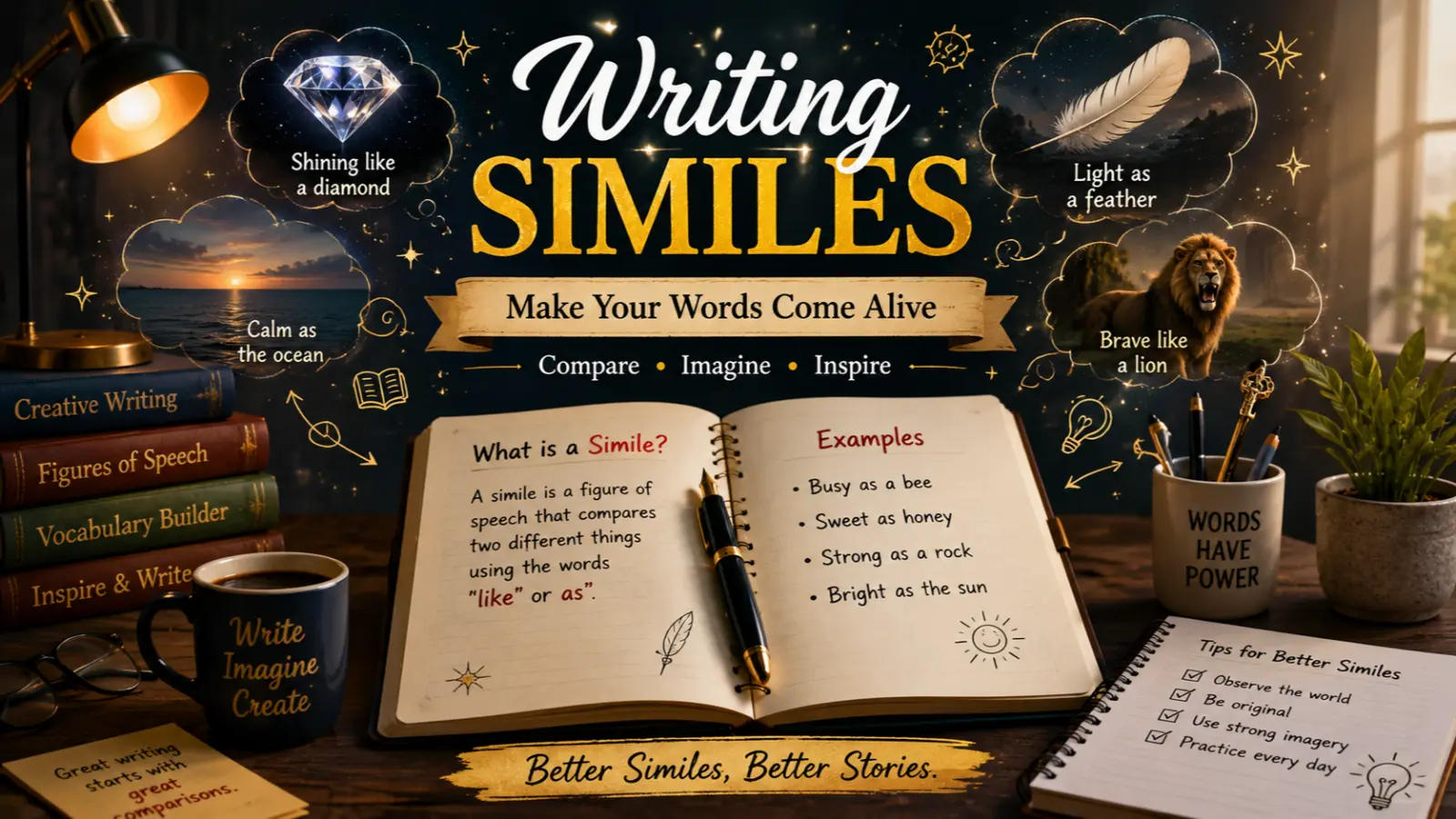
Writing similes are comparisons that use like or as to make descriptions clearer, more emotional, and easier to imagine. Strong similes create fresh mental pictures, strengthen storytelling, and help readers connect with characters, settings, and ideas.
Why Writing Similes Matter
A simile does much more than decorate a sentence. It gives readers something familiar to connect with.
For example:
The silence spread like fresh snow.
Readers immediately imagine softness, stillness, and calm without needing a lengthy explanation.
Strong similes can:
- Create vivid imagery
- Show emotions naturally
- Build atmosphere
- Reveal character personality
- Improve storytelling
- Make descriptions easier to remember
What Makes a Great Writing Simile?
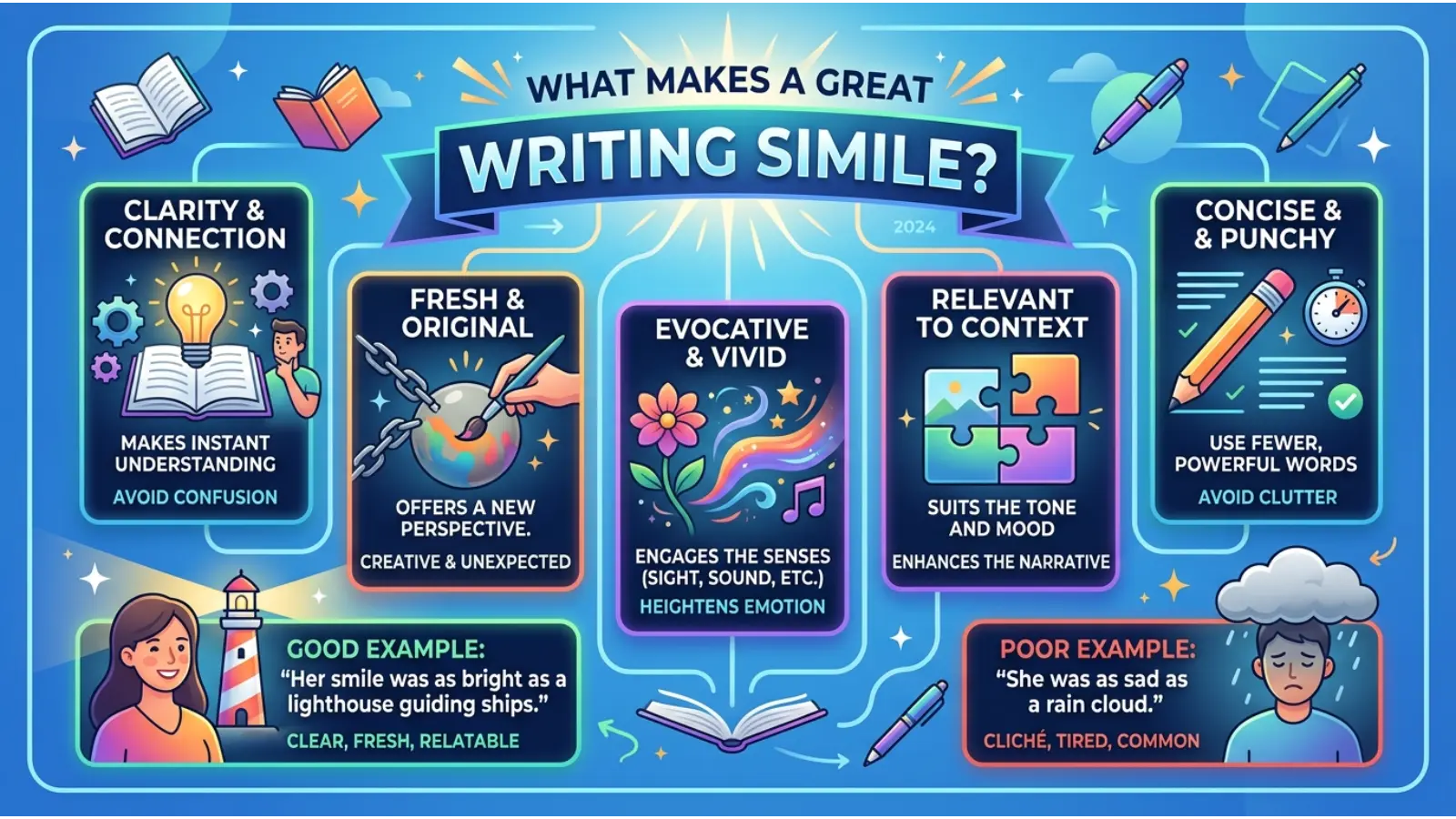
Not every comparison improves a sentence.
Effective similes usually have three qualities:
They Feel Natural
The comparison should make immediate sense.
They Add New Meaning
A simile should reveal something readers hadn’t noticed before.
They Match the Tone
A humorous story needs playful comparisons, while emotional scenes benefit from gentler imagery.
30 Original Writing Similes
1. Words flowed like water finding a hidden stream.
Meaning: Writing feels effortless.
Example 1: Her ideas flowed like water finding a hidden stream.
Example 2: Once he relaxed, every paragraph came naturally.
Best Context: Creative writing
Writing Tip: Use during moments of inspiration.
2. Ideas sparkled like stars waking before dawn.
Meaning: Fresh inspiration appears.
Example 1: New ideas sparkled like stars waking before dawn.
Example 2: Every notebook page offered another possibility.
Storytelling Effect: Creates excitement.
3. The paragraph stood like a sturdy bridge.
Meaning: Strong organization.
Example 1: The introduction stood like a sturdy bridge to the main idea.
Example 2: Every sentence supported the next.
Best Context: Essays
4. Sentences danced like leaves in a gentle breeze.
Meaning: Smooth rhythm.
Example 1: Her sentences danced like leaves in a gentle breeze.
Example 2: The story felt graceful from beginning to end.
Poetry Use: Excellent for lyrical writing.
5. The story unfolded like a sunrise over quiet hills.
Meaning: Gradual, beautiful development.
Formal Example: The narrative unfolded like a sunrise over quiet hills.
Conversation Example: The story slowly came to life.
6. A blank page waited like an unopened door.
Meaning: Unlimited possibilities.
Writing Purpose: Beginning a new project.
7. Inspiration arrived like rain after a long summer.
Meaning: Relief after creative struggle.
Emotional Effect: Hope.
8. Dialogue cracked like ice beneath careful footsteps.
Meaning: Tension in conversation.
Storytelling Tip: Ideal for suspense.
9. The ending settled like evening over a peaceful lake.
Meaning: Calm conclusion.
Poetry Example: The final line settled like evening over a peaceful lake.
10. Memories drifted like paper lanterns across the sky.
Meaning: Gentle reflection.
Best Context: Memoirs.
11. The description bloomed like spring after frost.
Meaning: Writing becomes vivid.
Example: One detail made the entire scene bloom like spring after frost.
12. Characters gathered like birds before migration.
Meaning: Preparation for change.
Storytelling Example: Every character sensed what was coming.
13. The plot twisted like climbing ivy.
Meaning: Complex but natural progression.
Writing Tip: Keep twists believable.
14. Emotions echoed like footsteps through an empty hall.
Meaning: Feelings linger.
Best Context: Literary fiction.
15. Hope glowed like a lantern in heavy fog.
Meaning: Small but powerful optimism.
Conversation Example: She never stopped believing.
16. The lesson settled like warm sunlight on old wood.
Meaning: Wisdom slowly sinks in.
Formal Use: Educational writing.
17. The opening sentence flashed like lightning across the horizon.
Meaning: Strong attention-grabber.
Writing Purpose: Hooks readers immediately.
18. Details gathered like seashells along the shore.
Meaning: Small elements create richness.
Writing Tip: Build scenes gradually.
19. The villain smiled like winter hiding beneath sunshine.
Meaning: Hidden danger.
Storytelling Effect: Creates unease.
20. The chapter ended like a closing theater curtain.
Meaning: Satisfying pause.
Best Context: Novels.
21. Questions floated like feathers in still air.
Meaning: Gentle uncertainty.
Emotional Effect: Curiosity.
22. The hero stood like an old oak in strong wind.
Meaning: Strength under pressure.
Storytelling Example: Nothing could shake his resolve.
23. Every sentence clicked like puzzle pieces finding their place.
Meaning: Excellent flow.
Writing Tip: Revise until ideas connect naturally.
24. The conflict burned like dry grass in summer.
Meaning: Escalates quickly.
Best Context: Drama.
25. Humor spread like sunlight through open windows.
Meaning: Cheerful atmosphere.
Conversation Example: Everyone relaxed immediately.
26. The setting shimmered like glass beneath moonlight.
Meaning: Beautiful imagery.
Poetry Example: The village shimmered like glass beneath moonlight.
27. Confidence grew like roots beneath fertile soil.
Meaning: Slow but lasting growth.
Writing Purpose: Character development.
28. Revision polished the draft like waves smoothing stone.
Meaning: Improvement through editing.
Writing Tip: Great writing comes from rewriting.
29. Curiosity fluttered like butterflies in a quiet garden.
Meaning: Gentle excitement.
Best Context: Children’s stories.
30. The final sentence lingered like the last note of a violin.
Meaning: Memorable ending.
Emotional Effect: Lasting impression.
How Professional Writers Create Better Similes
Experienced writers rarely choose the first comparison that comes to mind.
Instead, they ask:
- What emotion should readers feel?
- What image is unexpected but believable?
- Does the comparison reveal something new?
For example, instead of writing:
Cold as ice.
Try:
Cold like unopened letters left through winter.
The second comparison creates curiosity while remaining easy to picture.
Make Your Similes More Vivid
A stronger simile often comes from specific details.
Instead of comparing something to a broad object, focus on a unique quality.
Compare these examples:
Weak:
Bright like the sun.
Better:
Bright like morning light spilling across polished wood.
Specific details make readers pause and imagine.
Avoid Clichés Without Losing Clarity
Some classic similes remain effective, but overused comparisons lose impact because readers expect them.
Instead of relying on familiar phrases, observe everyday life.
Look at:
- Weather
- Nature
- Food
- Music
- Cities
- Childhood memories
- Everyday objects
Fresh observations often create original comparisons.
Related Literary Devices
Metaphor
A metaphor makes a direct comparison without using like or as.
Simile: Her smile was like sunshine.
Metaphor: Her smile was sunshine.
Imagery
Imagery appeals to the senses through descriptive language. Similes often strengthen imagery by making scenes easier to visualize.
Personification
Personification gives human qualities to non-human things.
Example:
The wind whispered through the trees.
Combining personification with similes can create rich descriptions.
Hyperbole
Hyperbole exaggerates for effect.
Example:
He ran as if the wind itself were chasing him.
Alliteration
Alliteration repeats beginning sounds.
Example:
Soft as silent snowfall.
Used carefully, it adds rhythm to similes.
Symbolism
A simile may include symbolic images that carry deeper meanings, such as light representing hope or storms representing conflict.
Create Your Own Writing Similes
You don’t need extraordinary vocabulary to write memorable similes.
Step 1
Choose what you want to describe.
Example:
Fear
Step 2
Think about its strongest quality.
Fear may feel heavy, fast, quiet, or confusing.
Step 3
Find something with the same quality.
Heavy clouds.
Step 4
Build the comparison.
Fear settled like heavy clouds before a storm.
Creative Exercises
Exercise 1
Write three similes describing happiness without mentioning smiles or sunshine.
Exercise 2
Describe a busy city using five original similes.
Exercise 3
Rewrite five ordinary sentences by adding fresh comparisons.
Exercise 4
Observe nature for ten minutes and create five new similes inspired by what you notice.
Common Mistakes Writers Make
Overusing Familiar Comparisons
Readers quickly skim past clichés.
Choose fresh imagery whenever possible.
Mixing Images
Avoid combining unrelated comparisons.
Poor example:
Her voice was like silk but roared like thunder through the flowers.
Stay consistent.
Confusing Metaphors and Similes
Remember:
- Similes use like or as.
- Metaphors do not.
Forcing Comparisons
If a simile feels unnatural, remove it.
Simple writing is often stronger than an awkward comparison.
Adding Similes Everywhere
Not every sentence needs one.
Well-placed similes have greater impact than constant comparisons.
Frequently Asked Questions
What is a writing simile?
A writing simile is a comparison using like or as that helps readers better understand an idea or image.
Why do authors use similes?
They create vivid imagery, express emotion, and make descriptions more engaging.
How many similes should I use in a story?
Use only where they naturally improve the writing. Quality matters more than quantity.
Can similes improve essays?
Yes. Thoughtful similes can clarify complex ideas and make examples more memorable when used appropriately.
What’s the difference between a simile and a metaphor?
A simile uses like or as. A metaphor states that one thing is another.
Are original similes better than common ones?
Usually. Fresh comparisons surprise readers and create stronger imagery while avoiding predictable language.
How can I practice writing better similes?
Read widely, observe everyday life, keep a notebook of interesting images, and revise your comparisons until they feel natural.
Conclusion
Writing similes are powerful tools for turning ordinary sentences into memorable experiences. The strongest comparisons don’t exist simply to sound poetic—they reveal emotion, sharpen imagery, and help readers see the world from a fresh perspective. As you write, pay close attention to the details around you. Everyday moments, familiar objects, and personal observations often inspire the most original similes. With practice, you’ll develop comparisons that feel authentic, strengthen your storytelling, and leave a lasting impression on your readers.
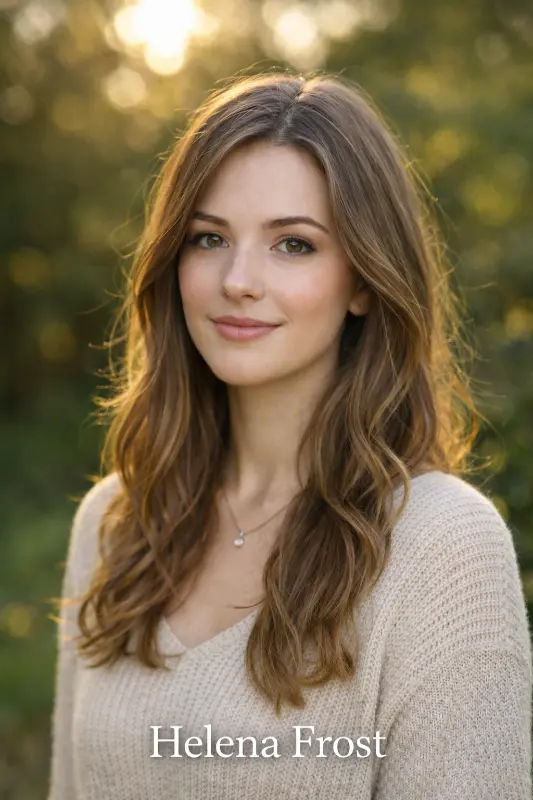
I am Helena Frost, a writer captivated by the beauty of language and the art of comparison. Through my words, I explore the world by turning ordinary moments into vivid similes and reflections. I enjoy crafting phrases that spark imagination, evoke emotion, and linger in the mind. My writing celebrates the subtle connections between people, nature, and the stories we live. For me, every sentence is an opportunity to reveal the extraordinary in the everyday.