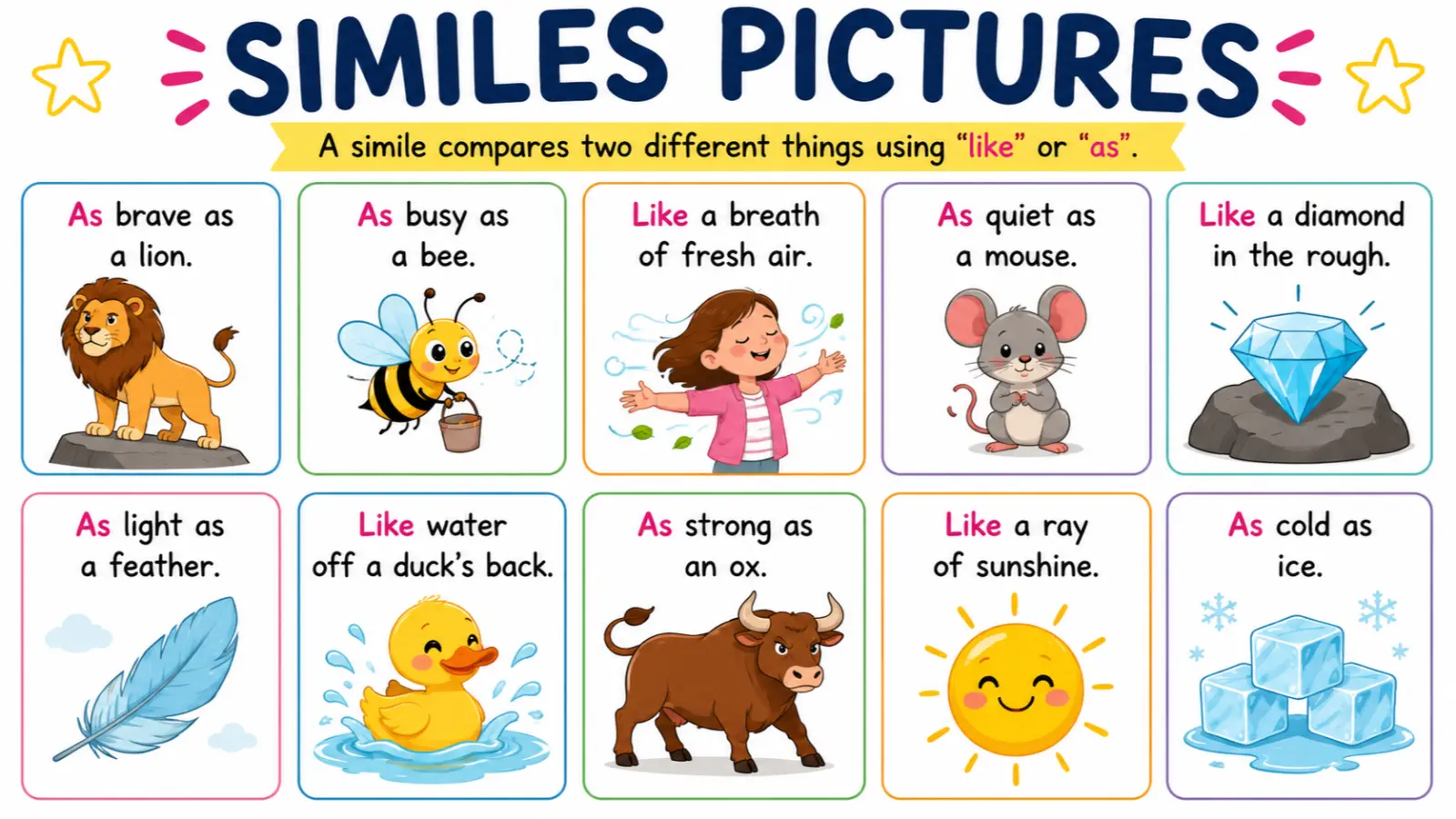
Similes Pictures can tell stories in a single glance, but words can paint pictures that stay in a reader’s imagination. That’s where similes come in. A simile compares two different things using “like” or “as”, helping readers visualize an idea more clearly. When people search for similes pictures, they often want visual-style comparisons that make writing more colorful, descriptive, and memorable. Whether you’re writing a story, poem, school assignment, or social media caption, these picture-inspired similes can help you create stronger imagery.
This guide explains how visual similes work, provides original examples, and teaches you how to create your own.
What Are Similes Pictures?
A similes picture is a comparison that creates a vivid mental image. Instead of simply describing something, it helps readers see it in their minds.
For example:
The sunset spread across the sky like watercolor on fresh paper.
Rather than saying the sunset was beautiful, this comparison paints a scene the reader can imagine instantly.
Why Visual Similes Make Writing Stronger
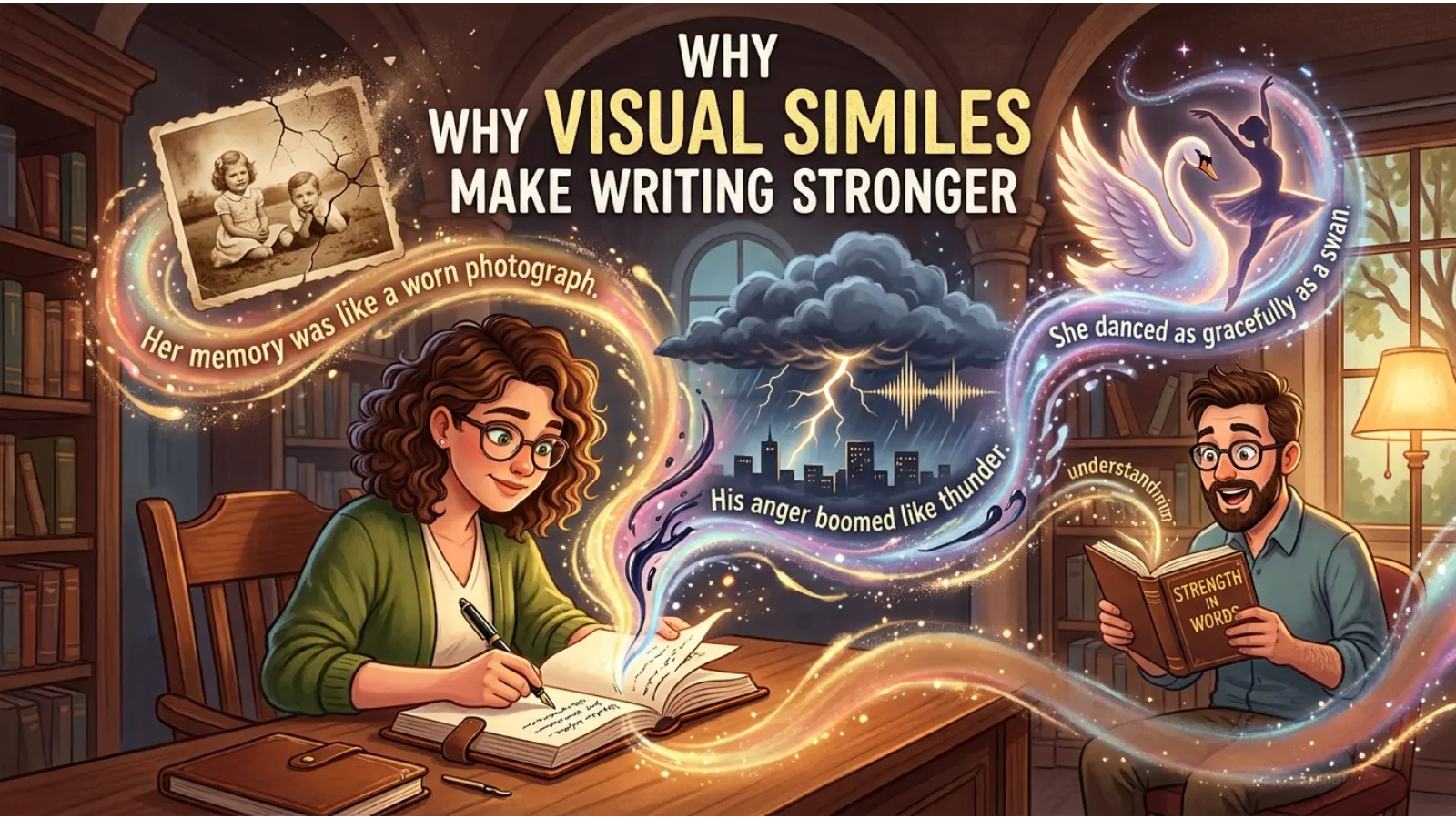
Good writing isn’t only about facts—it helps readers experience a scene.
Visual similes can:
- Create memorable descriptions
- Add emotion without lengthy explanations
- Improve storytelling
- Make poems more expressive
- Help students develop creative writing skills
- Make essays and presentations more engaging
Readers remember images more easily than plain descriptions.
Original Similes Pictures Collection
1. Like a Window Full of Morning Light
Meaning: Bright, welcoming, and full of hope.
Examples
- Her smile shone like a window full of morning light.
- The classroom felt like a window full of morning light after everyone arrived.
Writing Tip
Use this simile to create warmth and optimism.
2. Like Paint Spilled Across the Sky
Meaning: Colorful and dramatic.
Examples
- The sunset looked like paint spilled across the sky.
- Evening clouds stretched like bright paint across the horizon.
Best For
Nature writing and descriptive essays.
3. Like a Photograph Frozen in Time
Meaning: Perfectly still.
Examples
- The lake rested like a photograph frozen in time.
- Everyone stopped, standing like a photograph frozen in time.
Emotional Effect
Creates calmness and reflection.
4. Like a Puzzle Waiting to Be Solved
Meaning: Mysterious and intriguing.
Examples
- Her expression was like a puzzle waiting to be solved.
- The abandoned house looked like a puzzle waiting for answers.
5. Like Stars Scattered on Velvet
Meaning: Tiny bright lights against darkness.
Examples
- City lights glittered like stars scattered on velvet.
- The necklace sparkled like stars on velvet fabric.
Poetry Example
The village slept beneath stars scattered on velvet night.
6. Like Ink Flowing Across Paper
Meaning: Smooth and natural movement.
Examples
- The river curved like ink flowing across paper.
- Her handwriting moved like flowing ink.
7. Like a Mirror After Rain
Meaning: Perfectly reflective.
Examples
- The road looked like a mirror after rain.
- The lake became like a mirror after the storm.
8. Like Colored Glass in Sunlight
Meaning: Bright and vibrant.
Examples
- The butterfly’s wings shimmered like colored glass in sunlight.
- The festival decorations glowed like stained glass.
9. Like a Sketch Waiting for Color
Meaning: Full of potential.
Examples
- His first draft was like a sketch waiting for color.
- The empty garden looked like a sketch before spring.
10. Like a Lantern in the Fog
Meaning: Hope during uncertainty.
Examples
- Her advice was like a lantern in the fog.
- One smile became like a lantern on a difficult day.
11. Like Snow Painted with Gold
Meaning: Beautiful in warm light.
Examples
- Sunrise turned the hills into snow painted with gold.
- The rooftops looked like gold-covered snow.
12. Like a Feather Floating Across Glass
Meaning: Gentle movement.
Examples
- The leaf drifted like a feather across glass.
- Her scarf moved like a feather on still air.
13. Like Clouds Brushed with Silver
Meaning: Soft beauty.
Examples
- Moonlight made the clouds look like silver brushstrokes.
- The evening sky resembled clouds brushed with silver.
14. Like Pages Filled with Memories
Meaning: Rich with history.
Examples
- The old album felt like pages filled with memories.
- His face looked like pages carrying many stories.
15. Like a Rainbow Folded into Glass
Meaning: Brilliant colors.
Examples
- The crystal reflected light like a rainbow folded into glass.
- The vase sparkled beautifully in the sunlight.
16. Like a Candle Inside Crystal
Meaning: Gentle inner glow.
Examples
- Her kindness shone like a candle inside crystal.
- The small cabin glowed warmly at night.
17. Like Fresh Chalk on a Blackboard
Meaning: Clear and noticeable.
Examples
- His idea stood out like fresh chalk on a blackboard.
- The white flowers appeared against the dark leaves.
18. Like Tiny Paintbrush Strokes
Meaning: Delicate details.
Examples
- The blossoms covered the field like tiny paintbrush strokes.
- Freckles dotted her cheeks like careful brushstrokes.
19. Like a Picture Frame Around Summer
Meaning: Perfectly captures a moment.
Examples
- The garden became like a picture frame around summer.
- The porch framed the countryside beautifully.
20. Like Fire Reflected in Crystal
Meaning: Bright, energetic, and dazzling.
Examples
- Excitement flashed through his eyes like fire reflected in crystal.
- The celebration sparkled with brilliant colors.
Best Context
Celebrations, emotional scenes, and dramatic storytelling.
How to Create Your Own Picture Similes
Professional writers rarely settle for the first comparison that comes to mind. Instead, they build imagery by observing details.
Try this simple process:
- Look closely at your subject.
- Notice its color, shape, texture, or movement.
- Think of another object with a similar visual quality.
- Connect them using like or as.
- Read the sentence aloud to check if it feels natural.
Instead of writing:
The flowers were pretty.
Write:
The flowers opened like tiny umbrellas catching the morning sun.
The second sentence creates a picture the reader can imagine.
How to Make Similes More Vivid
Strong similes focus on one clear image rather than many competing ideas.
A few helpful techniques include:
- Compare one visual feature at a time.
- Choose unexpected but believable comparisons.
- Use specific objects instead of vague ones.
- Match the comparison to the mood of your writing.
- Read your similes aloud to test their rhythm.
Simple images are often more powerful than complicated ones.
Related Literary Devices
Metaphor
A metaphor makes a direct comparison without using like or as.
Simile: Her smile was like sunshine.
Metaphor: Her smile was sunshine.
Imagery
Imagery appeals to the senses and helps readers visualize a scene. Similes are one of the strongest tools for creating imagery.
Personification
Personification gives human qualities to non-human things.
Example:
The wind whispered through the trees.
Hyperbole
Hyperbole uses deliberate exaggeration.
Example:
The mountain was as tall as forever.
Alliteration
Alliteration repeats beginning sounds.
Example:
Bright blue blossoms bloomed.
Common Mistakes to Avoid
Using Overused Comparisons
Fresh comparisons are more memorable than familiar clichés.
Mixing Different Images
Keep your comparison focused on one visual idea.
Confusing Similes with Metaphors
Remember that similes use like or as.
Adding Too Many Similes
One strong comparison often creates a bigger impact than several weak ones.
Choosing Unclear Images
Readers should understand the picture immediately.
Practice Exercise
Choose one object from each group and create your own simile.
- A tree
- A bicycle
- A rainy window
- A mountain
- A bird
- A book
- A candle
- A river
Ask yourself:
- What shape do I notice?
- What color stands out?
- How does it move?
- What emotion does it create?
Write three different similes for each object and compare which one paints the clearest picture.
Frequently Asked Questions
What are similes pictures?
They are similes that create vivid mental images, helping readers visualize people, places, emotions, or objects more clearly.
Why are picture-based similes useful?
They make writing more descriptive, memorable, and emotionally engaging.
Can students use visual similes in school assignments?
Yes. They improve creative writing, essays, poetry, and descriptive paragraphs.
What’s the difference between imagery and a simile?
Imagery includes all descriptive language that appeals to the senses, while a simile is one specific technique that compares two things using like or as.
How can I avoid cliché similes?
Observe real-life details and create comparisons based on unique colors, textures, shapes, or movements instead of relying on familiar expressions.
Are similes only used in poetry?
No. They are valuable in stories, novels, speeches, blogs, classroom writing, marketing, and everyday conversation.
Conclusion
The best similes pictures don’t simply decorate writing—they help readers see, feel, and remember your words. By creating fresh visual comparisons instead of relying on common expressions, you can transform ordinary descriptions into vivid scenes that stay in the imagination. Practice observing everyday objects with a writer’s eye. Every sunrise, street, flower, reflection, or shadow can become the inspiration for an original simile that makes your writing more expressive, memorable, and uniquely your own.
I am Helena Frost, a writer captivated by the beauty of language and the art of comparison. Through my words, I explore the world by turning ordinary moments into vivid similes and reflections. I enjoy crafting phrases that spark imagination, evoke emotion, and linger in the mind. My writing celebrates the subtle connections between people, nature, and the stories we live. For me, every sentence is an opportunity to reveal the extraordinary in the everyday.