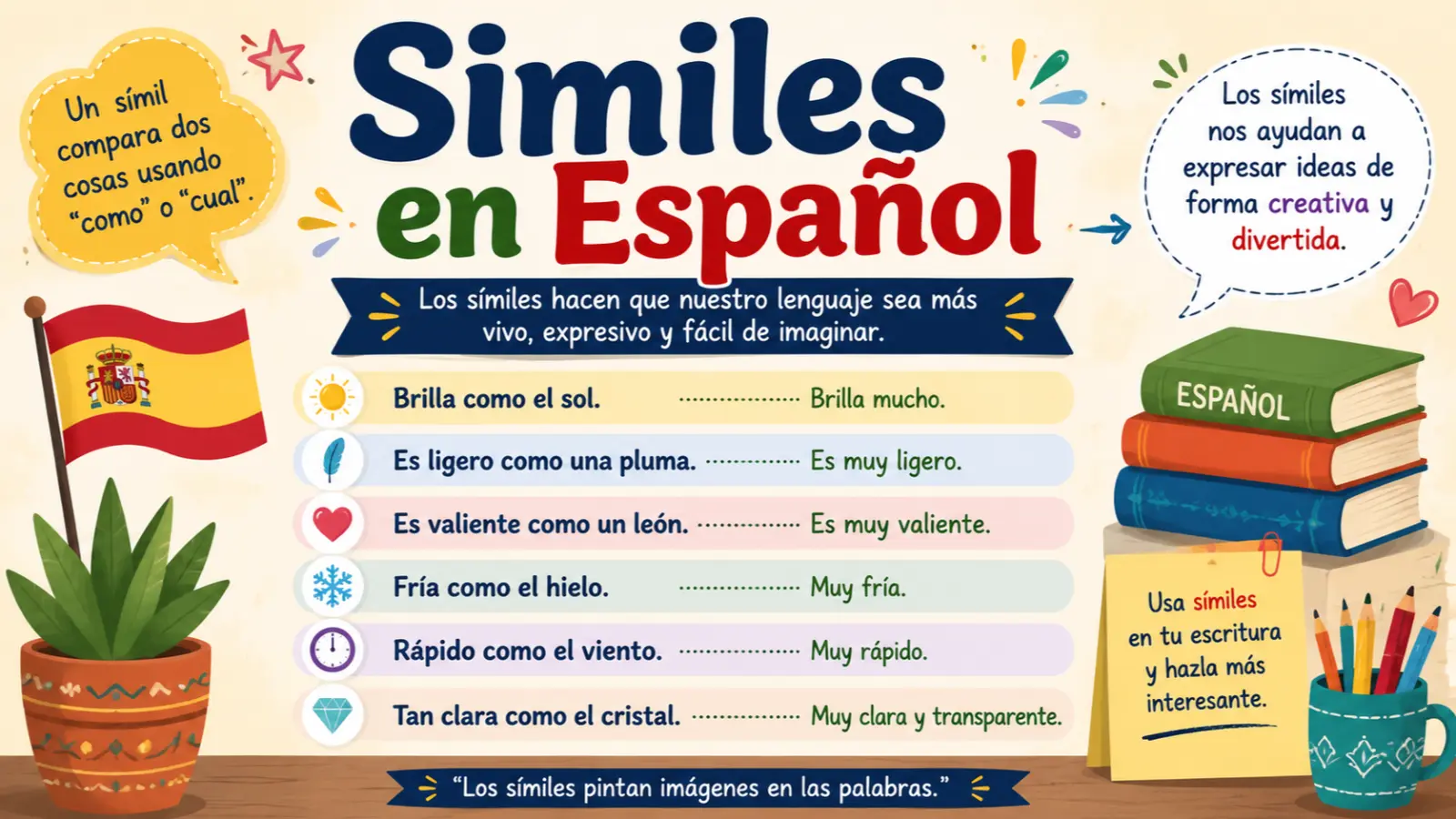
Similes en Espanol Language becomes more memorable when it paints pictures in the reader’s mind. One of the easiest ways to create those pictures is by using similes. In Spanish, a simile is called a simile or comparacion, and it compares two different things using words like como (“like” or “as”).
Whether you’re learning Spanish, writing poetry, creating stories, or simply looking for better expressions, this guide to similes en espanol will help you understand how they work and how to create your own original comparisons.
Quick Answer
Similes en espanol are comparisons that connect two different ideas using words such as como. They make descriptions clearer, more emotional, and easier to imagine.
Example:
“Brilla como una estrella al amanecer.”
(He/She shines like a star at dawn.)
Why Similes Matter in Spanish
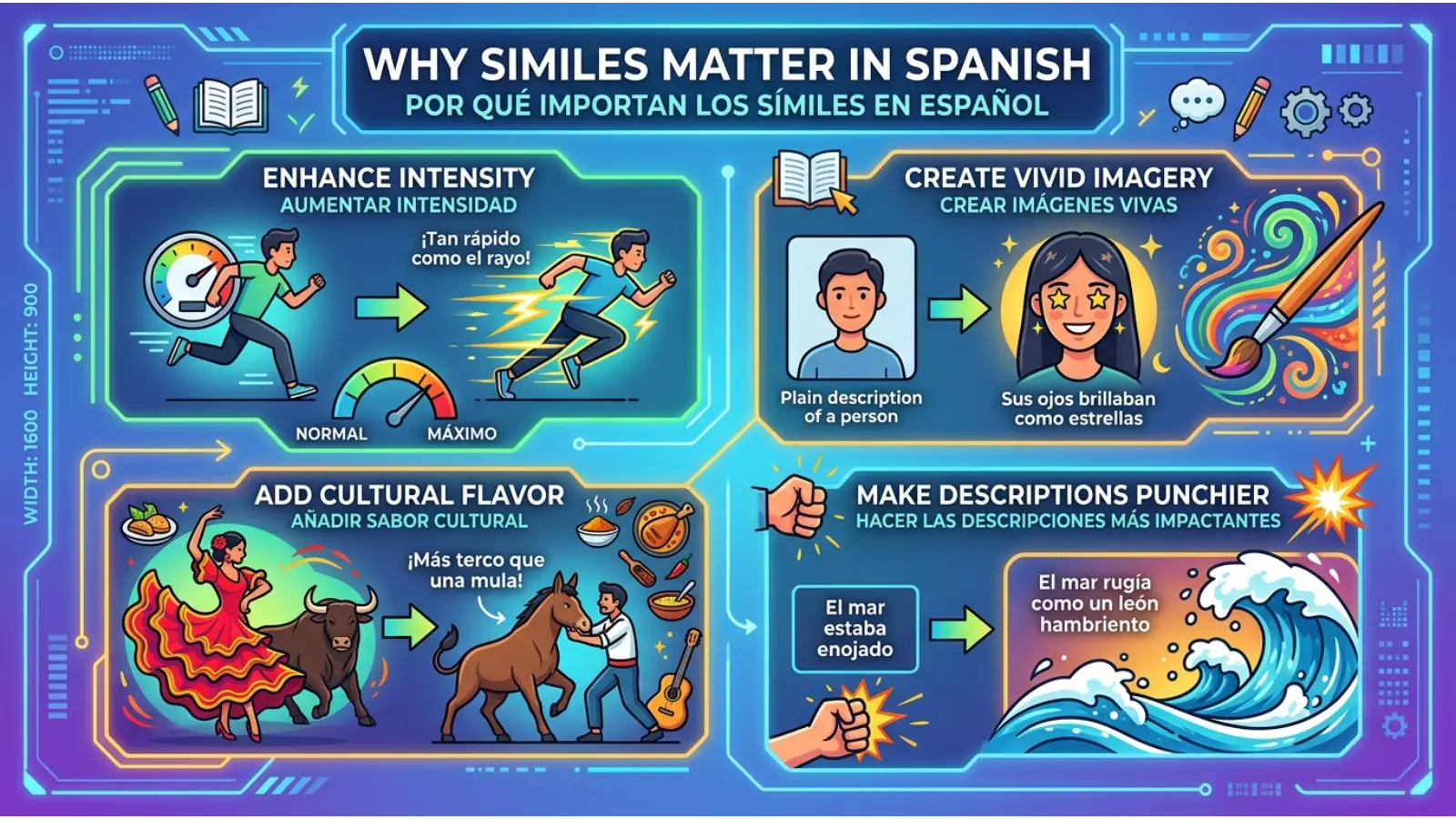
Spanish is naturally expressive, and similes add even more color to conversations and writing. They can make an ordinary sentence feel emotional, humorous, dramatic, or poetic.
You’ll often find similes in:
- Stories
- Poems
- Songs
- Classroom writing
- Speeches
- Everyday conversations
Good similes help readers see, hear, and feel exactly what you describe.
How Spanish Similes Are Formed
Most Spanish similes follow a simple pattern:
Subject + verb + como + comparison
Examples:
- Ella canta como un río tranquilo.
- El cielo parecía como un lienzo pintado.
- Sus palabras flotaban como hojas en el viento.
The comparison should always support the feeling you want to create.
25 Original Similes en Espanol
1. Claro como el agua de una montana
Meaning: Extremely clear.
Examples
- Su explicación fue clara como el agua de una montana.
- El mensaje quedó claro como el agua de una montaña.
Writing Tip: Perfect for describing understanding or honesty.
2. Ligero como una pluma bajo el viento
Meaning: Very light.
Examples
- El vestido era ligero como una pluma bajo el viento.
- Caminaba ligero como una pluma.
Works well in descriptive writing.
3. Tranquilo como un lago al amanecer
Meaning: Peaceful and calm.
Examples
- Permanecio tranquilo como un lago al amanecer.
- El jardín estaba tranquilo como un lago.
Creates a peaceful atmosphere.
4. Fuerte como un viejo roble
Meaning: Strong and dependable.
Examples
- Su voluntad era fuerte como un viejo roble.
- Permaneció fuerte durante la tormenta.
Ideal for inspirational writing.
5. Brillante como una estrella temprana
Meaning: Exceptionally bright.
Examples
- Sus ojos brillaban como una estrella temprana.
- La esperanza brillo como una estrella.
Works beautifully in poetry.
6. Suave como la lluvia de primavera
Meaning: Gentle.
Examples
- Su voz era suave como la lluvia de primavera.
- La música sonaba suave.
Excellent for emotional scenes.
7. Libre como un pajaro sobre el mar
Meaning: Completely free.
Examples
- Se sintió libre como un pájaro sobre el mar.
- Corría libre por el campo.
Adds movement and optimism.
8. Rapido como un rayo silencioso
Meaning: Extremely fast.
Examples
- Corrio rapido como un rayo silencioso.
- Respondió en un instante.
Great for action scenes.
9. Paciente como un jardinero
Meaning: Patient and steady.
Examples
- Esperó paciente como un jardinero.
- Enseñaba con paciencia.
Useful in educational writing.
10. Alegre como una manana soleada
Meaning: Cheerful.
Examples
- Llego alegre como una mañana soleada.
- Saludo con una sonrisa.
Creates warmth.
11. Firme como una montana
Meaning: Unshakable.
Examples
- Su decision fue firme como una montana.
- Permanecio firme frente al desafio.
12. Silencioso como la nieve al caer
Meaning: Completely quiet.
Examples
- Entró silencioso como la nieve al caer.
- Todo quedó en silencio.
Perfect for suspense.
13. Dulce como una fruta madura
Meaning: Kind or pleasant.
Examples
- Su personalidad era dulce como una fruta madura.
- Habló con ternura.
14. Curioso como un explorador
Meaning: Eager to learn.
Examples
- El nino era curioso como un explorador.
- Siempre hacía preguntas.
15. Flexible como una rama joven
Meaning: Adaptable.
Examples
- Fue flexible ante los cambios.
- Se adapto rapidamente.
16. Sereno como la luna llena
Meaning: Calm and composed.
Examples
- Permanecio sereno durante la discusion.
- Su rostro parecía tranquilo.
17. Luminoso como una ventana abierta al sol
Meaning: Full of light.
Examples
- El salón era luminoso.
- Su sonrisa iluminaba todo.
18. Creativo como un pintor sin limites
Meaning: Highly imaginative.
Examples
- Siempre encontraba nuevas ideas.
- Escribía historias originales.
19. Valiente como el primer paso
Meaning: Courageous enough to begin.
Examples
- Dio el primer paso con confianza.
- Afrontó el reto.
A meaningful comparison for motivational writing.
20. Constante como el movimiento del mar
Meaning: Persistent.
Examples
- Su esfuerzo fue constante.
- Nunca dejó de intentarlo.
21. Fresco como la brisa del bosque
Meaning: Refreshing.
Examples
- El aire era fresco.
- La mañana comenzó agradable.
22. Feliz como un nino descubriendo un tesoro
Meaning: Filled with joy.
Examples
- Saltaba de felicidad.
- Sonrió todo el día.
23. Profundo como un cielo nocturno
Meaning: Thoughtful.
Examples
- Sus ideas eran profundas.
- La conversación invitaba a reflexionar.
24. Elegante como un cisne en el agua
Meaning: Graceful.
Examples
- Caminaba con elegancia.
- Su baile fue hermoso.
25. Esperanzado como la primera flor de la primavera
Meaning: Full of hope.
Examples
- Miraba el futuro con ilusión.
- Nunca perdió la esperanza.
What Makes a Simile Memorable?
Strong similes do more than compare two things. They create an emotion.
Instead of choosing the first comparison that comes to mind, ask yourself:
- What feeling do I want readers to experience?
- What image best represents that feeling?
- Is the comparison fresh and believable?
The strongest similes are surprising without becoming confusing.
How Professional Writers Create Fresh Similes
Experienced writers often begin with an emotion rather than an object.
For example:
Instead of writing about happiness, they think about how happiness behaves.
Does it sparkle?
it bloom?
Does it spread?
Once the feeling is clear, they choose an image that naturally reflects it.
This approach produces more original writing than relying on familiar comparisons.
Similes and Other Literary Devices
Simile vs. Metaphor
A simile uses words like como.
Simile:
Su voz era suave como la lluvia.
A metaphor removes the comparison word.
Metaphor:
Su voz era lluvia.
Imagery
Imagery helps readers experience writing through the senses.
Good similes strengthen imagery because they make scenes easier to imagine.
Personification
Personification gives human qualities to objects.
Example:
El viento cantaba.
It can be combined with similes for richer descriptions.
Symbolism
A comparison may also suggest deeper meaning.
A mountain can symbolize strength.
A river may represent change.
A sunrise often symbolizes hope.
Create Your Own Similes in Spanish
Follow this simple process:
Step 1
Choose what you want to describe.
Example:
A smile.
Step 2
Choose the feeling.
Warm?
Bright?
Gentle?
Step 3
Think of something in nature, daily life, or art that shares that quality.
Step 4
Join them with como.
Example:
Su sonrisa era como una ventana abierta al sol.
Practice this method regularly, and your comparisons will become more natural.
Creative Writing Exercises
Exercise 1
Write three similes describing rain without mentioning water.
Exercise 2
Describe a friend using two original similes.
Exercise 3
Rewrite a simple sentence by adding a simile.
Original:
El jardín era bonito.
Improved:
El jardín era hermoso como un cuadro recién pintado.
Exercise 4
Choose an emotion and create five different comparisons using nature.
Common Mistakes to Avoid
Using Overused Comparisons
Readers notice clichés immediately.
Look for fresh images instead of familiar expressions.
Mixing Different Images
Keep one comparison consistent.
Avoid combining unrelated pictures in the same sentence.
Confusing Similes with Metaphors
Remember:
Similes usually include como.
Metaphors do not.
Choosing Comparisons That Don’t Fit
Every comparison should match the tone of your writing.
A humorous simile may not belong in a serious speech.
Making Similes Too Long
A short, vivid comparison is often stronger than a complicated one.
Frequently Asked Questions
What are similes called in Spanish?
They are commonly called símiles or comparaciones.
What word usually introduces a Spanish simile?
The most common word is como.
Are similes useful in everyday conversation?
Yes. They make speech more expressive and memorable without sounding unnatural.
Can beginners create original similes?
Absolutely. Start with simple emotions and compare them to familiar images from nature or daily life.
What’s the difference between a simile and a metaphor?
A simile uses a comparison word like como, while a metaphor states that one thing is another.
Should I use many similes in one paragraph?
Usually not. A few well-chosen similes create a stronger effect than many weak ones.
Are similes important in Spanish poetry?
Yes. They help poets create vivid imagery, emotion, and rhythm.
Conclusion
Learning similes en espanol is more than memorizing comparisons—it’s about seeing the world creatively. Every original simile invites readers to picture a scene, feel an emotion, or understand an idea in a new way. As you write, focus on fresh images, clear emotions, and natural language. With regular practice, you’ll create comparisons that sound authentic, memorable, and uniquely your own.

I am Helena Frost, a writer captivated by the beauty of language and the art of comparison. Through my words, I explore the world by turning ordinary moments into vivid similes and reflections. I enjoy crafting phrases that spark imagination, evoke emotion, and linger in the mind. My writing celebrates the subtle connections between people, nature, and the stories we live. For me, every sentence is an opportunity to reveal the extraordinary in the everyday.