Every writer wants descriptions that leave a lasting impression. One of the easiest ways to add color to your writing is through similes, but not every comparison creates a strong image. Many expressions have been repeated so often that they no longer surprise readers. These are known as cliche similes. Whether you’re writing a story, poem, essay, speech, or social media caption, understanding how cliche similes work can make your writing more engaging. This guide explains why some similes lose their impact, how to replace them with original comparisons, and how to create your own memorable imagery.
What Are Cliche Similes?
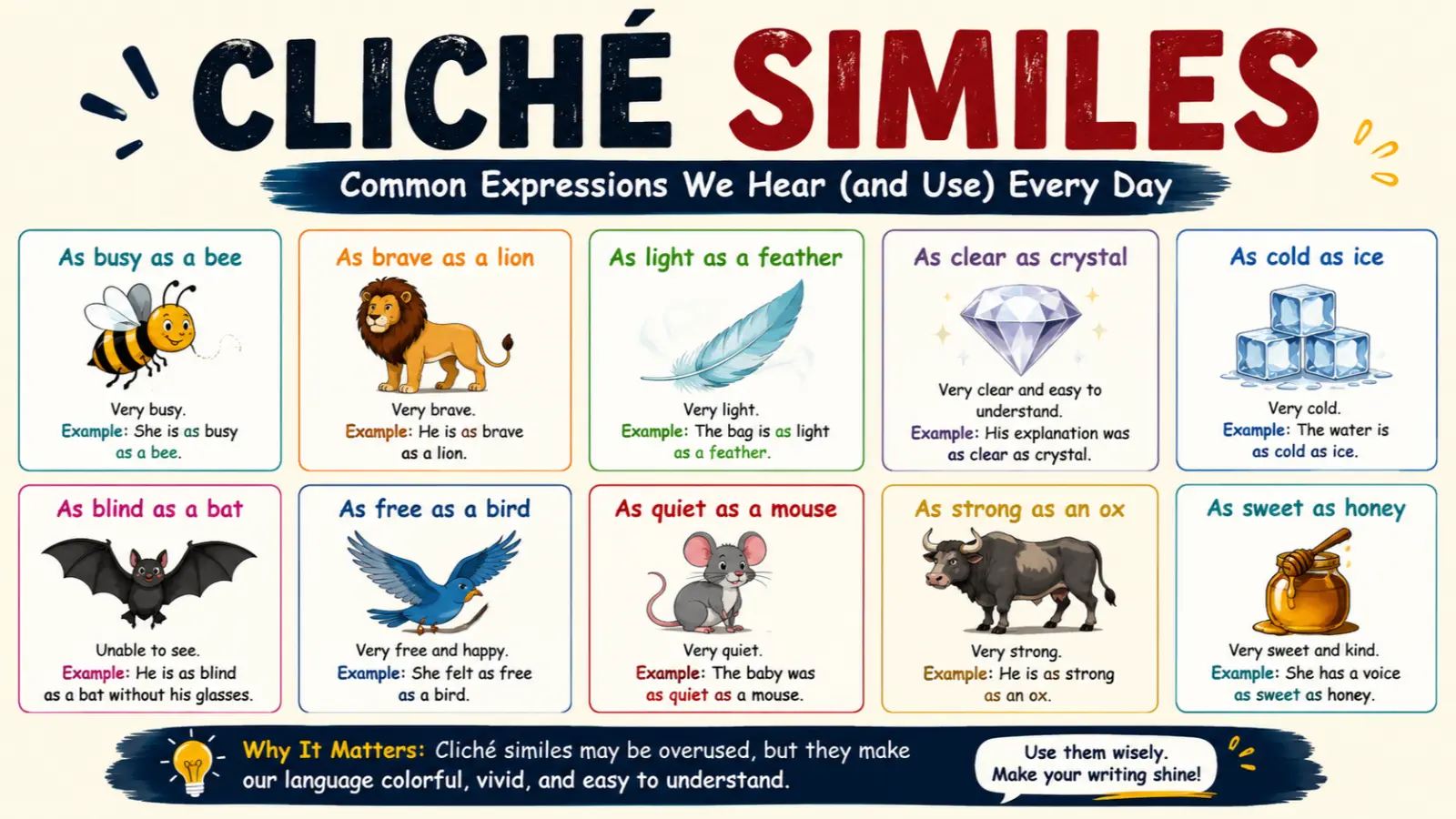
A cliche simile is a comparison that has become overly familiar through frequent use. Although readers understand its meaning instantly, it often fails to create a vivid mental picture.
For example, saying someone is “as busy as a bee” quickly communicates that they are hardworking, but it rarely surprises or delights modern readers.
Fresh similes encourage readers to pause and imagine. Cliché similes simply remind them of phrases they’ve heard countless times.
Why Writers Should Avoid Overused Similes
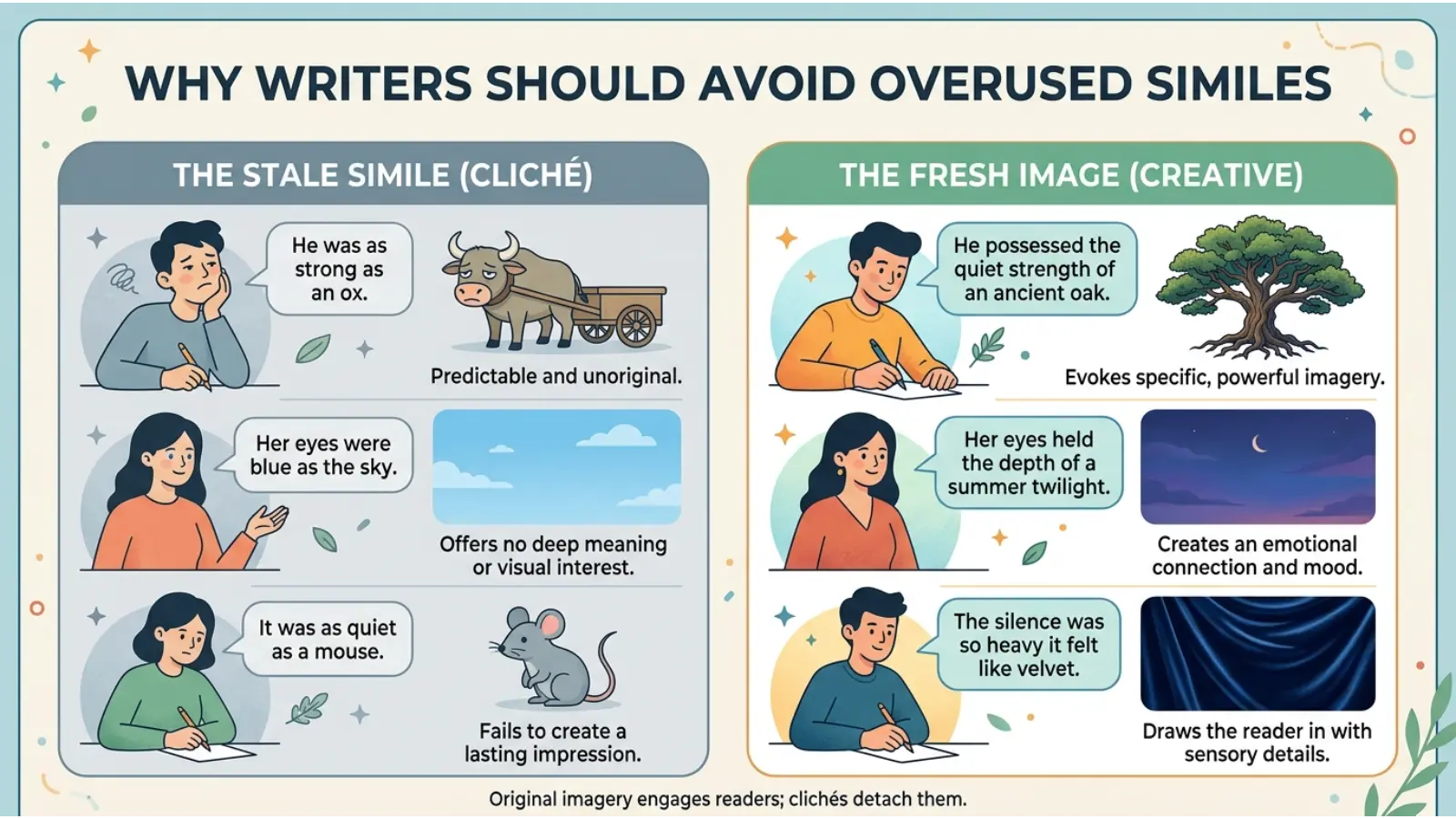
Cliché similes aren’t always wrong. In everyday conversation, they can sound natural and friendly. However, in creative writing they often:
- Reduce originality
- Weaken emotional impact
- Make descriptions feel predictable
- Blend into the background instead of standing out
A unique comparison helps readers experience a scene rather than merely understand it.
When Cliche Similes Still Work
There are times when familiar comparisons are useful.
- Casual conversations
- Dialogue that reflects a character’s personality
- Children’s books introducing figurative language
- Humorous writing that intentionally plays with familiar expressions
The key is choosing them deliberately instead of relying on them automatically.
Fresh Alternatives to Cliche Similes
Below are original similes designed to replace predictable comparisons while inspiring stronger writing.
1. As patient as a lighthouse waiting for dawn
Meaning: Calm and unwavering despite delays.
Examples
- She remained as patient as a lighthouse waiting for dawn while the meeting ran late.
- The teacher answered every question without frustration.
Writing Tip: Works well in reflective or emotional scenes.
2. Like rain finding every crack in the sidewalk
Meaning: Persistent and impossible to ignore.
Examples
- His curiosity spread like rain finding every crack in the sidewalk.
- Questions kept appearing throughout the interview.
Best Context: Character development.
3. As quiet as snow covering forgotten footsteps
Meaning: Peaceful and gentle silence.
Examples
- The library became as quiet as snow covering forgotten footsteps.
- Everyone stopped talking after the announcement.
Emotional Effect: Calm and reflective.
4. Like a compass searching for north
Meaning: Naturally drawn toward a purpose.
Examples
- She moved through challenges like a compass searching for north.
- His decisions always led him back to family.
5. As steady as roots beneath an old oak
Meaning: Reliable and dependable.
Examples
- His friendship stayed as steady as roots beneath an old oak.
- Investors appreciated her consistent judgment.
6. Like sunlight climbing a mountain
Meaning: Slow but unstoppable progress.
Examples
- Confidence returned like sunlight climbing a mountain.
- Recovery came one small step at a time.
7. As curious as a window left open
Meaning: Always welcoming new ideas.
Examples
- The child was as curious as a window left open.
- She explored every possibility.
8. Like ink spreading across handmade paper
Meaning: Gradually expanding influence.
Examples
- The rumor traveled like ink spreading across handmade paper.
- Inspiration filled the classroom.
9. As hopeful as the first bird before sunrise
Meaning: Optimistic before success appears.
Examples
- He remained hopeful despite repeated setbacks.
- Her smile suggested tomorrow would be better.
10. Like leaves learning the wind
Meaning: Adapting naturally to change.
Examples
- New employees adjusted like leaves learning the wind.
- The team quickly embraced new technology.
11. As gentle as moonlight on still water
Meaning: Soft and comforting.
Examples
- Her voice sounded as gentle as moonlight on still water.
- The nurse reassured the child kindly.
12. Like a bridge built one stone at a time
Meaning: Gradual growth through patience.
Examples
- Trust formed like a bridge built one stone at a time.
- The partnership strengthened over months.
13. As bright as fresh paint in morning sunlight
Meaning: Full of energy and freshness.
Examples
- His ideas felt bright and exciting.
- The classroom looked cheerful after renovation.
14. Like stars reflected in moving water
Meaning: Beautiful yet constantly changing.
Examples
- Her dreams shimmered like stars reflected in moving water.
- Memories shifted with time.
15. As determined as a river carving stone
Meaning: Persistent through obstacles.
Examples
- She pursued her goals relentlessly.
- His practice slowly produced remarkable results.
16. Like threads weaving a tapestry
Meaning: Many small parts creating something meaningful.
Examples
- Their experiences connected beautifully.
- Every conversation strengthened the friendship.
17. As calm as a garden before sunrise
Meaning: Peaceful before activity begins.
Examples
- The office felt unusually calm.
- Everyone prepared quietly.
18. Like sparks waking dry wood
Meaning: Inspiring sudden enthusiasm.
Examples
- The speech energized the audience.
- One idea transformed the discussion.
19. As flexible as young bamboo after rain
Meaning: Adaptable without losing strength.
Examples
- She handled unexpected problems gracefully.
- The business adjusted to changing markets.
20. Like a map unfolding with every step
Meaning: Discovering possibilities through action.
Examples
- His career developed unexpectedly.
- Travel revealed opportunities he never imagined.
21. As welcoming as a porch light in a storm
Meaning: Warm, comforting, and reassuring.
Examples
- Her smile eased everyone’s worries.
- The community greeted newcomers warmly.
22. Like a melody remembered after years
Meaning: Familiar in a comforting way.
Examples
- The hometown felt instantly recognizable.
- Old friendships returned naturally.
23. As resilient as wildflowers between stones
Meaning: Thriving despite difficult conditions.
Examples
- The athlete recovered from repeated setbacks.
- Small businesses survived challenging times.
24. Like morning mist lifting from a valley
Meaning: Gradually becoming clear.
Examples
- His confusion slowly disappeared.
- The solution revealed itself over time.
How Professional Writers Create Memorable Similes
Strong writers rarely choose the first comparison that comes to mind.
Instead, they ask:
- What image fits this exact moment?
- What would readers not expect?
- Which comparison creates emotion instead of simply describing?
Replacing a common phrase with an observation drawn from nature, everyday life, or personal experience often produces stronger imagery.
How to Create Your Own Original Similes
Follow this simple process:
Step 1: Identify the quality
Ask what you’re describing.
Examples:
- Fast
- Quiet
- Brave
- Lonely
- Happy
Step 2: Think beyond the obvious
Instead of choosing the first comparison, brainstorm unusual but believable images.
Rather than:
As quiet as a mouse
Try:
As quiet as frost settling on a window.
Step 3: Match the mood
Choose comparisons that support the tone.
- Adventure stories may use landscapes.
- Romance may use light, seasons, or music.
- Mystery often benefits from shadows, echoes, or weather.
Step 4: Read it aloud
If it sounds forced or confusing, simplify it.
The best similes feel effortless.
Related Literary Devices
Metaphor
A metaphor makes a direct comparison without using like or as.
- Simile: Her smile was like sunrise.
- Metaphor: Her smile was sunrise.
Imagery
Imagery appeals to the senses, helping readers see, hear, smell, taste, or feel a scene. Original similes strengthen imagery by making descriptions more vivid.
Personification
Personification gives human qualities to nonhuman things.
Example:
The wind whispered through the trees.
Combining personification with fresh similes can produce memorable descriptions.
Hyperbole
Hyperbole uses intentional exaggeration.
Use it carefully so your similes remain believable unless humor is the goal.
Common Mistakes Writers Make
Depending on familiar comparisons
If readers have heard the phrase hundreds of times, it probably won’t create a fresh image.
Mixing unrelated imagery
Avoid combining incompatible comparisons.
Poor example:
Her voice flowed like thunder.
The images don’t naturally fit together.
Confusing metaphors and similes
Remember:
- Similes use like or as.
- Metaphors do not.
Forcing creativity
Original doesn’t mean strange.
Choose comparisons readers can understand immediately.
Using too many similes
One strong comparison often has greater impact than several weaker ones.
Creative Practice Exercises
Exercise 1
Replace these overused ideas with fresh comparisons.
- Fast
- Happy
- Cold
- Loud
- Brave
Exercise 2
Choose one object nearby.
Describe it using three completely different similes inspired by:
- Nature
- Music
- Weather
Exercise 3
Read one page from your own writing.
Highlight every simile.
Ask:
- Is this surprising?
- Does it fit the tone?
- Would another comparison create a stronger image?
Frequently Asked Questions
What is a cliche simile?
A cliché simile is a comparison that has been used so often it no longer feels original or creates a vivid image.
Should writers avoid cliche similes completely?
Not always. They work well in casual conversation, dialogue, and situations where familiarity is intentional. Creative writing usually benefits from fresher comparisons.
How can I replace an overused simile?
Focus on the specific quality you’re describing, then compare it with something unexpected but believable from nature, daily life, or personal experience.
Are cliché similes bad for storytelling?
They aren’t necessarily bad, but relying on them too often can make stories feel predictable instead of memorable.
What’s the difference between a simile and a metaphor?
A simile uses words like as or like, while a metaphor makes a direct comparison without those words.
How many similes should I use in one piece of writing?
Use only as many as improve the reader’s experience. A few strong similes usually have more impact than many ordinary ones.
Conclusion
Cliché similes became popular because they once painted clear, memorable pictures. Over time, repetition dulled their effect. Today’s writers can learn from them without depending on them. When you create fresh comparisons rooted in careful observation, your writing becomes more vivid, emotional, and distinctive. Instead of reaching for the familiar, pause for a moment and look for an image only you would notice. Those original similes are often the ones readers remember long after they’ve finished your work.
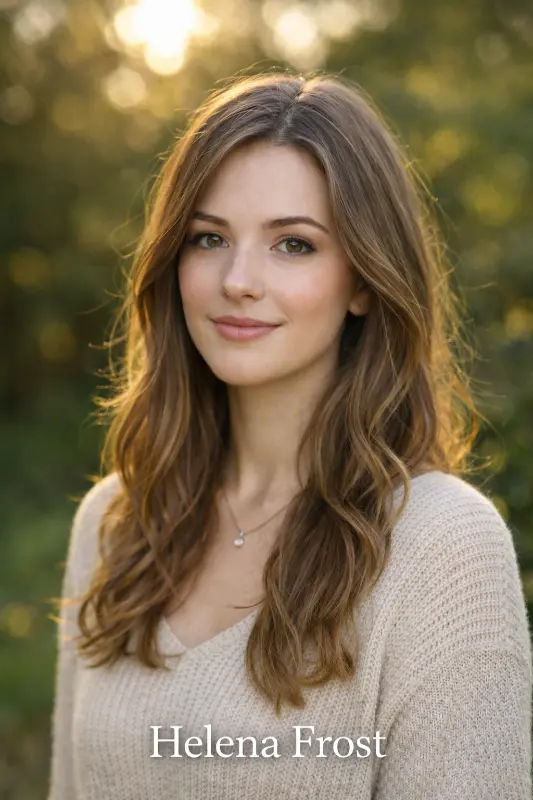
I am Helena Frost, a writer captivated by the beauty of language and the art of comparison. Through my words, I explore the world by turning ordinary moments into vivid similes and reflections. I enjoy crafting phrases that spark imagination, evoke emotion, and linger in the mind. My writing celebrates the subtle connections between people, nature, and the stories we live. For me, every sentence is an opportunity to reveal the extraordinary in the everyday.