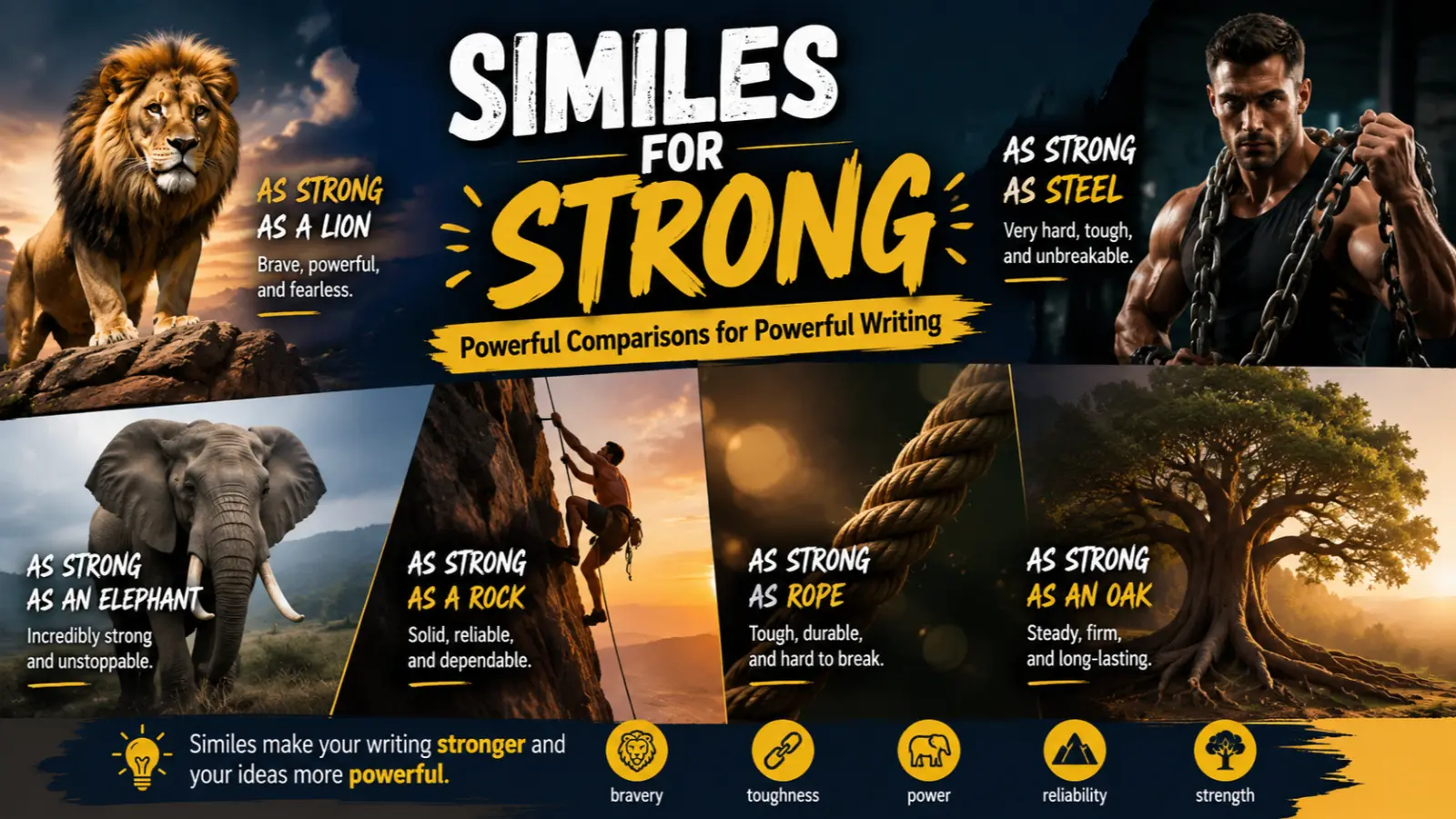
Strength is more than lifting heavy objects or winning battles. It can describe a person’s character, determination, emotions, voice, relationships, or even nature. That’s why writers often use similes to make strength easier to imagine. A simile compares two different things using “like” or “as.” Instead of simply saying someone is strong, a simile paints a picture that readers can instantly visualize. Whether you’re writing a story, poem, speech, essay, or everyday conversation, the right simile can transform an ordinary sentence into one readers remember. This guide shares original similes for strong, explains why they work, and shows how to create your own powerful comparisons.
Quick Answer
Similes for strong compare a person, object, or idea to something known for power or resilience using like or as. They help writers create vivid imagery, strengthen descriptions, and make characters or scenes more memorable.
Example:
- As strong as an oak rooted through storms.
- Like a bridge holding against every wave.
- As strong as mountain stone beneath centuries of wind.
Why Writers Use Similes for Strength
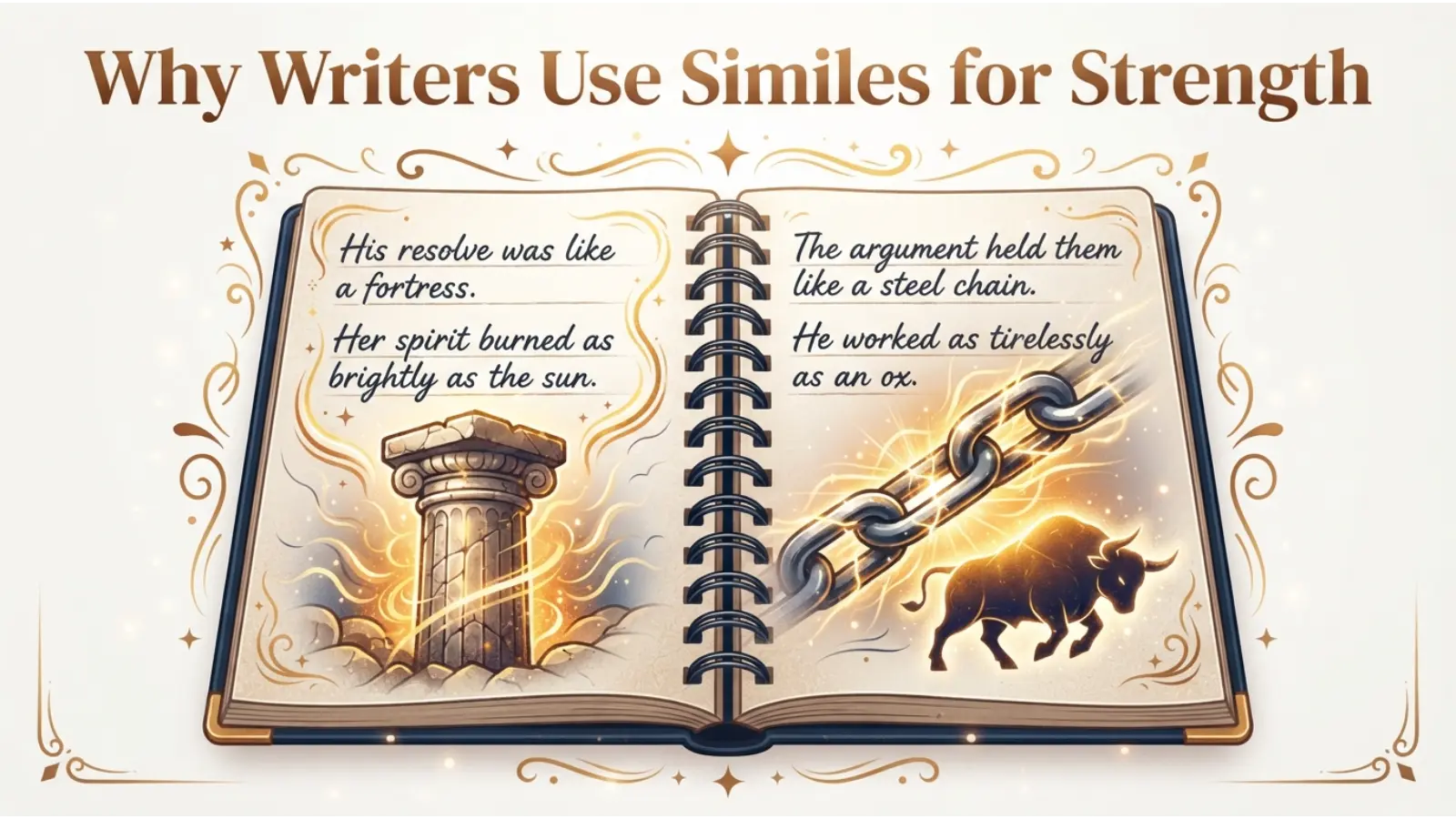
Strength appears in many forms.
You might describe:
- Physical power
- Mental toughness
- Emotional resilience
- Courage
- Leadership
- Loyalty
- Endurance
A thoughtful simile shows readers what kind of strength you’re describing instead of simply telling them.
For example:
“She stayed calm.”
becomes
“She stood like an ancient lighthouse through crashing waves.“
The second sentence creates an image that readers can picture and feel.
Original Similes for Strong
As Strong as an Oak Holding the Hillside
Meaning
Represents dependable, enduring strength.
Formal Example
The captain remained as strong as an oak holding the hillside despite endless challenges.
Conversation
“My grandmother is as strong as an oak holding the hillside.“
Storytelling
He refused to bend, standing as strong as an oak holding the hillside.
Writing Tip
Perfect for dependable characters.
Like a Bridge Refusing the River
Meaning
Quiet strength under constant pressure.
Emotional Effect
Suggests resilience rather than aggression.
Poetry
Her hope stretched like a bridge refusing the river.
As Strong as Mountain Roots
Meaning
Strength hidden beneath the surface.
Best Context
Leadership, family, determination.
Like Iron Woven into Silk
Meaning
Gentle appearance hiding great strength.
Story Example
Her voice sounded soft but carried like iron woven into silk.
As Strong as the First Sunrise After Winter
Meaning
Hope returning after hardship.
Best Used
Inspirational writing.
Like a Cliff Guarding the Sea
Meaning
Protective strength.
Conversation
“My father is like a cliff guarding the sea.“
As Strong as the Tide Returning Every Morning
Meaning
Persistence.
Writing Purpose
Ideal for characters who never give up.
Like a Hammer Shaping Steel
Meaning
Strength that builds instead of destroys.
As Strong as the Heart of an Old Tree
Meaning
Inner resilience gained through experience.
Like Fire Hidden Beneath Stone
Meaning
Quiet power waiting for the right moment.
As Strong as a Rope Pulled Tight
Meaning
Focused determination.
Like a River Cutting Through Rock
Meaning
Steady persistence over time.
Writing Insight
This emphasizes patience rather than force.
As Strong as Winter Pines
Meaning
Remaining steady during hardship.
Like an Anchor in Deep Water
Meaning
Keeping others secure during uncertainty.
As Strong as Thunder Before the Rain
Meaning
Power waiting to be released.
Like Steel Wrapped in Kindness
Meaning
Compassion combined with courage.
As Strong as the Earth Beneath Every Step
Meaning
Reliable support.
Like the Wind That Never Stops Returning
Meaning
Endless determination.
As Strong as a Lighthouse in the Storm
Meaning
Guiding others during difficult times.
Like Stone Shaped by Time
Meaning
Strength developed through experience.
As Strong as a Wolf Protecting Its Pack
Meaning
Protective courage.
Like Morning Light Breaking Darkness
Meaning
Strength through hope.
As Strong as a Castle Gate
Meaning
Firm defense against challenges.
Like a Falcon Riding the Wind
Meaning
Confident control.
As Strong as Deep Ocean Currents
Meaning
Hidden but powerful influence.
Like a Shield Forged from Patience
Meaning
Emotional endurance.
As Strong as Rain Feeding a Forest
Meaning
Strength that helps others grow.
Like Stars That Never Leave the Sky
Meaning
Constant reliability.
As Strong as Fresh Granite
Meaning
Solid and dependable.
Like a Seed Breaking Stone
Meaning
Small beginnings overcoming great obstacles.
How These Similes Create Stronger Writing
Good similes do more than decorate sentences.
They reveal personality, mood, and emotion.
Compare these examples:
Plain
She was strong.
Better
She stood like a bridge refusing the river.
The second sentence invites readers to imagine resilience rather than simply reading about it.
How to Write Your Own Similes for Strong
Professional writers rarely choose the first comparison that comes to mind.
Instead, follow this process.
Step 1: Decide What Kind of Strength
Ask yourself:
- Physical?
- Emotional?
- Mental?
- Moral?
- Protective?
Different strengths need different images.
Step 2: Look Beyond Obvious Comparisons
Instead of lions or bulls, consider:
- Rivers
- Bridges
- Mountains
- Trees
- Stars
- Weather
- Tools
- Architecture
Unexpected comparisons often feel fresher.
Step 3: Match the Mood
A poem may use gentle imagery.
A fantasy novel may prefer dramatic comparisons.
A speech may need inspiring language.
Choose images that support your tone.
Literary Devices That Work Well with Similes
Imagery
Strong similes help readers picture scenes more clearly.
Example:
“The castle stood like a mountain watching centuries pass.“
Metaphor
A metaphor says something is another thing.
A simile says something is like another thing.
Simile:
“He fought like a river through stone.“
Metaphor:
“He was a river through stone.”
Personification
Giving human qualities to nature can strengthen similes.
Example:
“The wind pushed like a determined friend refusing to quit.“
Symbolism
Natural objects often symbolize different kinds of strength.
- Oak = endurance
- Bridge = support
- Lighthouse = guidance
- Mountain = permanence
Common Mistakes When Writing Similes
Choosing Overused Comparisons
Readers have seen many traditional comparisons countless times.
Fresh imagery creates stronger writing.
Mixing Images
Avoid combining unrelated ideas.
Confusing:
“He was like a mountain sailing through fire.”
Keep one clear image.
Forgetting the Purpose
Every simile should improve the sentence.
If removing it changes nothing, it probably isn’t helping.
Comparing Unrelated Ideas
The comparison should make sense.
Readers shouldn’t have to guess why two things are connected.
Using Too Many Similes
One memorable comparison is usually stronger than several crowded into a paragraph.
Practice Exercises
Exercise 1
Describe emotional strength without mentioning muscles.
Exercise 2
Write three similes using weather instead of animals.
Exercise 3
Describe a teacher, parent, or friend using one original simile.
Exercise 4
Rewrite this sentence:
“He stayed strong.”
Create three different similes showing:
- Quiet strength
- Physical strength
- Emotional strength
Frequently Asked Questions
What is a simile for strong?
A simile for strong compares someone or something to a powerful image using like or as, making the description more vivid.
Can strength describe emotions?
Yes. Emotional strength is often shown through images of endurance, stability, or resilience rather than physical power.
Should I avoid common similes?
Not always. Familiar comparisons are easy to understand, but original similes make your writing stand out.
What’s the difference between a simile and a metaphor?
A simile uses like or as. A metaphor makes a direct comparison without those words.
Are similes useful in everyday conversation?
Absolutely. They make compliments, stories, and explanations more expressive and memorable.
How many similes should I use in one paragraph?
Usually one or two are enough. Too many comparisons can distract readers from your main message.
Can children use similes for strong?
Yes. Similes are an excellent way for young writers to develop descriptive language and creative thinking.
Conclusion
Strength isn’t always loud. Sometimes it appears in quiet determination, patient endurance, steady leadership, or unwavering kindness. The best similes for strong help readers see these different forms of strength through fresh, believable comparisons rather than familiar clichés. As you practice, focus on matching each simile to the exact kind of strength you want to express. Draw inspiration from nature, everyday objects, architecture, weather, and personal experiences. With thoughtful observation and a little creativity, you’ll craft comparisons that don’t just describe strength—they make readers feel it.

I am Helena Frost, a writer captivated by the beauty of language and the art of comparison. Through my words, I explore the world by turning ordinary moments into vivid similes and reflections. I enjoy crafting phrases that spark imagination, evoke emotion, and linger in the mind. My writing celebrates the subtle connections between people, nature, and the stories we live. For me, every sentence is an opportunity to reveal the extraordinary in the everyday.