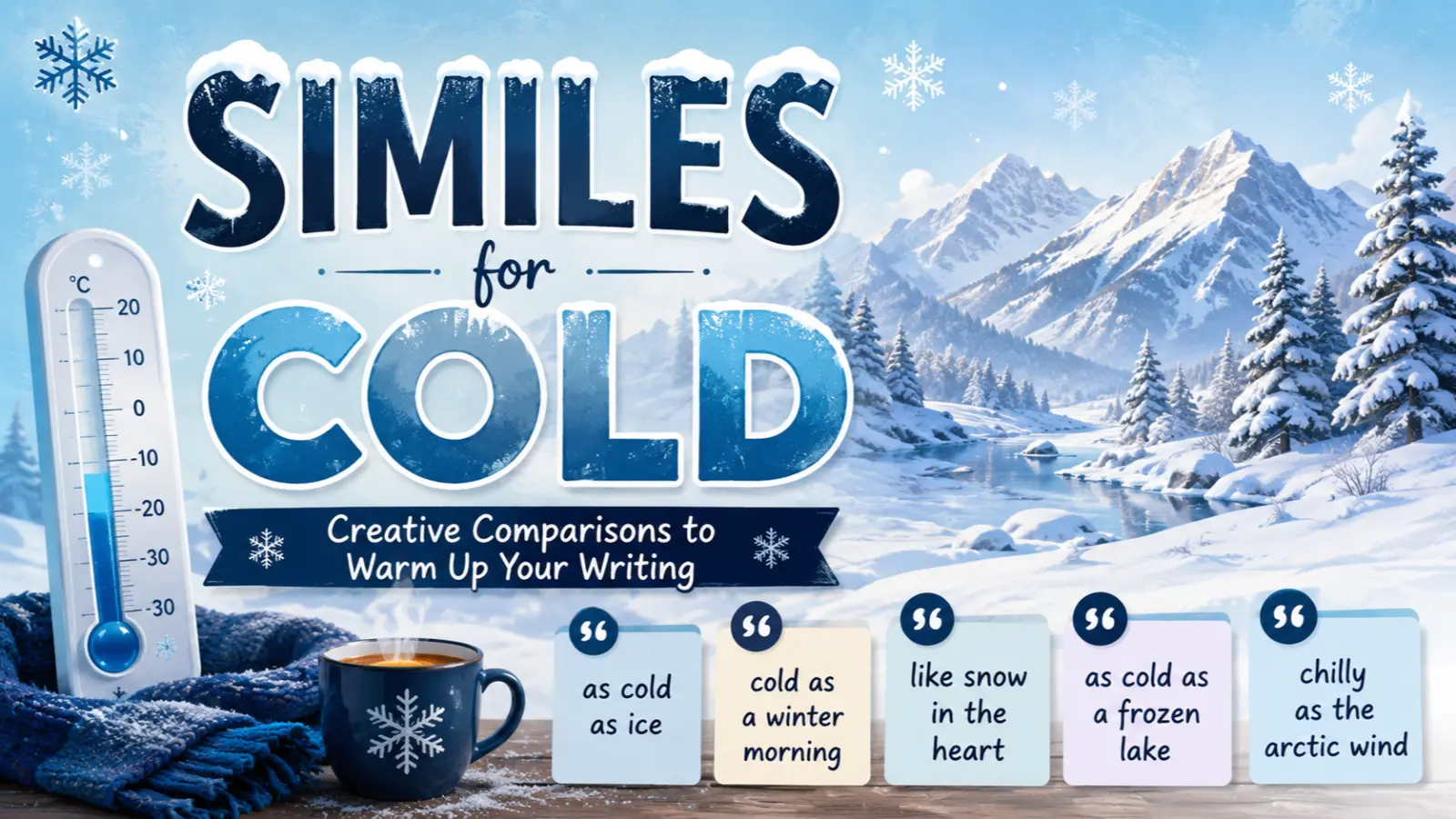
Cold is more than a temperature. It can describe weather, emotions, silence, fear, loneliness, or even a person’s personality. Similes help writers turn an ordinary description into an image readers can almost feel. Whether you’re writing a story, poem, school assignment, or everyday conversation, the right simile can make winter mornings sharper, icy winds harsher, and distant characters more believable. This guide shares original similes for cold, explains why they work, and shows you how to create your own without relying on worn-out comparisons.
Quick Answer
Similes for cold compare coldness to another object or experience using words like “as” or “like.” They help readers imagine not only the temperature but also the mood and emotion behind it.
Example:
The air was as silent as a frozen lake waiting for spring.
Instead of simply saying it was cold, the simile creates atmosphere and emotion.
Why Cold Makes Powerful Similes
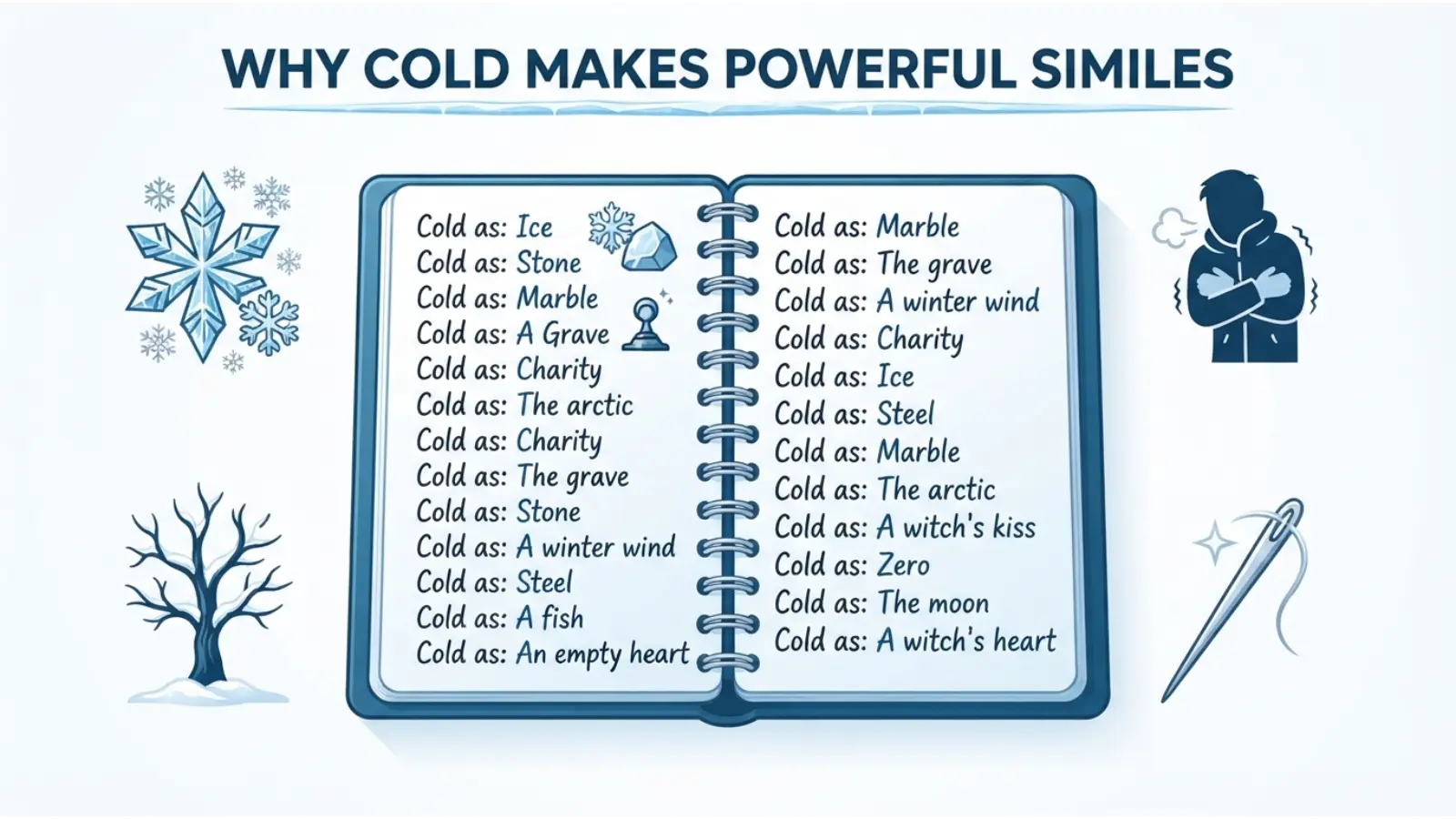
Cold naturally connects with many emotions and settings.
Writers often use it to describe:
- Winter landscapes
- Fear and suspense
- Loneliness
- Emotional distance
- Silence
- Mystery
- Fatigue
- Unwelcoming places
A thoughtful simile can transform a simple sentence into one readers remember.
25 Original Similes for Cold
1. As cold as forgotten moonlight
Meaning: Quiet, pale, and emotionally distant.
Story example:
The abandoned garden felt as cold as forgotten moonlight.
Writing tip: Perfect for mysterious settings.
2. Like morning mist hiding from the sun
Meaning: Gentle, soft cold.
Conversation example:
The breeze feels like morning mist hiding from the sun.
Best use: Early mornings.
3. As cold as unopened memories
Meaning: Emotional coldness rather than physical temperature.
Poetry example:
Her words stayed as cold as unopened memories.
4. Like snow whispering across empty fields
Meaning: Peaceful, silent cold.
Effect: Creates calm imagery instead of harsh weather.
5. As cold as an abandoned lighthouse before dawn
Meaning: Isolated and lonely.
Formal example:
The coastline remained as cold as an abandoned lighthouse before dawn.
6. Like glass waiting for winter light
Meaning: Crisp and delicate.
Writing tip: Excellent for descriptive fiction.
7. As cold as shadows beneath fresh ice
Meaning: Deep, hidden cold.
Storytelling:
The cave felt as cold as shadows beneath fresh ice.
8. Like stars fading before sunrise
Meaning: Quiet, fading chill.
Best for poetic descriptions.
9. As cold as untouched mountain air
Meaning: Pure, refreshing cold.
Conversation example:
“The water is as cold as untouched mountain air.”
10. Like silver frost climbing old fences
Meaning: Slow-moving winter cold.
Creates visual movement.
11. As cold as a silent cathedral at dawn
Meaning: Majestic yet chilly.
Ideal for historical fiction.
12. Like frozen feathers drifting through darkness
Meaning: Soft but haunting.
Works well in fantasy writing.
13. As cold as forgotten footsteps in winter
Meaning: Empty and lonely.
Emotional effect: nostalgia.
14. Like crystal rain before sunrise
Meaning: Bright, delicate cold.
Useful for poetic scenes.
15. As cold as a river holding its breath
Meaning: Calm but powerful.
Story example:
The valley became as cold as a river holding its breath.
16. Like winter clouds covering the hills
Meaning: Heavy, lingering cold.
Best context: landscape writing.
17. As cold as silence inside a cave
Meaning: Deep stillness.
Adds suspense to adventure stories.
18. Like frost painting forgotten windows
Meaning: Beautiful winter imagery.
Writing purpose: visual description.
19. As cold as empty marble halls
Meaning: Elegant but unwelcoming.
Great for castles and museums.
20. Like blue ice beneath clear water
Meaning: Hidden cold.
Creates layered imagery.
21. As cold as a forgotten melody
Meaning: Emotional emptiness.
Excellent for reflective writing.
22. Like winter breathing through pine trees
Meaning: Natural outdoor chill.
Conversation example:
The forest feels like winter breathing through pine trees.
23. As cold as the edge of midnight
Meaning: Dark and mysterious.
Useful for horror or suspense.
24. Like pale clouds wrapped around snowy peaks
Meaning: Gentle mountain cold.
Ideal for travel writing.
25. As cold as hope waiting for spring
Meaning: Cold mixed with patience and longing.
Poetry example:
His heart remained as cold as hope waiting for spring.
Choosing the Right Kind of Cold
Not every cold scene feels the same.
Gentle Cold
Use soft natural images.
- Morning fog
- Frost
- Quiet rivers
- Pine forests
These comparisons create peaceful imagery.
Harsh Cold
Choose stronger images.
- Ice
- Wind
- Empty stone buildings
- Frozen mountains
These create tension and discomfort.
Emotional Cold
Think beyond weather.
Describe distance using memories, silence, empty rooms, fading music, or forgotten places.
This gives readers emotional depth instead of simple temperature.
Why These Similes Work
Strong similes do more than compare two things.
They combine:
- Visual imagery
- Emotion
- Movement
- Atmosphere
Instead of merely saying something is freezing, they invite readers to experience the scene.
The best comparisons reveal something about both the setting and the character experiencing it.
Create Your Own Similes for Cold
You don’t need to wait for inspiration. You can build original similes with a simple process.
Step 1: Decide what kind of cold you mean
Is it:
- Peaceful?
- Painful?
- Lonely?
- Beautiful?
- Dangerous?
Knowing the feeling comes first.
Step 2: Find an image with the same feeling
Look for objects in nature, architecture, music, or memories that share that mood.
Step 3: Compare naturally
Use like or as without forcing the comparison.
Step 4: Read it aloud
If it sounds awkward in conversation, simplify it.
Creative Practice
Try finishing these prompts with your own ideas.
- The wind was as cold as _________.
- Her voice felt like _________.
- The river looked as cold as _________.
- The hallway was like _________.
- Winter arrived as quietly as _________.
Challenge yourself to avoid ice, snow, and freezer comparisons. Fresh imagery is often more memorable.
Common Mistakes When Writing Similes for Cold
Depending on clichés
Comparisons such as “as cold as ice” communicate the idea but rarely surprise readers.
Mixing unrelated images
Avoid comparisons that combine incompatible ideas, such as tropical beaches with frozen storms, unless the contrast is intentional.
Forgetting the emotion
Ask yourself what the cold should make readers feel. The answer shapes a stronger simile.
Confusing similes with metaphors
A simile uses like or as. A metaphor states that one thing is another.
Overloading a paragraph
One vivid simile often creates more impact than several crowded into the same scene.
Related Literary Devices
Metaphor
A metaphor removes like or as.
- Simile: The wind was like shattered glass.
- Metaphor: The wind was shattered glass.
Imagery
Imagery appeals to the senses. Pairing imagery with similes creates richer descriptions readers can see, hear, and feel.
Personification
Cold can seem alive.
Example:
Winter reached its icy fingers across the valley.
Hyperbole
Exaggeration can emphasize intense cold.
Example:
The air was so cold it felt like time had stopped.
Symbolism
Cold often symbolizes loneliness, fear, grief, emotional distance, or new beginnings after hardship. The meaning depends on the context of your story.
Frequently Asked Questions
What is a simile for cold?
A simile for cold compares coldness to another image using like or as to create vivid descriptions.
Can similes for cold describe emotions?
Yes. Cold frequently represents loneliness, fear, rejection, silence, or emotional distance in literature.
How can I avoid overused cold similes?
Look beyond ice and snow. Compare cold to memories, landscapes, sounds, architecture, or natural phenomena that create the same feeling.
Are similes useful in poetry?
Absolutely. Similes add rhythm, imagery, and emotional depth, making poems more memorable.
What’s the difference between a simile and a metaphor?
A simile uses like or as, while a metaphor makes a direct comparison without those words.
Can children use similes for cold?
Yes. Simple comparisons help children build descriptive writing skills, while older students can experiment with more imaginative imagery.
Conclusion
The most effective similes for cold do more than describe temperature—they shape emotion, atmosphere, and meaning. By choosing fresh comparisons instead of familiar clichés, you can make winter scenes, emotional moments, and dramatic settings feel vivid and authentic. Keep observing the world around you, experiment with unexpected images, and remember that the strongest similes are the ones that help readers feel the cold long after they’ve finished the sentence.

I am Helena Frost, a writer captivated by the beauty of language and the art of comparison. Through my words, I explore the world by turning ordinary moments into vivid similes and reflections. I enjoy crafting phrases that spark imagination, evoke emotion, and linger in the mind. My writing celebrates the subtle connections between people, nature, and the stories we live. For me, every sentence is an opportunity to reveal the extraordinary in the everyday.