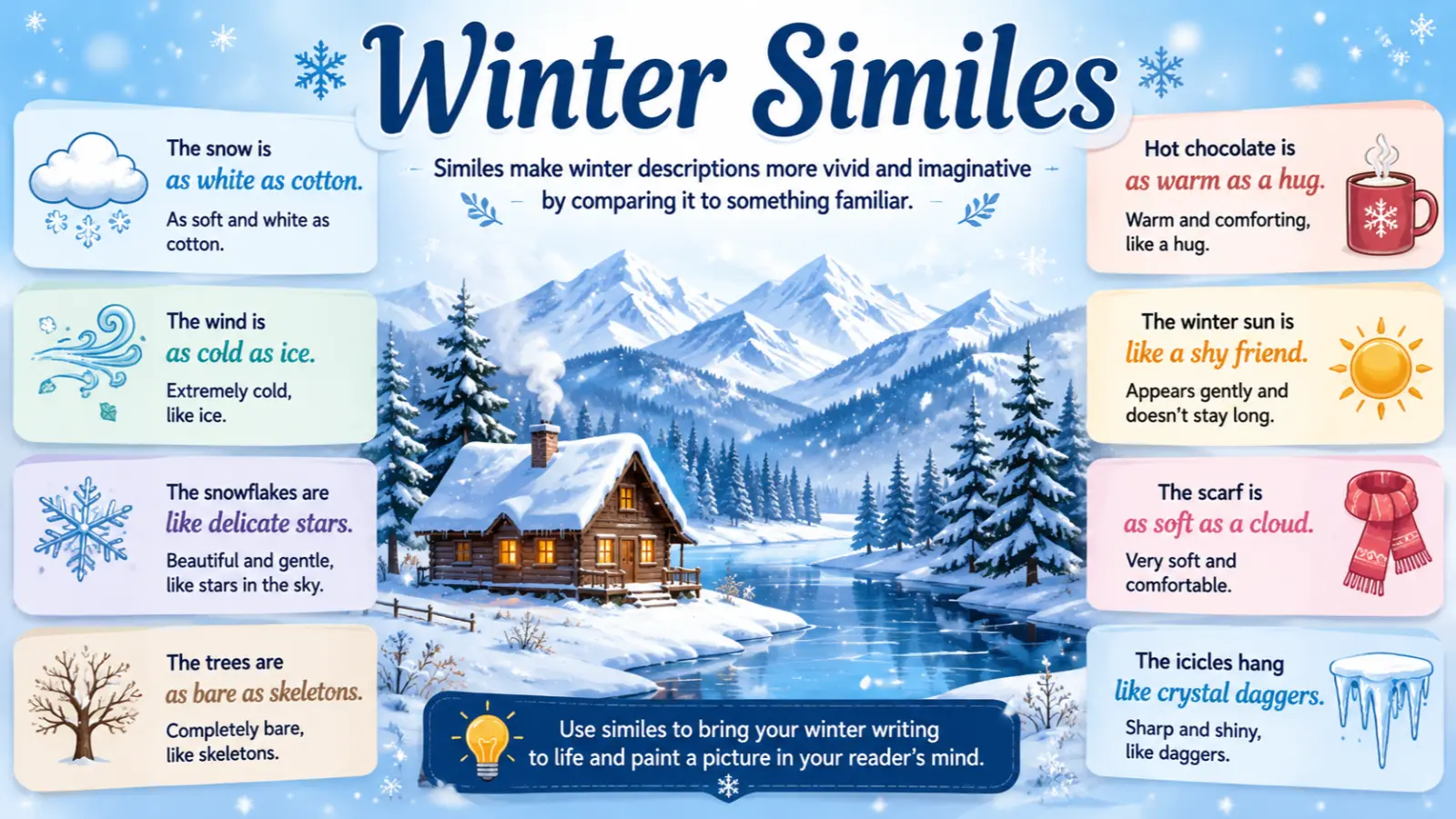
Winter has a way of transforming ordinary scenes into something unforgettable. Frost covers windows with delicate patterns, snow softens noisy streets, and icy winds change the mood of an entire landscape. Writers often use similes to capture these moments because simple descriptions rarely express the feeling of winter on their own. A simile compares one thing to another using words like “as” or “like.” These comparisons help readers picture scenes, understand emotions, and connect with a story more deeply. Winter similes appear in novels, poems, classroom assignments, holiday stories, travel writing, and everyday conversations. Whether you’re describing a peaceful snowfall or a freezing morning, the right comparison can make your writing more vivid. This guide explores original winter similes, explains why they work, and shows you how to create your own imaginative comparisons.
Quick Answer
Winter similes are comparisons that describe winter, snow, ice, cold weather, or winter emotions using “like” or “as.” They help readers visualize scenes and feel the atmosphere. For example, “The snow drifted like quiet feathers across the field.” Strong winter similes create imagery, mood, and memorable descriptions.
Why Winter Is Perfect for Similes
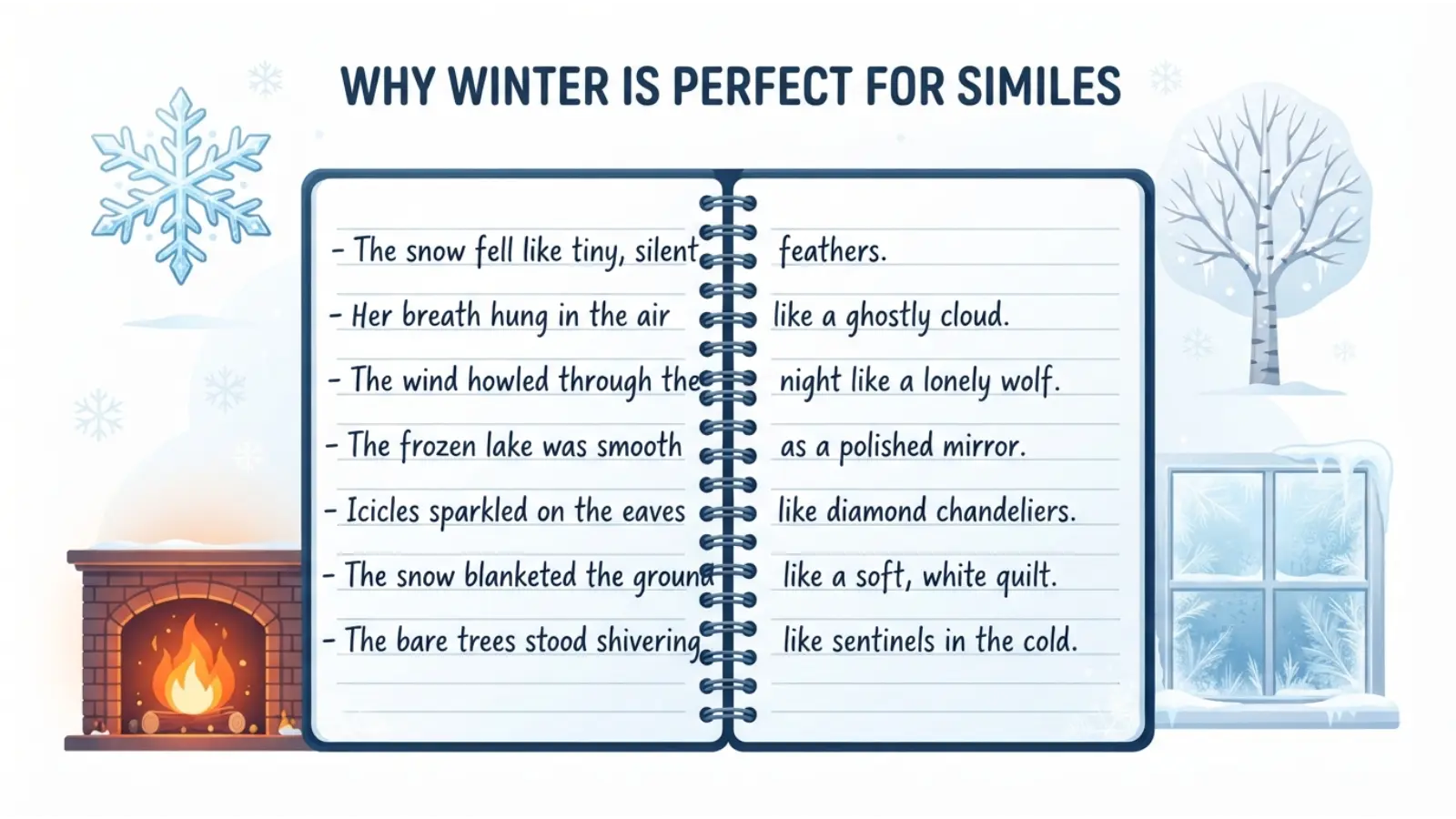
Winter naturally appeals to the senses.
You can see sparkling frost.
your can hear boots crunching through snow.
You can feel icy wind against your face.
You can even sense the silence after a snowfall.
Because winter is rich with sensory details, it offers endless opportunities for creative comparisons that bring writing to life.
Original Winter Similes
Like a Blanket Pulled Over the World
Meaning: Snow covers everything peacefully.
Formal Example
The fresh snow spread like a blanket pulled over the world.
Conversation
The neighborhood looks like someone tucked it in with snow.
Best for
Peaceful landscapes.
As Quiet as Snow Falling at Midnight
This comparison captures complete silence.
Story Example
The forest became as quiet as snow falling at midnight.
Writing Tip: Silence often makes winter scenes feel more magical than loud descriptions.
Like Tiny Diamonds Scattered Across the Ground
Perfect for sparkling snow under sunlight.
Poetry
The meadow glittered like tiny diamonds scattered across the earth.
As Sharp as January Wind
Describes intense cold.
Conversation
That wind is as sharp as January itself.
Works well for outdoor adventures.
Like Glass Beneath Your Feet
Useful when describing icy sidewalks.
Example
The frozen pond shimmered like glass beneath our feet.
As Pale as the Winter Morning Sky
Creates soft visual imagery.
Ideal for describing light, colors, or facial expressions.
Like Smoke Floating From a Sleeping Chimney
Describes gentle movement.
Example:
The mist drifted like smoke floating from a sleeping chimney.
As Still as a Frozen Lake
A wonderful comparison for calm moments.
Story Example:
The village remained as still as a frozen lake before sunrise.
Like Frost Painted by Invisible Artists
Adds imagination without becoming unrealistic.
Best used in descriptive essays and poetry.
As Crisp as the First Snowflake
Useful for fresh air.
Example:
The morning air felt as crisp as the first snowflake.
Like Silver Dust Across the Hills
Perfect for sparkling snow.
Creates elegant imagery.
As Cold as Forgotten Stone
Instead of common clichés, this comparison feels fresh.
Works well for emotional or physical descriptions.
Like Icicles Hanging From Time
A poetic comparison suggesting stillness.
Excellent for creative writing.
As Gentle as Winter Sunlight
Winter sunshine often feels soft instead of intense.
Ideal for peaceful scenes.
Like Frozen Lace on Every Window
Great for describing frost patterns.
Readers immediately picture delicate details.
As Slow as Snow Gathering on Branches
Describes gradual movement.
Excellent for reflective writing.
Like White Paint Brushed Across the Fields
Simple yet vivid.
Useful in children’s writing as well.
As Calm as a Snow-Covered Forest
Creates feelings of peace.
Often works in meditation or nature writing.
Like Cold Fingers Tapping the Door
Personifies winter slightly while remaining a simile.
Adds suspense.
As Bright as Fresh Snow in Morning Light
Perfect for brightness without using sunlight alone.
Like Tiny Stars Resting on Pine Trees
A beautiful comparison for snowy evergreens.
Works especially well in holiday stories.
As Gentle as Falling Snowflakes
Creates warmth despite the cold setting.
Ideal for emotional scenes.
Like Ice Carving the River’s Smile
A creative image showing frozen rivers.
Adds originality to descriptive writing.
As Clear as Winter Air After a Storm
Useful for describing visibility or thoughts.
Example:
Her ideas became as clear as winter air after the storm.
Like Pearls Scattered Across the Meadow
Perfect for untouched snow.
Elegant but easy to understand.
As Silent as Breath in Frozen Air
Excellent for suspenseful scenes.
Readers can almost feel the cold.
Like Moonlight Sleeping on Snow
Ideal for nighttime descriptions.
Creates peaceful imagery.
As Delicate as Frost on a Spider’s Web
Shows fragile beauty.
Works wonderfully in poetry.
Like Winter Wrapping the Earth in White Silk
Creates luxurious imagery.
Best for holiday writing.
As Fresh as the First Morning After Snow
Useful beyond weather.
Example:
His ideas felt as fresh as the first morning after snow.
Why These Similes Work
Strong similes do more than compare two things.
They create an emotional response.
Notice how these examples focus on:
- Movement
- Light
- Texture
- Sound
- Temperature
- Mood
Professional writers often begin with sensory details before searching for comparisons.
Instead of asking, “What looks like snow?” ask, “What does snow feel like?”
The second question usually produces more original ideas.
Making Your Winter Similes More Vivid
Specific details create stronger imagery.
Instead of writing:
Cold like ice.
Try:
The wind sliced across the valley like invisible crystal ribbons.
Specific nouns and active verbs make every comparison stronger.
Avoiding Overused Winter Comparisons
Some similes appear so often that readers barely notice them.
Examples include:
- Cold as ice
- White as snow
- Cold as the North Pole
Rather than copying familiar expressions, focus on unique observations from real winter experiences.
Ask yourself:
- What surprised me?
- What sound stood out?
- What tiny detail did I notice?
Originality often comes from careful observation.
Similes and Other Literary Devices
Metaphor
A metaphor says something is another thing.
Simile
The snow floated like feathers.
Metaphor
The snow became a feather blanket.
Imagery
Imagery appeals to the senses.
Winter similes naturally strengthen imagery because they help readers see, hear, and feel the scene.
Personification
Sometimes writers combine similes with personification.
Example:
The wind whispered like an old traveler.
The wind receives a human action while still using a comparison.
Symbolism
Winter often symbolizes:
- Reflection
- Endings
- Rest
- New beginnings
- Hope after hardship
Understanding symbolism helps you choose similes that fit your story’s emotional tone.
Create Your Own Winter Similes
Creating original similes becomes easier with practice.
Step 1: Observe Carefully
Choose one winter detail.
Examples:
- Snow
- Ice
- Frost
- Wind
- Bare trees
Step 2: Focus on One Quality
Ask:
Is it soft?
Bright?
Silent?
Sharp?
Slow?
Step 3: Find an Unexpected Match
Instead of comparing snow to cotton, compare it to something less obvious.
For example:
Snow drifted like forgotten letters floating through the sky.
Step 4: Read It Aloud
Natural similes sound effortless.
If the comparison feels forced, simplify it.
Creative Practice Exercises
Exercise One
Describe one snowy street using three different similes.
Each should focus on a different sense.
Exercise Two
Write five similes without using the words snow, ice, or winter.
Hint at the season through imagery instead.
Exercise Three
Rewrite a simple sentence.
Original:
The morning was cold.
Improved:
The morning wrapped around us like a coat stitched from frost.
Common Mistakes to Avoid
Using Too Many Similes
Several comparisons in one paragraph can overwhelm readers.
Choose the strongest one.
Mixing Images
Avoid combining unrelated ideas.
Weak:
The snow fell like feathers burning through the ocean.
The images conflict instead of supporting one another.
Choosing Predictable Comparisons
Readers appreciate fresh observations.
Originality doesn’t require strange ideas—only careful attention.
Confusing Similes and Metaphors
Remember:
Similes use like or as.
Metaphors do not.
Forgetting the Mood
A playful comparison may not fit a suspenseful winter scene.
Always match the simile to the emotion of your writing.
Frequently Asked Questions
What is a winter simile?
A winter simile compares winter-related subjects with another object using like or as to create vivid imagery.
Why are winter similes useful?
They help readers visualize scenes, experience emotions, and remember descriptions more easily.
Can winter similes be used in poetry?
Yes. Winter imagery has long been popular in poetry because it naturally creates atmosphere and emotion.
What makes a winter simile original?
Original similes come from careful observation rather than repeating familiar expressions.
Are winter similes suitable for children?
Absolutely. Simple comparisons help young writers develop creativity while improving descriptive language.
How can I avoid clichés?
Notice real details around you instead of relying on familiar comparisons. Personal observations often lead to the most memorable similes.
Conclusion
Winter offers endless inspiration for creative comparisons. From sparkling frost to silent forests, every snowy scene contains details that can become vivid similes with a little imagination. Rather than reaching for familiar expressions, pay attention to the textures, sounds, colors, and emotions around you. The more closely you observe the season, the more original your writing will become. Keep experimenting, revise your comparisons, and let each simile help readers experience winter instead of simply reading about it.
I am Helena Frost, a writer captivated by the beauty of language and the art of comparison. Through my words, I explore the world by turning ordinary moments into vivid similes and reflections. I enjoy crafting phrases that spark imagination, evoke emotion, and linger in the mind. My writing celebrates the subtle connections between people, nature, and the stories we live. For me, every sentence is an opportunity to reveal the extraordinary in the everyday.