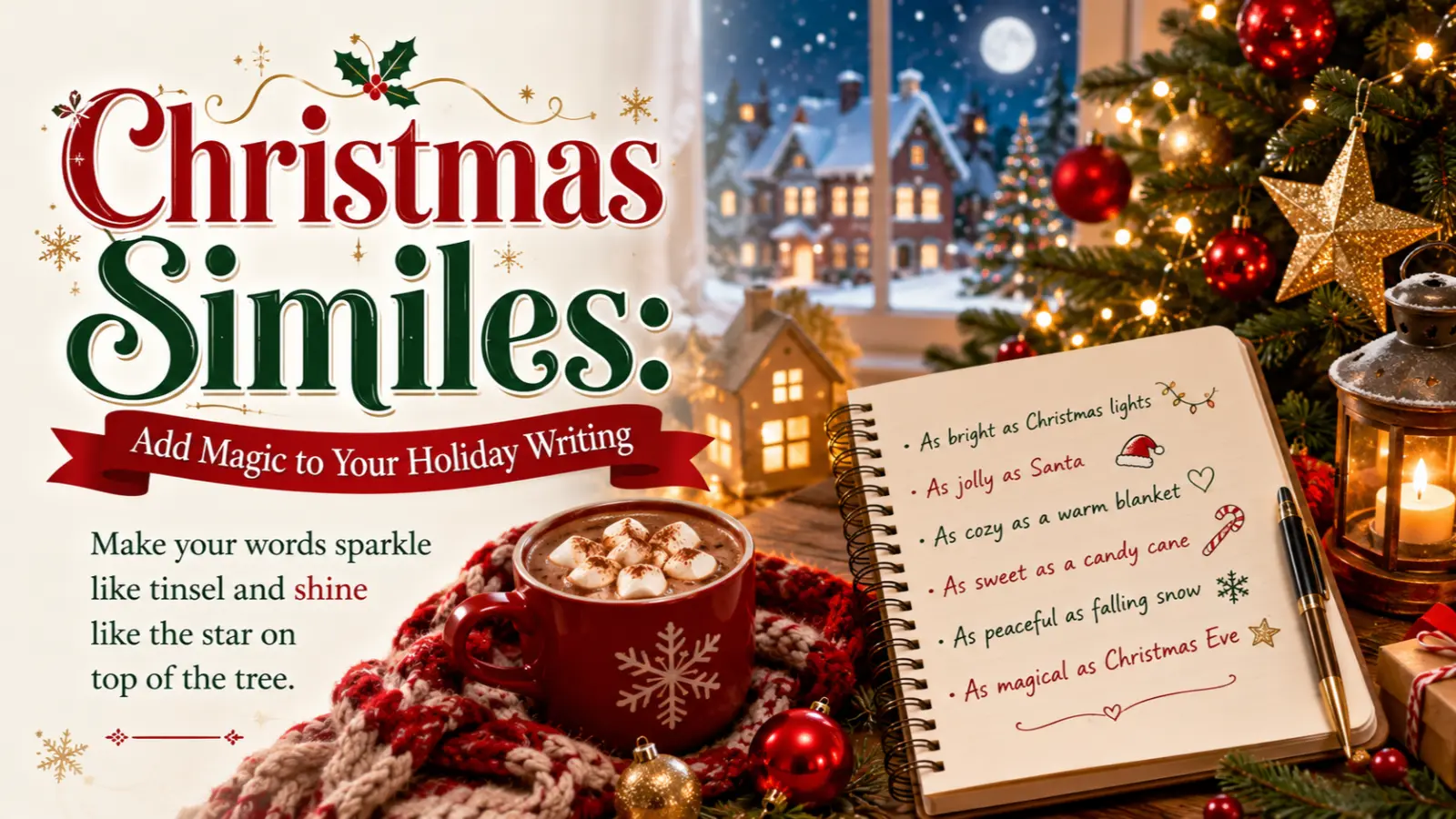
Christmas is full of sights, sounds, emotions, and traditions that inspire memorable writing. Whether you’re creating a holiday story, writing a Christmas card, composing a poem, or helping students improve their creative skills, well-crafted Christmas similes can make your descriptions feel warm and alive. A simile compares two different things using “like” or “as.” Instead of simply saying something is beautiful or joyful, a simile paints a picture that readers can easily imagine. In this guide, you’ll discover original Christmas similes, learn why they work, and find practical techniques for creating your own festive comparisons.
Quick Answer
Christmas similes are comparisons that use “like” or “as” to describe holiday people, places, feelings, objects, or events. They make writing more vivid by helping readers picture Christmas scenes through creative and relatable imagery.
Why Christmas Similes Make Writing More Memorable
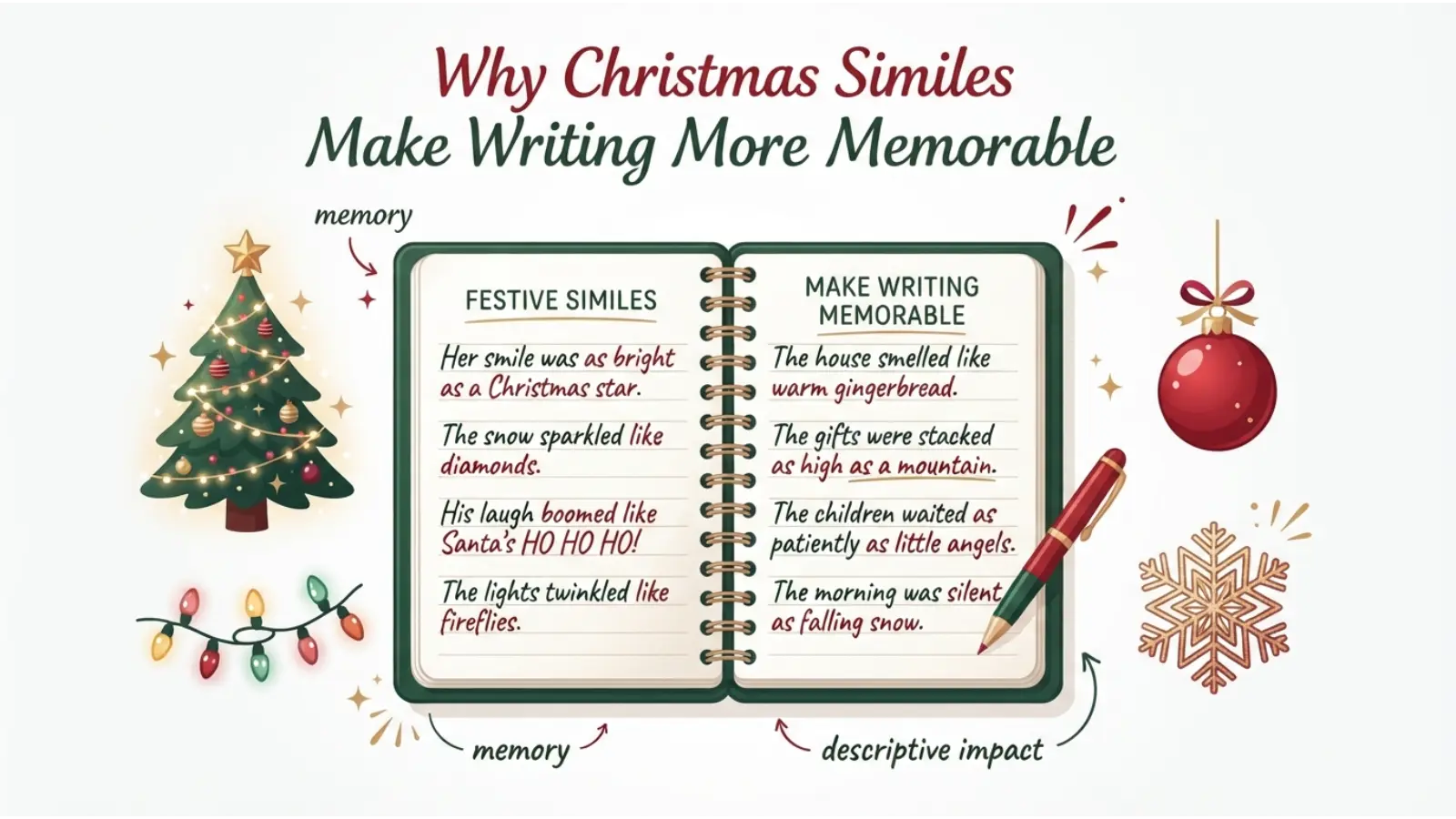
Holiday writing often celebrates warmth, generosity, excitement, and wonder. Simple descriptions can communicate these ideas, but similes help readers experience them.
Instead of writing:
The room looked beautiful.
You might write:
The room shimmered like fresh snow under moonlight.
The second sentence invites readers to imagine the scene rather than simply reading about it.
30 Original Christmas Similes
1. Bright as a candle greeting the night
Meaning: Full of hope and warmth.
Story example: Her smile was bright as a candle greeting the night.
2. Soft like snow settling on quiet rooftops
Creates peaceful holiday imagery.
Conversation: The blanket feels soft like snow settling on quiet rooftops.
3. Merry as bells dancing through cold air
Perfect for describing joyful people.
4. Warm as cocoa shared by old friends
Shows comfort and togetherness.
Formal example: Their reunion felt warm as cocoa shared by old friends.
5. Calm like a Christmas morning before sunrise
Ideal for peaceful scenes.
6. Shiny as ornaments catching fireplace light
Describes sparkling objects or joyful eyes.
7. Gentle like falling pine needles
Creates a quiet natural image
8. Excited as children spotting the first wrapped gift
Works well in stories about anticipation.
9. Cozy like a knitted scarf on a frosty evening
Expresses comfort and security.
10. Sweet as cinnamon drifting through the kitchen
Excellent for sensory writing.
11. Quiet like fresh footprints in untouched snow
Adds a feeling of stillness.
12. Cheerful as colorful lights along a snowy street
Describes happy personalities.
13. Glowing like a window welcoming travelers home
Suggests kindness and hospitality.
14. Light as a snowflake riding the wind
Useful for graceful movement.
15. Hopeful as the first star on Christmas Eve
Adds emotional depth.
16. Happy like a choir singing together
Ideal for celebrations.
17. Crisp as winter air after fresh snowfall
Perfect for describing weather.
18. Peaceful like a village wrapped in snow
Works beautifully in descriptive paragraphs.
19. Busy as elves preparing holiday surprises
A playful comparison for energetic people.
20. Colorful like presents beneath a glowing tree
Describes festive decorations.
21. Gentle as candlelight across an old photograph
Creates nostalgic emotion.
22. Joyful like laughter echoing through a decorated home
Excellent for family scenes.
23. Fresh as evergreen branches after morning frost
Great for nature-inspired descriptions.
24. Quiet as the final snowfall before dawn
Builds suspense or calm.
25. Bright like a star leading the way home
Works in inspirational writing.
26. Cozy as slippers beside a glowing fireplace
Perfect for holiday comfort.
27. Kind as a stranger sharing an umbrella in winter
Highlights generosity.
28. Magical like snowflakes catching Christmas lights
Excellent for children’s stories.
29. Full as a stocking waiting by the fireplace
Represents abundance or excitement.
30. Lasting like the scent of pine after the decorations are packed away
Expresses cherished memories.
What Makes a Strong Christmas Simile?
The best festive similes don’t simply mention Christmas objects. They connect an emotion with a vivid image.
For example:
Her kindness was warm as cocoa shared by old friends.
This works because readers associate hot cocoa with comfort, conversation, and winter evenings.
Strong similes create emotional connections instead of decorating sentences with random comparisons.
How Professional Writers Create Holiday Imagery
Experienced writers often begin with one clear feeling.
Ask yourself:
- What emotion do I want readers to feel?
- Which Christmas image naturally represents that feeling?
- Would someone instantly picture the comparison?
Choose sensory details whenever possible.
Think about:
- Lights
- Snow
- Pine trees
- Cookies
- Bells
- Candlelight
- Winter skies
- Scarves
- Fireplace warmth
- Holiday music
The more senses your writing touches, the more memorable it becomes.
Avoid Common Christmas Simile Mistakes
Using Overused Comparisons
Readers have seen many familiar holiday expressions countless times.
Try creating fresh images instead of repeating predictable ones.
Mixing Different Images
Avoid comparisons that compete with one another.
Example:
Her smile was like a snowflake and burned like the sun.
The imagery clashes rather than supporting one idea.
Forcing Every Sentence to Contain a Simile
Too many comparisons slow the writing.
Place similes where they create the strongest emotional impact.
Confusing Similes and Metaphors
Similes use like or as.
Example:
The tree stood like a glowing lighthouse.
A metaphor removes those comparison words.
Example:
The tree was a glowing lighthouse.
Related Literary Devices
Imagery
Imagery appeals to the senses through descriptive language. Christmas similes naturally strengthen imagery by helping readers see, hear, smell, and feel festive moments.
Personification
Giving human qualities to holiday objects creates charm.
Example:
The snow smiled across the hills.
Hyperbole
Holiday excitement sometimes benefits from exaggeration.
Example:
We wrapped presents until our table looked endless.
Symbolism
Christmas symbols often carry deeper meanings.
- Stars represent hope.
- Candles suggest warmth.
- Evergreen trees symbolize endurance.
- Bells often signal celebration.
Create Your Own Christmas Similes
Building original similes is easier than many people think.
Step 1
Choose an emotion.
Examples:
- Joy
- Peace
- Wonder
- Gratitude
- Excitement
Step 2
Think of a Christmas image connected to that feeling.
Examples:
- Snow
- Garland
- Cookies
- Fireplace
- Tree lights
- Bells
Step 3
Ask yourself what quality they share.
Example:
Feeling: Comfort
Image: Warm blanket by the fire
Result:
The evening felt as comforting as a blanket beside a glowing fireplace.
Creative Practice Exercise
Write one sentence for each theme:
- A snowy walk
- Decorating a tree
- Opening gifts
- Baking cookies
- Christmas dinner
Challenge yourself to avoid the first comparison that comes to mind. Your second or third idea is often more original.
Frequently Asked Questions
What is a Christmas simile?
A Christmas simile compares something to a festive image using like or as to create vivid descriptions.
Why are Christmas similes useful?
They help readers picture holiday scenes while adding emotion, atmosphere, and creativity.
Can children use Christmas similes?
Yes. They’re an excellent way for children to improve descriptive writing and storytelling.
Are Christmas similes only for poems?
No. They also work well in stories, greeting cards, essays, speeches, classroom activities, and holiday blogs.
How can I make my Christmas similes original?
Focus on real holiday experiences, use sensory details, and avoid comparisons you’ve heard many times before.
Should every paragraph include a simile?
No. Similes have the greatest impact when used selectively.
Conclusion
Christmas writing shines when readers can see, hear, and feel the holiday through your words. Thoughtful similes transform ordinary descriptions into memorable moments, whether you’re writing a poem, a family letter, a classroom assignment, or a festive story. Experiment with fresh comparisons inspired by your own holiday memories. The most meaningful similes often come from personal experiences, making your writing feel authentic, heartfelt, and unforgettable.
I am Helena Frost, a writer captivated by the beauty of language and the art of comparison. Through my words, I explore the world by turning ordinary moments into vivid similes and reflections. I enjoy crafting phrases that spark imagination, evoke emotion, and linger in the mind. My writing celebrates the subtle connections between people, nature, and the stories we live. For me, every sentence is an opportunity to reveal the extraordinary in the everyday.