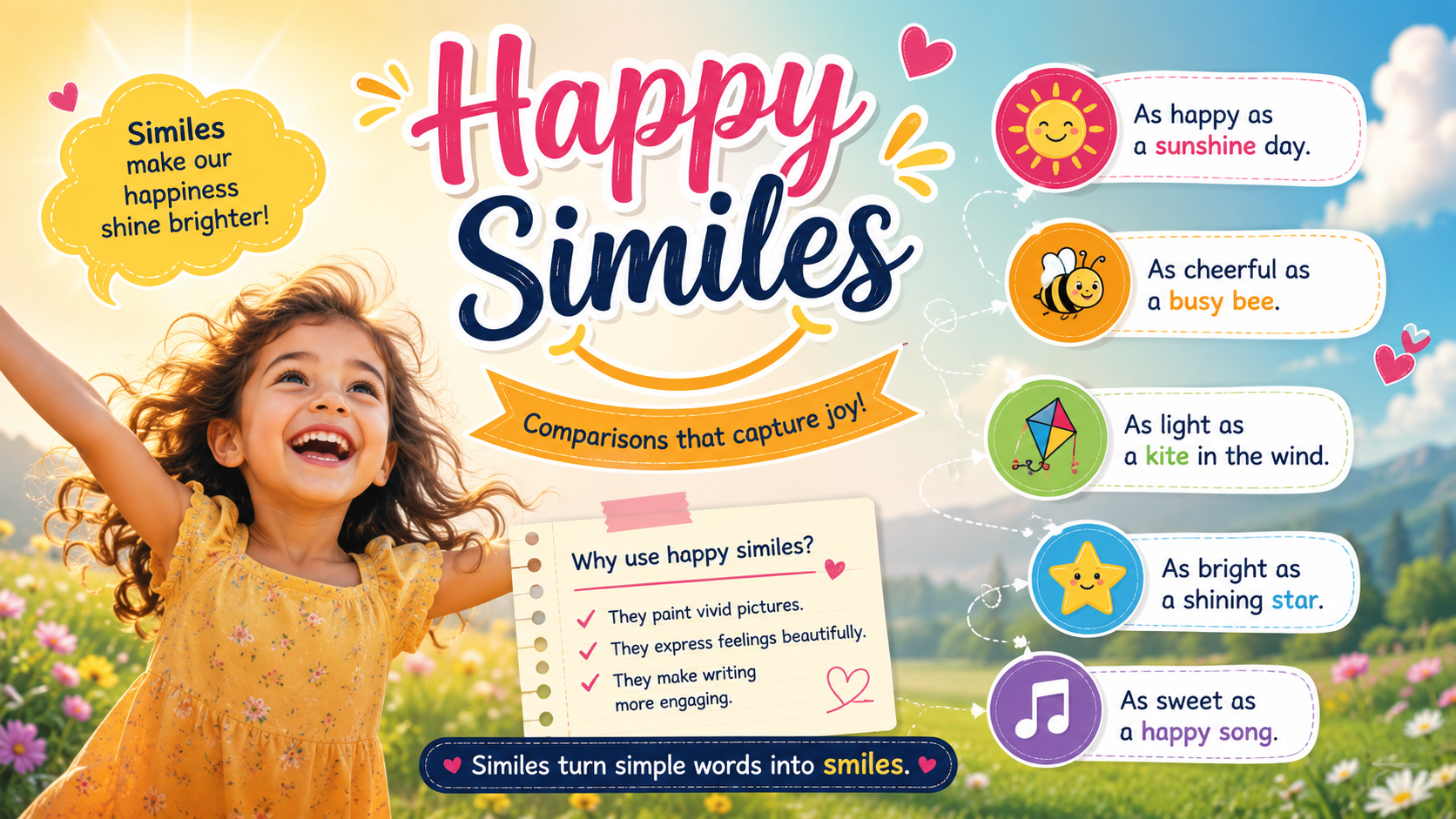
Happiness is one of the easiest emotions to recognize but one of the hardest to describe in a fresh way. That’s where similes can help. Instead of simply saying someone is happy, you can compare that feeling to something vivid and memorable.
A simile compares two different things using “like” or “as.” It helps readers picture emotions, scenes, and characters more clearly. Writers use similes in stories, poems, speeches, songs, conversations, and everyday writing because they make ordinary descriptions feel alive.
This guide explores original happy similes, explains why they work, and shows you how to create your own meaningful comparisons.
Quick Answer
Happy similes compare happiness to something familiar using like or as. They make emotions easier to imagine and more enjoyable to read. For example:
- She was as joyful as sunlight spilling through an open window.
- His smile spread like warm honey over fresh bread.
Strong happy similes help readers feel the emotion instead of simply reading about it.
Why Happy Similes Make Writing Better
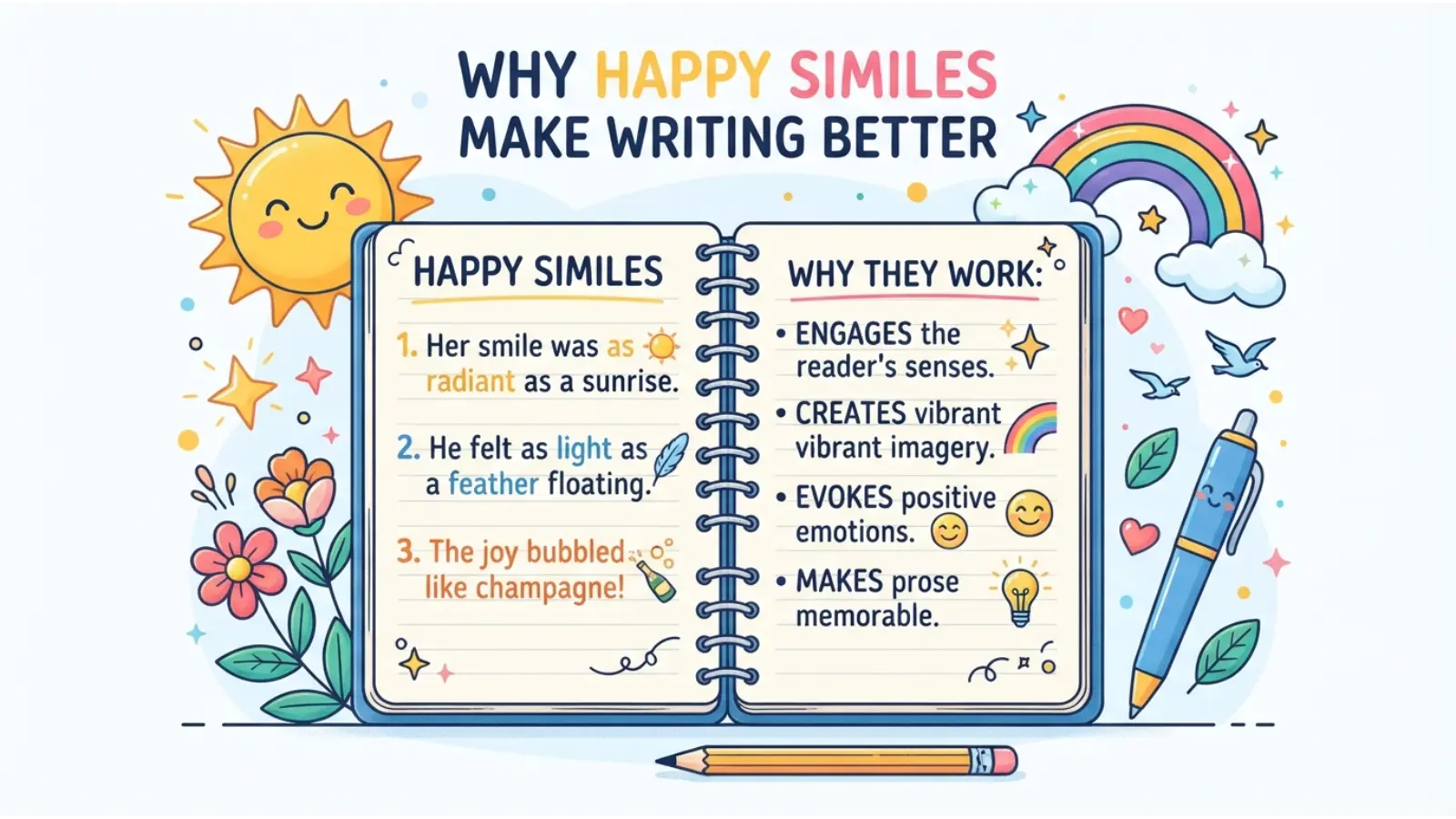
People rarely experience happiness in exactly the same way. One person feels light and energetic. Another feels calm and peaceful.
A thoughtful simile captures these different shades of happiness.
Instead of writing:
She was happy.
You could write:
She floated through the room like a feather dancing on a summer breeze.
The second version creates an image readers can see and feel.
30 Original Happy Similes
As Bright as Morning Sunshine
This simile suggests cheerful optimism.
Formal example
Her attitude remained as bright as morning sunshine despite the challenges.
Conversation
“You look as bright as morning sunshine today.”
Writing tip
Works well for describing personality.
Like a Garden After Spring Rain
Fresh happiness that brings new life.
Storytelling
Hope returned like a garden after spring rain.
As Cheerful as Birds Greeting Dawn
Perfect for energetic happiness.
Poetry
Her laughter was as cheerful as birds greeting dawn.
Like Fireflies Filling a Summer Night
Gentle happiness that spreads naturally.
Best used for magical scenes.
As Warm as Bread Fresh from the Oven
Comforting happiness shared with others.
Conversation
His welcome felt as warm as bread fresh from the oven.
Like Waves Dancing Across the Shore
Joy that moves freely.
This works well in descriptive writing.
As Light as Floating Seeds
Happiness without worry.
Example
She skipped home as light as floating seeds.
Like a Rainbow Finding the Sky
Unexpected happiness after difficult moments.
Ideal after emotional scenes.
As Fresh as the First Breeze of Spring
A renewed sense of happiness.
Like Stars Appearing One by One
Gradually growing happiness.
Useful for slow emotional development.
As Colorful as a Festival Parade
Excited happiness full of energy.
Like Music Flowing Through an Empty Room
Quiet happiness that fills every space.
As Gentle as a Sleeping Kitten
Peaceful contentment rather than excitement.
Like Golden Leaves Twirling in Autumn Wind
Carefree joy with graceful movement.
As Sweet as Homemade Lemonade on a Hot Day
Refreshing happiness.
Like Snow Sparkling Beneath Winter Sun
Pure and radiant joy.
As Free as a Kite Catching the Perfect Breeze
Happiness mixed with freedom.
Like Fresh Paint Bringing Color to a Blank Wall
Joy that transforms everything.
As Calm as Moonlight on a Quiet Lake
Peaceful happiness.
Perfect for reflective writing.
Like Butterflies Exploring a Flower Garden
Curious excitement and delight.
As Soft as Clouds After Rain
Gentle emotional relief.
Like Lanterns Lighting a Festival Night
Shared happiness among many people.
As Smooth as Pebbles Shaped by the River
Contentment developed over time.
Like Tiny Bells Ringing in the Breeze
Lighthearted happiness.
Excellent in children’s stories.
As Welcoming as an Open Front Porch
Friendly happiness.
Ideal for describing people.
Like Morning Coffee on a Quiet Weekend
Comfortable satisfaction.
Great for everyday writing.
As Hopeful as the First Blossom of Spring
Optimistic happiness.
Like Sunbeams Stretching Across a Wooden Floor
Quiet joy entering ordinary life.
As Peaceful as Fresh Snow Covering a Meadow
Deep emotional contentment.
Like Balloons Rising Into a Clear Blue Sky
Celebration and excitement.
A strong ending image for stories.
How Great Writers Create Better Happy Similes
The strongest similes don’t just compare objects. They compare experiences.
Instead of asking:
“What looks happy?”
Ask:
- What moves like happiness?
- What sounds joyful?
- What feels comforting?
- What changes a room the way happiness does?
These questions naturally lead to more original comparisons.
Make Your Similes More Vivid
A memorable simile often includes sensory details.
Instead of:
Happy like a flower.
Try:
Happy like a sunflower turning toward the morning light.
Notice how the second example creates movement and a stronger picture.
Related Literary Devices
Metaphor
A metaphor makes a direct comparison.
Simile
She was like sunshine.
Metaphor
She was sunshine.
Imagery
Imagery appeals to the senses.
A happy simile becomes stronger when readers can imagine the colors, sounds, or movement.
Personification
Giving human qualities to objects can strengthen a simile.
Example:
The breeze welcomed her like an old friend.
Symbolism
Objects such as sunrise, blossoms, birds, and light often symbolize hope and happiness, making them effective choices for positive similes.
Create Your Own Happy Similes
You don’t need extraordinary vocabulary.
Follow these simple steps.
Step 1
Choose the kind of happiness.
- Quiet
- Excited
- Proud
- Peaceful
- Hopeful
Step 2
Think of something that creates the same feeling.
Examples include:
- Sunrise
- Ocean waves
- Birds
- Fireworks
- Fresh flowers
- Music
- Warm bread
Step 3
Connect them using like or as.
Example:
Her excitement bounced like popcorn in a hot pan.
Creative Exercise
Write five happy moments.
For each one, compare the feeling to:
- Something from nature
- A favorite food
- Weather
- Music
- Light
This exercise trains your imagination to find fresh comparisons.
Common Mistakes to Avoid
Using Overused Comparisons
Readers have seen some comparisons countless times.
Try looking beyond the obvious.
Mixing Different Images
Avoid combining unrelated comparisons in one sentence.
Example:
She was as bright as sunshine and swam through the room like thunder.
The images clash instead of working together.
Confusing Similes with Metaphors
Remember:
- Similes use like or as.
- Metaphors do not.
Forcing Comparisons
A simile should feel natural.
If readers stop to figure it out, the comparison may be too complicated.
Describing Everything
Reserve similes for important moments.
Too many comparisons can weaken your writing instead of strengthening it.
Frequently Asked Questions
What is a happy simile?
A happy simile compares happiness to something else using like or as to create a clearer emotional image.
Why should I use happy similes?
They make emotions more vivid, memorable, and engaging for readers.
Are happy similes useful in stories?
Yes. They help readers connect with characters by showing emotions through imagery instead of simply naming them.
Can children use happy similes?
Absolutely. Simple comparisons encourage creativity and improve descriptive writing skills.
What’s the difference between a happy simile and a metaphor?
A simile uses like or as, while a metaphor makes a direct comparison without those words.
How do I avoid cliché similes?
Look at everyday experiences, nature, sounds, seasons, and personal memories instead of relying on familiar expressions.
Should every paragraph contain a simile?
No. Similes have the greatest impact when used thoughtfully rather than repeatedly.
Conclusion
Happy similes turn simple emotions into memorable images. They invite readers to experience joy through movement, color, sound, and feeling instead of relying on ordinary descriptions. The more you observe everyday life, the easier it becomes to create comparisons that feel fresh and authentic. Practice noticing the small moments that make people smile, then ask yourself what they remind you of. With time, you’ll develop a personal style that makes your writing more expressive, engaging, and unforgettable.
I am Helena Frost, a writer captivated by the beauty of language and the art of comparison. Through my words, I explore the world by turning ordinary moments into vivid similes and reflections. I enjoy crafting phrases that spark imagination, evoke emotion, and linger in the mind. My writing celebrates the subtle connections between people, nature, and the stories we live. For me, every sentence is an opportunity to reveal the extraordinary in the everyday.