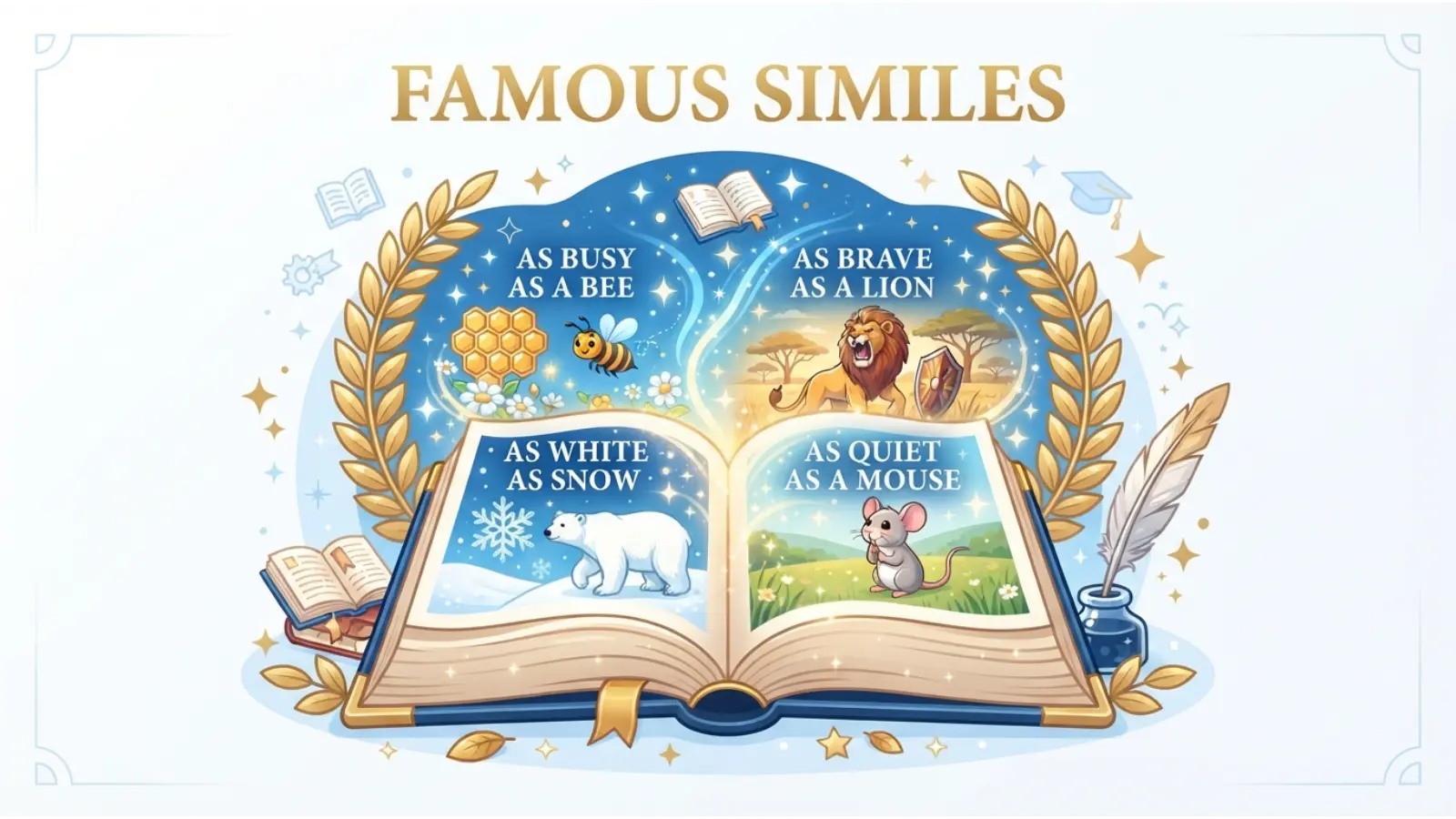
What Are Famous Similes?
Similes compare one thing to another using the words “like” or “as.” They help readers picture an idea, feel an emotion, or understand something in a memorable way. While many famous similes have become part of everyday language, writers can also create new ones that feel just as powerful.People use famous similes in novels, speeches, poems, classrooms, conversations, and even marketing because a strong comparison can make ordinary writing unforgettable. In this guide, you’ll discover original famous similes, learn why they work, and pick up practical techniques for writing your own vivid comparisons.
Quick Answer
A famous simile is a memorable comparison that uses “like” or “as” to describe a person, object, feeling, or situation. Great similes create clear mental images, strengthen emotions, and make writing easier to remember.
What Makes a Simile Become Famous?
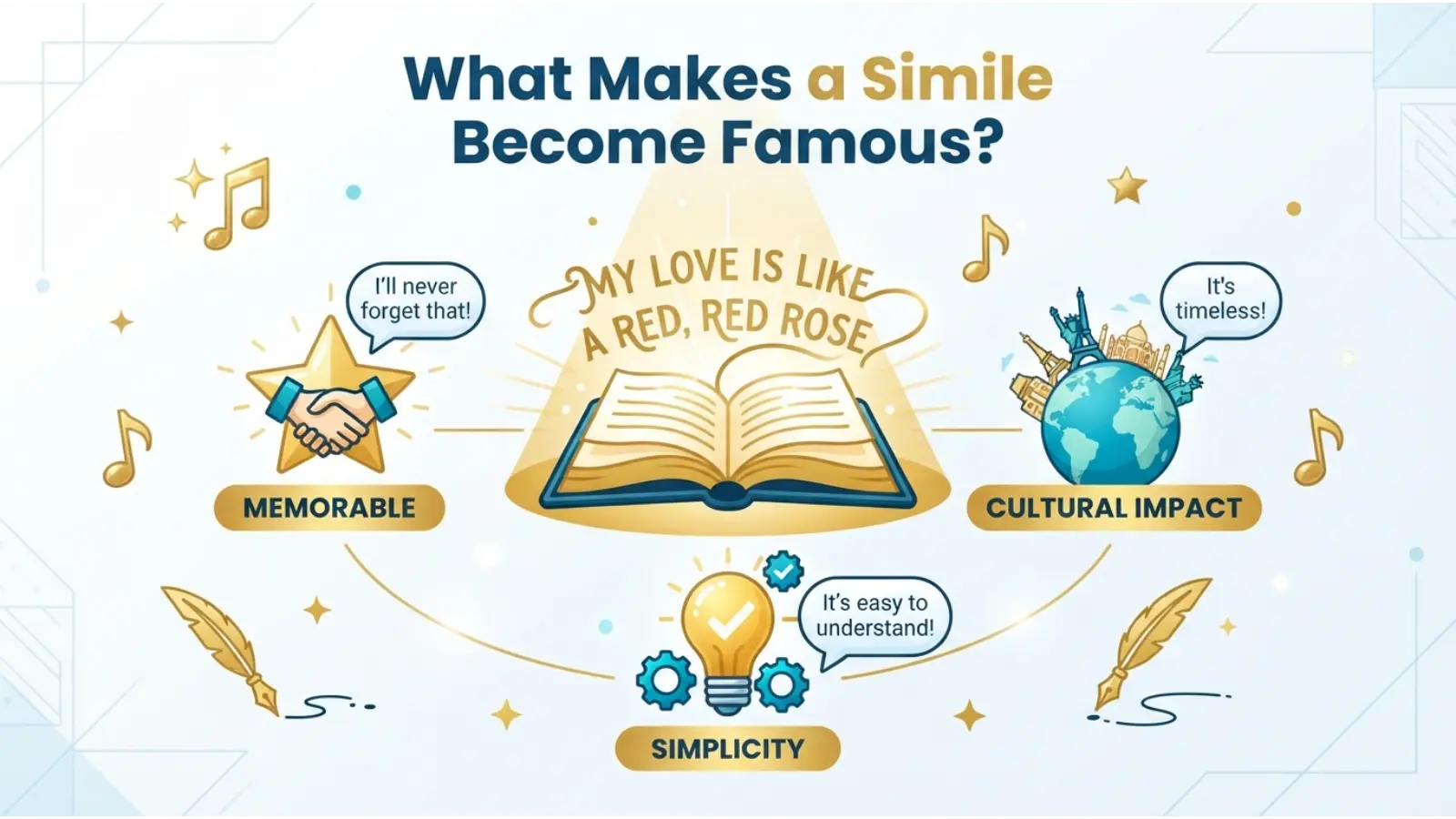
A simile becomes memorable when it is:
- Easy to understand
- Rich in imagery
- Emotionally meaningful
- Natural rather than forced
- Suitable for many different situations
The best similes feel so effortless that readers immediately picture what the writer means.
30 Original Famous Similes with Meanings and Examples
1. As steady as an old lighthouse
Meaning: Reliable during difficult times.
Story Example:
The coach remained as steady as an old lighthouse while everyone else panicked.
Writing Tip: Perfect for dependable characters.
2. Like sunrise breaking through fog
Meaning: Bringing hope after uncertainty.
Conversation:
Your advice was like sunrise breaking through fog.
3. As calm as a sleeping lake
Meaning: Peaceful and emotionally balanced.
Poetry:
Her thoughts rested as calm as a sleeping lake beneath the stars.
4. Like leaves dancing before autumn
Meaning: Moving gracefully.
Best for describing elegant movement.
5. As bright as freshly fallen snow
Meaning: Pure, clean, and brilliant.
Formal writing benefits from this gentle image.
6. Like a compass finding north
Meaning: Naturally choosing the right direction.
Excellent for stories about leadership.
7. As patient as growing forests
Meaning: Slow but steady progress.
8. Like rain waking thirsty fields
Meaning: Bringing relief and renewal.
Works beautifully in emotional scenes.
9. As fearless as dawn climbing mountains
Meaning: Facing challenges confidently.
10. Like stars stitched across velvet
Meaning: Beautifully scattered.
Ideal for descriptive writing.
11. As gentle as spring wind
Meaning: Kind and comforting.
12. Like echoes inside a quiet valley
Meaning: Thoughts that linger.
Useful in reflective stories.
13. As determined as roots through stone
Meaning: Persistent despite obstacles.
14. Like a candle refusing darkness
Meaning: Hope during difficult moments.
15. As welcoming as a warm fireplace
Meaning: Friendly and comforting.
16. Like waves polishing forgotten shells
Meaning: Quiet improvement over time.
17. As curious as morning birds
Meaning: Eager to explore.
Great for children or adventurous characters.
18. Like moonlight on still water
Meaning: Quiet beauty.
Excellent in poetry.
19. As bold as thunder crossing valleys
Meaning: Confident and powerful.
20. Like fresh paint on an old wall
Meaning: Bringing new life.
Works well for transformation stories.
21. As light as drifting feathers
Meaning: Extremely gentle.
22. Like hidden treasure beneath sand
Meaning: Unexpected value.
23. As graceful as clouds changing shape
Meaning: Smooth and effortless movement.
24. Like a bridge across rushing water
Meaning: Connecting people or ideas.
Useful for friendship themes.
25. As lively as rain on rooftops
Meaning: Full of energy.
26. Like fireflies guiding travelers
Meaning: Small acts that make a big difference.
27. As honest as clear glass
Meaning: Completely transparent.
Perfect for character descriptions.
28. Like seeds waiting for spring
Meaning: Full of hidden potential.
29. As cheerful as blooming sunflowers
Meaning: Bright and optimistic.
Excellent for positive writing.
30. Like an artist finding the perfect color
Meaning: Finally discovering exactly what is needed.
A fitting simile for creativity and inspiration.
Why These Similes Work
Strong similes don’t simply compare two things—they connect familiar experiences with new ideas.
For example, “as determined as roots through stone” works because nearly everyone understands how roots slowly overcome hard ground. The comparison feels believable, making determination easier to imagine.
Good similes create pictures instead of lengthy explanations.
How Professional Writers Create Memorable Similes
Professional writers usually begin with an emotion instead of an object.
Ask yourself:
- What feeling am I trying to show?
- What in nature behaves the same way?
- What everyday experience shares this emotion?
Instead of saying someone is happy, compare their happiness to something readers instantly recognize.
The more specific the image, the stronger the simile becomes.
How to Create Your Own Famous Similes
Step 1: Choose an Emotion
Examples:
- Joy
- Fear
- Curiosity
- Courage
- Peace
Step 2: Find a Visual Image
Think about:
- Weather
- Animals
- Seasons
- Light
- Water
- Mountains
- Music
Step 3: Connect Them Naturally
Instead of:
Happy like happiness
Try:
Happy like the first warm day after winter.
Specific images always create stronger writing.
Creative Practice Exercise
Choose one word from each column.
| Emotion | Nature | Object |
|---|---|---|
| Hope | River | Lantern |
| Courage | Storm | Bridge |
| Joy | Sunrise | Feather |
| Patience | Forest | Clock |
| Wonder | Stars | Window |
Create your own comparison using like or as.
Try writing five different versions and keep only the strongest one.
Common Mistakes to Avoid
Using Overused Comparisons
Some classic similes are useful, but relying on them too often can make writing feel predictable.
Create fresh images whenever possible.
Mixing Different Images
Avoid comparisons that combine unrelated ideas.
Keep one clear picture throughout the sentence.
Confusing Similes with Metaphors
A simile uses like or as.
A metaphor makes a direct statement without those words.
Forcing the Comparison
If readers have to stop and figure out what you meant, the simile probably needs revision.
Natural comparisons are usually the strongest.
Choosing Weak Images
Compare ideas to things readers can easily picture.
Concrete images leave lasting impressions.
Related Literary Devices
Metaphor
A metaphor says something is another thing instead of saying it is like it.
Imagery
Imagery appeals to the senses and helps readers visualize scenes.
Similes are one of the easiest ways to create vivid imagery.
Personification
Personification gives human qualities to non-human things.
It often works well alongside similes in descriptive writing.
Hyperbole
Hyperbole exaggerates for effect.
Combined carefully with similes, it can make dramatic scenes more memorable.
Symbolism
Symbols represent deeper meanings.
A symbolic simile can add emotional depth without lengthy explanations.
Frequently Asked Questions
What is a famous simile?
A famous simile is a memorable comparison using “like” or “as” that creates a clear image and communicates an idea effectively.
Why are similes important in writing?
They make descriptions more vivid, improve reader engagement, and help emotions feel more realistic.
Can I invent my own similes?
Absolutely. Original similes often make writing feel fresher and more personal than relying on familiar comparisons.
What is the difference between a simile and a metaphor?
A simile uses “like” or “as.” A metaphor makes a direct comparison without those words.
Are similes useful in everyday conversation?
Yes. People naturally use similes to explain feelings, describe experiences, and make conversations more engaging.
How do I avoid cliché similes?
Look for unique comparisons based on everyday observations instead of repeating familiar expressions.
Conclusion
Famous similes become memorable because they transform ordinary ideas into vivid mental pictures. The strongest comparisons are clear, meaningful, and connected to real experiences. As you write, don’t be afraid to experiment with fresh imagery drawn from nature, daily life, or your own imagination. With practice, your original similes can become the most memorable part of your stories, poems, and conversations.
I am Helena Frost, a writer captivated by the beauty of language and the art of comparison. Through my words, I explore the world by turning ordinary moments into vivid similes and reflections. I enjoy crafting phrases that spark imagination, evoke emotion, and linger in the mind. My writing celebrates the subtle connections between people, nature, and the stories we live. For me, every sentence is an opportunity to reveal the extraordinary in the everyday.