Humor makes writing memorable, and one of the easiest ways to add personality is through funny similes. A simile compares two different things using “like” or “as” to create a vivid image. The comparison often surprises readers, making them smile while helping them picture exactly what you mean. Funny similes appear in everyday conversations, comedy, children’s books, novels, speeches, classroom activities, and social media posts. A clever comparison can turn an ordinary sentence into something readers remember. This guide shares original funny similes, explains why they work, and teaches you how to create your own without relying on worn-out expressions.
Quick Answer
Funny similes are humorous comparisons that use “like” or “as” to describe people, actions, emotions, or situations in an amusing and imaginative way. They make writing more entertaining by creating unexpected mental images while keeping descriptions easy to understand.
Why Funny Similes Make Writing Better
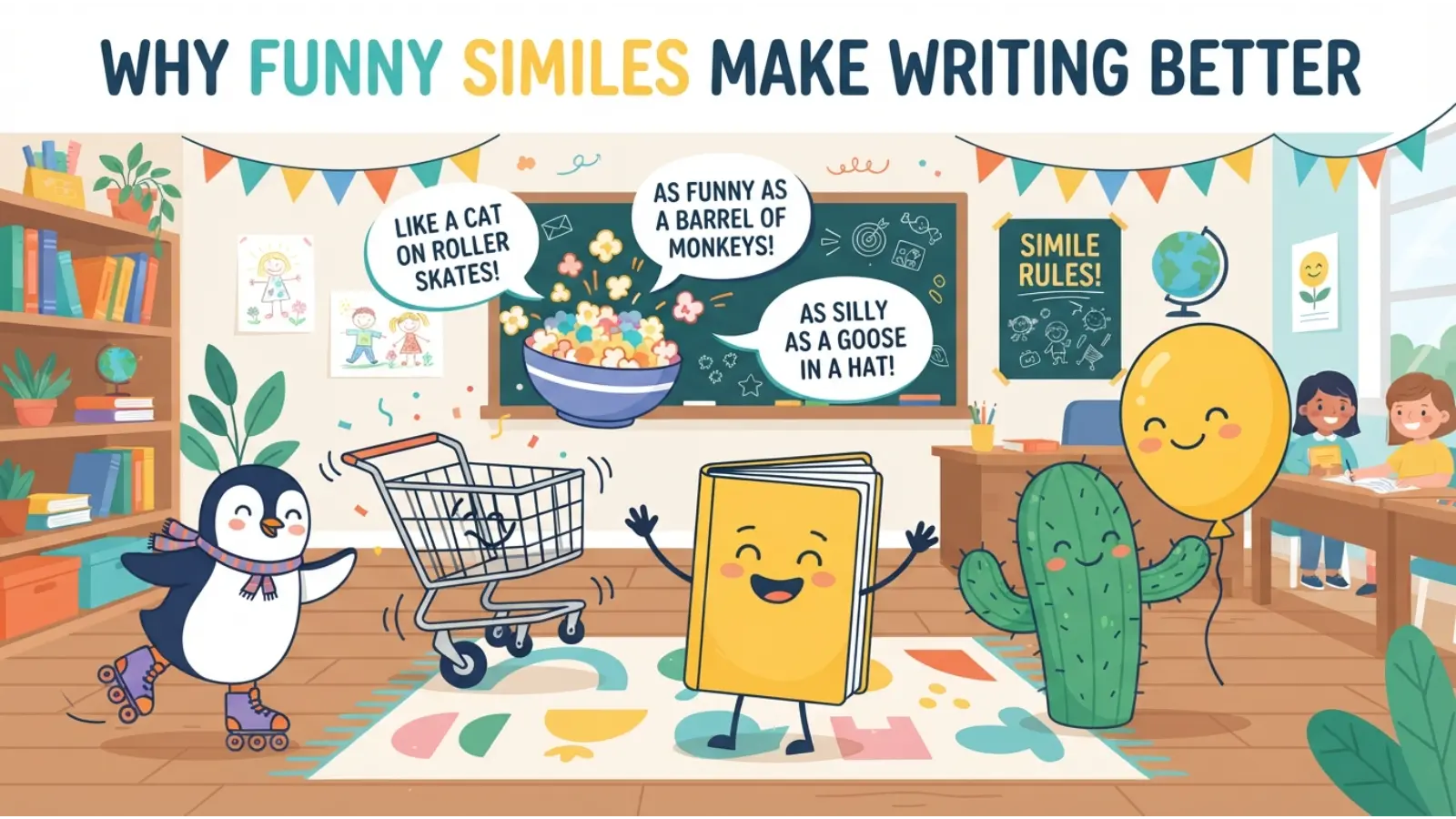
Humor keeps readers engaged because it creates surprise. A funny simile paints a picture while adding personality.
Instead of writing:
He looked nervous.
You might write:
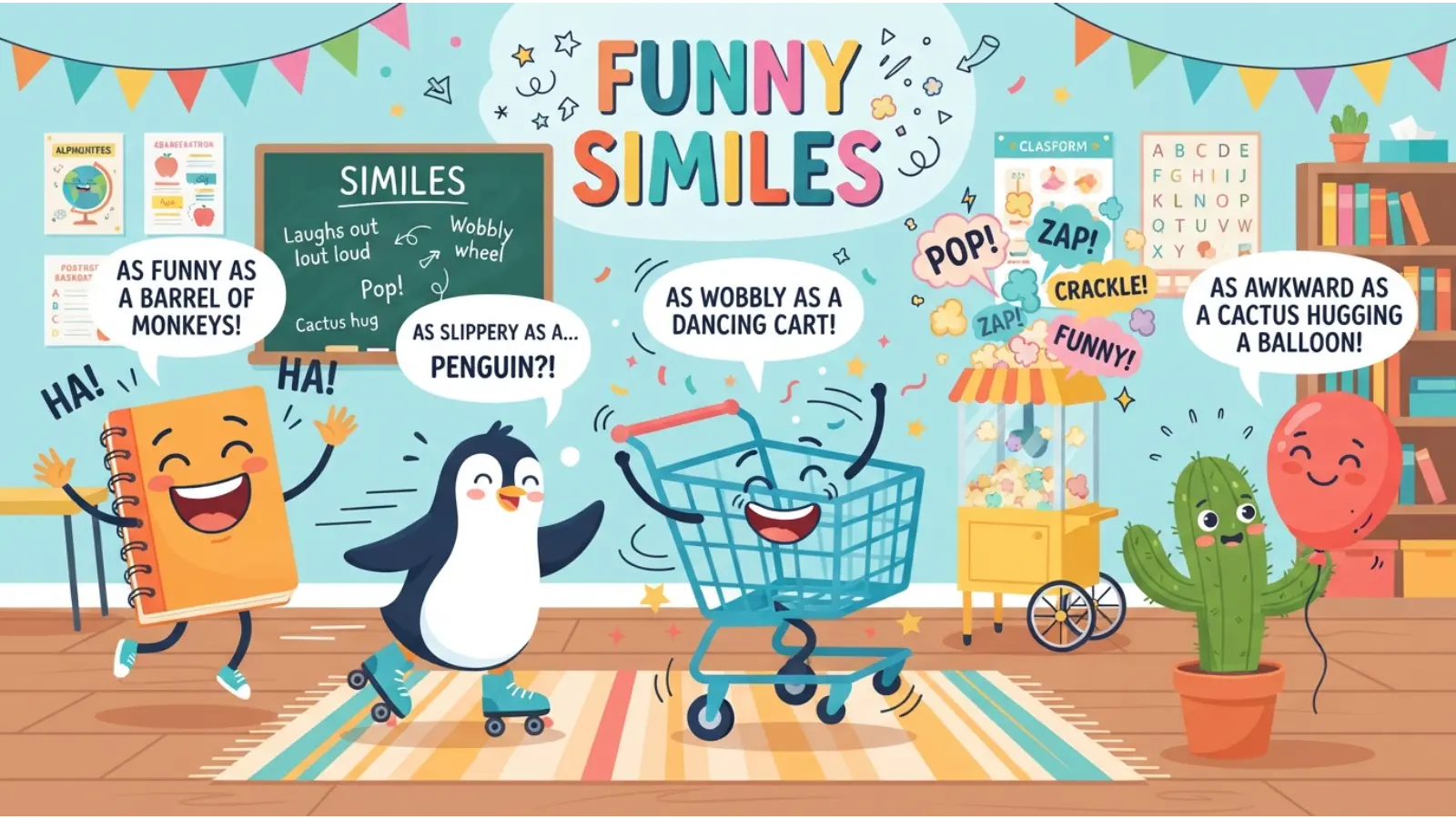
He looked as confident as a penguin wearing roller skates.
The reader immediately imagines the awkward scene, making the description both visual and memorable.
30 Original Funny Similes
1. As organized as a squirrel hiding snacks in different time zones.
Meaning: Extremely disorganized.
Conversation: My desk is as organized as a squirrel hiding snacks in different time zones.
Writing Tip: Great for humorous office scenes.
2. Like a cactus trying to give hugs.
Meaning: Well-meaning but awkward.
Story Example: His apology sounded like a cactus trying to give hugs.
3. As dramatic as popcorn in a microwave.
Meaning: Overreacting.
Poetry Example: Your worries burst like popcorn in a microwave.
4. Like a turtle entering a dance competition.
Meaning: Slow but determined.
Perfect for lighthearted storytelling.
5. As useful as sunglasses during a cave tour.
Meaning: Completely useless.
Works well in comedy writing.
6. Like a duck wearing business shoes.
Meaning: Looking strangely out of place.
7. As calm as a cat watching a cucumber appear.
Meaning: Suddenly startled.
8. Like spaghetti trying to stand at attention.
Meaning: Weak or floppy.
9. As graceful as a shopping cart with one bad wheel.
Meaning: Very clumsy.
Conversation:
“I danced as gracefully as a shopping cart with one bad wheel.”
10. Like a balloon arguing with a pin.
Meaning: Facing impossible odds.
11. As quiet as a sneezing elephant in a library.
Meaning: Impossible to stay unnoticed.
12. Like pancakes escaping the frying pan.
Meaning: Chaotic movement.
13. As confused as a fish reading a road map.
Meaning: Completely puzzled.
14. Like socks debating fashion.
Meaning: Taking something too seriously.
15. As patient as a toddler waiting for cake.
Meaning: Very impatient.
16. Like a snowman visiting the desert.
Meaning: Completely uncomfortable.
17. As cheerful as a puppy discovering autumn leaves.
Meaning: Joyfully excited.
18. Like jelly balancing on a trampoline.
Meaning: Extremely unstable.
19. As predictable as popcorn in a thunderstorm.
Meaning: Impossible to predict.
20. Like a robot trying stand-up comedy.
Meaning: Funny without meaning to be.
21. As sleepy as a bear after reading bedtime stories all winter.
Meaning: Extremely tired.
22. Like a pencil trying to win a swimming race.
Meaning: Unsuited for the task.
23. As stubborn as chewing gum on a sneaker.
Meaning: Refusing to let go.
24. Like marshmallows lifting dumbbells.
Meaning: Trying very hard despite limitations.
25. As slippery as soap on an ice rink.
Meaning: Difficult to catch.
26. Like a rooster forgetting sunrise.
Meaning: Completely out of routine.
27. As busy as a bee answering customer emails.
Meaning: Constantly occupied.
28. Like confetti caught in a tornado.
Meaning: Wildly chaotic.
29. As nervous as a cookie at a bake sale.
Meaning: Very anxious.
30. Like a broom trying ballet.
Meaning: Awkward but determined.
What Makes a Funny Simile Work?
Surprise
Readers enjoy comparisons they don’t expect.
Instead of comparing speed to lightning, compare it to something amusing and believable.
Visual Imagery
A good funny simile creates an instant picture.
Readers should almost see the comparison happening.
Relatability
The funniest comparisons usually involve everyday experiences like cooking, school, pets, weather, or family life.
Simplicity
Complicated comparisons lose their humor.
Keep them easy to picture.
How Professional Writers Create Humorous Similes
Professional writers often begin with an ordinary description.
Instead of asking:
“What is this like?”
They ask:
“What is the funniest unexpected thing this reminds me of?”
They then choose comparisons that match the mood of the story rather than forcing a joke.
How to Create Your Own Funny Similes
Step 1: Pick One Quality
Choose a trait.
Examples:
- Clumsy
- Loud
- Happy
- Sleepy
- Messy
Step 2: Brainstorm Unusual Objects
Think about everyday items.
- Toaster
- Umbrella
- Penguin
- Marshmallow
- Shopping cart
- Balloon
Step 3: Imagine an Impossible Situation
Ask:
“What would this object look funny doing?”
Examples:
- A toaster at the beach
- A penguin riding a scooter
- A balloon lifting weights
Step 4: Connect the Comparison
Use “like” or “as.”
Example:
She was as excited as a penguin riding its first skateboard.
Creative Writing Exercise
Write a funny simile for each situation.
- Someone arriving late.
- A messy bedroom.
- A loud classroom.
- A sleepy student.
- A nervous pet.
- A forgetful neighbor.
Try writing three different versions for each until one feels natural.
Common Mistakes to Avoid
Using Overused Comparisons
Expressions like “as busy as a bee” are familiar but may not feel fresh.
Look for original comparisons instead.
Mixing Images
Avoid combining unrelated ideas.
Example:
Like a fish climbing clouds on roller skates.
Too many images confuse readers.
Forcing Humor
Not every sentence needs to be funny.
Use humorous similes where they fit the tone.
Confusing Similes with Metaphors
Simile:
She smiled like sunshine.
Metaphor:
She was sunshine.
The words like and as usually signal a simile.
Choosing Weak Comparisons
Your comparison should help readers picture the scene, not leave them wondering what you meant.
Related Literary Devices
Metaphor
A metaphor compares two things without using like or as, often creating a stronger or more direct image.
Hyperbole
Hyperbole deliberately exaggerates for humorous or dramatic effect. Funny similes often pair well with exaggeration.
Imagery
Imagery appeals to the senses. Strong funny similes create clear visual images that readers can easily imagine.
Personification
Giving human qualities to objects or animals can make humorous comparisons even more entertaining.
Alliteration
Repeating beginning sounds can make a funny simile more rhythmic and memorable.
Idioms
Some familiar expressions resemble similes, but idioms often have meanings that cannot be understood literally.
Frequently Asked Questions
What is a funny simile?
A funny simile is a humorous comparison using like or as to describe something in a memorable and entertaining way.
Why are funny similes useful?
They make writing more engaging, easier to visualize, and more enjoyable to read.
Can funny similes be used in school assignments?
Yes. They add creativity to stories, essays, speeches, and poems when used appropriately.
What’s the difference between a funny simile and a joke?
A joke aims for a punchline. A funny simile mainly creates a humorous comparison while supporting the description.
How can I avoid cliché similes?
Choose everyday objects, imagine unusual situations, and create comparisons readers haven’t heard before.
Are funny similes good for children’s writing?
Yes. Children often enjoy playful, visual comparisons because they are easy to picture and remember.
Can funny similes improve dialogue?
Absolutely. They help characters develop unique voices and make conversations feel more lively.
Conclusion
Funny similes do more than make readers laugh—they make descriptions clearer, scenes more memorable, and characters more expressive. The strongest comparisons balance humor with vivid imagery, helping readers picture exactly what you mean. Experiment with unexpected ideas, observe everyday life, and don’t be afraid to invent playful comparisons. With practice, you’ll develop a style that’s both creative and unmistakably your own.

I am Helena Frost, a writer captivated by the beauty of language and the art of comparison. Through my words, I explore the world by turning ordinary moments into vivid similes and reflections. I enjoy crafting phrases that spark imagination, evoke emotion, and linger in the mind. My writing celebrates the subtle connections between people, nature, and the stories we live. For me, every sentence is an opportunity to reveal the extraordinary in the everyday.