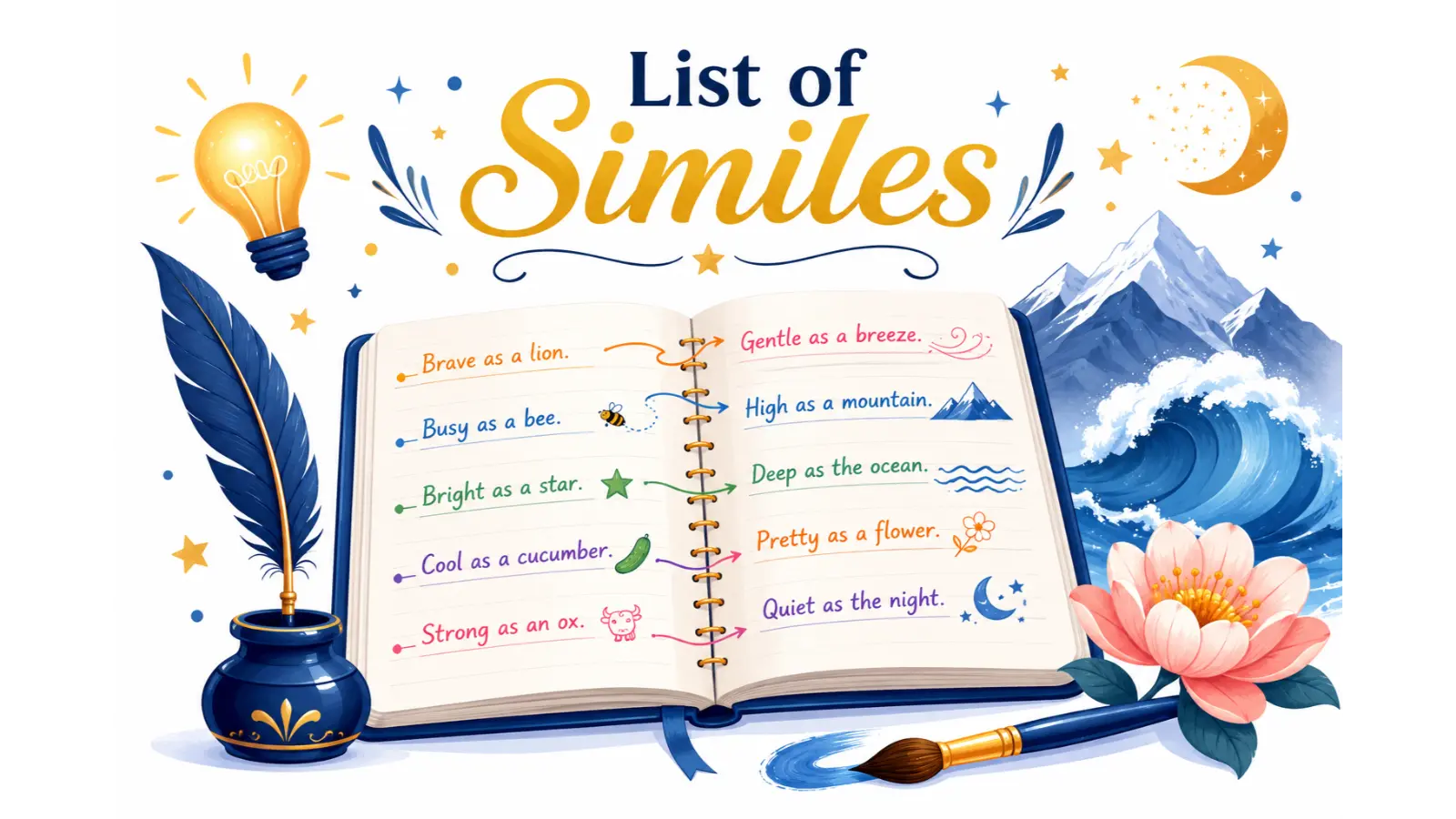
Similes are one of the easiest ways to make writing more colorful. Instead of simply saying that something is beautiful, loud, fast, or calm, A simile helps readers picture exactly what you mean by comparing one thing to another using “like” or “as.” You’ll find similes in novels, poems, speeches, classrooms, conversations, and even advertisements because they make ideas easier to imagine and remember. This guide offers a fresh list of Happy designed to inspire creative writing, strengthen descriptions, and help writers avoid overused comparisons. Whether you’re a student, teacher, storyteller, or aspiring author, you’ll discover practical examples you can adapt for your own work.
Quick Answer
A simile is a figure of speech that compares two different things using like or as. Writers use similes to create vivid imagery, express emotions, clarify ideas, and make descriptions more engaging. A strong list of happy gives writers inspiration while encouraging them to create comparisons that fit their own style.
Why Writers Use Similes
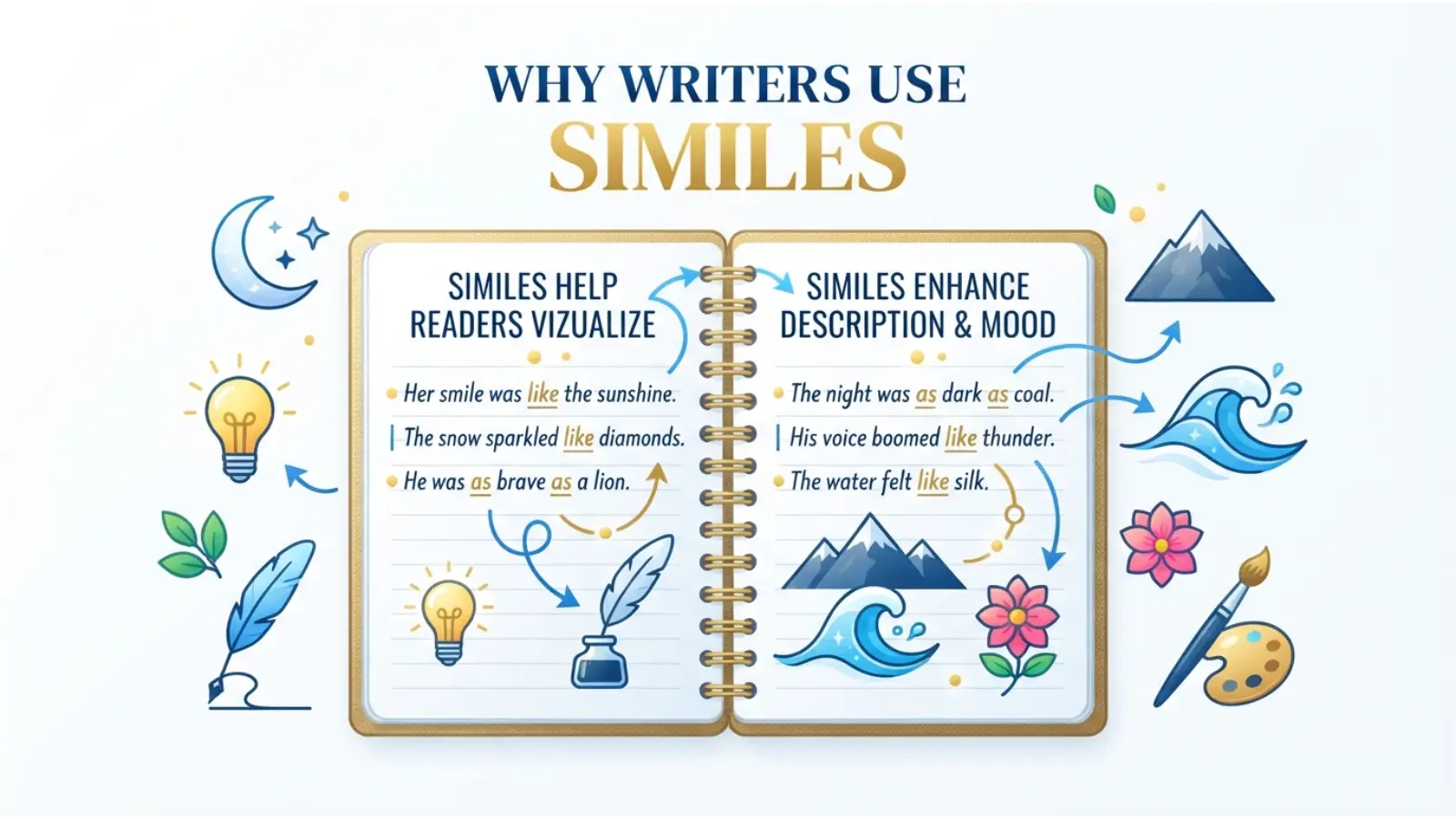
Similes do much more than decorate a sentence.
They help readers experience a scene instead of simply reading about it.
Good similes can:
- Create vivid mental images
- Express emotions naturally
- Make characters feel realistic
- Improve storytelling
- Add rhythm to poetry
- Simplify complex ideas
The best similes feel surprising yet believable.
35 Original Similes with Meanings and Examples
1. As patient as a tree waiting for spring
Meaning: Calm endurance over time.
Example: She remained as patient as a tree waiting for spring while the project slowly came together.
Best for: Personal growth and perseverance.
2. Like sunlight finding a window
Meaning: Bringing hope unexpectedly.
Conversation: Your encouragement felt like sunlight finding a window.
3. As quiet as fresh snow before sunrise
Meaning: Deep peaceful silence.
Storytelling: The village rested as quiet as fresh snow before sunrise.
4. Like a compass searching for north
Meaning: Looking for direction.
Writing Tip: Great for characters facing important decisions.
5. As steady as an old lighthouse
Meaning: Reliable during difficult times.
6. Like rain waking thirsty flowers
Meaning: Bringing comfort and renewal.
7. As bright as laughter around a campfire
Meaning: Warm happiness shared with others.
8. Like a bird discovering open skies
Meaning: Feeling newly free.
9. As gentle as morning mist
Meaning: Soft and calming.
10. Like waves polishing smooth stones
Meaning: Small efforts creating lasting change.
11. As curious as a child opening a mystery box
Meaning: Eager to learn.
12. Like a lantern guiding late travelers
Meaning: Offering hope or leadership.
13. As fearless as lightning crossing the sky
Meaning: Bold confidence.
14. Like ink spreading across fresh paper
Meaning: Ideas growing naturally.
15. As calm as a lake beneath the stars
Meaning: Complete inner peace.
16. Like autumn leaves sharing secrets
Meaning: Quiet conversation.
17. As determined as roots breaking through stone
Meaning: Strong persistence.
18. Like music filling an empty room
Meaning: Bringing life and joy.
19. As graceful as a feather floating downstream
Meaning: Elegant movement.
20. Like stars stitched across velvet
Meaning: Beautiful nighttime imagery.
Perfect for poetry.
21. As hopeful as dawn after a storm
Meaning: Optimism after hardship.
22. Like fresh paint on an old wall
Meaning: New beginnings.
23. As sharp as winter air
Meaning: Extremely clear or intelligent.
24. Like echoes dancing through mountains
Meaning: Memories lasting over time.
25. As welcoming as an open gate
Meaning: Friendly and inviting.
26. Like fireflies painting the evening
Meaning: Small moments creating beauty.
27. As focused as an artist finishing a masterpiece
Meaning: Deep concentration.
28. Like rivers finding the sea
Meaning: Following a natural path.
29. As cheerful as birds greeting sunrise
Meaning: Joyful optimism.
30. Like a bridge joining distant shores
Meaning: Bringing people together.
31. As resilient as wild grass after rain
Meaning: Recovering quickly from challenges.
32. Like fresh bread welcoming neighbors
Meaning: Warm hospitality.
33. As creative as colors escaping a painter’s brush
Meaning: Endless imagination.
34. Like clouds drifting without hurry
Meaning: Relaxed and unhurried.
35. As unforgettable as the first star at dusk
Meaning: A lasting memory.
What Makes a Simile Memorable?
The strongest similes don’t compare random objects.
Instead, they connect two ideas that naturally share a feeling, appearance, movement, or emotion.
Rather than choosing the first comparison that comes to mind, ask yourself:
- What emotion should the reader feel?
- What image best represents that feeling?
- Is the comparison fresh without becoming confusing?
Specific details usually create stronger imagery than general descriptions.
How Professional Writers Create Better Similes
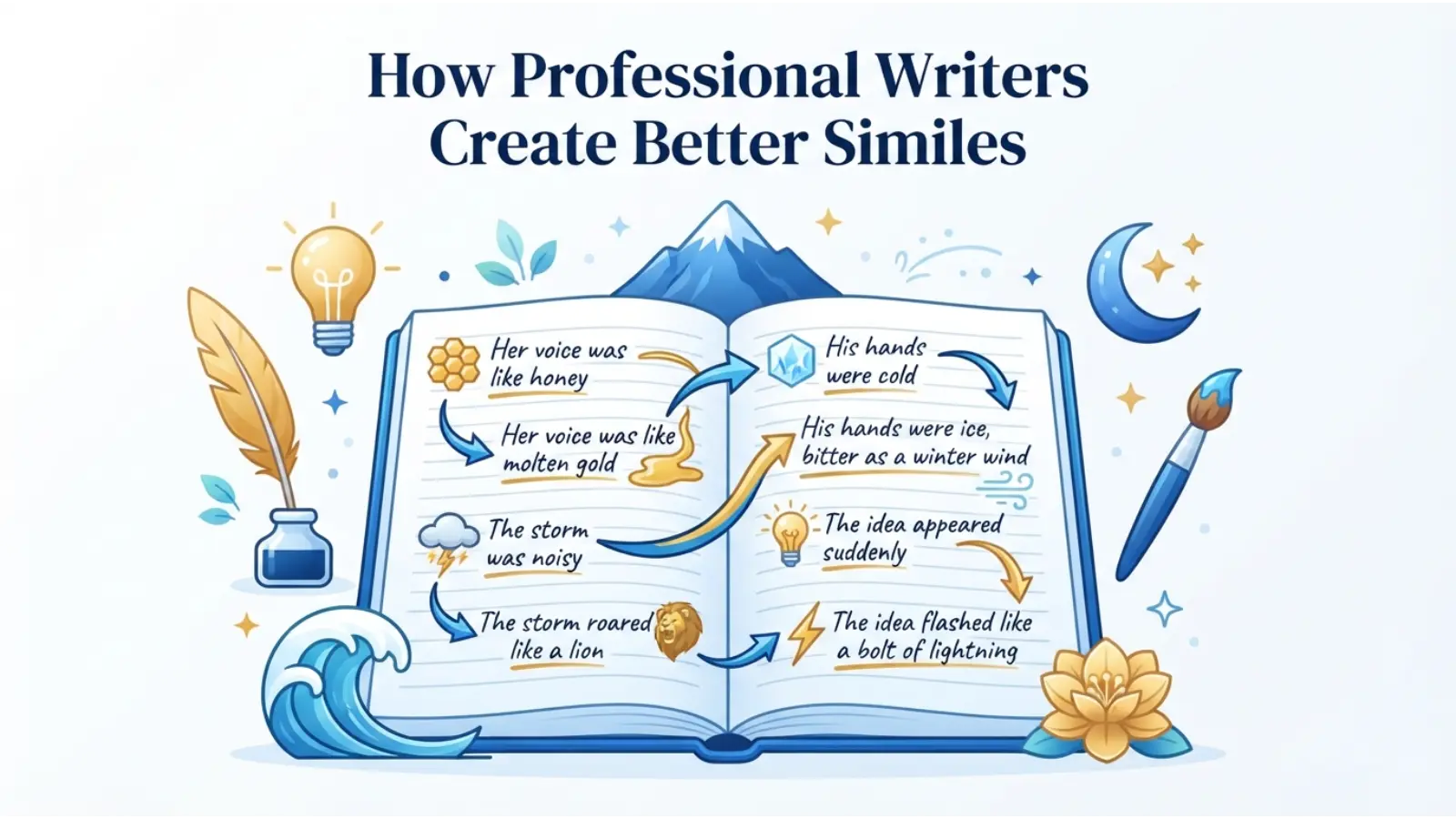
Professional writers often begin with observation rather than comparison.
They notice how light falls across a room, how leaves move in the wind, or how someone smiles after hearing good news.
Only then do they search for another image that creates the same emotional effect.
This approach produces similes that feel original because they grow naturally from real experiences.
How to Create Your Own Similes
Creating original similes becomes easier with practice.
Step 1: Choose your subject.
Example: A smile.
Step 2: Pick one quality.
Warm, bright, shy, confident, or welcoming.
Step 3: Think of something with the same quality.
Morning sunshine, glowing candles, fresh blossoms, gentle rain.
Step 4: Connect them with “like” or “as.”
Example:
Her smile was like the first warm sunlight after winter.
Creative Exercise
Choose five everyday objects around you.
For each object, write three different similes based on:
- Color
- Movement
- Emotion
This exercise helps develop original imagery.
Common Mistakes to Avoid
Using Overused Comparisons
Familiar expressions can lose their impact through repetition.
Try creating your own comparisons instead.
Mixing Imagery
Keep your comparison consistent.
Avoid combining unrelated images in one sentence.
Confusing Similes with Metaphors
A simile uses like or as.
A metaphor states one thing is another.
Forcing Comparisons
If a comparison feels unnatural, simplify it.
Clarity always beats complexity.
Choosing Vague Images
Specific details make writing memorable.
Instead of “beautiful as a flower,” describe a flower that matches the exact mood.
Related Literary Devices
Metaphor
Makes a direct comparison without using “like” or “as.”
Imagery
Uses descriptive language that appeals to the senses.
Personification
Gives human qualities to animals, objects, or ideas.
Hyperbole
Uses deliberate exaggeration for emphasis.
Alliteration
Repeats beginning consonant sounds to create rhythm.
Symbolism
Uses objects or actions to represent deeper meanings.
Frequently Asked Questions
What is a simile?
A simile compares two different things using like or as to create clearer, more vivid descriptions.
Why are similes important?
They help readers imagine scenes, understand emotions, and remember ideas more easily.
Where are similes commonly used?
You’ll find them in literature, poetry, speeches, classroom writing, storytelling, songs, and everyday conversations.
How can I write original similes?
Observe real-life details first, then compare them with something that shares the same feeling or quality.
What’s the difference between a simile and a metaphor?
A simile uses “like” or “as,” while a metaphor makes a direct comparison without those words.
Can similes improve creative writing?
Yes. Strong similes make descriptions more engaging, emotional, and memorable.
Conclusion
A thoughtful list of Happy is more than a collection of comparisons—it’s a source of creative inspiration. The most effective similes help readers see familiar ideas from a fresh perspective while making stories, essays, and poems more vivid. Practice observing the world around you, experiment with unexpected comparisons, and keep refining your imagery. Over time, writing memorable similes will become a natural part of your creative voice.
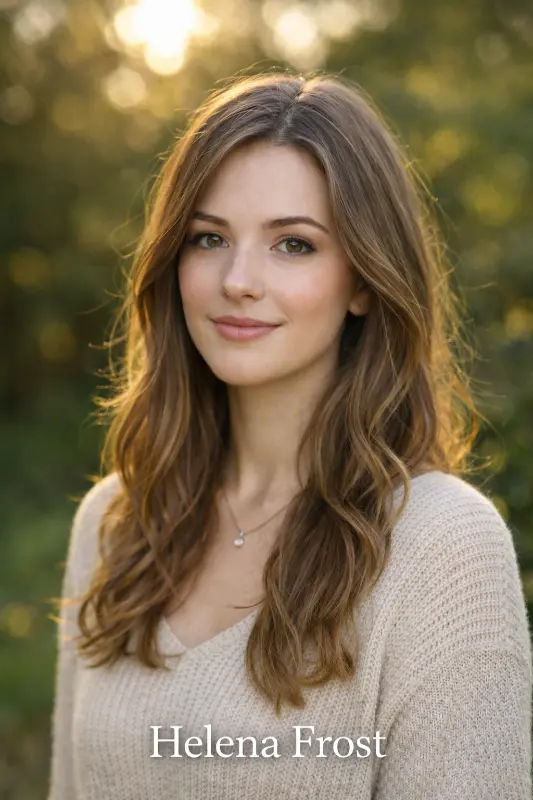
I am Helena Frost, a writer captivated by the beauty of language and the art of comparison. Through my words, I explore the world by turning ordinary moments into vivid similes and reflections. I enjoy crafting phrases that spark imagination, evoke emotion, and linger in the mind. My writing celebrates the subtle connections between people, nature, and the stories we live. For me, every sentence is an opportunity to reveal the extraordinary in the everyday.