Songs often stay with us because they create vivid pictures in our minds. One of the easiest ways songwriters achieve this is through similes. A well-crafted simile can turn an ordinary lyric into something listeners remember long after the music ends. Whether you’re writing lyrics, studying English, or simply curious about figurative language, this guide explores how similes in songs create emotion, imagery, and memorable storytelling. You’ll also find original examples, practical writing advice, and exercises to help you create your own comparisons.
What Is a Simile?
A simile is a figure of speech that compares two different things using words such as like or as.
Instead of saying someone is brave, a songwriter might compare that courage to something familiar. The comparison helps listeners feel the emotion instead of simply being told about it.
Similes appear in:
- Song lyrics
- Poetry
- Stories
- Speeches
- Everyday conversations
- Creative writing
Quick Answer
Similes in songs are comparisons that use words like “like” or “as” to create vivid imagery and emotional impact. They help listeners visualize feelings, strengthen storytelling, and make lyrics more memorable.
Why Songwriters Use Similes
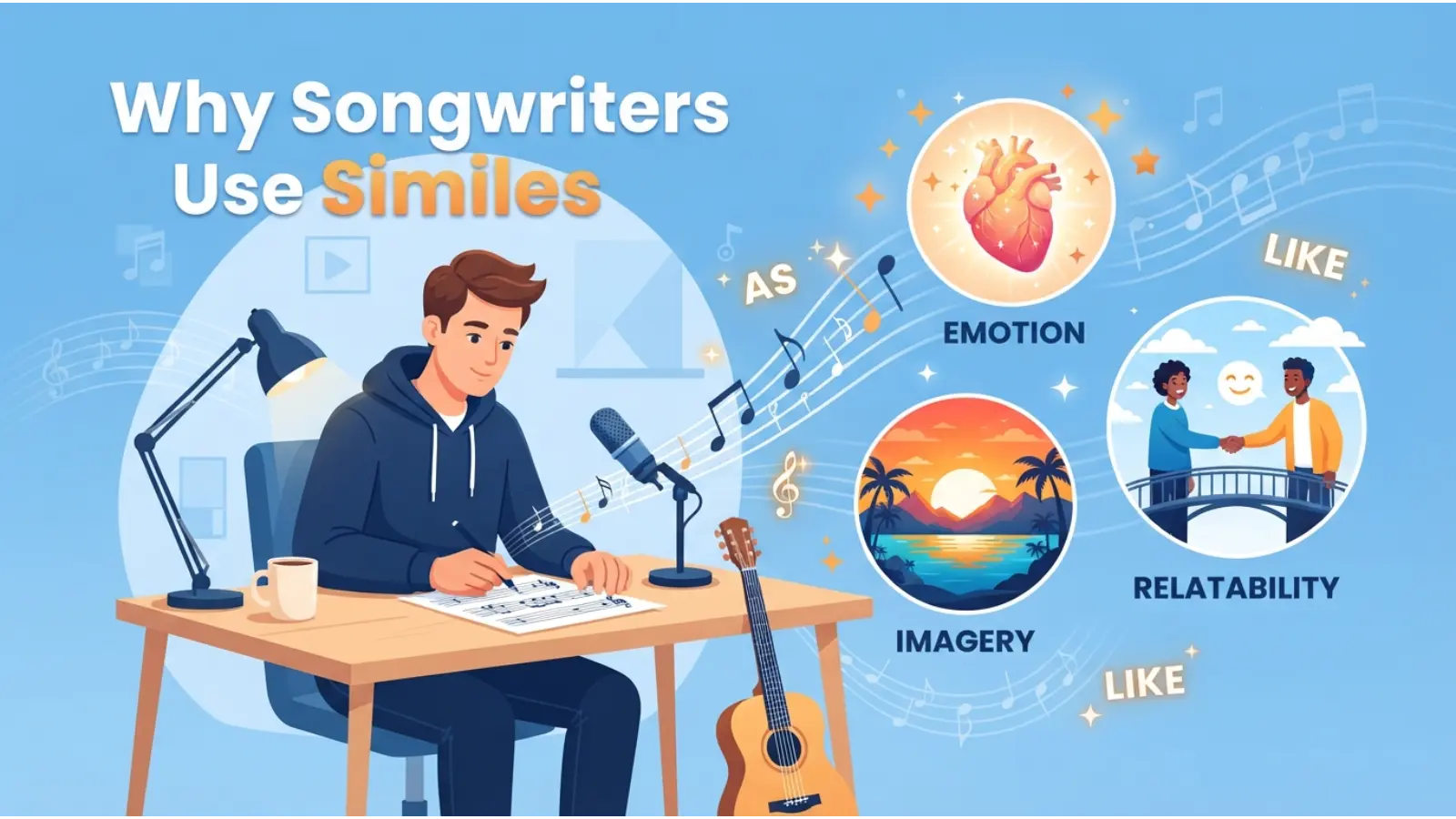
Music communicates emotion quickly. A good simile lets listeners connect their own experiences to a lyric.
Songwriters use similes to:
- Paint clear mental pictures
- Express emotions creatively
- Make lyrics easier to remember
- Add rhythm and musical flow
- Create fresh, imaginative imagery
Instead of explaining sadness in several lines, one meaningful comparison can express it instantly.
Original Similes in Songs
The following examples are completely original and designed to inspire lyric writing.
1. Like sunrise melting through winter glass
Meaning: Hope slowly replacing sadness.
Lyric example:
Your smile came like sunrise melting through winter glass.
Best for: Love songs and emotional ballads.
2. As quiet as snowfall on forgotten streets
Creates peaceful, reflective imagery.
Conversation:
“The room became as quiet as snowfall on forgotten streets.”
3. Like a compass chasing invisible stars
Represents searching for purpose.
Works well in inspirational songs.
4. As restless as waves before a storm
Expresses anxiety and anticipation.
5. Like candlelight finding an empty window
Suggests unexpected comfort.
Ideal for heartfelt lyrics.
6. As bright as laughter across a lake
Creates cheerful imagery.
7. Like leaves dancing after the rain
Shows freedom and renewal
8. As fragile as morning mist over hills
Perfect for describing delicate emotions.
9. Like echoes wrapped inside old walls
Suggests memories that never disappear.
10. As fearless as birds greeting dawn
Symbolizes confidence and new beginnings.
11. Like rivers remembering the sea
Represents returning home or finding belonging.
12. As gentle as moonlight on quiet water
Creates a calm romantic mood.
13. Like sparks escaping a campfire
Describes excitement spreading quickly.
14. As lonely as an unopened letter
Expresses isolation in a fresh way.
15. Like autumn painting sleepy forests
Shows gradual change.
16. As steady as mountains watching seasons
Represents loyalty and strength.
17. Like raindrops teaching flowers to bloom
Suggests growth through hardship.
18. As free as clouds choosing their own path
Perfect for songs about independence.
19. Like stars stitched into midnight
Creates beautiful visual imagery.
20. As patient as tides meeting the shore
Represents persistence.
21. Like a lantern leading forgotten travelers
Shows guidance and hope.
22. As warm as bread from an old kitchen
Creates feelings of comfort and nostalgia.
23. Like feathers floating through open skies
Represents peace and freedom.
24. As unexpected as rain in summer sunlight
Captures surprising happiness.
25. Like footprints fading beside the ocean
Shows memories disappearing.
26. As bold as thunder over open fields
Expresses courage and confidence.
27. Like flowers reaching for distant light
Represents ambition and determination.
28. As timeless as the moon above quiet rivers
Suggests enduring love.
29. Like music stitched into the wind
Creates magical imagery.
30. As endless as tomorrow’s horizon
Perfect for hopeful endings.
What Makes a Song Simile Memorable?
Great song similes do more than compare two things.
They:
- Create a clear image.
- Match the emotion of the lyric.
- Feel natural within the melody.
- Avoid comparisons readers have seen hundreds of times.
- Reveal something new about the subject.
A memorable comparison surprises listeners without confusing them.
How Professional Songwriters Build Strong Similes
Professional writers often begin with an emotion instead of an object.
For example:
Emotion → loneliness
Then they ask:
“What naturally feels lonely?”
Instead of choosing obvious answers, they search for fresh experiences, places, sounds, or seasons that carry the same feeling.
This approach creates original imagery instead of recycled comparisons.
How to Write Your Own Similes for Songs
Step 1: Choose the emotion
Examples include:
- Love
- Joy
- Fear
- Hope
- Regret
- Excitement
Step 2: Find something people recognize
Nature often provides powerful inspiration:
- Rivers
- Stars
- Rain
- Wind
- Fire
- Trees
- Birds
Step 3: Look for shared qualities
Ask:
“What do these two things have in common?”
That shared quality becomes your comparison.
Step 4: Read it aloud
Songs depend on rhythm.
If the simile sounds awkward when spoken, revise it until it flows naturally.
Creative Exercise
Choose one emotion and write three comparisons.
Example:
Emotion: Courage
- Like…
- As…
- Like…
Then choose the strongest one and place it inside a short chorus.
This exercise helps develop originality instead of relying on familiar expressions.
Common Mistakes When Writing Similes in Songs
Using Overused Comparisons
Comparisons that appear everywhere rarely surprise listeners.
Try replacing predictable images with fresh observations from nature, everyday life, or personal experiences.
Mixing Imagery
Keep your comparison focused.
Switching from oceans to fire to clouds in one sentence can confuse the listener.
Confusing Similes with Metaphors
A simile uses like or as.
A metaphor states one thing is another.
Understanding the difference makes your writing more precise.
Forcing a Comparison
Not every lyric needs a simile.
Sometimes simple language creates stronger emotional impact.
Choosing Complicated Images
Listeners should understand the comparison quickly.
If they spend too much time decoding it, the emotion may be lost.
Related Literary Devices
Metaphor
A metaphor compares two things without using like or as.
Imagery
Imagery appeals to the senses, helping readers or listeners picture, hear, feel, taste, or smell a scene.
Personification
Personification gives human qualities to non-human things, such as saying the wind whispered.
Hyperbole
Hyperbole uses deliberate exaggeration for emotional effect.
Symbolism
Symbols allow objects or places to represent deeper meanings, making lyrics richer and more layered.
Frequently Asked Questions
What are similes in songs?
They are comparisons using words like “like” or “as” to create vivid imagery and emotion in lyrics.
Why do songwriters use similes?
They make lyrics more memorable, expressive, and emotionally engaging.
Are similes only used in love songs?
No. They appear in every music genre, including country, pop, rock, folk, worship, jazz, and hip-hop.
What is the difference between a simile and a metaphor?
A simile uses like or as, while a metaphor makes a direct comparison without those words.
Can beginners write effective song similes?
Yes. Starting with everyday observations and focusing on one clear emotion often produces the strongest results.
How can I avoid cliché similes?
Look beyond common comparisons and draw inspiration from personal experiences, nature, sounds, memories, and small everyday moments.
Conclusion
Similes in songs help transform ordinary lyrics into memorable experiences. They give listeners something to picture, something to feel, and often something to remember long after the music ends. The best comparisons don’t exist simply to sound poetic—they reveal emotion in a fresh, believable way. Keep observing the world around you, experiment with unexpected images, and don’t be afraid to revise until each comparison feels both natural and meaningful. With practice, your own song similes will become more vivid, personal, and unforgettable.
Image Prompts
Featured Image Prompt
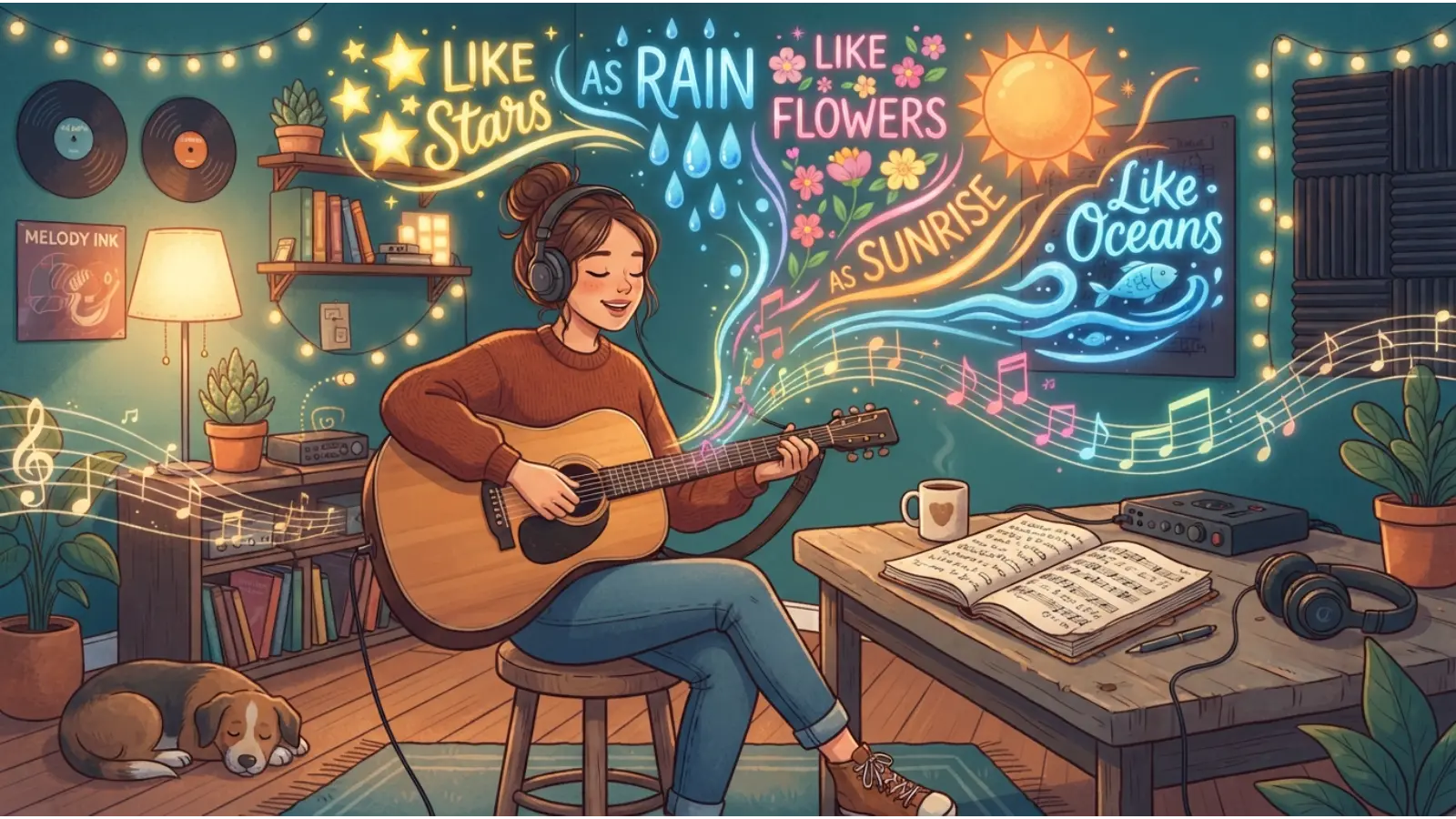
A modern, artistic illustration of a songwriter composing music in a cozy studio with a guitar, notebook, headphones, and glowing musical notes transforming into colorful similes. Include floating words like “like” and “as” connected to vivid imagery such as stars, rain, flowers, sunrise, and oceans. Warm lighting, creative atmosphere, clean flat-vector style, high resolution.
Pinterest Image Prompt
Vertical educational infographic titled “Similes in Songs.” Show a notebook of handwritten lyrics, musical notes, microphone, guitar, and colorful comparison bubbles featuring imaginative scenes like sunrise, waves, moonlight, forests, and stars. Bright typography, minimal design, Pinterest-friendly layout.
Infographic Prompt
Create an educational infographic titled “How Similes Make Songs Memorable.” Include five sections: What Is a Simile, Why Songwriters Use Similes, Original Examples, Common Mistakes, and Steps to Write Your Own. Use icons for music, emotions, nature, creativity, and writing. Modern flat-vector style with soft colors, clear typography, and a clean white background.
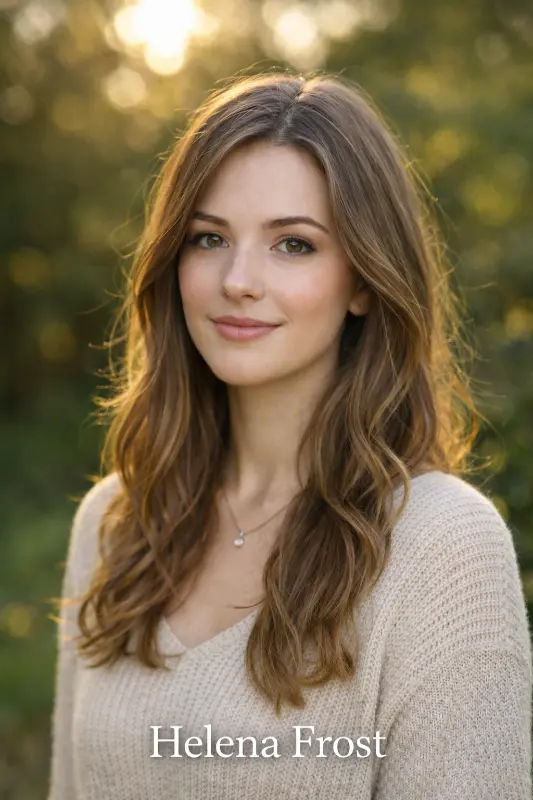
I am Helena Frost, a writer captivated by the beauty of language and the art of comparison. Through my words, I explore the world by turning ordinary moments into vivid similes and reflections. I enjoy crafting phrases that spark imagination, evoke emotion, and linger in the mind. My writing celebrates the subtle connections between people, nature, and the stories we live. For me, every sentence is an opportunity to reveal the extraordinary in the everyday.