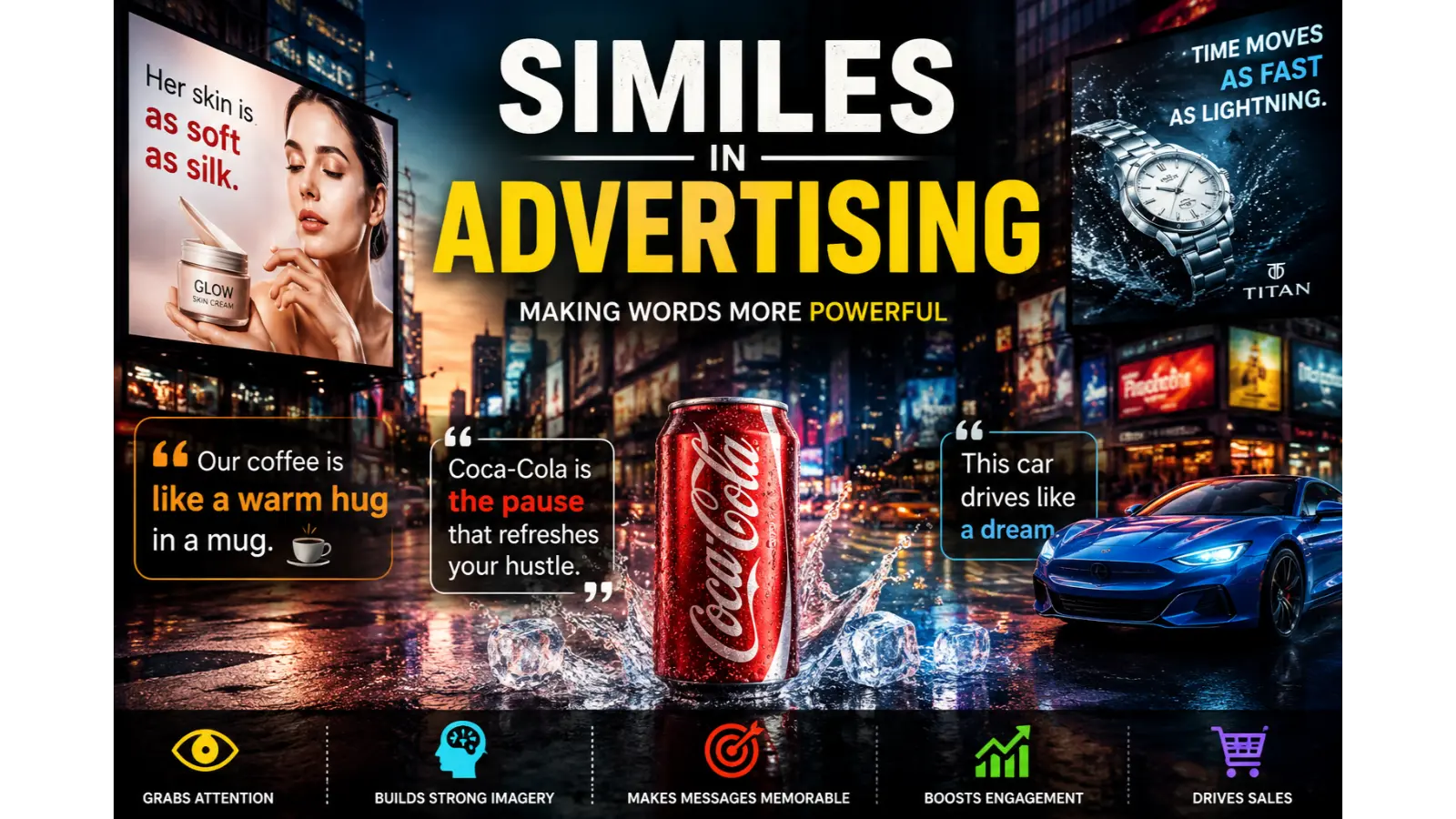
Advertising is built on memorable language. A great slogan or headline often sticks in our minds because it creates a vivid picture in just a few words. One of the simplest ways to achieve that effect is through a simile. A simile compares two different things using words like “as” or “like.” Instead of simply saying a product is fast, soft, or reliable, advertisers compare it to something familiar. The comparison helps people understand the message instantly while making it more interesting and emotional. You’ll find similes in commercials, magazine ads, social media campaigns, product descriptions, and brand slogans. They can make products feel luxurious, trustworthy, exciting, or comforting without using complicated language. This guide explores similes in advertising, explains why they work, provides original examples, and teaches you how to create your own persuasive comparisons.
Quick Answer
Similes in advertising are comparisons that use words such as “like” or “as” to make products, services, or brands more memorable. They help audiences visualize benefits, create emotional connections, and make marketing messages easier to remember.
Why Similes Work So Well in Advertising
Advertising has only a few seconds to grab attention.
A well-crafted simile helps because it:
- Creates an instant mental image.
- Makes product benefits easier to understand.
- Builds emotional appeal.
- Makes slogans more memorable.
- Helps brands stand out from competitors.
Rather than listing technical features, a simile allows readers to feel the benefit.
For example:
“Soft like morning clouds.”
The audience immediately imagines comfort without needing a long explanation.
What Makes an Effective Advertising Simile?
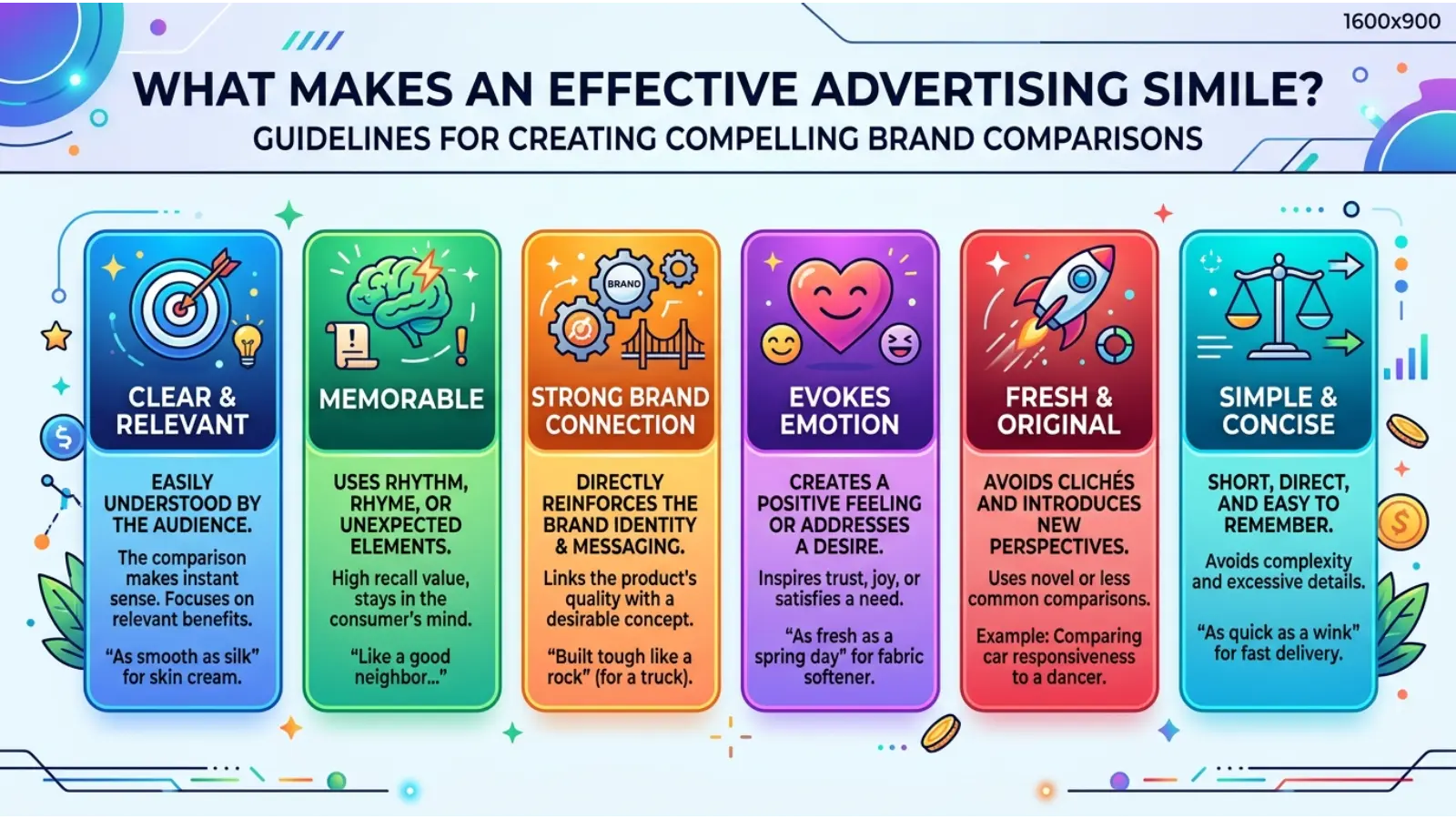
The strongest advertising similes share several qualities:
They Are Easy to Visualize
People remember pictures more easily than facts.
Instead of saying:
“Our blanket is comfortable.”
Try:
“Comfortable like the first warm sunrise after winter.”
The image creates an emotional experience.
They Focus on One Clear Benefit
Avoid comparing too many qualities at once.
Choose one idea:
- Speed
- Comfort
- Freshness
- Reliability
- Strength
- Simplicity
- Luxury
One strong comparison is usually more persuasive than several weak ones.
They Match the Brand Personality
A playful brand may use humorous similes.
A luxury brand may use elegant imagery.
A children’s product might use colorful, imaginative comparisons.
Consistency makes the message believable.
25 Original Similes in Advertising
1. Bright Like the First Morning Sunbeam
Meaning: Suggests freshness and optimism.
Example Sentences
- Our windows shine like the first morning sunbeam.
- Start every day with coffee that feels like the first sunrise.
Best Use: Cleaning products, breakfast brands, travel ads.
Writing Tip: Morning imagery naturally creates positive emotions.
2. Smooth Like Fresh Silk
Meaning: Highlights luxury and comfort.
Example Sentences
- Skin as smooth as fresh silk.
- Drive a car that glides like fresh silk across the road.
Storytelling Effect
Creates elegance without sounding exaggerated.
3. Reliable Like a Lighthouse
Meaning: Suggests trust and guidance.
Example Sentences
- Insurance that’s reliable like a lighthouse.
- Banking support like a lighthouse during every storm.
Best Context
Financial services, insurance, security.
4. Fast Like a Shooting Star
Meaning: Emphasizes speed.
Example Sentences
- Delivery as fast as a shooting star.
- Internet speed like a streak across the night sky.
Writing Purpose
Adds excitement while remaining easy to imagine.
5. Fresh Like Mountain Air
Meaning: Communicates cleanliness.
Example Sentences
- Laundry fresh like mountain air.
- Every sip feels like mountain air after rain.
6. Strong Like an Oak Tree
Meaning: Represents durability.
Examples
- Furniture strong like an oak tree.
- Built like an oak standing through every season.
Best Context
Construction, furniture, outdoor products.
7. Light Like a Floating Feather
Meaning: Highlights lightweight design.
Conversation Example
“This laptop feels like a floating feather.”
8. Sweet Like Summer Berries
Meaning: Appeals to the senses.
Examples
- Flavor sweet like summer berries.
- Every bite tastes like berry season.
9. Quiet Like Falling Snow
Meaning: Promotes peaceful performance.
Best Context
Cars, appliances, fans.
10. Warm Like a Favorite Blanket
Meaning: Creates emotional comfort.
Poetry Style
Warm like the blanket waiting after a cold walk.
11. Clear Like Crystal Water
Meaning: Suggests purity and transparency.
Best Context
Water filters, skincare, beverages.
12. Flexible Like a Dancing Ribbon
Meaning: Shows adaptability.
Writing Tip
Movement makes the comparison feel alive.
13. Crisp Like an Autumn Apple
Meaning: Highlights freshness.
Examples
- Chips crisp like an autumn apple.
- Every bite feels freshly picked.
14. Gentle Like Spring Rain
Meaning: Suggests care.
Best Context
Baby products, skincare.
15. Cool Like Ocean Breeze
Meaning: Communicates refreshment.
Formal Example
Experience cooling comfort like an ocean breeze.
16. Bold Like a Firework
Meaning: Represents excitement.
Examples
- Colors bold like fireworks.
- Flavor explodes like a summer celebration.
17. Calm Like a Still Lake
Meaning: Encourages relaxation.
Best Context
Wellness brands and spas.
18. Bright Like City Lights
Meaning: Modern and energetic.
Conversation Example
“The screen is bright like downtown at night.”
19. Secure Like a Castle Wall
Meaning: Suggests protection.
Best Context
Cybersecurity, home security.
20. Gentle Like a Whisper
Meaning: Softness without weakness.
Writing Purpose
Perfect for beauty and skincare advertising.
21. Fresh Like Garden Herbs
Meaning: Natural quality.
Examples
- Fresh like herbs picked today.
- Flavor that feels straight from the garden.
22. Steady Like the Northern Star
Meaning: Dependability.
Best Context
Navigation, finance, technology.
23. Colorful Like a Festival Parade
Meaning: Joy and excitement.
Storytelling Example
Every room becomes colorful like a festival parade.
24. Cozy Like a Fireside Evening
Meaning: Warm hospitality.
Best Context
Hotels, cafés, furniture.
25. Sharp Like the Edge of Dawn
Meaning: Precision and innovation.
Examples
- Photography sharp like the edge of dawn.
- Technology designed for remarkable clarity.
How Professional Copywriters Create Memorable Similes
Experienced advertisers rarely begin with comparisons.
Instead, they first identify the product’s strongest benefit.
Ask yourself:
- What feeling should customers experience?
- What image represents that feeling?
- Is the comparison familiar enough to understand immediately?
The goal isn’t to sound poetic. It’s to make readers remember the message.
Related Literary Devices That Strengthen Advertising
Metaphor
Unlike similes, metaphors compare without using like or as.
Example:
“Our coffee is sunshine in a cup.”
Metaphors feel stronger but require careful wording.
Imagery
Imagery appeals to the senses.
Pairing imagery with similes helps readers see, hear, smell, taste, or feel the product.
Hyperbole
Hyperbole uses intentional exaggeration.
Advertising often combines hyperbole with similes for dramatic effect, but overuse can reduce credibility.
Personification
Giving human qualities to products makes them feel more relatable.
Example:
“The engine welcomes every journey.”
Alliteration
Repeating initial sounds creates rhythm.
Example:
“Smooth like summer silk.”
Symbolism
Certain images carry deeper meaning.
A lighthouse symbolizes safety.
An oak tree symbolizes strength.
A feather symbolizes lightness.
Choosing meaningful symbols gives similes greater emotional impact.
How to Create Your Own Advertising Similes
Follow this simple process.
Step 1
Choose one product benefit.
Step 2
Think of something everyone recognizes.
Step 3
Find a comparison that creates emotion.
Step 4
Keep it short and natural.
Step 5
Read it aloud.
If it sounds forced, simplify it.
Creative Practice Exercises
Exercise 1
Write three similes for a coffee brand.
Focus on:
- Warmth
- Energy
- Aroma
Exercise 2
Create one simile for each product:
- Running shoes
- Shampoo
- Backpack
- Chocolate
- Smartphone
Exercise 3
Rewrite this sentence:
“Our service is excellent.”
Replace it with a vivid simile.
Common Mistakes to Avoid
Using Overused Comparisons
Readers have seen clichés too many times.
Aim for fresh but believable imagery.
Mixing Images
Don’t combine unrelated ideas.
Poor example:
“Fast like lightning and soft like steel.”
The images compete instead of supporting each other.
Forcing the Comparison
If the simile feels unnatural, remove it.
Simple writing often persuades more effectively.
Confusing Similes with Metaphors
Remember:
- Simile uses like or as.
- Metaphor makes a direct comparison.
Knowing the difference improves clarity.
Describing Too Many Features
One memorable comparison is usually stronger than five average ones.
Stay focused.
Frequently Asked Questions
What are similes in advertising?
They are comparisons using like or as to make products, services, or brands easier to imagine and remember.
Why do advertisers use similes?
They simplify ideas, create emotional connections, and make marketing messages more memorable.
Can similes improve brand recognition?
Yes. Strong visual comparisons help audiences remember both the message and the brand behind it.
Should every advertisement include a simile?
No. Similes work best when they naturally strengthen the message rather than distract from it.
What’s the difference between a slogan and a simile?
A slogan is a brand’s memorable phrase. A simile is one literary technique that may appear within a slogan.
Are similes suitable for digital marketing?
Absolutely. They work well in social media captions, email campaigns, product descriptions, landing pages, and online advertisements.
How can beginners write better advertising similes?
Start with one product benefit, choose a familiar image, keep the comparison simple, and revise until it sounds natural in conversation.
Conclusion
The best similes in advertising do more than decorate a sentence—they make ideas easier to picture and harder to forget. A thoughtful comparison can turn an ordinary product description into a memorable message that resonates with readers. Whether you’re writing a slogan, a product page, a social media ad, or a marketing campaign, focus on one clear benefit and pair it with imagery your audience instantly understands. With practice, you’ll create original similes that are persuasive, memorable, and uniquely suited to your brand’s voice.

I am Helena Frost, a writer captivated by the beauty of language and the art of comparison. Through my words, I explore the world by turning ordinary moments into vivid similes and reflections. I enjoy crafting phrases that spark imagination, evoke emotion, and linger in the mind. My writing celebrates the subtle connections between people, nature, and the stories we live. For me, every sentence is an opportunity to reveal the extraordinary in the everyday.