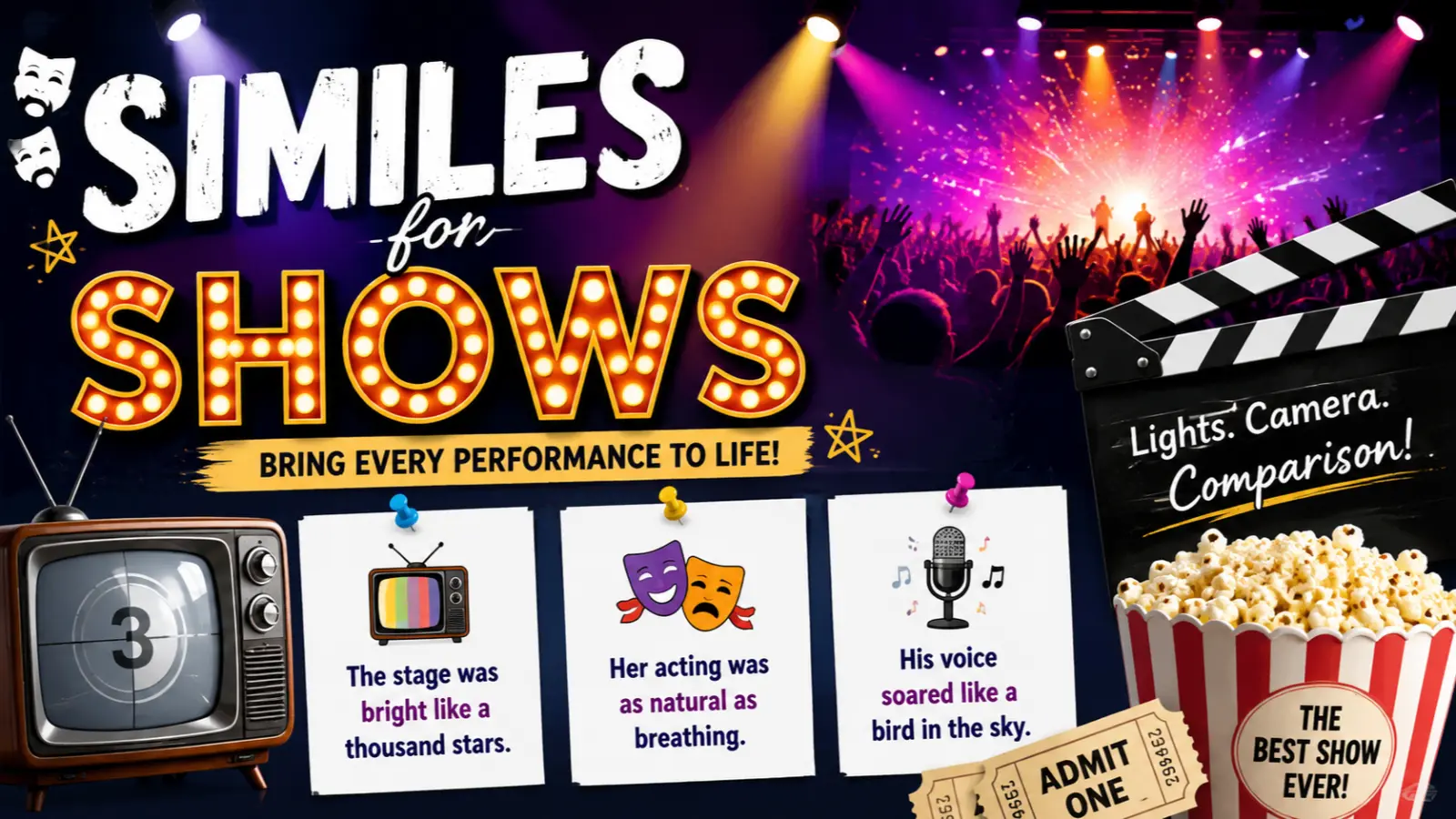
A good Similes for Shows can make an audience laugh, wonder, cheer, or sit quietly in anticipation. Writers often create that emotional response through vivid language, and similes for shows are a useful way to make performances and scenes easier to imagine.
A Similes for Shows compares two different things using words such as “like” or “as.” Instead of simply saying that a performer moved quickly, you can compare the movement to something readers already understand: The dancer moved like a spark skipping across dry grass.
Similes for Shows appear in scripts, reviews, novels, stories, poetry, music writing, and everyday conversation. They can describe actors, singers, dancers, crowds, lighting, sound, costumes, stage movement, or the atmosphere surrounding a performance.
The examples below are designed to give you fresh ideas without relying on tired comparisons. More importantly, they show why a comparison works and how you can adapt it to your own writing.
Quick Answer: What Are Similes for Shows?
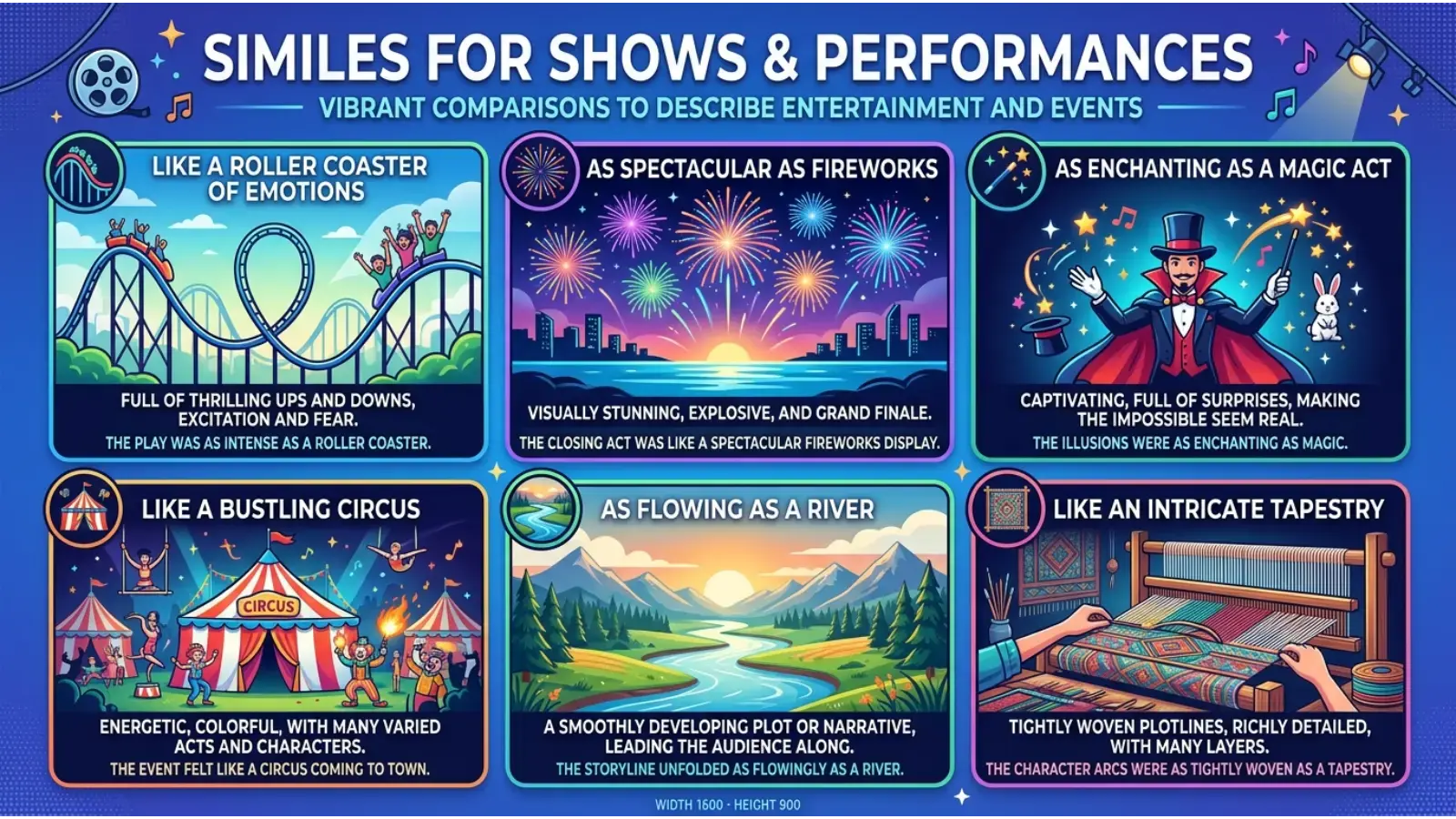
Similes for shows are creative comparisons that use “like” or “as” to describe performances, performers, audiences, sounds, settings, or emotions in a vivid way. For example: The spotlight spread across the stage like morning sunlight through a window.
Why Similes Work So Well in Show Descriptions
Similes for Shows are naturally visual and emotional, but simply describing what happens can sometimes feel flat.
Compare these two sentences:
The singer walked onto the stage.
Now consider:
The singer walked onto the stage like a quiet storm gathering its strength.
The second sentence suggests more than movement. It creates anticipation and gives the performer a particular presence.
The best Similes for Shows do not merely decorate a sentence. They add information. A comparison can tell readers whether a moment feels energetic, mysterious, graceful, chaotic, joyful, or tense.
30 Original Similes for Shows and Performances
1. The Spotlight Fell Like a Silver Ribbon
Meaning: The comparison makes the spotlight seem smooth, bright, and flowing.
Example:
The spotlight fell like a silver ribbon across the empty stage.
As the curtain opened, the light stretched like a silver ribbon toward the lead performer.
Best context: Theater, dance, concerts, or dramatic scenes.
Writing tip: Use an object with a recognizable shape when describing lighting. It helps readers visualize the beam instead of simply calling it “bright.”
2. The Crowd Roared Like a River Breaking Its Banks
Meaning: This comparison emphasizes the sudden force and volume of an audience.
Example:
The crowd roared like a river breaking its banks when the final performer appeared.
Cheers rushed through the theater like a river suddenly freed from a dam.
Writing purpose: This works especially well for exciting reveals, finales, competitions, and concerts.
The image suggests that the audience’s reaction is too powerful to contain.
3. Her Voice Floated Like a Feather on Warm Air
Meaning: The singer’s voice sounds light, gentle, and effortless.
Example:
Her voice floated like a feather on warm air above the quiet audience.
The final verse rose like a feather carried by a soft breeze.
Best context: Ballads, quiet performances, poetry readings, and emotional scenes.
4. The Drums Hit Like Doors Slamming in a Storm
Meaning: The simile creates a sudden, forceful sound.
Example:
The drums hit like doors slamming in a storm.
Each beat landed like a heavy door thrown shut by the wind.
Emotional effect: Urgency, excitement, tension, or controlled chaos.
Notice that the comparison focuses on sound, not simply volume. That makes it more specific.
5. The Dancers Moved Like Shadows Chasing Moonlight
Meaning: Their movements seem fluid, mysterious, and difficult to catch.
Example:
The dancers moved like shadows chasing moonlight across the stage.
They crossed the floor like shadows racing after a disappearing glow.
Best context: Contemporary dance, fantasy performances, or poetic descriptions.
6. The Comedian’s Timing Was Like a Perfectly Thrown Ball
Meaning: Every joke arrived at exactly the right moment.
Example:
Her timing was like a perfectly thrown ball—never early and never late.
Each punchline arrived like a ball landing directly in the catcher’s glove.
Writing insight: Similes can describe an abstract skill by connecting it to something physical and easy to understand.
7. The Curtain Rose Like the First Page of a Mystery
Meaning: The opening creates curiosity and makes the audience want to discover what happens next.
Example:
The curtain rose like the first page of a mystery.
When the curtain lifted, the stage opened like a story no one had finished reading.
Best context: Reviews, theater essays, stories, and introductions to performances.
8. The Guitar Sounded Like Sunlight Through Open Windows
Meaning: The music feels warm, bright, and uplifting.
Example:
The guitar sounded like sunlight through open windows.
Warm chords filled the room like sunlight pouring through an open window.
Emotional effect: Comfort, happiness, freedom, and warmth.
9. The Actor’s Silence Was Like a Held Breath
Meaning: The silence creates suspense or emotional pressure.
Example:
The actor’s silence was like a held breath before a difficult answer.
For several seconds, his silence hung over the stage like a breath no one dared release.
Writing tip: Silence can be more powerful than dialogue. A comparison can help readers feel its weight.
10. The Stage Glowed Like a City at Midnight
Meaning: The lights create a large, colorful, lively atmosphere.
Example:
The stage glowed like a city at midnight.
Neon lights flickered across the set like windows waking in a distant city.
Best context: Concerts, modern theater, dance shows, and large productions.
11. The Singer’s High Note Rose Like a Kite Caught by Wind
Meaning: The note seems to climb smoothly and freely.
Example:
Her high note rose like a kite caught by a sudden wind.
The final note climbed like a kite drifting higher into the evening.
Writing purpose: This gives the reader a sense of upward movement.
12. Laughter Spread Like Ripples Across a Pond
Meaning: One person’s laughter gradually caused others to laugh.
Example:
Laughter spread like ripples across a pond.
One joke started a laugh that traveled through the theater like ripples moving across water.
Best context: Comedy shows, family performances, and lighthearted scenes.
13. The Magician’s Hands Moved Like Quick-Winged Birds
Meaning: His hands were extremely fast and difficult to follow.
Example:
The magician’s hands moved like quick-winged birds.
His fingers darted like small birds changing direction in midair.
Writing insight: A strong simile often captures movement rather than simply labeling it “fast.”
14. The Finale Exploded Like Fireworks Over a Harbor
Meaning: The ending was energetic, spectacular, and visually exciting.
Example:
The finale exploded like fireworks over a harbor.
Music, lights, and applause burst together like fireworks above the water.
Best context: Concert finales, stage productions, festivals, and large shows.
15. The Audience Sat Like a Field of Statues
Meaning: Everyone was completely still and focused.
Example:
The audience sat like a field of statues during the opening monologue.
Hundreds of faces remained still like statues waiting for the next word.
Emotional effect: Concentration, suspense, awe, or seriousness.
16. Her Costume Shimmered Like Fish Scales Underwater
Meaning: The costume reflected light in a moving, sparkling way.
Example:
Her costume shimmered like fish scales underwater.
Every step made the fabric flash like scales catching sunlight beneath the surface.
Best context: Dance, fantasy theater, costumes, and musical performances.
17. The Music Built Like a Staircase Into the Sky
Meaning: The music gradually increases in intensity or rises toward a powerful moment.
Example:
The music built like a staircase into the sky.
Each new instrument lifted the song like another step toward the clouds.
Writing tip: When describing music, think about direction: rising, falling, circling, stopping, bursting, or drifting.
18. The Actor’s Entrance Was Like a Match Striking in Darkness
Meaning: The entrance immediately changed the mood and captured attention.
Example:
His entrance was like a match striking in darkness.
The moment she stepped onto the stage, the scene brightened like a match flaring in a dark room.
Best context: Dramatic entrances and character reveals.
19. The Violin Wept Like Rain Against a Window
Meaning: The sound feels sorrowful and emotionally delicate.
Example:
The violin wept like rain against a window.
Its final notes trembled like rain tapping softly against glass.
Best context: Emotional performances, dramatic scenes, and reflective writing.
20. The Dancers Spun Like Leaves in a Sudden Wind
Meaning: Their movements appear quick, light, and unpredictable.
Example:
The dancers spun like leaves in a sudden wind.
They turned across the stage like leaves caught in an autumn gust.
Writing purpose: This works particularly well when describing group choreography.
21. The Applause Came Like Waves Reaching the Shore
Meaning: The applause arrived in repeated, spreading bursts.
Example:
The applause came like waves reaching the shore.
Clapping rolled through the theater like wave after wave touching the sand.
Emotional effect: Celebration, appreciation, and warmth.
22. The Stage Became Like a Dream Someone Had Painted Awake
Meaning: The production feels surreal, beautiful, or unreal.
Example:
When the lights changed, the stage became like a dream someone had painted awake.
The scenery transformed like a dream suddenly becoming visible.
Best context: Fantasy, visual theater, experimental performances, and poetic reviews.
23. His Dialogue Snapped Like Dry Twigs Underfoot
Meaning: His speech was sharp, abrupt, and possibly aggressive.
Example:
His dialogue snapped like dry twigs underfoot.
Every short sentence broke like a twig beneath a heavy step.
Writing insight: Sound-based similes are especially useful for dialogue because they reveal a character’s attitude without directly explaining it.
24. The Children Danced Like Sparks From a Campfire
Meaning: Their movements were energetic, playful, and unpredictable.
Example:
The children danced like sparks from a campfire.
They bounced across the stage like bright sparks leaping into the night.
Best context: School shows, children’s performances, celebrations, and joyful scenes.
25. The Host’s Smile Was Like a Door Opening Into Summer
Meaning: The smile creates warmth and makes people feel welcome.
Example:
The host’s smile was like a door opening into summer.
She greeted the audience with a smile like an open door on a warm day.
Emotional effect: Friendliness, comfort, optimism, and welcome.
26. The Final Chord Hung Like a Star Before Dawn
Meaning: The last sound remains emotionally present after the music stops.
Example:
The final chord hung like a star before dawn.
For a moment, the last note remained like a single star fading before sunrise.
Best context: Musical reviews, emotional endings, and reflective writing.
27. The Stage Crew Worked Like Clockwork Beneath the Show
Meaning: The crew coordinated efficiently and smoothly.
Example:
Behind the curtain, the stage crew worked like clockwork.
Props appeared and disappeared like pieces moved by an invisible clock.
Writing insight: Similes can describe the behind-the-scenes work of a production, not just what the audience sees.
28. The Suspense Tightened Like a Knot
Meaning: The tension became stronger and harder to ignore.
Example:
The suspense tightened like a knot as the lights dimmed.
With every unanswered question, the tension pulled tighter like a knot in a rope.
Best context: Mystery shows, dramatic theater, thrillers, and storytelling.
29. The Crowd Became Like One Giant Breathing Creature
Meaning: Thousands of people seemed united by the same reaction.
Example:
The crowd became like one giant breathing creature when the singer began.
Everyone moved together like a single living rhythm.
Emotional effect: Unity, excitement, shared anticipation.
30. The Ending Landed Like a Letter From the Past
Meaning: The ending carries emotional meaning that may make the audience reflect on earlier events.
Example:
The ending landed like a letter from the past.
The final scene felt like a letter arriving years after it was written.
Best context: Drama, emotional theater, storytelling, and reflective reviews.
How to Make Your Show Similes More Vivid
A useful simile begins with observation, not with the word “like.”
Instead of asking:
“What can I compare this to?”
Ask:
“What does this moment actually feel, sound, look, or move like?”
For example, if an audience becomes very quiet, you could write:
The audience was quiet like a library.
That comparison is understandable, but it is predictable.
A more specific image might be:
The audience sat like hikers pausing beside an unfamiliar trail.
Now the silence contains curiosity and uncertainty.
Use the Five Senses
When describing a show, consider:
- Sight: lights, colors, movement, costumes, scenery
- Sound: music, applause, laughter, silence, dialogue
- Touch: warmth, vibration, pressure, movement
- Emotion: excitement, nervousness, sadness, wonder
- Atmosphere: mystery, celebration, tension, calm
The more precisely you observe the moment, the easier it becomes to create an original comparison.
How Professional Writers Avoid Cliché Similes
Clichés are comparisons that readers have encountered so often that they no longer create a strong mental picture.
For example, phrases such as “quiet as a mouse” or “busy as a bee” are familiar, but they may not tell your reader anything distinctive about the scene.
Instead, connect your subject to something that shares its specific quality.
If a singer has a gentle voice, don’t stop at “soft as a cloud.” Ask what kind of softness you mean.
Is the voice:
- comforting?
- distant?
- fragile?
- warm?
- mysterious?
- sleepy?
- soothing?
A precise emotion leads to a stronger image.
Similes for Different Types of Shows
Theater
Focus on entrances, dialogue, silence, lighting, costumes, scenery, and dramatic tension.
Example:
The empty stage waited like a room holding a secret.
Music Shows
Think about rhythm, pitch, instruments, volume, silence, and the relationship between the performer and audience.
Example:
The bass pulsed like footsteps approaching from a distant hallway.
Dance Performances
Movement is the key. Consider speed, direction, balance, repetition, and group coordination.
Example:
The dancers folded and unfolded like waves meeting a rocky shore.
Comedy Shows
Timing and audience reactions are often more important than physical appearance.
Example:
The punchline arrived like an unexpected knock at midnight.
Children’s Shows
Use playful, accessible comparisons that match the energy of the performance.
Example:
The children bounced across the stage like popcorn popping in a pan.
Similes and Other Literary Devices
Similes are closely related to several other forms of figurative language, but they are not interchangeable.
Simile vs. Metaphor
A simile makes a direct comparison using “like” or “as.”
The singer’s voice was like warm sunlight.
A metaphor makes the comparison more directly:
The singer’s voice was warm sunlight.
Both create imagery, but the metaphor states the comparison more forcefully.
Simile vs. Hyperbole
Hyperbole deliberately exaggerates.
The audience applauded for a thousand years.
That is not intended as a literal measurement. It emphasizes how long the applause seemed.
Simile and Imagery
Imagery helps readers experience a scene through sensory language. A well-written simile is one way to create imagery.
The trumpet sounded like a bright metal bird calling across the theater.
The comparison gives the reader an imagined sound and image at the same time.
Simile and Personification
Personification gives human qualities to nonhuman things.
The spotlight searched the stage.
Adding a simile can create another layer:
The spotlight searched the stage like a guard looking for a missing key.
Use multiple devices only when each one contributes something useful.
How to Create Your Own Similes for Shows
Try this simple five-step process.
Step 1: Choose One Detail
Don’t describe the entire performance at once.
Choose one thing:
- a voice
- a movement
- a light
- a sound
- a costume
- an audience reaction
- a moment of silence
Step 2: Identify Its Strongest Quality
Ask what makes that detail interesting.
Is it:
fast, fragile, bright, heavy, mysterious, playful, sharp, warm, restless, or peaceful?
Step 3: Brainstorm Unusual Sources
Think beyond obvious comparisons.
If something is fast, don’t automatically choose a cheetah. Consider a bouncing pinball, a startled bird, a dropped marble, or a spark.
Step 4: Test the Image
Ask:
Does the comparison actually share the quality I’m describing?
If not, discard it.
A creative comparison is not automatically a good comparison. Accuracy matters.
Step 5: Put It Into a Real Sentence
A simile becomes more useful when it works naturally inside the surrounding prose.
Instead of listing:
Her voice was like a bell.
Try:
Her first note rang through the quiet theater like a bell heard across an empty courtyard.
The surrounding details make the image stronger.
A Quick Exercise for Better Similes
Choose a performance you have watched or imagine one.
Write five observations without using figurative language.
For example:
- The lights change suddenly.
- The drummer plays faster.
- The audience becomes quiet.
- The dancer turns repeatedly.
- The singer holds a long note.
Now turn each observation into a comparison.
Don’t accept your first idea. Write three possible comparisons for each sentence and choose the one that feels most specific.
This exercise teaches an important writing skill: revision often creates better imagery than the first idea that comes to mind.
Common Mistakes When Writing Show Similes
Using the Same Familiar Comparisons
If every performer is compared to a star, every voice to an angel, and every audience to thunder, the writing begins to sound predictable.
Look for details unique to your scene.
Choosing an Image That Does Not Fit
A comparison can sound beautiful but still be inaccurate.
If a performance is slow and delicate, comparing it to a racing engine creates a confusing image unless the contrast is intentional.
Mixing Images
Avoid combining unrelated comparisons in the same sentence.
For example, a sentence that compares a singer to a bird, a river, and a machine at once can overwhelm the reader.
Choose the strongest image and let it breathe.
Explaining the Simile Too Much
If the image is clear, trust the reader.
Instead of:
Her voice was like rain because it was soft, gentle, peaceful, and soothing.
Try:
Her voice fell like gentle rain against a quiet window.
The image can carry much of the meaning itself.
Using a Simile Just Because You Can
Not every sentence needs figurative language.
Sometimes:
The audience became silent.
is stronger than a complicated comparison.
Use a simile when it adds something that a literal description cannot provide as effectively.
FAQ About Similes for Shows
What is a good simile for a performance?
A good performance simile should match the specific quality you want to emphasize. For example, “The dancers moved like shadows chasing moonlight” suggests graceful, mysterious movement.
How do I describe a show using similes?
Focus on individual elements such as lighting, sound, performers, movement, costumes, audience reactions, and atmosphere. Then compare each detail with something that shares its most important quality.
What are some similes for a concert?
You can compare music to natural forces, moving objects, light, weather, or physical sensations. For example: “The bass pulsed like footsteps approaching from a distant hallway.”
What is a simile for a loud crowd?
Try a comparison that communicates the particular kind of loudness. For example: “The crowd roared like a river breaking its banks.”
How can I make show descriptions more interesting?
Replace general adjectives with specific observations. Instead of simply calling a performance “amazing,” describe what the performers did and use a carefully chosen comparison to show why the moment was impressive.
Are similes used in theater writing?
Yes. Similes can appear in scripts, reviews, stories, poetry, stage directions, and descriptions of performances. Writers use them to communicate movement, atmosphere, emotion, and sensory details.
What makes a simile effective?
An effective simile is clear, relevant, specific, and meaningful. It should give readers a mental picture or emotional impression rather than merely making a sentence sound decorative.
Conclusion
The strongest similes for shows do more than make performances sound beautiful. They help readers see the lights, hear the music, feel the tension, and understand why a particular moment matters. When creating your own comparisons, begin with careful observation. Find the most important quality in the moment, search for an unexpected but believable image, and revise until the comparison feels natural. A memorable simile does not need to be complicated. It simply needs to make the reader experience the scene in a way that ordinary description could not.