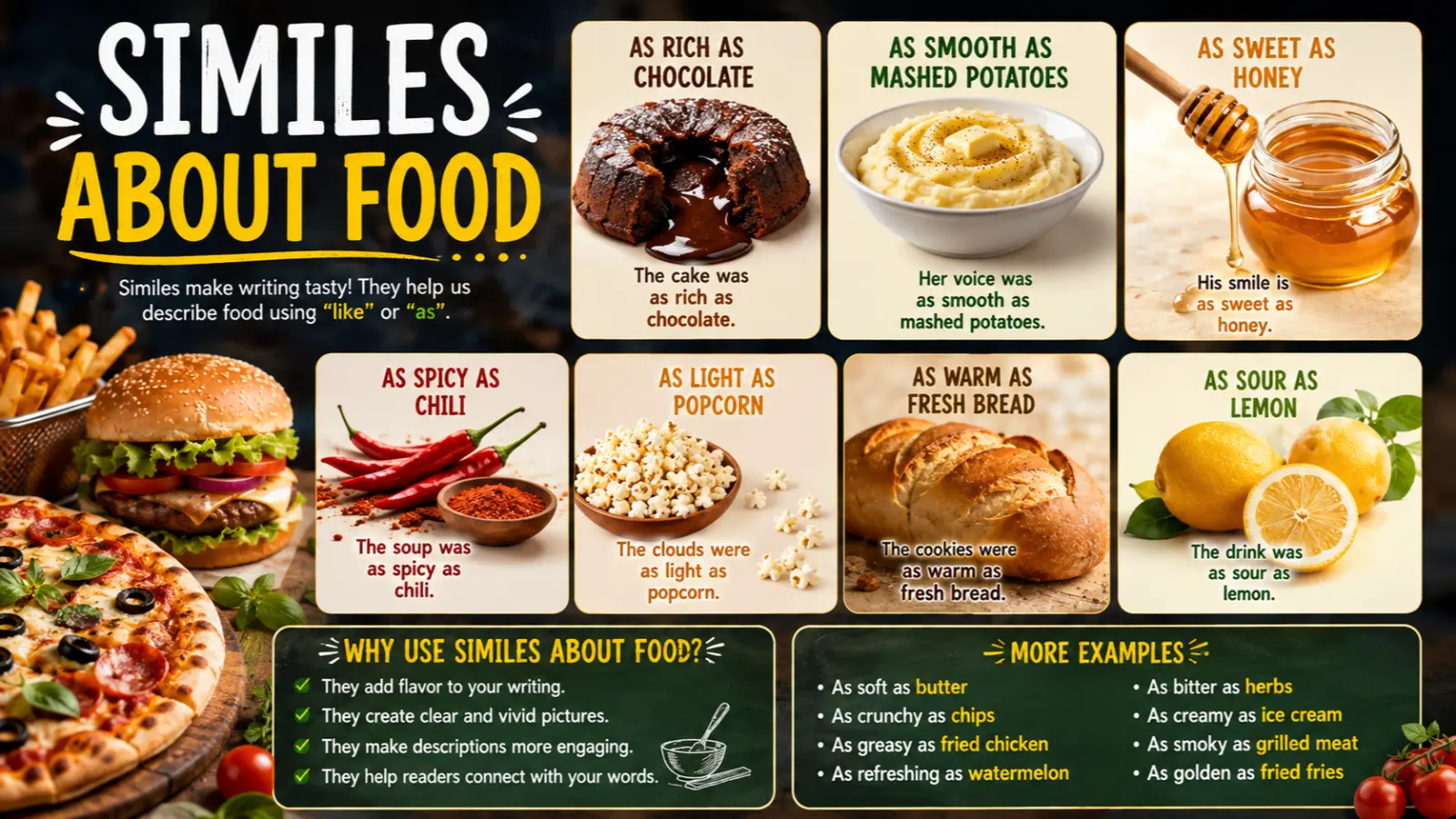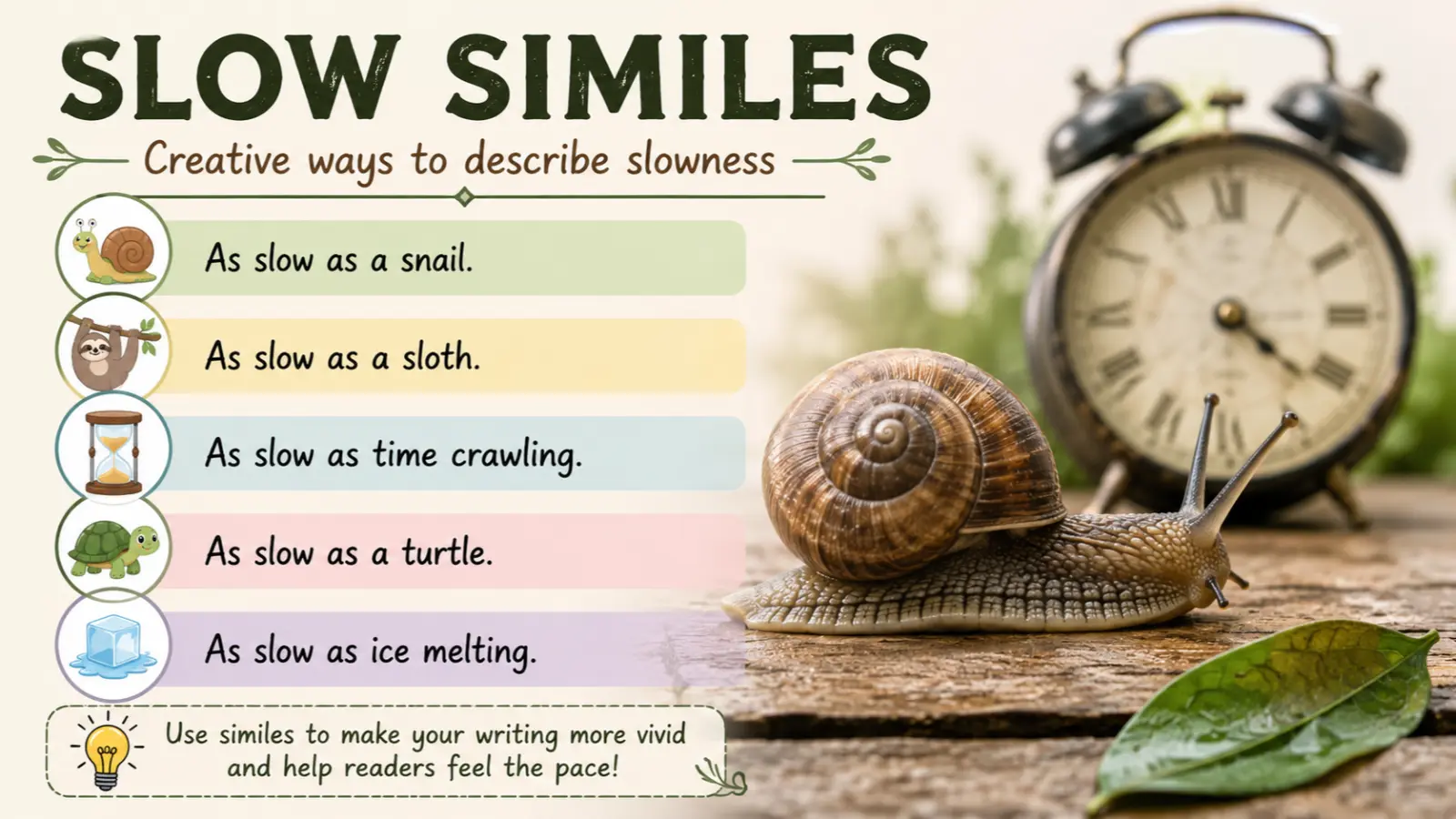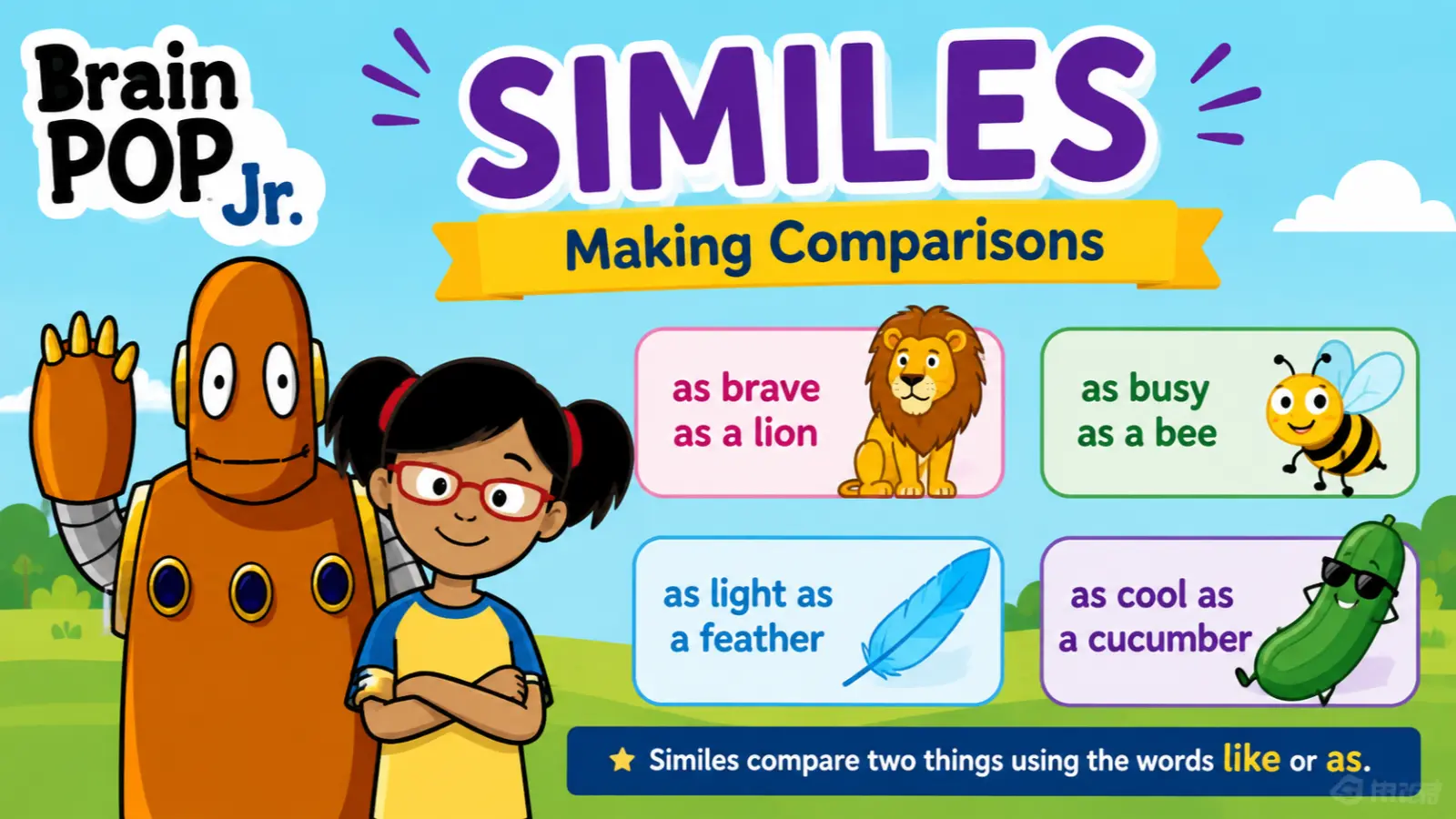
A BrainPOP Jr. Similes is a figure of speech that compares two different things using the words “like” or “as.” Instead of simply describing something, a simile helps readers imagine it more clearly.
Children often encounter similes in storybooks, poems, classroom lessons, and educational resources like BrainPOP Jr. Learning to recognize and create similes strengthens vocabulary, improves reading comprehension, and encourages creative thinking.
This guide explains BrainPOP Jr. similes in a simple, classroom-friendly way while giving students, teachers, and parents plenty of fresh examples to practice.
Quick Answer
BrainPOP Jr. similes are simple comparisons using like or as that help children understand descriptive language. They make writing more colorful by comparing one thing with another in an easy-to-imagine way, such as “The puppy was as playful as a bouncing ball.”
Why Kids Learn Similes in BrainPOP Jr.
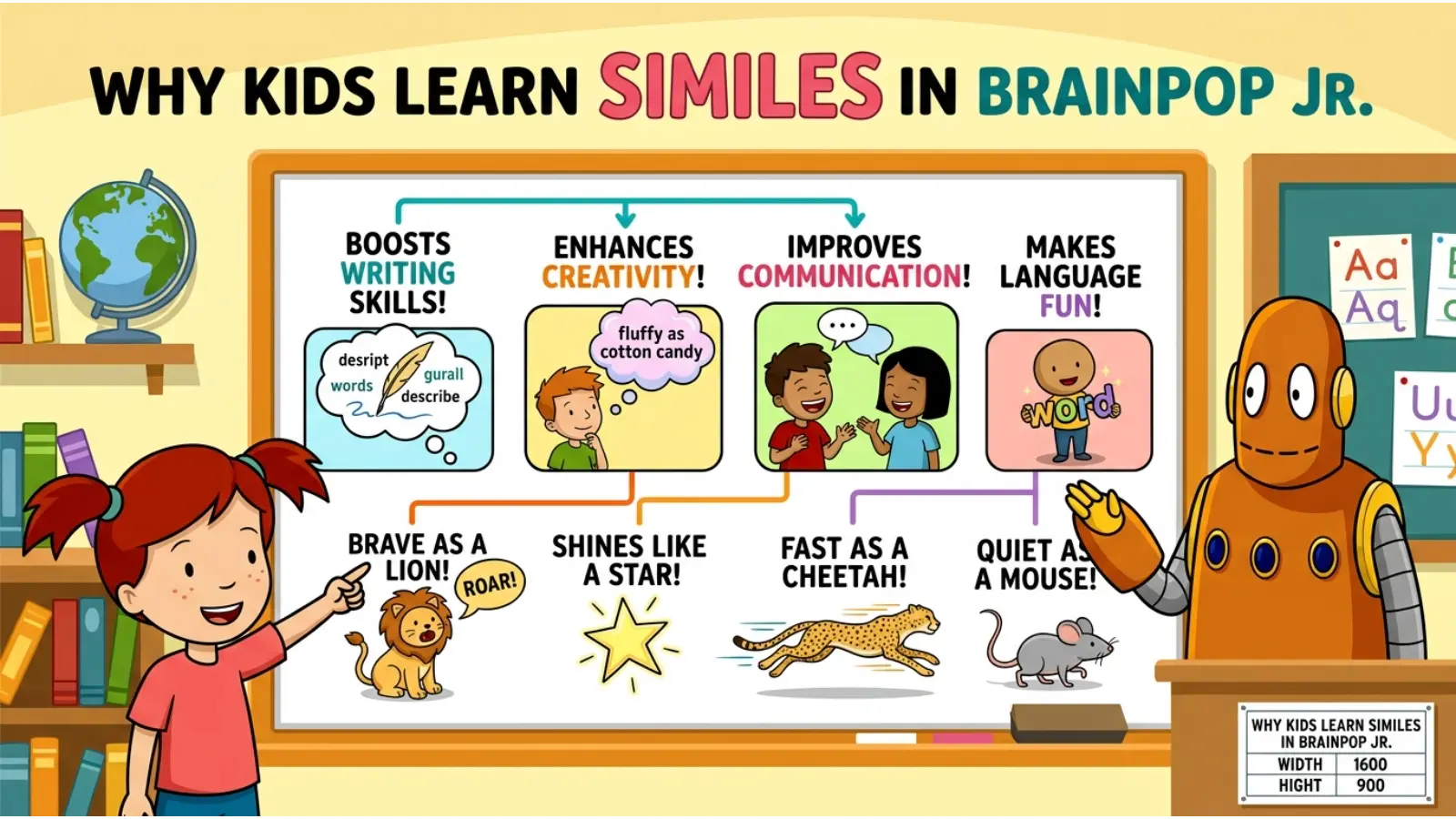
Similes are one of the first figurative language skills students learn because they help children:
- Build stronger descriptive writing
- Understand stories more deeply
- Visualize characters and settings
- Express emotions clearly
- Develop creative thinking
Rather than memorizing definitions, students learn best by reading and writing their own comparisons.
How to Spot a Simile
Most similes contain one of these words:
- Like
- As
Ask yourself these questions:
- Are two different things being compared?
- Does the sentence use like or as?
- Does the comparison create a clearer picture?
If the answer is yes, you’ve probably found a simile.
25 Original BrainPOP Jr. Similes with Examples
1. As cheerful as a sunny playground
Meaning: Extremely happy and welcoming.
Example Sentences
- Maya was as cheerful as a sunny playground on the first day of school.
- The classroom felt as cheerful as a sunny playground after everyone finished decorating.
Writing Tip: Great for describing positive moods.
2. Like a kite dancing in the wind
Meaning: Moving lightly and freely.
Examples
- The ribbon floated like a kite dancing in the wind.
- His imagination soared like a kite dancing in the wind.
Best Context: Stories about freedom and imagination.
3. As quiet as fresh snowfall
Meaning: Completely peaceful.
Examples
- The library became as quiet as fresh snowfall.
- The baby slept as quiet as fresh snowfall.
Emotional Effect: Creates calm.
4. Like popcorn popping in a pan
Meaning: Full of energy.
Examples
- The children laughed like popcorn popping in a pan.
- Ideas burst like popcorn popping in a pan.
Conversation Example
“The class is like popcorn popping today!”
5. As gentle as a floating feather
Meaning: Very soft and careful.
Examples
- Dad’s voice was as gentle as a floating feather.
- She placed the kitten down as gentle as a floating feather.
6. Like a rainbow after rain
Meaning: Bringing hope.
Examples
- Her smile appeared like a rainbow after rain.
- Good news arrived like a rainbow after rain.
7. As busy as little ants building a home
Meaning: Working hard.
Examples
- The students were as busy as little ants before the science fair.
- Everyone became as busy as little ants during cleanup.
8. Like bubbles floating upward
Meaning: Light and joyful.
Examples
- Giggles rose like bubbles floating upward.
- Her excitement floated like bubbles upward.
9. As bright as a brand-new crayon
Meaning: Colorful and exciting.
Examples
- His drawing was as bright as a brand-new crayon.
- The classroom looked as bright as a brand-new crayon box.
10. Like a squirrel finding treasure
Meaning: Excited by discovery.
Examples
- Emma smiled like a squirrel finding treasure.
- He searched the bookshelf like a squirrel finding treasure.
11. As steady as a tree trunk
Meaning: Strong and dependable.
Examples
- The bridge stood as steady as a tree trunk.
- She remained as steady as a tree trunk during the performance.
12. Like a pencil racing across paper
Meaning: Writing quickly.
Examples
- His ideas flowed like a pencil racing across paper.
- Notes appeared like a pencil racing across paper.
13. As curious as a child exploring a garden
Meaning: Eager to learn.
Examples
- Liam was as curious as a child exploring a garden.
- Scientists stay as curious as children exploring gardens.
14. Like a balloon reaching for the sky
Meaning: Growing with confidence.
Examples
- Her confidence rose like a balloon reaching for the sky.
- Dreams floated like balloons reaching for the sky.
15. As colorful as autumn leaves
Meaning: Rich in color.
Examples
- The painting looked as colorful as autumn leaves.
- The parade was as colorful as autumn leaves.
16. Like a hummingbird tasting flowers
Meaning: Moving quickly from one thing to another.
Examples
- He skipped through books like a hummingbird tasting flowers.
- She explored each activity like a hummingbird tasting flowers.
17. As smooth as polished glass
Meaning: Even and flawless.
Examples
- The table felt as smooth as polished glass.
- His speech flowed as smooth as polished glass.
18. Like tiny stars twinkling together
Meaning: Sparkling beautifully.
Examples
- The decorations glittered like tiny stars twinkling together.
- Her eyes shined like tiny stars twinkling together.
19. As patient as a gardener waiting for spring
Meaning: Calm while waiting.
Examples
- Grandma was as patient as a gardener waiting for spring.
- Good readers are as patient as gardeners waiting for spring.
20. Like waves greeting the shore
Meaning: Repeating gently.
Examples
- The music returned like waves greeting the shore.
- Friendly smiles came like waves greeting the shore.
21. As warm as fresh cookies
Meaning: Friendly and comforting.
Examples
- The welcome felt as warm as fresh cookies.
- Her hug was as warm as fresh cookies.
22. Like puzzle pieces fitting together
Meaning: Matching perfectly.
Examples
- Their teamwork fit like puzzle pieces together.
- The clues connected like puzzle pieces fitting together.
23. As light as a paper airplane
Meaning: Very light.
Examples
- The craft floated as light as a paper airplane.
- Her steps felt as light as a paper airplane.
24. Like morning birds singing
Meaning: Happy and lively.
Examples
- The children chatted like morning birds singing.
- The neighborhood woke like morning birds singing.
25. As proud as a child holding a gold star
Meaning: Feeling accomplished.
Examples
- Ben smiled as proud as a child holding a gold star.
- The team stood as proud as children holding gold stars.
Why These Similes Work
Strong similes do more than compare two things.
They:
- Paint a picture instantly.
- Create emotion.
- Make ideas easier to remember.
- Help readers imagine the scene.
Notice that each comparison uses familiar objects children already understand. That makes the imagery both vivid and accessible.
Tips for Writing Better Similes
Choose Familiar Images
Young readers connect more easily with playgrounds, balloons, animals, crayons, and weather than with abstract ideas.
Match the Mood
A happy scene should use cheerful comparisons, while a quiet moment benefits from calm imagery.
Be Specific
Instead of writing:
“Fast like a car.”
Try:
“Fast like a scooter racing down a smooth sidewalk.”
Specific details make writing memorable.
Similes and Other Literary Devices
Metaphor
A metaphor says one thing is another.
- Simile: The clouds were like cotton.
- Metaphor: The clouds were cotton.
Imagery
Imagery creates pictures using descriptive language. Similes are one way to build strong imagery.
Personification
Personification gives human qualities to nonhuman things.
Example:
“The wind whispered through the trees.”
Hyperbole
Hyperbole uses exaggeration.
Example:
“I waited a million years.”
Unlike a simile, it doesn’t compare two things.
Alliteration
Alliteration repeats beginning sounds.
Example:
“Busy buzzing bees.”
It can work alongside similes to make writing more musical.
Create Your Own Similes
Follow these simple steps.
Step 1: Pick a subject.
Example: A puppy.
Step 2: Think of one quality.
Playful.
Step 3: Find something with that same quality.
A bouncing ball.
Step 4: Join them using like or as.
The puppy was as playful as a bouncing ball.
Creative Exercise
Complete these starters:
- As brave as ____________
- Like a ____________ in the sunshine
- As calm as ____________
- Like ____________ after a storm
- As colorful as ____________
Try writing five original similes about your classroom, favorite animal, or best friend.
Common Mistakes Students Make
Using Overused Comparisons
Avoid relying on the same examples repeatedly. Fresh comparisons make writing more interesting.
Mixing Different Images
Keep one clear picture.
Instead of combining several unrelated ideas in one sentence, focus on a single comparison.
Forgetting “Like” or “As”
Without these words, your sentence may become a metaphor instead of a simile.
Comparing Unrelated Ideas
The comparison should make sense to readers.
Choose qualities that naturally connect.
Adding Too Many Similes
One strong simile often creates a bigger impact than several weak ones in the same paragraph.
Frequently Asked Questions
What is a simile for kids?
A simile compares two different things using like or as to make descriptions easier to imagine.
Why does BrainPOP Jr. teach similes?
Because similes improve reading comprehension, vocabulary, descriptive writing, and creative thinking.
What words usually appear in a simile?
Most similes use like or as.
How can students write better similes?
Choose familiar objects, focus on one shared quality, and create original comparisons instead of copying common ones.
What’s the difference between a simile and a metaphor?
A simile uses like or as. A metaphor makes a direct comparison without those words.
Can similes be used in everyday conversation?
Yes. People naturally use similes to make stories, conversations, and explanations more interesting.
Conclusion
Learning similes is one of the easiest ways to make writing more vivid and enjoyable. The simple comparisons often introduced through BrainPOP Jr. help children describe people, places, emotions, and events with confidence. As students practice creating their own original similes, they begin to notice details, strengthen their imagination, and communicate ideas more clearly. Keep experimenting with new comparisons, and you’ll discover that even ordinary moments can become memorable through creative language.
I am Helena Frost, a writer captivated by the beauty of language and the art of comparison. Through my words, I explore the world by turning ordinary moments into vivid similes and reflections. I enjoy crafting phrases that spark imagination, evoke emotion, and linger in the mind. My writing celebrates the subtle connections between people, nature, and the stories we live. For me, every sentence is an opportunity to reveal the extraordinary in the everyday.