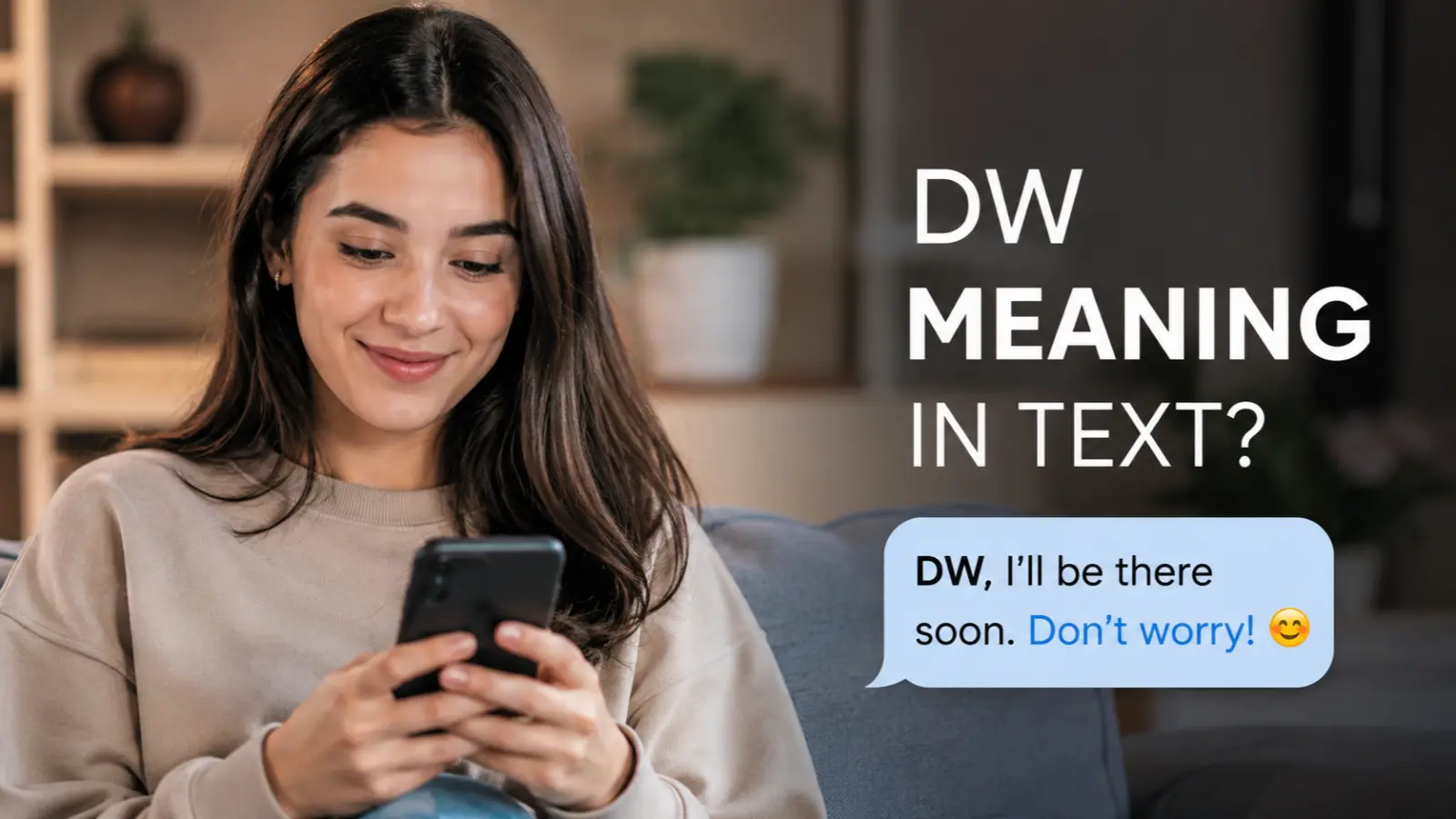
DW meaning in text is usually “don’t worry.” It is a common texting abbreviation people use to reassure someone, tell them not to stress, or let them know that something is okay.
You may see “DW” in text messages, social media comments, chats, gaming conversations, and direct messages.
Because texting often uses short forms, abbreviations such as “DW” can sometimes be confusing, especially when you see them for the first time. The meaning can also depend slightly on the conversation and tone.
If someone sends you “DW, I got it,” they are usually saying, “Don’t worry, I’ve got it.” Understanding this simple abbreviation can make online conversations easier and more natural.
Quick Answer
DW in text usually means “don’t worry.” It is a casual abbreviation used to reassure someone or tell them there is no need to be concerned.
What Does DW Mean in Text?
The most common DW meaning in text is “don’t worry.”
It is generally used when someone wants to reassure another person.
For example:
- “DW, everything is fine.” → Don’t worry, everything is fine.
- “DW about it.” → Don’t worry about it.
- “DW, I can handle this.” → Don’t worry, I can handle this.
- “DW! You didn’t do anything wrong.” → Don’t worry; you did nothing wrong.
The abbreviation is especially common in informal digital communication because it saves time and space.
DW Full Form
The most common DW full form in texting is:
DW = Don’t Worry
It is an abbreviation rather than a traditional slang word.
People often type it instead of the complete phrase because short forms make conversations quicker.
What Does DW Stand For?
If you are wondering “what does DW stand for?”, the answer is usually “don’t worry.”
However, context matters. In some specialized situations, “DW” can have other meanings, but in everyday texting and social media, “don’t worry” is the most common interpretation.
DW Meaning Slang: Different Contexts
The DW meaning slang can have slightly different uses depending on the situation.
1. Reassurance
Someone may use DW to comfort another person.
Example:
“I’m sorry I’m late.”
“DW, it’s okay.”
Here, DW means “don’t worry.”
2. Reducing Stress
A person may use DW to tell someone not to think too much about a problem.
Example:
“I forgot to bring the notes.”
“DW, I have an extra copy.”
3. Saying Something Is Not a Problem
DW can also mean that someone does not need to apologize.
Example:
“Sorry for bothering you.”
“DW!”
In this context, it means something like “It’s okay” or “No problem.”
4. Offering Reassurance
Sometimes DW is followed by an explanation.
Example:
“DW, I’ll finish it before tomorrow.”
This tells the other person not to worry because the speaker will take care of the situation.
Is DW Rude, Offensive, or Neutral?
DW is normally neutral and not offensive.
It is generally friendly and harmless when used appropriately.
However, tone can change depending on the situation.
For example:
- “DW 😊” → Friendly and comforting
- “DW lol” → Casual and relaxed
- “DW.” → Could sound brief or slightly dismissive depending on the conversation
- “DW about it.” → Usually reassuring
The abbreviation itself is not rude. The surrounding words and punctuation can influence how the message feels.
Where Is DW Commonly Used?
You may encounter DW in many informal online settings, including:
- Text messages
- Instagram DMs
- Snapchat
- TikTok comments and messages
- WhatsApp chats
- Facebook Messenger
- Discord
- Online gaming
- Group chats
- Casual conversations
It is much more suitable for informal communication than formal writing.
Real-Life Conversation Examples
Friendly Example
Alex: “Sorry I forgot your book!”
Sam: “DW! You can bring it tomorrow.”
Here, DW sounds warm and forgiving.
Casual Example
Mia: “I might be a few minutes late.”
Tom: “DW, take your time.”
The speaker is telling Mia not to stress.
Argumentative Example
Person A: “I thought you were going to help me.”
Person B: “DW, I’ll do it myself.”
In this situation, DW could sound sarcastic or irritated depending on the speaker’s tone.
This shows why context matters.
Emotional and Psychological Meaning of DW
Although DW is simply an abbreviation, it often carries an emotional message.
When someone writes “DW,” they may be trying to:
- Reduce anxiety
- Offer comfort
- Show understanding
- Stop someone from apologizing
- Make a situation feel less serious
- Reassure a friend
- Create a relaxed atmosphere
For example, when someone says:
“DW, everything will be okay.”
The phrase communicates more than just information. It can provide emotional reassurance.
Origin and Background of DW
“DW” developed as part of the wider culture of internet and text-message abbreviations.
As texting and online chatting became popular, users began shortening common phrases to communicate faster. Expressions such as “LOL,” “BRB,” “IDK,” and “BTW” became widely recognized.
“Don’t worry” naturally became DW because the first letters of the two words are D and W.
Unlike some slang expressions, DW does not have a complicated hidden meaning. It is simply a convenient abbreviation of a common phrase.
DW vs Similar Texting Abbreviations
DW is related to several expressions that communicate reassurance or reduce concern.
| Texting Term | Meaning | Typical Use |
|---|---|---|
| DW | Don’t worry | Reassurance |
| NBD | No big deal | Saying something is not important |
| NP | No problem | Responding to an apology or request |
| IDC | I don’t care | Showing lack of concern or interest |
| YW | You’re welcome | Replying to thanks |
| IK | I know | Showing that you already understand |
NBD vs DW
DW tells someone not to worry.
NBD means something is not a big deal.
Example:
“Sorry I made a mistake.”
“DW, NBD.”
Both expressions can work together.
When Should You Use DW?
DW is appropriate when talking casually with people who understand texting abbreviations.
You can use it when:
- A friend apologizes
- Someone is worried
- Someone thinks they made a mistake
- You want to reassure someone
- You want to make a conversation more relaxed
Example
“Sorry I can’t come tonight.”
“DW, maybe next time!”
When Should You Avoid Using DW?
Avoid DW in situations where professional or formal language is expected.
For example, you generally should not write:
“DW about the meeting.”
in a formal business email.
Instead, use:
“Please don’t worry about the meeting.”
or:
“There is no need to worry about it.”
Formal vs Informal
Informal:
“DW, I’ll take care of it.”
Formal:
“Please don’t worry. I’ll take care of it.”
The meaning is almost the same, but the level of formality is different.
Polite Alternatives to DW
If you want to sound more formal or professional, try:
- “Don’t worry.”
- “Please don’t worry.”
- “It’s okay.”
- “No problem.”
- “There’s no need to worry.”
- “Everything is fine.”
- “It’s all under control.”
- “You don’t need to be concerned.”
Why Do People Use DW?
People use DW mainly because it is:
- Short
- Easy to type
- Widely understood
- Friendly
- Convenient
- Suitable for casual conversations
Texting encourages fast communication, so short forms can make conversations more efficient.
Instead of typing:
“Don’t worry about it. Everything is okay.”
someone may simply write:
“DW, it’s okay.”
Impact of DW on Communication
Abbreviations like DW can make digital communication faster and more natural.
However, they can sometimes create misunderstandings.
For example:
“DW.”
could be interpreted as comforting by one person but dismissive by another.
Adding context, emojis, or a few extra words can make your meaning clearer.
Compare:
“DW 😊”
with:
“DW. Whatever.”
The first sounds reassuring, while the second could sound annoyed or dismissive.
Is DW Safe for Social Media?
Yes. DW is generally safe and harmless to use on social media.
It does not normally contain offensive or inappropriate language. It is simply a common abbreviation for “don’t worry.”
Still, remember that social media communication is informal. If you are communicating with a teacher, employer, customer, or professional contact, spelling out the phrase may be more appropriate.
Common Misunderstandings About DW
One common mistake is assuming that DW always has the same meaning in every situation.
In everyday texting, “don’t worry” is by far the most likely meaning. But abbreviations can have different meanings in specialized communities.
For example, a technical, professional, gaming, or academic conversation could use “DW” as an abbreviation for something completely different.
Therefore, always consider:
- Who sent the message?
- What were you discussing?
- What words appeared around “DW”?
- Is the conversation casual or professional?
Variations and Types of DW
You may see DW written in several ways:
- DW
- dw
- Dw
- DW!
- DW 😊
- DW lol
- DW about it
- DW, I got you
Capitalization usually does not change the meaning.
The lowercase form “dw” is especially common in fast texting.
How to Respond When Someone Uses DW
Your response depends on what the person means.
If They Are Reassuring You
You can say:
- “Thanks!”
- “Okay, appreciate it.”
- “Got it 😊”
- “Thank you, I feel better now.”
If They Say “DW” After You Apologize
You can simply respond:
- “Thanks!”
- “I appreciate it.”
- “Okay, thank you!”
Example
You: “Sorry I couldn’t make it.”
Friend: “DW!”
You: “Thanks, I appreciate it!”
Regional and Cultural Usage
DW is widely understood in English-language internet communication, particularly among people familiar with texting and social media slang.
However, the frequency of use can vary between age groups, communities, and countries.
Younger internet users may be more comfortable with abbreviations, while older or more formal audiences may prefer complete phrases.
The safest approach is to match the communication style of the person you are talking to.
FAQs About DW Meaning in Text
1. What does DW mean in text?
DW usually means “don’t worry.” It is commonly used to reassure someone or tell them that something is okay.
2. What is the DW full form?
The most common DW full form in texting is “don’t worry.”
3. Is DW slang?
DW is best described as a texting abbreviation or internet shorthand. People commonly use it in casual digital communication.
4. Is DW rude?
No. DW is generally neutral and friendly. However, the tone can depend on the surrounding words, punctuation, and situation.
5. What does “DW about it” mean?
“DW about it” means “don’t worry about it.” It is often used to reassure someone that a problem is not serious.
6. Can I use DW in a formal email?
It is better to avoid DW in formal emails. Write “don’t worry,” “please don’t worry,” or another professional alternative instead.
Conclusion
The most common dw meaning in text is “don’t worry.” It is a simple, informal abbreviation used to reassure someone, reduce stress, or show that something is not a problem.
You can commonly see DW in text messages, social media chats, gaming conversations, and direct messages. It is generally neutral and safe to use, but the tone can change depending on the context.
Remember that DW is best suited to casual communication. In professional or formal situations, writing “don’t worry” in full is usually clearer and more appropriate.
So, if someone texts “DW, you’re fine!”, they are simply telling you: “Don’t worry, you’re fine!”