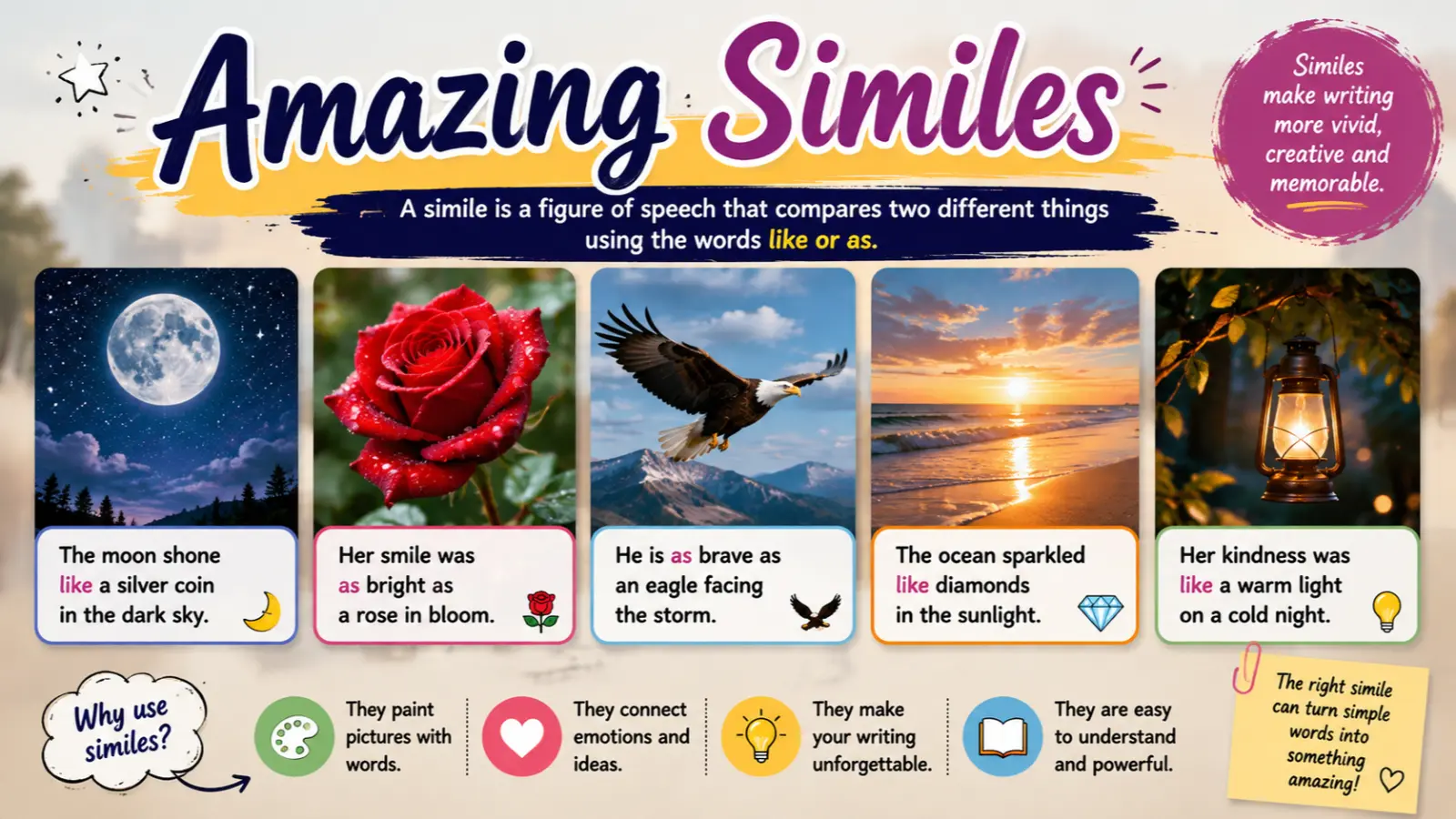
Amazing Similes compares two different things using words such as like or as. The comparison helps readers picture an idea, emotion, person, sound, or scene more clearly. The moon is not actually a coin. The comparison gives the reader a visual image and creates a particular mood. Amazing similes go one step further. They do more than decorate a sentence. Amazing Similes strong comparison reveals something about the subject and makes the reader feel or imagine it in a specific way. Writers use Amazing Similes in novels, poems, songs, speeches, advertising, personal essays, conversations, and storytelling. This collection of amazing similes offers original examples while showing how you can build stronger comparisons of your own.
What Makes a Simile Amazing?
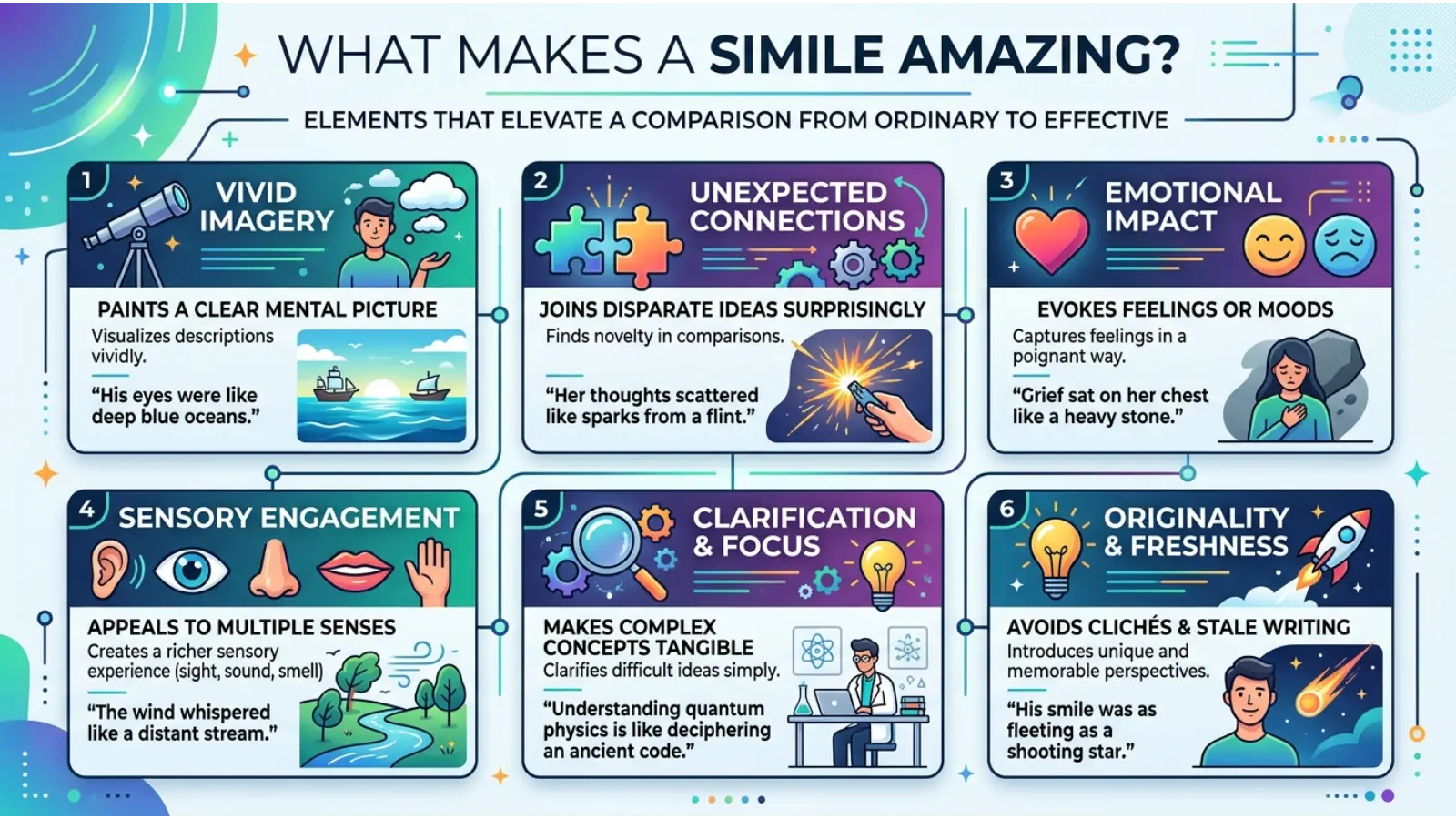
An amazing simile is a clear, original comparison that connects an idea to something familiar or unexpected in a meaningful way. It should sharpen an image, communicate an emotion, or give a sentence a memorable quality rather than simply adding decoration.
30 Amazing Similes for Creative Writing
1. Her Smile Was Like Morning Light Through Curtains
Meaning: Her smile feels gentle, warm, and capable of changing the atmosphere around her.
Example:
- Her smile was like morning light through curtains, softening the whole room.
- Even after a difficult conversation, her smile brought a little brightness back.
Why it works: Morning light suggests comfort and renewal without directly saying that the person is comforting.
Best context: Character descriptions, friendship scenes, romance, and hopeful stories.
Writing tip: Compare a person’s expression to something that produces the same emotional effect.
2. His Thoughts Raced Like Sparrows Released From a Cage
Meaning: His mind was filled with quick, restless thoughts.
Example:
- His thoughts raced like sparrows released from a cage as the exam approached.
- Questions flew through her mind like startled birds.
The comparison creates movement. Instead of merely telling readers that someone is nervous, it lets them experience the mental activity.
Best context: Anxiety, excitement, anticipation, or moments of sudden realization.
3. The City Glowed Like Embers Beneath a Black Sky
At night, a city can look bright while the surrounding sky remains dark.
Example:
- From the hilltop, the city glowed like embers beneath a black sky.
- Far below, the distant lights shimmered like scattered sparks.
This simile is particularly effective because embers suggest both warmth and fading fire. Depending on the scene, it can create beauty, mystery, or even a sense of danger.
Best context: Night scenes, travel writing, fantasy, and atmospheric storytelling.
4. Her Laughter Burst Out Like Popcorn in a Hot Pan
Meaning: Her laughter came quickly, noisily, and in several bursts.
Example:
- Her laughter burst out like popcorn in a hot pan.
- One joke was enough, and his laughter started popping through the quiet room.
The unusual comparison gives the scene energy and a touch of humor.
Best context: Funny stories, children’s writing, casual scenes, and lively character descriptions.
Writing tip: Unexpected everyday objects can create memorable similes when their behavior matches the subject.
5. The Rain Fell Like Thousands of Tiny Fingers Tapping Glass
Meaning: The rain made a steady tapping sound against windows or another hard surface.
Example:
- The rain fell like thousands of tiny fingers tapping glass.
- All night, the storm tapped against the bedroom window.
Here the comparison works through sound, not just appearance. Good similes can appeal to any of the senses.
Best context: Weather descriptions, reflective scenes, poetry, and quiet storytelling.
6. His Anger Rose Like a Locked Door Slowly Being Kicked Open
Meaning: His anger built gradually until he could no longer contain it.
Example:
- His anger rose like a locked door slowly being kicked open.
- She tried to remain calm, but frustration pushed against her patience.
The image suggests pressure building from inside.
Best context: Conflict, dramatic scenes, character development, and emotional writing.
Writing tip: For emotions, choose an image that shows what the emotion does, rather than simply naming the emotion.
7. The Lake Was Still as a Thought No One Had Spoken
Meaning: The lake was extremely quiet and undisturbed.
Example:
- At dawn, the lake was still as a thought no one had spoken.
- They stood beside the water, afraid to disturb its silence.
This comparison combines physical stillness with emotional silence.
Best context: Poetry, reflective prose, nature writing, and peaceful scenes.
8. Her Friendship Was Like a Lantern on an Unfamiliar Road
Meaning: Her friendship provided guidance, comfort, and reassurance during uncertain times.
Example:
- Her friendship was like a lantern on an unfamiliar road.
- Whenever I felt lost, his advice gave me a little light to follow.
The lantern becomes a useful image because friendship is often difficult to describe physically. The comparison gives the abstract idea a concrete form.
Best context: Essays, personal writing, friendship poems, and character relationships.
9. The Old House Creaked Like a Ship Remembering the Sea
Meaning: The house made old, deep, or mysterious noises.
Example:
- The old house creaked like a ship remembering the sea.
- Every floorboard seemed to carry a story from another time.
This simile adds personality and history to an ordinary building.
Best context: Mystery, gothic-style storytelling, historical fiction, and atmospheric descriptions.
10. Her Happiness Sparkled Like Sunlight on Moving Water
Meaning: Her happiness was bright, lively, and constantly changing.
Example:
- Her happiness sparkled like sunlight on moving water.
- The children ran across the yard with faces bright as summer mornings.
The image avoids simply saying someone was “very happy.” It gives happiness movement and light.
Best context: Celebrations, childhood memories, joyful scenes, and poetry.
11. The Guitar Sounded Like Rain Falling Inside an Empty Room
Meaning: The music had a soft, echoing, possibly lonely quality.
Example:
- The guitar sounded like rain falling inside an empty room.
- A quiet melody drifted through the hall, carrying a strange sadness.
This is useful for writing about similes in music because it compares sound with another sensory experience.
Best context: Music reviews, poems, emotional scenes, and creative descriptions.
Writing tip: When describing music, don’t limit yourself to musical vocabulary. Compare sound to weather, movement, texture, light, or memory.
12. The Crowd Moved Like a River Searching for the Sea
Meaning: A large crowd moved continuously in one general direction.
Example:
- After the concert, the crowd moved like a river searching for the sea.
- Students poured through the gates like water finding an open channel.
The river comparison emphasizes direction and constant movement.
Best context: Sports events, concerts, festivals, city scenes, and travel writing.
13. His Voice Was Rough Like Gravel Beneath a Bicycle Tire
Meaning: His voice sounded harsh, coarse, or scratchy.
Example:
- His voice was rough like gravel beneath a bicycle tire.
- After shouting all afternoon, her voice sounded like dry paper being rubbed together.
The comparison uses texture and sound to create a stronger impression.
Best context: Character introductions and dialogue descriptions.
14. The Snow Covered the Field Like an Unopened Letter
Meaning: Fresh snow made the field appear untouched, blank, and full of possibility.
Example:
- Snow covered the field like an unopened letter.
- No footprints disturbed the white surface.
The letter suggests something waiting to be discovered. This gives the description a layer of meaning beyond appearance.
Best context: Winter stories, poetry, reflective writing, and beginnings.
15. His Secret Sat Between Them Like a Third Person
Meaning: An unspoken secret affected the relationship even though nobody mentioned it.
Example:
- His secret sat between them like a third person at the table.
- They talked about school, weather, and dinner, but the truth remained between them.
This is a strong example of using a simile to make an invisible problem feel physically present.
Best context: Suspense, relationships, family stories, and dramatic fiction.
16. The Baby’s Cry Cut Through the House Like a Fire Alarm
Meaning: The cry was sudden, loud, and impossible to ignore.
Example:
- The baby’s cry cut through the house like a fire alarm.
- Her shout broke the quiet like a bell in an empty station.
The comparison emphasizes sound and urgency.
Best context: Action scenes, family stories, humorous descriptions, and moments requiring attention.
17. The Sunset Spread Across the Sky Like Paint From a Careless Brush
Meaning: The sunset appeared broad, colorful, and irregular.
Example:
- The sunset spread across the sky like paint from a careless brush.
- Clouds drifted through the colors, breaking the scene into uneven shapes.
This works because a sunset and spilled paint can both create unexpected patterns.
Best context: Nature writing, travel stories, poetry, and visual descriptions.
18. Her Hope Flickered Like a Candle in a Drafty Hallway
Meaning: She still had hope, but it was fragile and uncertain.
Example:
- Her hope flickered like a candle in a drafty hallway.
- One encouraging message was enough to keep that small light alive.
The comparison communicates vulnerability without explaining the emotion at length.
Best context: Difficult journeys, emotional fiction, personal essays, and reflective poetry.
19. The Old Photograph Felt Like a Window Into a Locked Room
Meaning: The photograph offered a glimpse into a past that could no longer be fully reached.
Example:
- The old photograph felt like a window into a locked room.
- Every face in the picture seemed to know a story he could never hear.
This simile is useful for memory because photographs preserve images while leaving much of the past unknown.
Best context: Family stories, memoir, historical writing, and emotional fiction.
20. Her Words Fell Like Pebbles Into Deep Water
Meaning: Her words were quiet but had effects that seemed to continue beyond the moment.
Example:
- Her words fell like pebbles into deep water.
- Nobody answered immediately, but the silence afterward felt different.
The image suggests that small words can create large emotional ripples.
Best context: Serious conversations, poetry, drama, and reflective prose.
21. The Wind Whistled Like a Train Passing Beyond the Hills
Meaning: The wind produced a distant, continuous sound.
Example:
- The wind whistled like a train passing beyond the hills.
- All evening, the trees answered the strange sound with soft rustling.
This comparison turns an ordinary weather sound into something distant and mysterious.
Best context: Storm scenes, rural settings, suspense, and nature writing.
22. His Confidence Was Like a Bridge He Had Built One Plank at a Time
Meaning: His confidence developed gradually through experience.
Example:
- His confidence was like a bridge he had built one plank at a time.
- Every successful presentation added another piece to the structure.
This works especially well when writing about personal growth because the bridge represents progress and stability.
Best context: Essays, inspirational writing, school stories, and character development.
23. The Classroom Became Busy as a Beehive After the Bell
Meaning: Students suddenly became active and noisy.
Example:
- The classroom became busy as a beehive after the bell.
- Chairs scraped, books opened, and conversations filled every corner.
The comparison immediately communicates activity without listing every sound.
Best context: School writing, children’s stories, and humorous descriptions.
24. Her Memory Was Like a Beach After the Tide Had Gone Out
Meaning: Her memory contained scattered pieces of the past, with some things missing.
Example:
- Her memory was like a beach after the tide had gone out.
- She remembered a red scarf, a wooden gate, and someone’s laugh, but little else.
This is more effective than simply saying that her memory was incomplete because the image shows fragments left behind.
Best context: Memoir, literary fiction, poetry, and reflective writing.
25. The Joke Landed Like a Feather on a Stone
Meaning: The joke received almost no reaction.
Example:
- His joke landed like a feather on a stone.
- He waited for laughter, but the room remained completely quiet.
This is a playful way to describe an unsuccessful joke.
Best context: Funny stories, dialogue, social situations, and character writing.
26. The Storm Arrived Like an Argument Nobody Wanted
Meaning: The storm came suddenly and brought tension or disruption.
Example:
- The storm arrived like an argument nobody wanted.
- One moment the sky was calm; the next, rain hammered the roof.
The comparison connects an external event with human conflict, making the weather feel emotionally significant.
Best context: Fiction, dramatic scenes, poetry, and symbolic descriptions.
27. The Book Opened Like a Door Into Someone Else’s Dream
Meaning: Reading the book transported the reader into an unfamiliar imaginative world.
Example:
- The book opened like a door into someone else’s dream.
- Within a few pages, the ordinary room around her seemed to disappear.
This simile explains the immersive power of reading without relying on a generic phrase such as “the book was amazing.”
Best context: Book reviews, essays, literary writing, and storytelling.
28. His Anger Was Hot as a Pan Left Too Long on the Stove
Meaning: His anger was intense and increasingly difficult to control.
Example:
- His anger was hot as a pan left too long on the stove.
- She could hear the frustration building in his voice.
The familiar kitchen image makes an abstract emotion easier to understand.
Best context: Character conflict and emotional storytelling.
Writing tip: Everyday experiences are often excellent sources for emotional comparisons.
29. The Stars Looked Like Pinholes in a Curtain of Ink
Meaning: The stars appeared as tiny points of light against a dark night sky.
Example:
- The stars looked like pinholes in a curtain of ink.
- They lay on the grass and watched the tiny lights above them.
The image creates a strong contrast between darkness and light.
Best context: Night scenes, fantasy, poetry, and peaceful nature descriptions.
30. The Final Note Hung in the Air Like a Question
Meaning: The ending of the music felt unresolved or invited reflection.
Example:
- The final note hung in the air like a question.
- Nobody spoke when the performance ended.
This is particularly useful when describing similes in music because it connects sound with an emotional or intellectual response.
Best context: Music writing, poetry, dramatic endings, and reflective scenes.
How to Make a Simile More Vivid
A weak simile often compares something with an obvious quality:
The room was as cold as ice.
The reader understands it, but the comparison does not give much personality to the sentence.
A more distinctive comparison might focus on what the cold does:
The room felt like a refrigerator someone had forgotten to close.
The second version creates a specific situation that readers can imagine.
When creating your own similes, ask:
- What exactly am I trying to show?
- Which quality matters most?
- What familiar object behaves in the same way?
- Can I make the comparison more specific?
- Does the image fit the mood of the scene?
The goal is not to find the strangest comparison possible. The goal is to find the right comparison.
How Professional Writers Build Strong Comparisons
Strong writers usually begin with observation rather than a search for fancy language.
Suppose you want to describe a nervous character. Instead of immediately writing nervous as a rabbit, observe the physical behavior:
- fingers move constantly
- breathing becomes shallow
- eyes keep checking the door
- words come out too quickly
Now you have several possible directions for a simile.
His fingers moved like a pianist playing a song only he could hear.
This tells the reader something specific about the character. The simile works because it grows from an observable detail.
Use Specific Details
Compare:
The dog was fast like lightning.
with:
The dog shot across the wet yard like a tennis ball launched from a racket.
The second image gives the movement direction, speed, and energy.
Let the Simile Reveal Character
A comparison can tell readers about the person making it.
A child might compare a huge building to a giant’s castle. A scientist might use a mechanical comparison. A musician might describe a voice through rhythm or harmony.
This means similes can contribute to characterization, not merely description.
Choose Comparisons That Belong to the Scene
A fishing village, a classroom, a hospital, and a basketball court naturally provide different imagery.
If a character is standing beside the ocean, marine imagery may feel natural. If that same character suddenly uses a complicated mechanical comparison, the image may feel disconnected unless there is a reason for it.
Good imagery belongs to its world.
How to Avoid Cliché Similes
Clichés are comparisons that have been used so often that they may no longer create a fresh image.
Examples include familiar expressions such as:
- busy as a bee
- cold as ice
- white as snow
- quiet as a mouse
These are not grammatically wrong. They can be useful in everyday conversation, children’s writing, or situations where brevity matters.
The problem occurs when every description depends on familiar comparisons.
Try asking:
What would this subject remind someone of in this particular situation?
Instead of:
She was as quiet as a mouse.
Try:
She moved through the meeting like a bookmark nobody noticed.
The second comparison creates a different image and suggests quietness without using a standard formula.
Similes for Different Writing Situations
Amazing Similes for Happiness
Happiness can be described through light, movement, sound, color, warmth, or expansion.
His excitement bubbled like water beginning to boil.
Her happiness moved through the room like music from an open window.
The best choice depends on the type of happiness. Quiet contentment needs different imagery from wild excitement.
Amazing Similes for Friendship
Friendship often works well with images of support, direction, shelter, or light.
Their friendship was like two paths meeting beneath the same tree.
This suggests companionship without implying that friends must always agree or remain identical.
Amazing Similes for Rain
Rain offers endless sensory possibilities.
Rain stitched silver lines across the window.
This example actually moves toward metaphor rather than simile, showing an important point: not every beautiful comparison needs like or as.
A simile version would be:
Rain fell like silver thread across the window.
Amazing Similes for Love
Love is easier to write convincingly when the comparison is specific rather than exaggerated.
Her affection felt like a familiar song returning after years of silence.
This suggests recognition and emotional connection without simply calling love “beautiful.”
Amazing Similes for Anger
Anger can be shown through heat, pressure, noise, movement, or confinement.
His frustration pressed against his calm like steam against a sealed lid.
This image emphasizes pressure rather than merely announcing that the character is angry.
Amazing Similes in Music
Music is difficult to describe because it is experienced through sound but often creates visual or emotional responses.
Try comparing music to:
- weather
- movement
- physical texture
- architecture
- light
- memory
- conversation
For example:
The melody moved like a slow train leaving an empty station.
The comparison gives the music pace, direction, and emotional atmosphere.
Simile vs. Metaphor: What’s the Difference?
A simile makes a comparison using words such as like or as.
The clouds were like torn pieces of cotton.
A metaphor makes the comparison directly.
The clouds were torn pieces of cotton.
Both can create imagery, but they create slightly different effects.
Similes often feel more exploratory because they invite the reader to connect two things. Metaphors can sound more direct and forceful.
When revising your writing, try converting a simile into a metaphor and then compare the two versions. One may fit your sentence better.
Similes, Imagery, and Personification
Similes are closely connected to imagery because they help readers form sensory pictures.
They can also work alongside personification, which gives human qualities to nonhuman things.
For example:
The wind complained like an old man arguing with a locked door.
This sentence combines personification and simile. The wind is described as if it can complain, while the comparison explains the kind of sound it makes.
You can combine literary devices, but make sure each one serves the same image. Too many unrelated devices can make a sentence feel crowded.
Common Mistakes Writers Make With Similes
1. Choosing a Comparison Just Because It Sounds Fancy
A complicated image is not automatically a good image.
If readers have to stop and decode the comparison, it may distract from the scene.
Fix: Choose clarity first, originality second.
2. Using Too Many Similes
A paragraph filled with comparisons can make every sentence compete for attention.
Fix: Give your strongest image room to work.
3. Mixing Unrelated Images
Suppose you begin with a sailing image and suddenly shift into cooking imagery in the same comparison. The reader may lose track of the picture.
Fix: Keep the image internally consistent.
4. Explaining the Simile Too Much
For example:
Her smile was like sunrise because sunrise is bright and beautiful and her smile made everyone happy.
The explanation removes much of the reader’s opportunity to interpret the image.
Fix: Let the comparison carry some of the meaning.
5. Using a Simile Where a Precise Description Would Be Better
Not every sentence needs figurative language.
Sometimes:
The boy had muddy shoes.
is stronger than:
The boy’s shoes were like two ancient swamps after a terrible battle.
A simile should earn its place.
How to Create Your Own Amazing Similes
Try this five-step exercise.
Step 1: Choose a Subject
Pick something ordinary:
A crowded bus.
Step 2: Identify Its Strongest Quality
Maybe the bus is:
- noisy
- cramped
- unpredictable
- constantly moving
Step 3: Brainstorm Related Experiences
What else is noisy and crowded?
- a market
- a stadium
- a busy kitchen
- a beehive
- a train station
Step 4: Look for an Unexpected Connection
Instead of immediately choosing the most obvious option, explore further.
The bus sounded like a kitchen preparing dinner for a hundred impatient guests.
Now the comparison adds noise, activity, and humor.
Step 5: Test the Sentence
Ask:
- Is the comparison understandable?
- Does it fit the mood?
- Does it reveal something?
- Is it more interesting than a literal description?
- Would removing it make the sentence weaker?
If the answer is yes, keep it.
Three Creative Exercises
Exercise 1: Describe an Emotion Without Naming It
Choose one emotion:
happiness, fear, anger, loneliness, excitement, or disappointment.
Do not use the emotion’s name. Describe it through a simile.
For example:
Excitement jumped through her like electricity finding a new wire.
Then write two more versions using completely different images.
Exercise 2: Give One Object Five Personalities
Choose an ordinary object such as a door.
Describe it as:
- welcoming
- frightening
- lonely
- impatient
- mysterious
Your comparisons might change completely depending on the mood.
This exercise teaches an important lesson: the quality of a simile depends on context.
Exercise 3: Improve a Cliché
Start with:
He was as busy as a bee.
Write three original versions.
For example:
He moved from desk to desk like a waiter carrying an invisible dinner rush.
The aim is not simply to make the sentence unusual. Make the replacement reveal something new about the character.
When Should You Use a Simile?
Use a simile when the comparison gives readers something they would not get from a literal statement.
A simile can be especially useful when you want to:
- make an abstract emotion concrete
- create a memorable character description
- establish atmosphere
- slow down an important moment
- add humor
- describe an unfamiliar experience
- make poetry more sensory
- give a setting personality
- help readers visualize movement or sound
Avoid using one simply because the sentence feels empty. Figurative language should support the writing rather than cover a lack of detail.
Frequently Asked Questions About Amazing Similes
What is an amazing simile?
An amazing simile is an effective, memorable comparison between two different things, usually using like or as. It works because the connection is clear, fresh, and meaningful.
What are 5 examples of strong similes?
Here are five original examples:
- Her smile was like morning light through curtains.
- The old house creaked like a ship remembering the sea.
- His thoughts raced like sparrows released from a cage.
- The snow covered the field like an unopened letter.
- The final note hung in the air like a question.
How do I make my similes more creative?
Start with a specific quality rather than searching for a fancy comparison. Decide what the subject looks, sounds, feels, or behaves like, then explore several possible images before choosing the most precise one.
Can similes be used in poems?
Absolutely. Similes are especially useful in poetry because they can compress an emotion or image into a few memorable words. A good poetic simile should contribute to the poem’s mood, rhythm, or meaning.
Are similes and metaphors the same?
No. Both compare different things, but a simile usually signals the comparison with like or as, while a metaphor makes the comparison directly.
What makes a simile sound natural?
A natural simile fits the subject, context, tone, and voice of the writing. It should feel like a meaningful observation rather than an impressive phrase inserted into the sentence.
Should every sentence contain a simile?
No. Too many similes can weaken their impact. Strong writing uses figurative language selectively, giving important images enough space to stand out.
How can students practice writing similes?
Students can choose everyday objects, emotions, sounds, or places and create several comparisons for each. A useful exercise is to replace common clichés with original comparisons based on specific observations.
Conclusion
Amazing similes do not depend on complicated vocabulary. They depend on seeing ordinary things in interesting ways. A strong comparison can turn rain into a sound, friendship into a source of light, anger into pressure, music into movement, and memory into a place readers can almost enter. The best way to improve is to experiment. Write several comparisons for the same subject. Try familiar images, then unexpected ones. Read the sentence aloud. Remove anything that feels forced. Most importantly, pay attention to the world around you. Fresh similes often begin with ordinary observations—a sound through a window, sunlight on a wall, the movement of a crowd, or the expression on someone’s face. When you learn to notice those details, your writing gains a richer visual and emotional vocabulary. And that is where truly memorable similes begin.
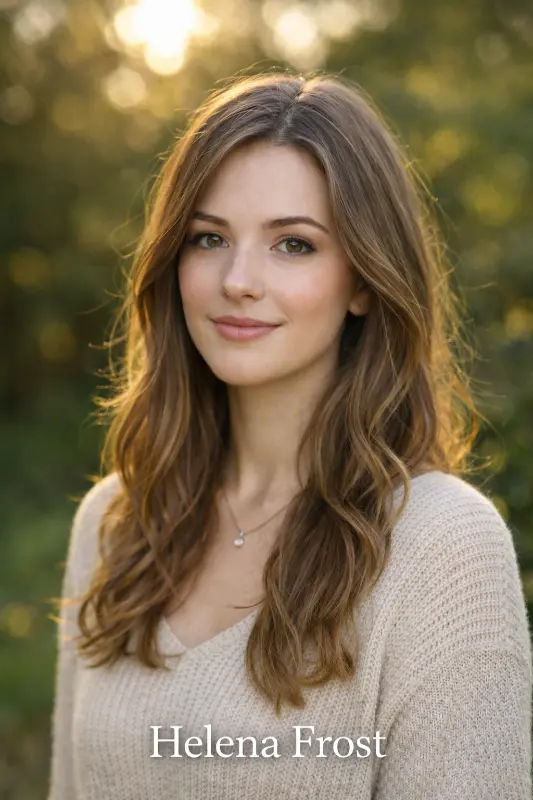
I am Helena Frost, a writer captivated by the beauty of language and the art of comparison. Through my words, I explore the world by turning ordinary moments into vivid similes and reflections. I enjoy crafting phrases that spark imagination, evoke emotion, and linger in the mind. My writing celebrates the subtle connections between people, nature, and the stories we live. For me, every sentence is an opportunity to reveal the extraordinary in the everyday.