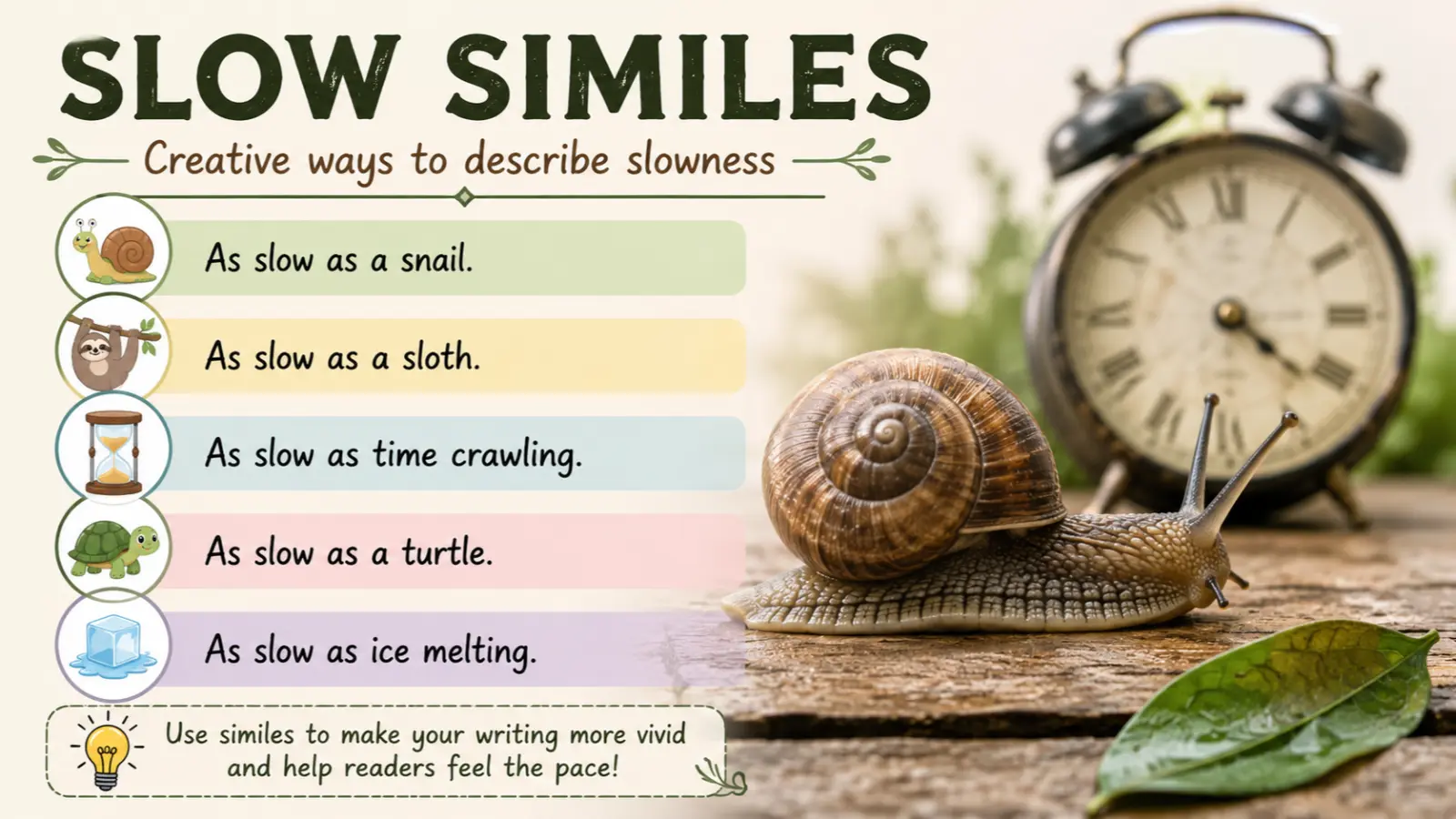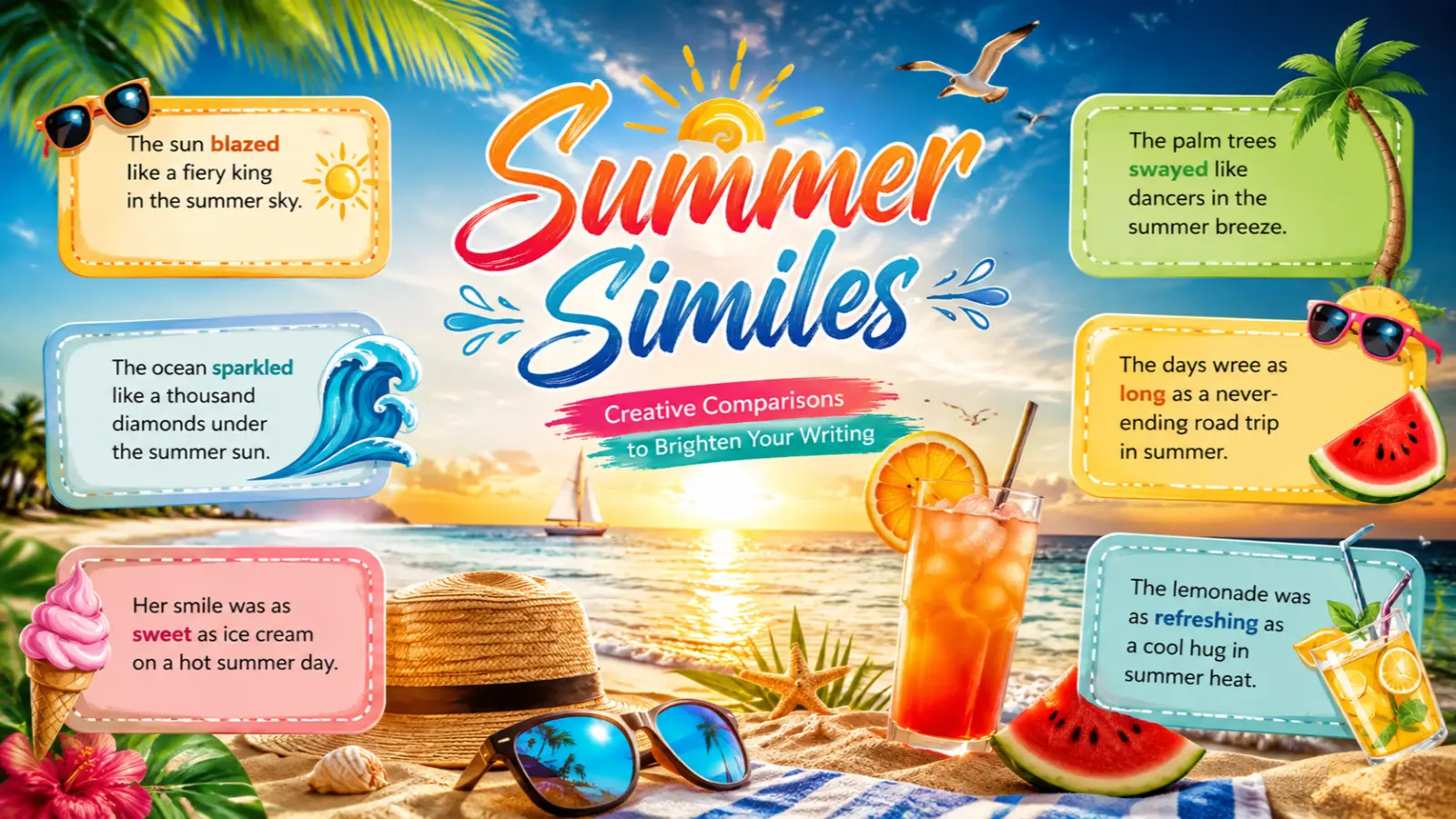
Summer Similes is more than a season. It is a collection of warm afternoons, bright skies, long vacations, buzzing insects, cool drinks, and unforgettable memories. When writers want readers to feel the heat of the sun or the joy of a beach day, similes help transform ordinary descriptions into vivid experiences.
A simile compares two different things using words such as like or as. These comparisons help readers picture scenes, understand emotions, and connect with characters. From novels and poems to speeches, conversations, and classroom assignments, similes make language more colorful.
This guide explores original summer similes, explains why they work, shows how to use them naturally, and offers practical advice to help you create your own.
Quick Answer
Summer similes are comparisons that use like or as to describe the sights, sounds, feelings, and experiences of summer. They make writing more engaging by helping readers imagine sunshine, warmth, vacations, nature, and seasonal emotions through creative comparisons.
Why Summer Is Perfect for Similes
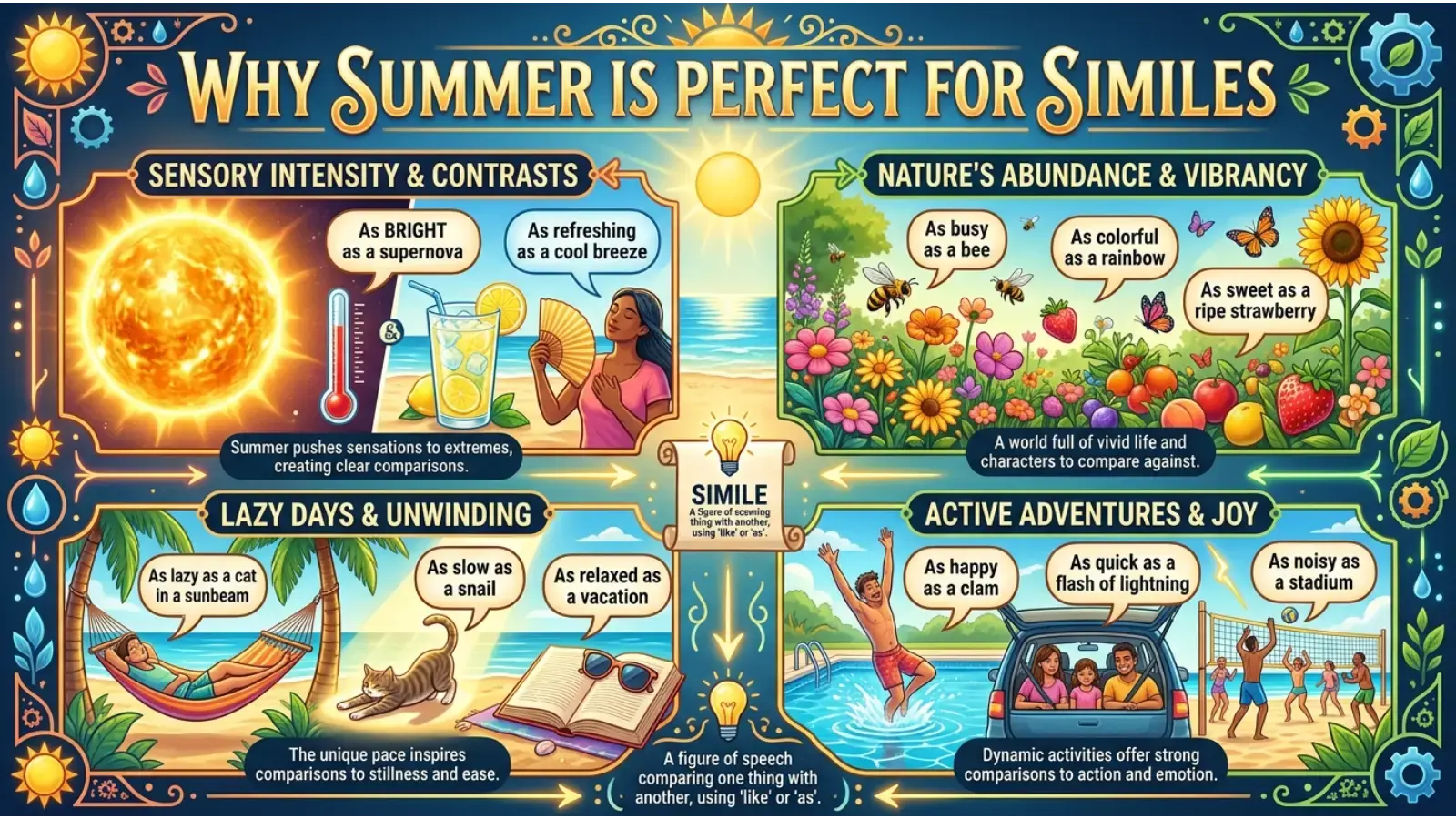
Summer offers endless inspiration because it appeals to every sense.
You can describe:
- Bright sunshine
- Warm breezes
- Blooming gardens
- Ocean waves
- Family vacations
- Ice cream melting
- Long evenings
- Thunderstorms
- Outdoor adventures
- Relaxed moods
These details naturally invite imaginative comparisons.
30 Original Summer Similes
1. As cheerful as a sunflower greeting the morning
Meaning: Full of happiness and optimism.
Examples
- Her smile was as cheerful as a sunflower greeting the morning.
- The children looked as cheerful as a sunflower greeting the morning on the last day of school.
Best for: Positive characters, celebrations, happy memories.
Writing Tip: Use this when describing joyful people instead of simply saying “happy.”
2. Like lemonade poured over a hot afternoon
Meaning: Refreshing and comforting.
Examples
- His kind words felt like lemonade poured over a hot afternoon.
- The cool breeze arrived like lemonade poured over a hot afternoon.
Works well in: Descriptive stories and reflective writing.
3. As golden as sunlight dancing on quiet water
Meaning: Bright, beautiful, and peaceful.
Examples
- Her hair looked as golden as sunlight dancing on quiet water.
- The wheat fields became as golden as sunlight dancing on quiet water.
4. Like flip-flops skipping across warm sand
Meaning: Lighthearted and carefree.
Examples
- Their laughter bounced like flip-flops skipping across warm sand.
- The conversation moved like flip-flops skipping across warm sand.
5. As endless as a summer horizon
Meaning: Vast or seemingly without limits.
Examples
- Their dreams felt as endless as a summer horizon.
- The possibilities seemed as endless as a summer horizon.
6. Like a hammock swaying beneath old trees
Meaning: Calm and relaxing.
Examples
- The afternoon passed like a hammock swaying beneath old trees.
- His voice was like a hammock swaying beneath old trees.
7. As bright as fresh citrus under the noon sun
Meaning: Full of energy and color.
Examples
- Her artwork looked as bright as fresh citrus under the noon sun.
- The festival decorations were as bright as fresh citrus under the noon sun.
8. Like waves whispering to the shore
Meaning: Gentle and soothing.
Examples
- Her voice sounded like waves whispering to the shore.
- The music drifted like waves whispering to the shore.
9. As playful as dragonflies over a quiet pond
Meaning: Full of fun and movement.
Examples
- The puppies were as playful as dragonflies over a quiet pond.
- His imagination stayed as playful as dragonflies over a quiet pond.
10. Like a breeze slipping through open windows
Meaning: Quiet and effortless.
Examples
- She entered the room like a breeze slipping through open windows.
- The idea arrived like a breeze slipping through open windows.
11. As warm as sand beneath bare feet
Meaning: Comforting and welcoming.
Examples
- Her greeting was as warm as sand beneath bare feet.
- Their friendship remained as warm as sand beneath bare feet.
12. Like a picnic under wide blue skies
Meaning: Pleasant and carefree.
Examples
- The family reunion felt like a picnic under wide blue skies.
- Their afternoon was like a picnic under wide blue skies.
13. As colorful as a beach umbrella village
Meaning: Full of variety and excitement.
Examples
- The market looked as colorful as a beach umbrella village.
- Her imagination became as colorful as a beach umbrella village.
14. Like strawberries fresh from the garden
Meaning: Naturally sweet and fresh.
Examples
- His compliments were like strawberries fresh from the garden.
- The memory stayed like strawberries fresh from the garden.
15. As lively as fireworks above a summer fair
Meaning: Energetic and exciting.
Examples
- The crowd became as lively as fireworks above a summer fair.
- Their celebration felt as lively as fireworks above a summer fair.
16. Like cool shade beneath a giant oak
A perfect comparison for relief after difficulty.
Example: Her encouragement arrived like cool shade beneath a giant oak.
17. As peaceful as a quiet lakeside sunrise
Ideal for calm scenes and reflective writing.
18. Like seashells scattered along the shore
Useful for describing beautiful variety.
19. As sweet as peaches picked at sunrise
Works well for personalities and memories.
20. Like butterflies drifting across wildflowers
Perfect for graceful movement.
21. As fresh as morning dew in July
Suggests new beginnings.
22. Like sunlight spilling through tree leaves
Creates vivid imagery of gentle light.
23. As free as a kite above the beach
Expresses freedom and adventure.
24. Like a canoe gliding across still water
Shows smooth, effortless motion.
25. As gentle as evening sunshine
Excellent for peaceful endings.
26. Like cherries ripening in quiet orchards
Suggests slow, natural growth.
27. As inviting as a sparkling swimming pool
Describes attractive places or opportunities.
28. Like clouds floating over summer hills
Creates peaceful visual imagery.
29. As joyful as children chasing fireflies
Captures innocent happiness.
30. Like the first splash into a cool lake
Represents excitement, relief, or fresh beginnings.
Why These Similes Work
Strong similes do more than compare two things.
They invite readers to experience a moment through familiar sights, sounds, textures, and emotions. A successful summer simile often combines sensory detail with a feeling, making descriptions memorable instead of predictable.
Notice that these comparisons avoid common clichés. Instead of saying someone is “as hot as the sun,” they focus on unique seasonal experiences like hammocks, dragonflies, lemonade, and lakes.
Make Your Summer Similes More Vivid
Professional writers often begin with observation instead of comparison.
Ask yourself:
- What does summer smell like?
- What sounds define the season?
- Which colors dominate the landscape?
- What memories does summer bring?
The more specific your observations, the more original your similes become.
Instead of writing:
The day was hot.
Try:
The afternoon felt like a blanket warming on a clothesline.
Specific details create stronger imagery.
Summer Similes and Other Literary Devices
Metaphor
A metaphor makes a direct comparison.
Simile: The lake shimmered like polished glass.
Metaphor: The lake was polished glass.
Imagery
Imagery appeals to the senses.
Summer similes naturally strengthen visual, auditory, tactile, and even taste imagery.
Personification
Personification gives human qualities to non-human things.
Example:
“The breeze danced through the trees.”
Combining personification with similes can create richer descriptions.
Hyperbole
Hyperbole exaggerates for effect.
Example:
“The beach stretched forever.”
Used carefully, it pairs well with vivid similes.
Symbolism
Summer often symbolizes:
- Freedom
- Growth
- Youth
- Adventure
- Hope
- Renewal
Thoughtful similes can reinforce these deeper meanings.
Create Your Own Summer Similes
Follow this simple process.
Step 1
Choose one summer subject.
Examples:
- Sunshine
- Ice cream
- Ocean
- Garden
- Vacation
Step 2
Identify its strongest quality.
Examples:
- Bright
- Refreshing
- Relaxing
- Busy
- Peaceful
Step 3
Think of another object that shares the same quality.
Example:
Bright → fresh oranges
Relaxing → hammock
Refreshing → mountain spring
Step 4
Build the comparison using like or as.
Practice creating five different versions before choosing your favorite.
Creative Exercise
Describe each of these using your own simile.
- A hot afternoon
- A family picnic
- A beach sunset
- A summer thunderstorm
- A cool evening breeze
Challenge yourself to avoid comparisons you’ve heard before.
Common Mistakes
Using Overused Comparisons
Readers have seen familiar similes countless times.
Aim for fresh, believable imagery instead.
Mixing Different Images
Avoid combining unrelated comparisons.
Choose one clear image that supports your description.
Forcing a Comparison
Every simile should sound natural.
If it distracts readers, simplify it.
Confusing Similes with Metaphors
Remember:
- Similes use like or as.
- Metaphors compare directly.
Adding Similes Everywhere
Too many comparisons slow your writing.
Use them where they create the greatest impact.
Frequently Asked Questions
What is a summer simile?
A summer simile compares something to a summer-related image using like or as to create vivid descriptions.
Why should writers use summer similes?
They make scenes more visual, emotional, and memorable while helping readers connect with seasonal experiences.
Are summer similes only useful in poetry?
No. They improve stories, essays, speeches, blog posts, journals, and everyday conversations.
How do I make my similes original?
Observe real experiences, focus on specific details, and avoid comparisons that have become clichés.
Can children learn summer similes?
Yes. Summer provides familiar images that make similes easy to understand and enjoyable to practice.
What’s the difference between a simile and a metaphor?
A simile uses words like like or as. A metaphor makes a direct comparison without those words.
How many similes should I use in one story?
Use enough to enhance important moments without overwhelming the reader. A few well-placed similes are often more effective than many ordinary ones.
Conclusion
Summer offers endless inspiration for creative comparisons. From golden sunsets and gentle breezes to lively beaches and peaceful lakes, the season is filled with images that can make writing more vivid and memorable. The best summer similes don’t simply decorate a sentence—they help readers see, hear, and feel the moment. Keep observing the world around you, experiment with fresh comparisons, and don’t be afraid to revise until each simile feels natural. With practice, you’ll create original imagery that adds warmth, emotion, and lasting impact to every piece of writing.
I am Helena Frost, a writer captivated by the beauty of language and the art of comparison. Through my words, I explore the world by turning ordinary moments into vivid similes and reflections. I enjoy crafting phrases that spark imagination, evoke emotion, and linger in the mind. My writing celebrates the subtle connections between people, nature, and the stories we live. For me, every sentence is an opportunity to reveal the extraordinary in the everyday.