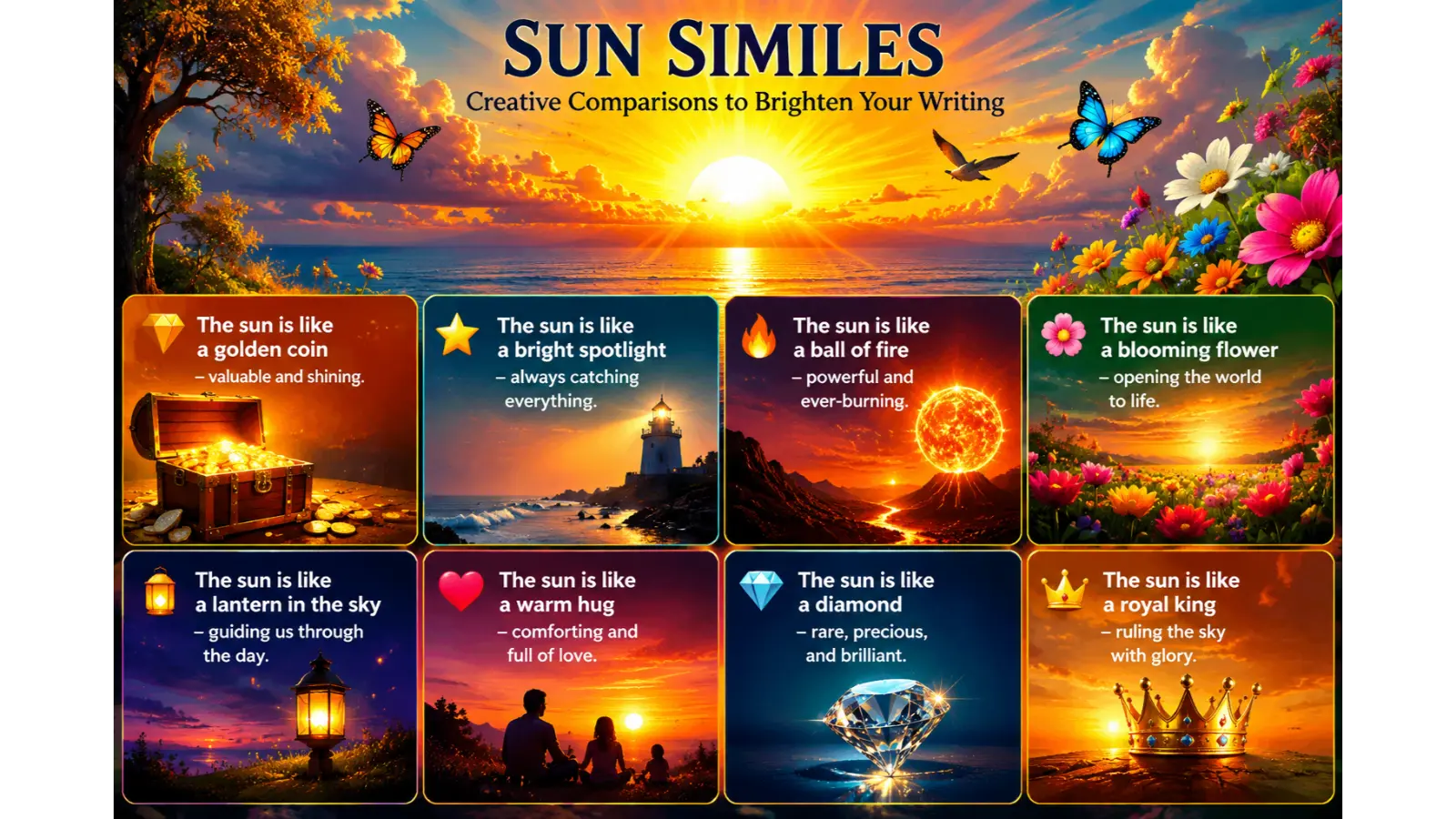
The sun has inspired writers for thousands of years because it represents warmth, hope, power, beauty, time, and change. One simple comparison can transform an ordinary sentence into an unforgettable image. That’s where similes become useful. A simile compares two different things using like or as. Instead of saying the sun was bright, you can compare it to something readers instantly recognize, creating a vivid picture in their minds. Whether you’re writing stories, poems, essays, speeches, or everyday descriptions, well-crafted sun similes help readers experience a scene rather than simply read about it. This guide shares original sun similes, explains why they work, and shows you how to create your own imaginative comparisons.
Quick Answer
Sun similes compare the sun to another object using words like like or as. They help writers describe brightness, warmth, color, energy, hope, and emotion in a way that feels vivid and memorable. A fresh simile creates stronger imagery than a plain description.
Why Writers Love Sun Similes
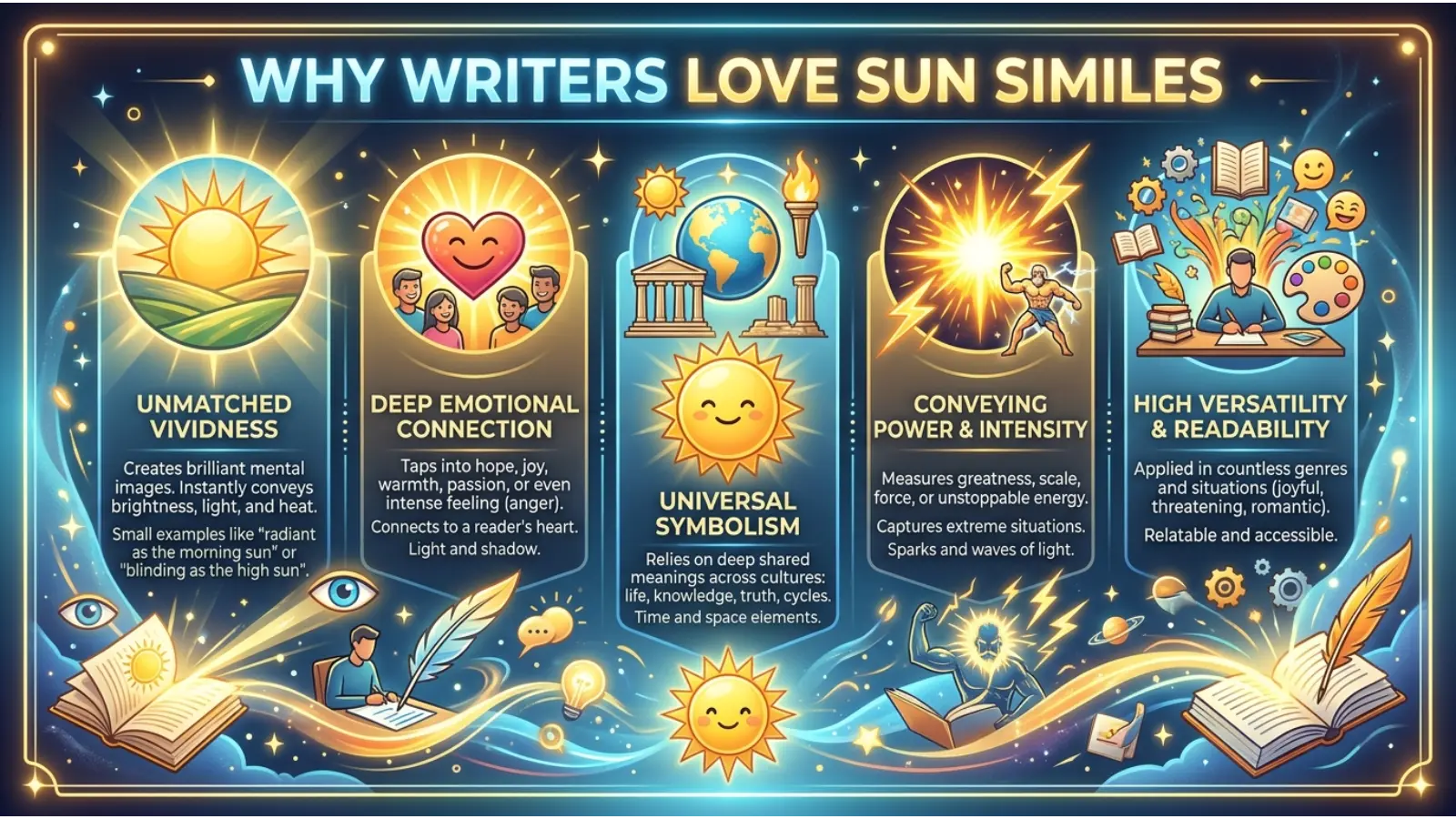
The sun can represent many different ideas depending on the scene.
- Joy
- New beginnings
- Summer
- Strength
- Heat
- Optimism
- Time passing
- Peace
- Determination
- Hope after hardship
The best similes don’t simply describe the sun—they reveal the mood of the moment.
30 Original Sun Similes
1. The sun shone like a golden promise.
Meaning
The sunlight suggests hope and a bright future.
Examples
- The sun shone like a golden promise after the storm.
- Morning arrived like a golden promise across the hills.
Best for
Inspirational writing, personal growth, hopeful endings.
Writing Tip
Use this after difficult moments to symbolize change.
2. The sun blazed like a blacksmith’s furnace.
Meaning
Describes intense heat.
Examples
- The afternoon sun blazed like a blacksmith’s furnace.
- We hurried home before the sky became unbearable.
Conversation
“It’s hot enough to melt shoes today.”
3. The sun floated like a glowing lantern.
Meaning
Creates a peaceful evening image.
Examples
- The sun floated like a glowing lantern over the lake.
- The fishermen watched the orange light slowly fade.
Perfect for
Nature writing.
4. The sun smiled like an old friend.
Meaning
Creates warmth and comfort.
Examples
- The sun smiled like an old friend after days of rain.
- Its gentle warmth welcomed everyone outside.
Storytelling
Excellent for comforting scenes.
5. The sun spread across the sky like spilled honey.
Meaning
Soft golden light covering everything.
Examples
- Sunrise spread like spilled honey over the fields.
- Every rooftop glowed warmly.
6. The sun burned like polished copper.
Meaning
Describes rich orange color.
Examples
- The evening sun burned like polished copper.
- The desert reflected its fiery glow.
7. The sun rose like a curtain opening.
Meaning
Marks the beginning of a new day.
Examples
- Dawn unfolded like a curtain opening.
- Every bird welcomed the performance.
8. The sun glowed like fresh amber.
Meaning
Soft golden-orange beauty.
Examples
- The autumn sun glowed like fresh amber.
- Leaves shimmered beneath it.
9. The sun hung like a quiet guardian.
Meaning
Suggests protection.
Examples
- The afternoon sun watched like a quiet guardian.
- Children played beneath its gentle light.
10. The sun sparkled like polished glass.
Meaning
Brilliant reflected light.
Examples
- The sea mirrored a sun sparkling like polished glass.
- Tiny waves glittered everywhere.
11. The sun drifted like a patient traveler.
Meaning
Highlights slow movement through the sky.
Examples
- The sun drifted like a patient traveler toward evening.
- Shadows gradually lengthened.
12. The sun flashed like a king’s crown.
Meaning
Represents majesty.
Examples
- The morning sun flashed like a king’s crown.
- Mountains glowed beneath its brilliance.
13. The sun rested like a sleepy child.
Meaning
Peaceful sunset imagery.
Examples
- The sun rested like a sleepy child beyond the hills.
- Evening quietly settled.
14. The sun burst like laughter.
Meaning
Expresses sudden happiness.
Examples
- Sunshine burst through clouds like laughter.
- Everyone smiled instantly.
15. The sun shimmered like molten gold.
Meaning
Rich, luxurious brightness.
Examples
- The river carried sunlight like molten gold.
- Every ripple sparkled.
16. The sun climbed like a determined explorer.
Meaning
Steady progress.
Examples
- The sun climbed like a determined explorer.
- Morning slowly conquered the darkness.
17. The sun glimmered like a polished coin.
Meaning
Small but brilliant appearance.
Examples
- The distant sun looked like a polished coin.
- Thin clouds softened its shine.
18. The sun glowed like a welcoming fireplace.
Meaning
Comfort and warmth.
Examples
- Winter sunlight glowed like a welcoming fireplace.
- Everyone gathered outside.
19. The sun stretched like warm silk.
Meaning
Soft, elegant light.
Examples
- Morning sunlight stretched across the garden like warm silk.
- Flowers slowly opened.
20. The sun gleamed like fresh paint.
Meaning
Bright and vibrant.
Examples
- The summer sun gleamed like fresh paint.
- The sky looked newly created.
21. The sun hovered like a watchful eagle.
Meaning
Strength and observation.
Best Context
Adventure stories.
22. The sun glistened like crystal fire.
Meaning
Combines beauty with power.
Example
Snow reflected the sun like crystal fire.
23. The sun arrived like cheerful music.
Meaning
Instantly changes the mood.
Example
The clouds disappeared as sunshine arrived like cheerful music.
24. The sun rested like a pearl on the horizon.
Meaning
Gentle sunset comparison.
Example
The evening ended with the sun resting like a pearl.
25. The sun shined like a painter’s brightest brushstroke.
Meaning
Artistic imagery.
Example
The sky looked like a masterpiece.
26. The sun blazed like a victorious torch.
Meaning
Success and celebration.
Example
The championship parade unfolded beneath a victorious torch.
27. The sun shimmered like dancing fireflies.
Meaning
Playful light.
Example
Heat waves made the sun shimmer like dancing fireflies.
28. The sun settled like a whispered goodbye.
Meaning
Quiet endings.
Example
The sun settled like a whispered goodbye beyond the sea.
29. The sun glowed like a heart full of kindness.
Meaning
Warm emotional tone.
Example
The village welcomed visitors beneath a kind sun.
30. The sun bloomed like a flower of light.
Meaning
Fresh sunrise imagery.
Examples
- The eastern sky bloomed with light.
- Every new day felt full of possibility.
Writing Purpose
Perfect for poetry and descriptive openings.
What Makes a Sun Simile Memorable?
The strongest similes do more than describe brightness.
Think about:
- Color
- Temperature
- Movement
- Emotion
- Atmosphere
- Symbolism
Instead of comparing the sun to another bright object, ask what feeling you want readers to experience.
How Professional Writers Create Fresh Similes
Professional writers usually begin with emotion before choosing a comparison.
For example:
Instead of asking,
“What looks like the sun?”
Ask,
“How does this sunrise make the character feel?”
The answer naturally leads to stronger imagery.
A hopeful character sees the sun differently from someone feeling lonely or afraid.
Related Literary Devices
Metaphor
A metaphor states one thing is another.
- Metaphor: The sun was a beacon.
- Simile: The sun was like a beacon.
Imagery
Imagery appeals to the senses.
Adding sound, smell, or texture around your sun simile makes scenes more immersive.
Personification
Giving the sun human qualities creates emotional depth.
Example:
“The sun greeted the valley.”
Symbolism
The sun often symbolizes:
- Hope
- Renewal
- Victory
- Wisdom
- Life
- Courage
Choosing the right symbol strengthens your writing without needing extra explanation.
Create Your Own Sun Similes
Follow this simple process.
Step 1
Choose the mood.
Examples:
- Peaceful
- Joyful
- Dangerous
- Lonely
- Hopeful
Step 2
Think of an object with the same feeling.
Step 3
Compare them using like or as.
Step 4
Read the sentence aloud.
If it sounds natural, you’ve likely found a strong simile.
Creative Practice
Try writing one sun simile for each situation.
- A freezing winter morning
- A child’s first beach trip
- A mountain sunrise
- A long desert walk
- The final page of a hopeful novel
Challenge yourself to avoid comparing the sun to gold, fire, or a lamp. Fresh ideas often come from unexpected objects and emotions.
Common Mistakes
Using Overused Comparisons
Readers have seen comparisons like “bright as the sun” countless times. Look for more specific images.
Mixing Imagery
Avoid combining unrelated comparisons in the same sentence.
Example:
“The sun was like honey while roaring like thunder.”
The images clash instead of working together.
Forcing Similes
Every comparison should fit the scene naturally. If it feels distracting, simplify it.
Confusing Similes and Metaphors
Remember:
- Simile uses like or as.
- Metaphor makes a direct comparison.
Choosing Weak Images
Select comparisons readers can picture instantly. Clear imagery creates stronger writing than complicated wording.
Frequently Asked Questions
What is a sun simile?
A sun simile compares the sun to another object or idea using words such as like or as to create vivid imagery.
Why are sun similes useful?
They help readers visualize scenes, understand emotions, and connect with your writing more deeply.
Can sun similes be used in poetry?
Absolutely. They are especially effective in poems because they add rhythm, symbolism, and emotional depth.
How can I avoid cliché sun similes?
Focus on the feeling you want to express before choosing a comparison. Unexpected but believable images are usually more memorable.
Are sun similes appropriate for children’s writing?
Yes. Simple, clear comparisons help young readers imagine scenes while expanding their vocabulary.
What’s the difference between a sun simile and a metaphor?
A simile uses like or as, while a metaphor directly says one thing is another.
Can I invent my own sun similes?
Definitely. Original comparisons often make your writing stand out and feel more personal.
Conclusion
The best sun similes do more than describe light—they shape emotion, reveal atmosphere, and guide readers through your story. Instead of relying on familiar comparisons, observe the world closely and let each scene suggest its own unique image. With practice, you’ll create similes that feel fresh, memorable, and perfectly suited to your writing, whether you’re crafting poetry, fiction, essays, or everyday descriptions.

I am Helena Frost, a writer captivated by the beauty of language and the art of comparison. Through my words, I explore the world by turning ordinary moments into vivid similes and reflections. I enjoy crafting phrases that spark imagination, evoke emotion, and linger in the mind. My writing celebrates the subtle connections between people, nature, and the stories we live. For me, every sentence is an opportunity to reveal the extraordinary in the everyday.