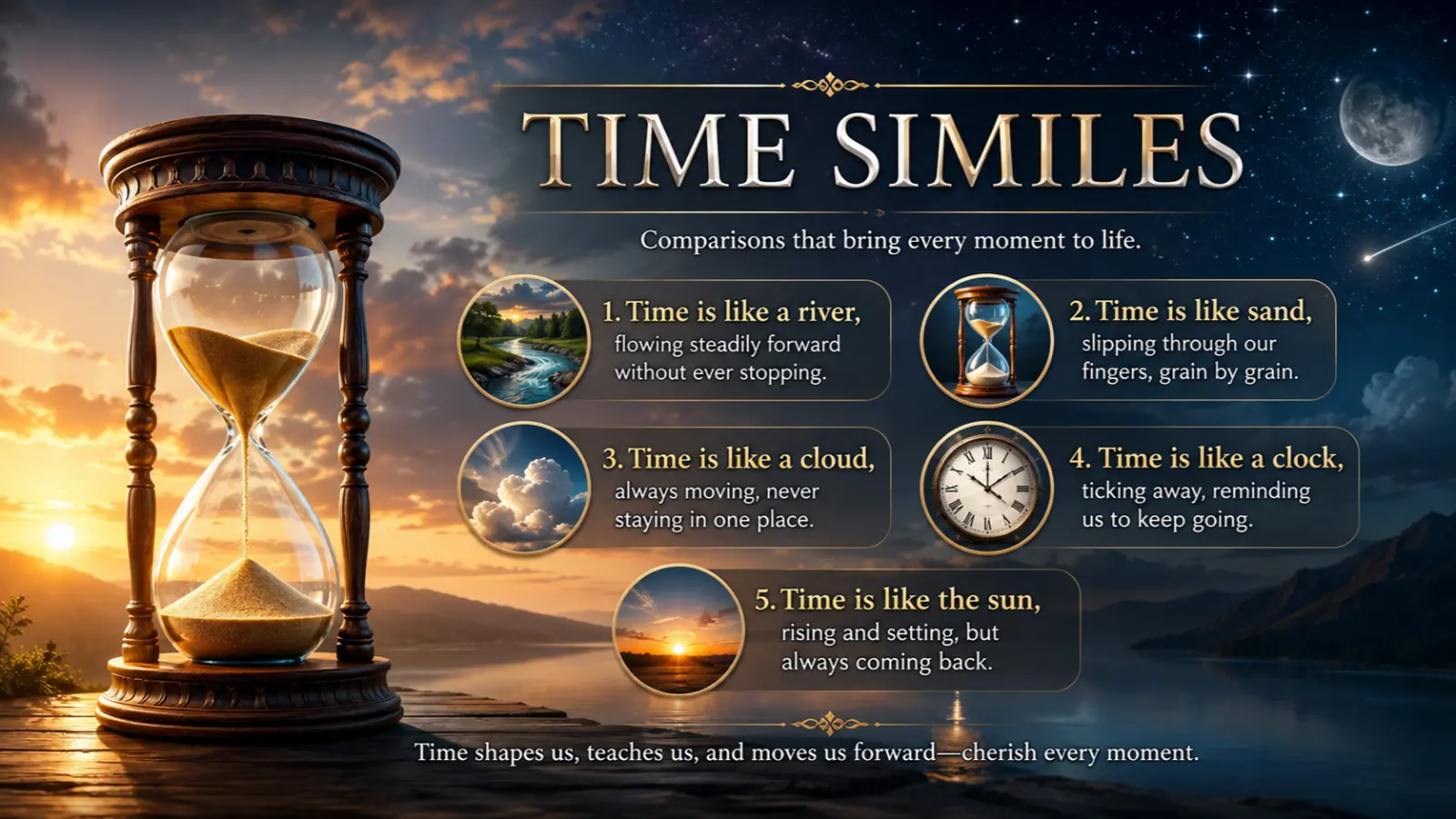
Time shapes every story, memory, and conversation. We measure it with clocks, but we often understand it through comparisons. That’s where time similes become powerful. A well-crafted simile can make a single moment feel endless or show years disappearing in the blink of an eye.
A simile compares two different things using “like” or “as.” Instead of saying time passed quickly, you might compare it to something unexpected that creates a stronger image in the reader’s mind. In this guide, you’ll discover original time similes, learn why they work, explore practical examples, and gain techniques for creating your own memorable comparisons.
What Are Time Similes?
Time similes compare the passage, speed, feeling, or importance of time to another object, action, or experience using like or as.
Rather than describing time directly, they help readers picture how time feels. Writers use them in stories, poems, speeches, journals, and everyday conversation to make descriptions more expressive.
Why Writers Use Time Similes
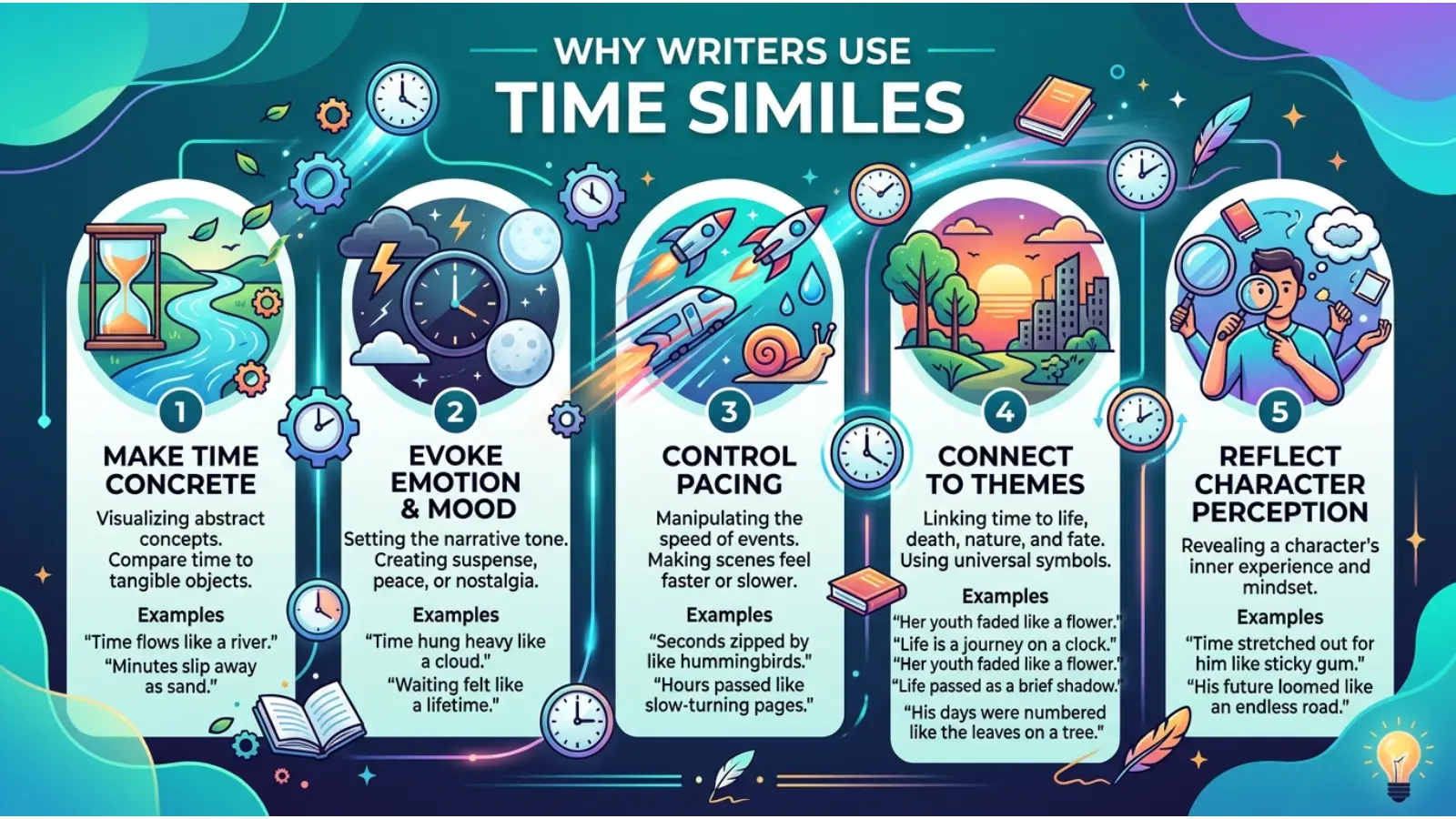
Time is invisible. Readers cannot see it, touch it, or hear it directly.
Similes transform this abstract idea into something readers instantly recognize.
They help writers:
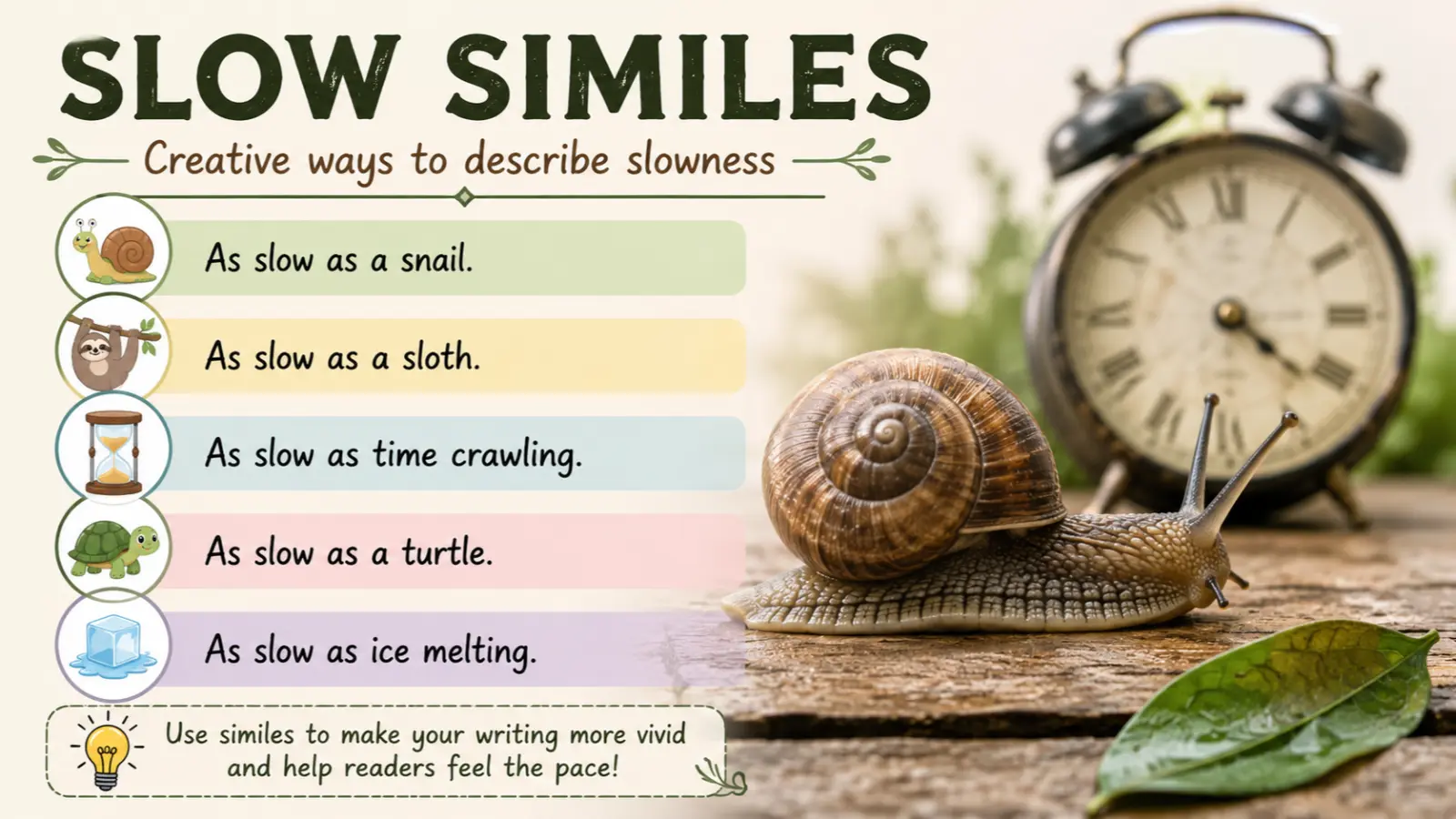
- Show fast or slow pacing.
- Express emotion through the passage of time.
- Create vivid imagery.
- Build atmosphere.
- Make scenes easier to imagine.
35 Original Time Similes
1. Time slipped away like snow melting on warm stone.
Meaning: Time disappeared quietly.
Examples
- Our vacation slipped away like snow melting on warm stone.
- The afternoon vanished before anyone noticed.
Writing Tip: Excellent for peaceful or nostalgic scenes.
2. Time stretched like a road across the desert.
Meaning: Time felt incredibly long.
Examples
- The final exam stretched like a road across the desert.
- Waiting for the results felt endless.
Best Context: Suspense and anticipation.
3. Time fluttered like leaves caught in autumn wind.
Meaning: Moments passed unpredictably.
Examples
- Childhood fluttered like leaves caught in autumn wind.
- The afternoon disappeared without warning.
4. Time flowed like water beneath an old bridge.
Meaning: Life moved steadily forward.
Examples
- Years flowed like water beneath an old bridge.
- Friendships changed as seasons passed.
5. Time raced like lightning chasing the horizon.
Meaning: Events happened extremely fast.
Examples
- Graduation raced like lightning chasing the horizon.
- Summer ended before we knew it.
6. Time drifted like clouds after sunrise.
Meaning: Time passed peacefully.
Examples
- Sunday drifted like clouds after sunrise.
- We talked for hours without noticing.
7. Time folded like pages in an old journal.
Meaning: Many memories blended together.
Examples
- The decades folded like pages in an old journal.
- Looking back made everything feel close again.
8. Time echoed like distant church bells.
Meaning: Past memories remained meaningful.
Examples
- Her words echoed like distant church bells through the years.
- The promise stayed with him forever.
9. Time rolled like gentle ocean waves.
Meaning: Life moved naturally.
Examples
- Retirement rolled like gentle ocean waves.
- Days arrived without hurry.
10. Time sparkled like morning dew.
Meaning: Every moment felt precious.
Examples
- Their first date sparkled like morning dew.
- Childhood mornings felt magical.
11. Time faded like footprints after rain.
Meaning: Memories slowly disappeared.
Examples
- Old worries faded like footprints after rain.
- The pain became easier to carry.
12. Time climbed like ivy across an old wall.
Meaning: Growth happened gradually.
Examples
- Experience climbed like ivy across an old wall.
- Confidence grew little by little.
13. Time burst like fireworks across the night.
Meaning: Exciting moments passed quickly.
Examples
- The celebration burst like fireworks across the night.
- The concert ended too soon.
14. Time wandered like a traveler without a map.
Meaning: Life felt uncertain.
Examples
- During vacation, time wandered without direction.
- We forgot every schedule.
15. Time shimmered like sunlight on glass.
Meaning: Moments felt beautiful but fragile.
Examples
- Their happiness shimmered like sunlight on glass.
- The afternoon seemed perfect.
16. Time curled like smoke into the evening.
Meaning: The day quietly disappeared.
Examples
- Conversation curled into the evening.
- Hours disappeared unnoticed.
17. Time bounced like a pebble across a lake.
Meaning: Events moved quickly from one to another.
Examples
- The weekend bounced by.
- Meetings followed one another rapidly.
18.Time settled like dust in an empty room.
Meaning: Everything became calm.
Examples
- After the storm, time settled quietly.
- Peace returned to the house.
19. Time floated like a feather on still water.
Meaning: Time felt calm and effortless.
Examples
- The holiday floated by peacefully.
- Reading outside slowed everything down.
20. Time scattered like birds at sunrise.
Meaning: Moments disappeared suddenly.
Examples
- Opportunities scattered like birds at sunrise.
- The morning vanished.
21. Time glowed like a lantern in the fog.
Meaning: Certain moments stood out clearly.
Examples
- That conversation glowed in my memory.
- One lesson stayed with me.
22. Time twisted like climbing vines.
Meaning: Events became complicated over the years.
Examples
- Family history twisted through generations.
- Memories became tangled.
23. Time hummed like distant machinery.
Meaning: Life continued steadily.
Examples
- The city hummed through every season.
- Business never truly stopped.
24. Time drifted like paper boats downstream.
Meaning: Time moved gently away.
Examples
- School years drifted downstream.
- Childhood felt brief.
25. Time scattered like seeds in spring.
Meaning: Every moment created future possibilities.
Examples
- Small choices scattered like seeds.
- Today’s effort shaped tomorrow.
26. Time balanced like a tightrope walker.
Meaning: Every second mattered.
Examples
- The surgeon worked carefully.
- Every minute counted.
27. Time shimmered like heat above a road.
Meaning: Time felt uncertain or unreal.
Examples
- During grief, days shimmered strangely.
- Reality seemed distant.
28. Time gathered like rain before a storm.
Meaning: Tension slowly increased.
Examples
- Silence gathered before the announcement.
- Everyone sensed change coming.
29. Time opened like a flower at dawn.
Meaning: New opportunities appeared gradually.
Examples
- Recovery opened slowly.
- Confidence returned each day.
30. Time rippled like a pebble dropped into a pond.
Meaning: One event influenced many others.
Examples
- A single decision changed everything.
- Kindness spread through generations.
31. Time climbed like sunrise over distant hills.
Meaning: Progress happened steadily.
Examples
- Healing climbed each morning.
- Success arrived patiently.
32. Time whispered like wind through tall grass.
Meaning: Time passed quietly.
Examples
- The evening whispered away.
- No one noticed the hours.
33. Time bloomed like spring after winter.
Meaning: Better days gradually arrived.
Examples
- Hope bloomed again.
- Recovery brought new beginnings.
34. Time drifted like stars across the night sky.
Meaning: Time moved silently but constantly.
Examples
- Years drifted across our lives.
- Dreams slowly changed.
35. Time unfolded like a handwritten letter.
Meaning: Every moment revealed something meaningful.
Examples
- The journey unfolded naturally.
- Every chapter taught a lesson.
How to Make Your Own Time Similes
Creating original similes becomes easier when you focus on the feeling rather than the clock.
Step 1: Decide How Time Feels
Ask yourself:
- Fast?
- Slow?
- Peaceful?
- Exciting?
- Painful?
- Hopeful?
The emotion guides the comparison.
Step 2: Find Something That Behaves the Same Way
Think about nature, weather, music, light, movement, or everyday objects.
For example:
- Slow → drifting clouds
- Fast → falling sparks
- Precious → rare gemstones
- Endless → ocean horizon
Step 3: Use “Like” or “As”
Build the comparison naturally.
Instead of:
Time was quick.
Write:
Time rushed like birds escaping the trees.
Creative Exercise
Write one simile for each situation:
- Waiting for good news
- Celebrating a birthday
- Finishing school
- Watching a sunset
- Growing older
Try using unexpected comparisons instead of familiar ones.
Why These Similes Work
Strong time similes succeed because they:
- Match the emotion of the scene.
- Create clear mental pictures.
- Avoid predictable comparisons.
- Feel natural in context.
- Add depth without distracting readers.
Readers remember imagery more than plain description.
Related Literary Devices
Metaphor
A metaphor makes a direct comparison without using like or as.
Simile: Time moved like a river.
Metaphor: Time is a river.
Imagery
Imagery appeals to the senses. Time similes often strengthen visual and emotional imagery by giving readers something concrete to imagine.
Personification
Personification gives human qualities to time.
Example:
Time knocked gently on the door of change.
Hyperbole
Hyperbole intentionally exaggerates.
Example:
I waited a thousand years.
Unlike a simile, hyperbole does not require a comparison.
Symbolism
Objects such as clocks, sunsets, candles, or changing seasons often symbolize time while working alongside similes to deepen meaning.
Common Mistakes When Writing Time Similes
Using Overused Comparisons
Readers have seen familiar comparisons many times. Look for fresh images inspired by everyday life or nature.
Mixing Images
Avoid combining unrelated comparisons.
Weak: Time flew like a turtle swimming through lightning.
The images conflict instead of supporting each other.
Forcing Comparisons
Every simile should fit naturally into the sentence.
If it sounds awkward when read aloud, simplify it.
Confusing Similes with Metaphors
Remember:
- Simile = uses like or as.
- Metaphor = direct comparison.
Adding Too Many Similes
A few memorable comparisons create stronger writing than filling every paragraph with imagery.
Frequently Asked Questions
What is a time simile?
A time simile compares time to another object or experience using like or as to help readers imagine how time feels.
Why are time similes useful?
They make abstract ideas easier to visualize, add emotion, and improve storytelling.
Can time similes be used in essays?
Yes. They work well in descriptive, narrative, and creative essays when used sparingly.
Are time similes suitable for children?
Absolutely. Simple comparisons help young writers understand and describe the passage of time more creatively.
How can I avoid cliché time similes?
Observe everyday experiences, nature, weather, music, and personal memories instead of relying on familiar comparisons.
What’s the difference between a time simile and a metaphor?
A simile uses like or as, while a metaphor states that one thing is another without those words.
Can poets and novelists use time similes differently?
Yes. Poets often use them for emotion and rhythm, while novelists use them to build atmosphere, reveal character, or control pacing.
Conclusion
Time is one of the hardest ideas to describe because we cannot see it directly. Original time similes give readers something they can picture, making your writing more emotional, memorable, and engaging. Instead of relying on familiar comparisons, look for fresh connections in everyday life, nature, movement, and memory. With practice, you’ll create similes that not only describe the passage of time but also leave a lasting impression on your readers.