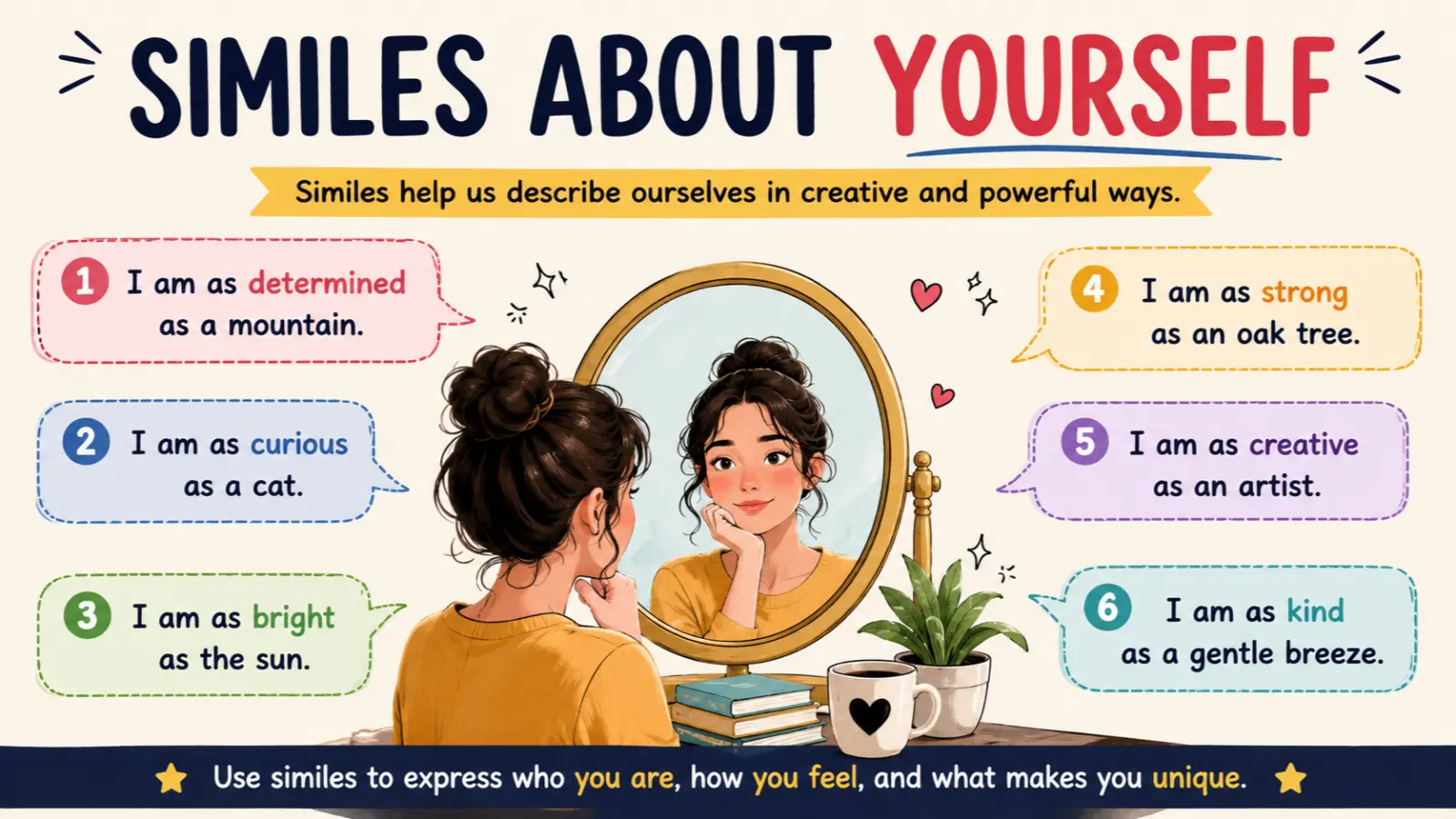
Writing about yourself can feel challenging because simple descriptions often fail to capture your personality. That’s where similes become useful. A simile compares one thing to another using “like” or “as,” making your writing more vivid, memorable, and expressive. Whether you’re writing a personal essay, journal entry, speech, poem, story, or social media bio, thoughtful similes about yourself help readers picture your character, emotions, strengths, and experiences. This guide offers original similes, practical explanations, and creative techniques you can adapt to your own writing.
Quick Answer
Similes about yourself compare your personality, emotions, or experiences to familiar objects, animals, or situations using words such as like or as. They make self-descriptions more engaging by helping readers imagine who you are instead of simply being told.
Why Use Similes to Describe Yourself?
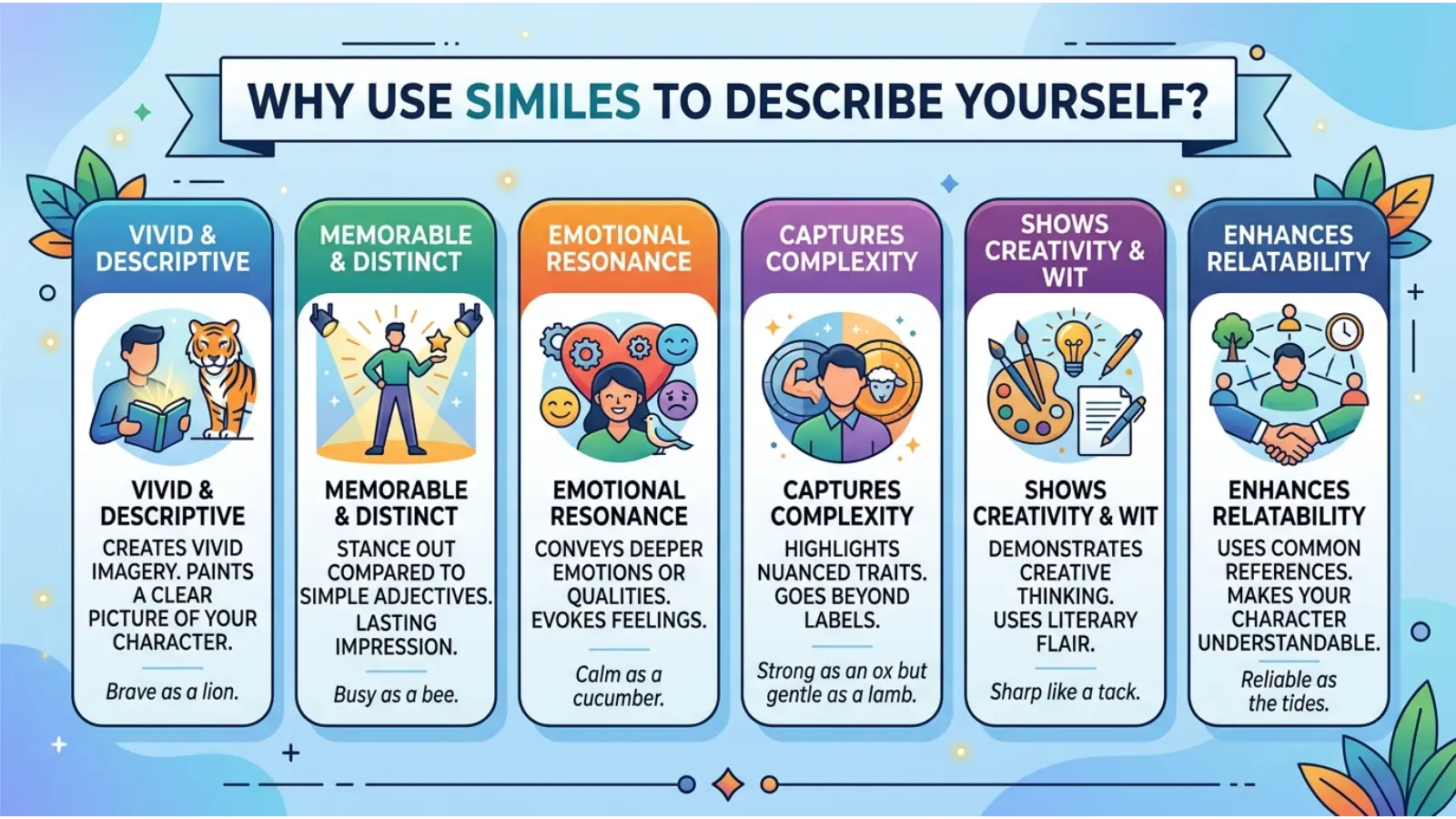
Self-description is more interesting when readers can visualize it.
Instead of saying:
I am calm.
You might write:
I am as steady as a lighthouse during a storm.
The second sentence creates an image while suggesting confidence and reliability.
Good self-descriptive similes can express:
- Personality
- Confidence
- Kindness
- Curiosity
- Determination
- Creativity
- Growth
- Resilience
- Hope
- Uniqueness
How Great Self-Descriptions Go Beyond Simple Labels
Strong writers avoid listing personality traits.
Instead of saying:
I am hardworking.
They create imagery:
I work like a gardener who patiently waits for every seed to bloom.
The comparison invites readers to understand the quality instead of simply reading it.
30 Original Similes About Yourself
1. Like a compass that keeps finding north
Meaning: You stay true to your values.
Example 1: I move through challenges like a compass that keeps finding north.
Example 2: Even under pressure, I remain like a compass that never forgets its direction.
Writing Tip: Perfect for personal statements and interviews.
2. As curious as a child discovering stars
Meaning: Always eager to learn.
Examples
- I ask questions as curious as a child discovering stars.
- Every new idea feels exciting.
Best Context: Education and creative writing.
3. Like a tree growing through stone
Meaning: Strong despite obstacles.
Storytelling Example
I kept moving forward like a tree growing through stone, refusing to stop.
4. As patient as the sunrise
Meaning: Calm and dependable.
Conversation Example
I try to be as patient as the sunrise when solving problems.
5. Like a notebook waiting for new stories
Meaning: Open to new experiences.
Poetry Example
I walk through life like a notebook waiting for new stories.
6. As bright as a window on a rainy morning
Meaning: Optimistic.
Writing Purpose
Adds warmth to self-introductions.
7. Like a bridge between strangers
Meaning: Good at bringing people together.
Example
I often feel like a bridge between strangers who soon become friends.
8. As flexible as flowing water
Meaning: Adaptable.
Formal Example
I approach change as flexibly as flowing water finding its path.
9. Like a lantern in the fog
Meaning: Helpful during uncertainty.
Emotional Effect
Creates a feeling of guidance and hope.
10. As determined as a river reaching the sea
Meaning: Persistent.
Writing Tip
Ideal for scholarship essays and career writing.
11. Like fresh paint on a blank wall
Meaning: Full of new possibilities.
12. As gentle as falling leaves
Meaning: Kind and thoughtful.
Conversation Example
People say I speak as gently as falling leaves.
13. Like a puzzle slowly coming together
Meaning: Still growing and learning.
14. As calm as snow before dawn
Meaning: Peaceful.
15. Like an open book with unfinished chapters
Meaning: Honest and still developing.
16. As dependable as tomorrow’s sunrise
Meaning: Reliable.
17. Like a spark waiting for dry wood
Meaning: Full of hidden potential.
18. As hopeful as the first flower of spring
Meaning: Optimistic.
19. Like a kite learning the wind
Meaning: Growing through experience.
20. As steady as mountain roots
Meaning: Emotionally grounded.
21. Like a song finding its melody
Meaning: Discovering your purpose.
22. As thoughtful as an artist choosing colors
Meaning: Careful decision-maker.
23. Like a quiet stream shaping stone
Meaning: Gentle but influential.
24. As resilient as grass after rain
Meaning: Quick to recover.
25. Like a candle sharing its flame
Meaning: Encouraging others.
26. As creative as clouds inventing shapes
Meaning: Imaginative.
27. Like a traveler collecting sunsets
Meaning: Appreciates life’s moments.
28. As fearless as the first bird to fly at dawn
Meaning: Brave enough to begin.
29. Like a map still being drawn
Meaning: Constantly growing.
30. As unique as fingerprints in fresh snow
Meaning: One of a kind.
Writing Purpose
Excellent for personal reflections and graduation speeches.
Why These Similes Work
Effective self-descriptive similes succeed because they connect an abstract personality trait with a concrete image.
For example:
- Rivers suggest persistence.
- Lanterns symbolize guidance.
- Trees represent growth.
- Sunrises imply reliability.
- Bridges symbolize connection.
Readers understand these images almost instantly.
How to Create Your Own Similes About Yourself
Step 1: Choose One Personal Quality
Examples:
- Honest
- Brave
- Funny
- Quiet
- Curious
- Creative
Step 2: Think of an Image
Ask yourself:
“What naturally reminds me of this quality?”
Example:
Determined → River
Patient → Sunrise
Creative → Painter
Reliable → Lighthouse
Step 3: Connect Them
Use:
- Like…
- As…as…
Example:
I am like a river that refuses to stop flowing.
Step 4: Make It Personal
Instead of copying common comparisons, use experiences from your own life.
Example:
Instead of:
As busy as a bee.
Try:
Like a backpack carrying dreams from one adventure to the next.
Fresh comparisons make your writing memorable.
Writing Tips for Better Self-Descriptive Similes
Focus on One Clear Idea
Avoid comparing yourself to several unrelated things in one sentence.
Good:
I stood as steady as an old oak.
Less effective:
I was like an eagle, a train, and a rainbow all at once.
Choose Familiar Images
Readers understand common experiences faster than obscure references.
Match the Mood
Hopeful writing should use hopeful images.
Reflective writing should use softer comparisons.
Humorous writing can use playful comparisons.
Keep It Natural
If the comparison feels forced, simplify it.
Strong writing values clarity over complexity.
Related Literary Devices
Metaphor
A metaphor says something is another thing.
Metaphor: I am a lighthouse.
Simile: I am like a lighthouse.
Imagery
Imagery creates sensory experiences that readers can picture, hear, or feel. Similes often strengthen imagery by adding clear visual comparisons.
Personification
Personification gives human qualities to non-human things.
Example:
The wind whispered my name.
It can work alongside similes in descriptive writing.
Hyperbole
Hyperbole is intentional exaggeration.
Example:
I waited forever.
Unlike similes, hyperbole focuses on emphasis rather than comparison.
Symbolism
Many similes use symbols naturally.
A river may symbolize persistence.
A bridge may symbolize connection.
A lantern may symbolize hope.
Common Mistakes When Writing Similes About Yourself
Using Overused Comparisons
Phrases such as “busy as a bee” or “cool as a cucumber” may feel predictable. Original images leave a stronger impression.
Mixing Unrelated Images
Stay with one comparison at a time so readers can easily follow your meaning.
Confusing Metaphors and Similes
Remember:
- Similes use like or as.
- Metaphors do not.
Making Comparisons Too Complicated
Simple, believable images usually create the strongest emotional impact.
Practice Exercise
Complete these sentences with your own ideas.
- I am like __________________________.
- I stay calm as ______________________.
- My dreams grow like __________________.
- I learn as quickly as __________________.
- My kindness spreads like _______________.
Then explain why each comparison fits your personality.
Frequently Asked Questions
What are similes about yourself?
They are comparisons that describe your personality, emotions, strengths, or experiences using like or as.
Where can I use self-descriptive similes?
They work well in essays, speeches, poems, journals, biographies, personal statements, and creative stories.
How many similes should I use in one piece of writing?
Use only enough to strengthen your ideas. Too many comparisons can distract readers.
Are original similes better than common ones?
Usually, yes. Fresh comparisons make your writing more memorable while reflecting your unique voice.
Can similes describe emotions as well as personality?
Absolutely. They can illustrate happiness, fear, confidence, loneliness, hope, determination, and many other emotions.
What’s the difference between a simile and a metaphor?
A simile uses like or as to compare two things. A metaphor makes a direct comparison without those words.
Conclusion
Similes about yourself do more than decorate your writing—they help readers see your personality, experiences, and emotions through vivid imagery. Instead of relying on simple labels, use meaningful comparisons that reflect who you are and how you view the world. The most memorable similes are honest, specific, and original. As you practice creating your own, you’ll develop a stronger writing voice and make your personal stories more engaging and authentic.