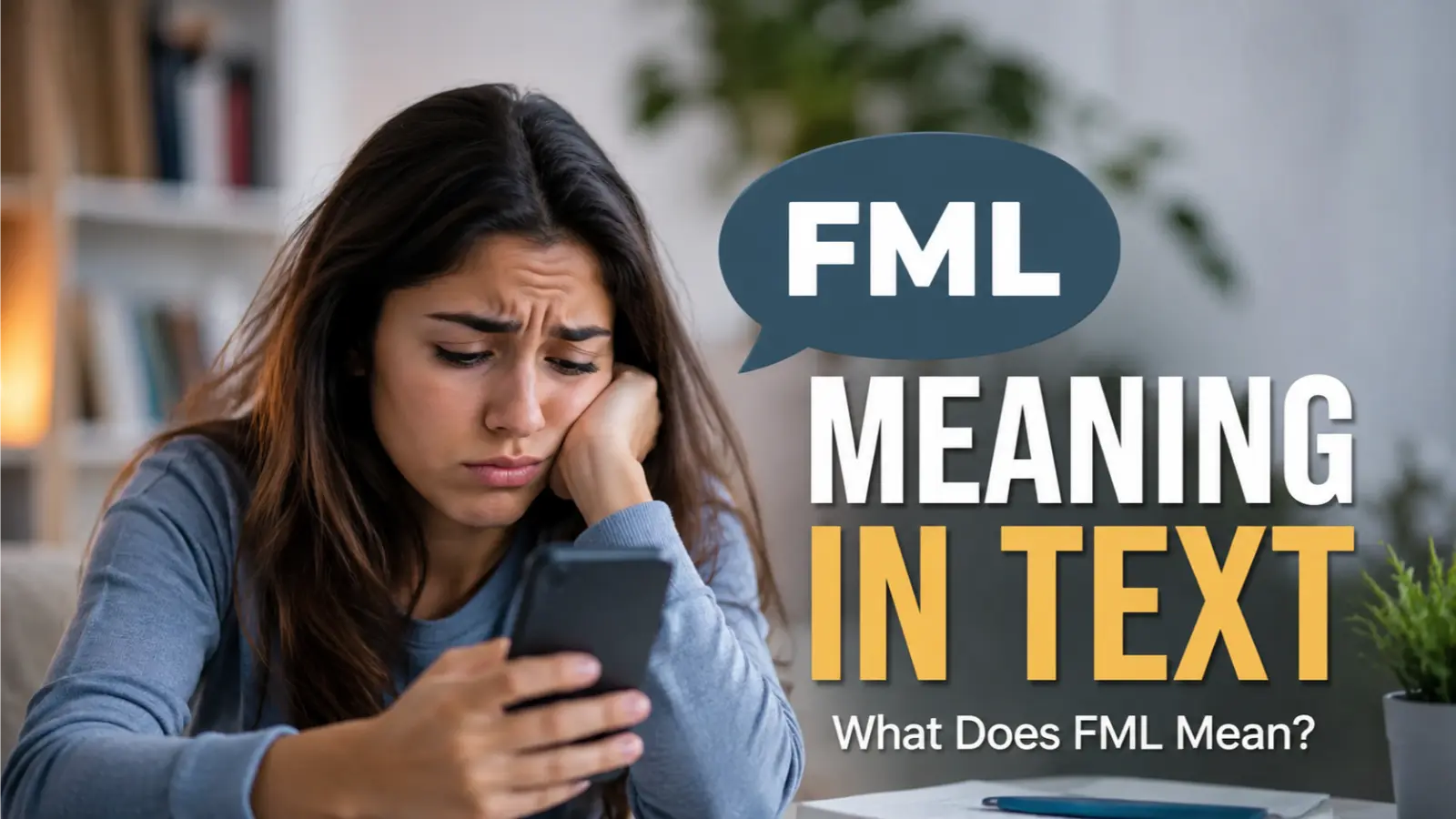
FML meaning in text is one of the most searched internet slang terms because people often see it in text messages, social media posts, memes, and online chats.
If you’ve ever received a message saying “FML” or noticed someone posting it after something went wrong, you may have wondered what it really means.
Like many internet abbreviations, FML can express emotions quickly without typing a long explanation.
However, its meaning depends on the situation and the person’s tone. Sometimes it’s used jokingly, while other times it reflects genuine frustration or disappointment.
Understanding slang like FML helps you communicate better online and avoid misunderstandings, especially if you’re chatting with friends, following social media trends, or learning modern internet language.
Quick Answer
FML stands for “F* My Life.”** It is a slang expression people use to show frustration, disappointment, embarrassment, or bad luck after something unpleasant happens.
What Does FML Mean in Text?
The FML meaning in text is an expression used when someone feels that everything is going wrong or when they experience an embarrassing, stressful, or unlucky situation.
Although the phrase contains a swear word, most people use the abbreviation FML instead of writing the full expression.
FML Full Form
FML = F* My Life**
The phrase doesn’t usually mean someone literally hates their life. Instead, it often exaggerates a frustrating moment for dramatic or humorous effect.
Example:
“I forgot my homework and left my phone at home too. FML.”
FML Meaning in Different Contexts
The meaning of FML changes slightly depending on the conversation.
1. Everyday Frustration
People use it after minor inconveniences.
Example:
- “I spilled coffee on my shirt before work. FML.”
2. Embarrassing Moments
It can describe awkward or embarrassing situations.
Example:
- “I accidentally sent the message to my teacher instead of my friend. FML.”
3. Bad Luck
Someone may use FML after unexpected problems.
Example:
- “Missed the train by 10 seconds. FML.”
4. Humor and Memes
Many people use FML sarcastically to make others laugh.
Example:
- “Ordered fries and forgot to order the burger. FML 😂”
5. Emotional Stress
Sometimes the expression reflects genuine sadness or frustration.
Example:
- “Everything has gone wrong this week. FML.”
Is FML Rude, Offensive, or Neutral?
FML is generally considered mildly offensive because its full form contains profanity.
It may be acceptable:
- Between close friends
- Casual texting
- Private chats
- Social media posts with adults
It may not be appropriate:
- At work
- School assignments
- Professional emails
- Conversations with teachers or clients
- Formal business communication
If you’re unsure, it’s better to choose a more polite expression.
Where Is FML Commonly Used?
You’ll often see FML on:
- Text messages
- Snapchat
- TikTok
- X (formerly Twitter)
- Discord
- Gaming chats
- Meme pages
It’s especially popular among teenagers and young adults, although many adults use it casually as well.
Real-Life Conversation Examples
Friendly Conversation
Alex: I dropped my ice cream five seconds after buying it.
Sam: FML moments happen to everyone.
Casual Chat
Emma: Forgot my wallet at home.
Lily: FML 😂
Argumentative Situation
Jake: My project got deleted because my laptop crashed.
Ryan: FML. That really sucks.
Social Media Caption
“Alarm didn’t ring, missed my interview… FML.”
Gaming Context
“Lost the final match because my internet disconnected. FML.”
Emotional and Psychological Meaning
The phrase often reflects emotions such as:
- Frustration
- Stress
- Embarrassment
- Disappointment
- Self-pity
- Temporary hopelessness
Interestingly, people often use FML humorously to reduce stress. Sharing a frustrating experience with friends can make difficult situations feel less overwhelming.
However, if someone repeatedly uses FML while expressing serious emotional distress, it may indicate they’re struggling and could benefit from support rather than jokes.
Origin and Background of the Slang
The expression FML became widely popular in the late 2000s through the website FMyLife (FML), where users shared short stories about embarrassing or unlucky experiences.
As smartphones and texting became more common, people began using the abbreviation in everyday conversations because it was quick and easy to type.
Today, FML is recognized worldwide as one of the most common internet slang abbreviations.
FML vs Similar Slang
| Slang | Meaning | Emotion | Offensive Level |
|---|---|---|---|
| FML | Bad luck or frustration | Negative | Moderate |
| SMH | Shaking My Head | Disappointment | Low |
| OMG | Oh My God | Surprise | Low |
| RIP | Expression of loss or joking exaggeration | Sad/Humorous | Low |
| WTF | What The F*** | Shock or confusion | High |
| LMAO | Laughing My Ass Off | Humor | Mild |
When to Use FML
Using FML is appropriate when:
- Talking with close friends
- Sending casual text messages
- Posting humorous content
- Sharing relatable bad luck
- Commenting on everyday frustrations
Examples:
- “Forgot my lunch again. FML.”
- “Laptop crashed before I saved my work. FML.”
When to Avoid Using FML
Avoid using it in:
- Job interviews
- Professional emails
- Business meetings
- School reports
- Academic writing
- Conversations with people who dislike profanity
Even though it’s abbreviated, many people still recognize its offensive origin.
Polite Alternatives to FML
If you want to express frustration without profanity, try these alternatives:
- What a bad day.
- That’s unfortunate.
- Just my luck.
- Oh no.
- Seriously?
- This is frustrating.
- What a disaster.
- Not my day.
- That’s disappointing.
These alternatives work better in professional and family-friendly settings.
Why Do People Use FML?
People use FML because it:
- Saves time while texting.
- Expresses emotions quickly.
- Makes frustrating experiences relatable.
- Adds humor to everyday problems.
- Helps connect with others who have had similar experiences.
- Fits naturally into internet culture.
The abbreviation is short, memorable, and widely understood online.
Impact of Using Slang in Communication
Slang like FML has both advantages and disadvantages.
Benefits
- Makes conversations feel natural.
- Builds friendships.
- Adds humor.
- Speeds up texting.
- Reflects internet culture.
Drawbacks
- Can seem unprofessional.
- May offend some readers.
- Older audiences may not understand it.
- Can be misunderstood without context.
Knowing your audience is the key to using slang effectively.
Is FML Safe for Social Media?
Yes, FML is generally safe on most social media platforms because it is commonly recognized as an abbreviation rather than explicit profanity.
However:
- Some workplaces may view it negatively.
- Family-friendly pages may prefer avoiding it.
- It can create the wrong impression in professional profiles.
If you’re posting publicly, consider whether the tone matches your audience.
Common Misunderstandings
Many people incorrectly believe:
- FML always means someone is seriously depressed.
- Not true. It’s often used humorously.
- It’s always offensive.
- While it contains profanity, many people use only the abbreviation in casual conversations.
- Only teenagers use it.
- Adults frequently use it online too.
Variations and Types
Some common variations include:
- FML 😂 (used humorously)
- Major FML moment
- Total FML
- #FML
- FML today
These versions all express frustration with slightly different tones.
How to Respond When Someone Uses FML
Your response depends on the situation.
If they’re joking
- “That’s hilarious!”
- “Bad luck!”
- “Hope tomorrow is better.”
When they’re upset
- “I’m sorry that happened.”
- “That sounds really frustrating.”
- “Can I help?”
If you’re close friends
- “You’ll laugh about this later.”
- “Hang in there.”
Showing empathy is usually the best response.
Regional and Cultural Usage
FML is widely understood in:
- United States
- Canada
- United Kingdom
- Australia
- New Zealand
Because English internet culture spreads globally, many non-native English speakers also recognize the abbreviation through social media, gaming communities, and messaging apps.
However, in cultures where profanity is considered highly inappropriate, using FML may be viewed as disrespectful, even as an abbreviation.
Frequently Asked Questions (FAQs)
What does FML stand for in text?
FML stands for “F* My Life.”** It expresses frustration, disappointment, or bad luck.
Is FML considered a bad word?
The abbreviation itself is less offensive than the full phrase, but it still represents profanity, so it should be avoided in formal settings.
Can I use FML at work?
It’s best not to. Professional communication should use more polite expressions.
Is FML always serious?
No. Many people use it humorously to exaggerate small everyday problems.
What does FML mean on social media?
It usually means the person is sharing an unlucky, embarrassing, or frustrating experience with followers.
What are polite alternatives to FML?
You can say:
- Just my luck
- That’s frustrating
- Oh no
- What a day
- That’s unfortunate
These are suitable in both casual and professional conversations.
Conclusion
The FML meaning in text is “F* My Life,”** a popular internet slang expression used to communicate frustration, disappointment, embarrassment, or bad luck. While it often sounds dramatic, most people use it humorously to describe everyday mishaps rather than serious life problems.
Because the abbreviation comes from a profane phrase, it’s best reserved for casual conversations with friends or informal social media posts. In workplaces, schools, and professional communication, choosing a polite alternative is usually the better option.
Understanding FML meaning slang, its full form, and what does FML stand for helps you interpret online conversations correctly and use the expression appropriately based on your audience and the situation.