Every writer wants descriptions that readers remember. One of the simplest ways to create vivid imagery is through a well-crafted simile. Instead of relying on comparisons everyone has heard before, unique similes help your writing feel fresh, personal, and engaging. Whether you’re writing a story, poem, speech, school assignment, or even social media content, original comparisons can make ordinary moments unforgettable. In this guide, you’ll discover unique similes, learn why they work, and find practical techniques for creating your own.
What Is a Unique Simile?
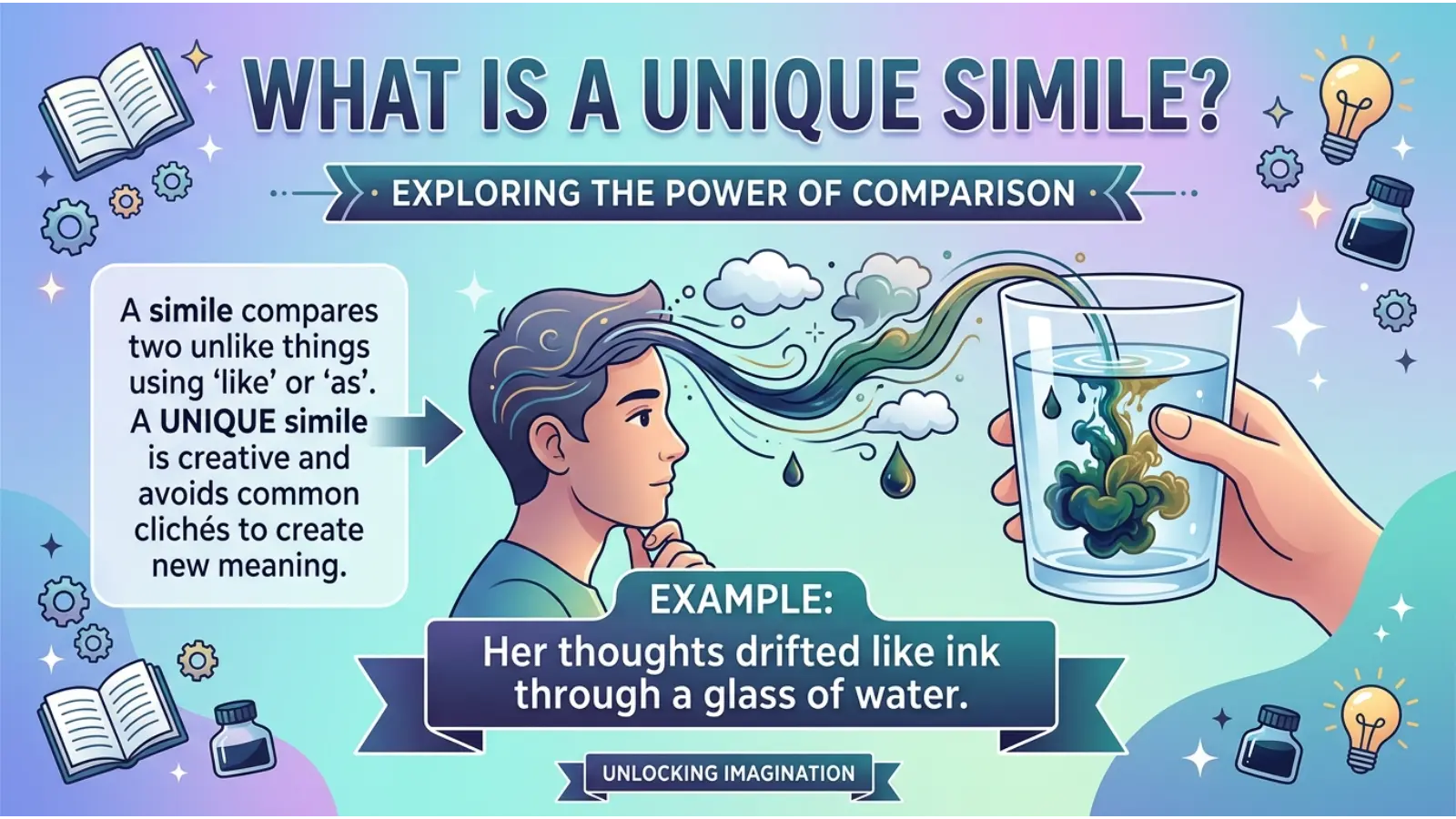
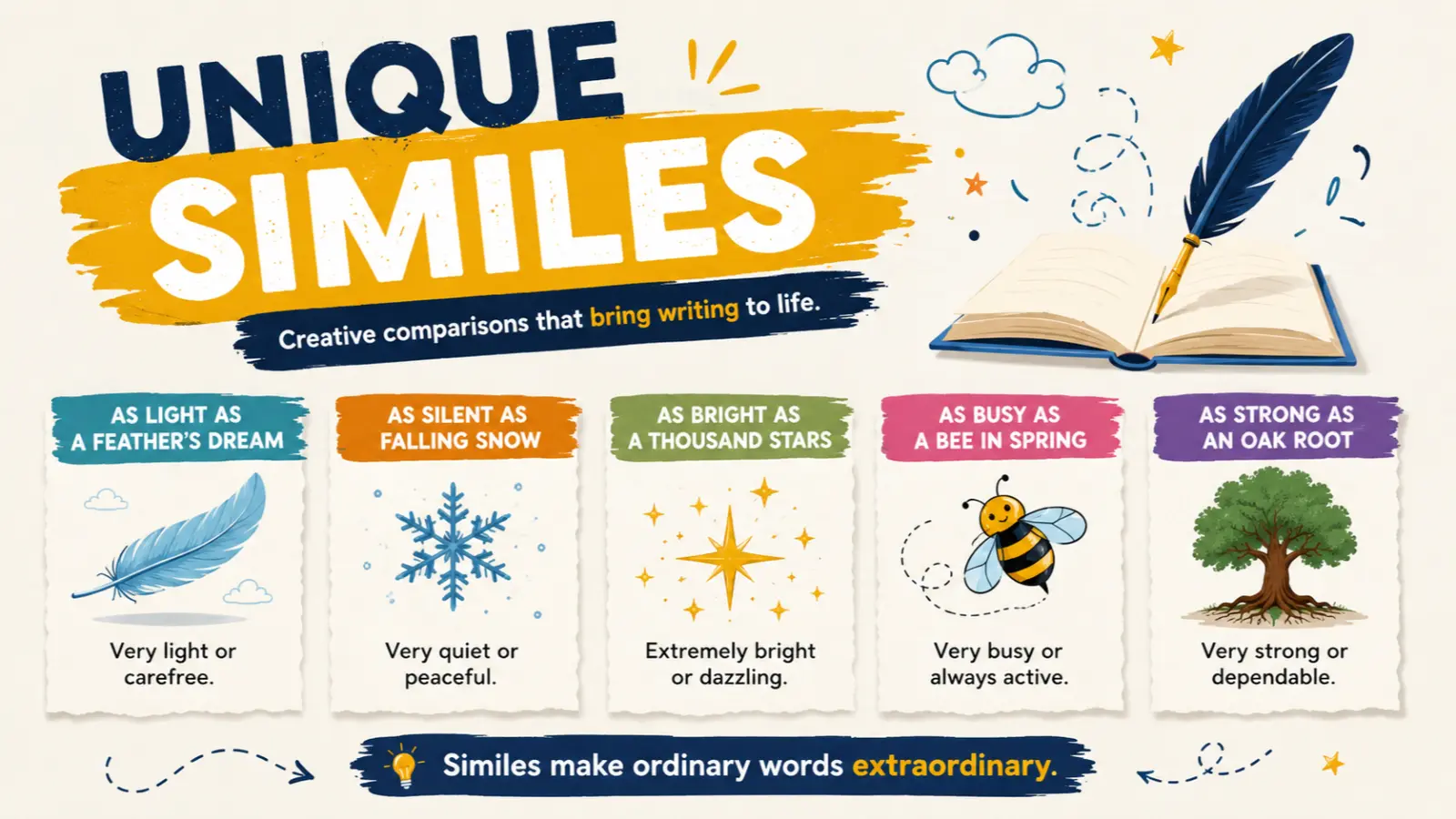
A simile compares two different things using like or as.
A unique simile goes beyond familiar expressions. Rather than repeating overused comparisons, it creates an unexpected connection that still feels clear and believable.
For example:
- Overused: As busy as a bee.
- Unique: As busy as a lighthouse during a storm.
The second comparison paints a stronger picture because readers haven’t encountered it countless times.
Why Original Similes Matter
Fresh similes can:
- Capture attention immediately.
- Help readers visualize scenes.
- Add personality to your writing.
- Create stronger emotional impact.
- Make stories and poems more memorable.
Professional writers often spend time refining comparisons because the right image can transform an ordinary sentence into one readers remember.
30 Unique Similes With Meanings and Examples
1. As steady as a mountain shadow
Meaning: Calm and dependable.
Example Sentences
- Her voice remained as steady as a mountain shadow.
- He stayed as steady as a mountain shadow during the emergency.
Writing Tip: Great for describing reliable characters.
2. Like a lantern floating across midnight water
Meaning: Gentle hope in darkness.
Examples
- Her smile drifted through the room like a lantern floating across midnight water.
- The small success felt like a lantern floating across midnight water.
Best Context: Emotional scenes and poetry.
3. As quiet as snowfall on velvet
Meaning: Exceptionally peaceful.
Examples
- The library became as quiet as snowfall on velvet.
- His footsteps were as quiet as snowfall on velvet.
Effect: Creates soft imagery.
4. Like sunlight slipping through stained glass
Meaning: Beautiful and colorful.
Examples
- Her laughter spread like sunlight slipping through stained glass.
- Hope entered the room like sunlight slipping through stained glass.
Storytelling Tip: Works well in uplifting scenes.
5. As patient as an old tree counting seasons
Meaning: Extremely patient.
Examples
- The teacher remained as patient as an old tree counting seasons.
- My grandfather listened as patiently as an old tree counting seasons.
6. Like a compass finding true north
Meaning: Naturally guided.
Examples
- She solved the puzzle like a compass finding true north.
- His instincts worked like a compass finding true north.
7. As bright as morning after heavy rain
Meaning: Full of renewed hope.
Examples
- Her future looked as bright as morning after heavy rain.
- His face became as bright as morning after heavy rain.
8. Like a river discovering the sea
Meaning: Finally reaching a goal.
Examples
- She walked onto the stage like a river discovering the sea.
- The project ended like a river discovering the sea.
9. As gentle as moonlight on fresh leaves
Meaning: Kind and soothing.
Examples
- His words were as gentle as moonlight on fresh leaves.
- The breeze felt as gentle as moonlight on fresh leaves.
10. Like a feather dancing with the wind
Meaning: Light and graceful.
Examples
- The dancer moved like a feather dancing with the wind.
- Her scarf floated like a feather dancing with the wind.
11. As curious as a key searching for its lock
Meaning: Eager to discover.
Examples
- The child was as curious as a key searching for its lock.
- Scientists remain as curious as keys searching for their locks.
12. Like stars gathering before dawn
Meaning: Quietly growing stronger.
Examples
- Confidence returned like stars gathering before dawn.
- Ideas arrived like stars gathering before dawn.
13. As warm as fresh bread from the oven
Meaning: Welcoming and comforting.
Examples
- Their home felt as warm as fresh bread from the oven.
- Her greeting was as warm as fresh bread from the oven.
14. Like rain waking sleepy flowers
Meaning: Bringing energy.
Examples
- Encouragement spread like rain waking sleepy flowers.
- Music reached the audience like rain waking sleepy flowers.
15. As fearless as the tide meeting the shore
Meaning: Bold and unstoppable.
Examples
- She spoke as fearlessly as the tide meeting the shore.
- The team attacked as fearlessly as the tide.
16. Like an echo finding its mountain
Meaning: Perfectly matched.
Examples
- His words landed like an echo finding its mountain.
- Their friendship formed like an echo finding its mountain.
17. As clear as a frozen lake at sunrise
Meaning: Easy to understand.
Examples
- Her explanation was as clear as a frozen lake at sunrise.
- The solution became as clear as a frozen lake.
18. Like ivy embracing old stone
Meaning: Slowly becoming connected.
Examples
- Trust grew like ivy embracing old stone.
- Memories settled like ivy embracing old stone.
19. As lively as sparks chasing the wind
Meaning: Full of energy.
Examples
- The children were as lively as sparks chasing the wind.
- The celebration became as lively as sparks chasing the wind.
20. Like a candle refusing the darkness
Meaning: Courage despite difficulty.
Examples
- She smiled like a candle refusing the darkness.
- His determination burned like a candle refusing the darkness.
21. As thoughtful as rain filling a quiet pond
Meaning: Calm and reflective.
Examples
- He answered as thoughtfully as rain filling a quiet pond.
- Her silence was as thoughtful as rain filling a quiet pond.
22. Like autumn leaves writing secret letters
Meaning: Beautifully mysterious.
Examples
- The leaves fell like autumn leaves writing secret letters.
- Memories drifted like secret letters through the years.
23. As bold as sunrise climbing the horizon
Meaning: Confident and inspiring.
Examples
- Her speech was as bold as sunrise climbing the horizon.
- His decision felt as bold as sunrise.
24. Like clouds making room for blue skies
Meaning: Problems fading away.
Examples
- Worry disappeared like clouds making room for blue skies.
- Fear left him like clouds clearing after rain.
25. As graceful as a swan gliding through mist
Meaning: Elegant movement.
Examples
- She danced as gracefully as a swan gliding through mist.
- The skater moved with effortless elegance.
26. Like seeds waiting beneath winter soil
Meaning: Hidden potential.
Examples
- Her talent rested like seeds waiting beneath winter soil.
- New ideas waited quietly beneath the surface.
27. As determined as roots breaking stone
Meaning: Persistent despite obstacles.
Examples
- He remained as determined as roots breaking stone.
- Her dreams pushed forward despite setbacks.
28. Like a rainbow stitched into gray skies
Meaning: Unexpected happiness.
Examples
- Good news arrived like a rainbow stitched into gray skies.
- The surprise felt wonderfully unexpected.
29. As gentle as dew greeting dawn
Meaning: Soft and peaceful.
Examples
- Her touch was as gentle as dew greeting dawn.
- The morning breeze felt equally gentle.
30. Like a forgotten song returning home
Meaning: Comfortingly familiar.
Examples
- The old memory returned like a forgotten song coming home.
- His voice sounded wonderfully familiar.
Why These Similes Work
Original similes succeed because they combine surprise with clarity.
Instead of choosing random comparisons, they connect two things that share an emotional or visual quality. Readers understand the image instantly, yet it still feels fresh.
A good simile should make someone think:
“I never would have compared those—but it fits perfectly.”
How to Create Your Own Unique Similes
Step 1: Choose the feeling
Ask yourself what you’re describing.
Examples:
- Joy
- Fear
- Loneliness
- Excitement
- Calm
Step 2: Look beyond obvious comparisons
Instead of comparing happiness to sunshine, think about experiences that create the same emotion.
Examples include:
- The first page of a new notebook
- A bridge after fog clears
- Birds returning in spring
- Fresh footprints in snow
Step 3: Focus on one shared quality
Ask:
- What do both things have in common?
- Is it movement?
- Color?
- Emotion?
- Sound?
- Texture?
Keeping the comparison focused makes it stronger.
Step 4: Read It Aloud
If the simile sounds awkward or confusing, simplify it.
The best comparisons sound effortless.
Practical Writing Exercises
Exercise 1
Describe happiness without using:
- sunshine
- flowers
- rainbows
Invent a completely different comparison.
Exercise 2
Choose one object in your room.
Write three similes comparing it to something unexpected.
Exercise 3
Rewrite this sentence:
“The room was quiet.”
Create three different similes that express:
- peaceful quiet
- uncomfortable quiet
- mysterious quiet
Common Mistakes When Writing Similes
Using Overused Comparisons
Readers have seen phrases like as cold as ice countless times. Try to create fresh imagery instead.
Mixing Images
Avoid combining unrelated comparisons in one sentence.
Weak: Her smile was like sunshine riding a thunderstorm through glass.
Too many images compete with one another.
Confusing Similes With Metaphors
A simile uses like or as.
A metaphor states that one thing is another.
- Simile: Her courage was like a lighthouse.
- Metaphor: Her courage was a lighthouse.
Making Comparisons Too Complicated
A creative comparison should still be easy to understand.
If readers have to stop and decode the image, simplify it.
Ignoring the Tone
A humorous simile may not fit a serious story, and a dramatic one may feel out of place in casual conversation. Match the comparison to the mood of your writing.
Related Literary Devices
Metaphor
Metaphors compare two things directly without using like or as. They often create stronger, more immediate imagery.
Imagery
Imagery uses sensory details—sight, sound, smell, taste, and touch—to help readers experience a scene. Similes are one tool for building vivid imagery.
Personification
Personification gives human qualities to non-human things. Combining it with a simile can make descriptions even more expressive.
Hyperbole
Hyperbole is intentional exaggeration. While similes compare, hyperbole amplifies. Used together carefully, they can create memorable writing.
Symbolism
Symbols represent larger ideas or emotions. A thoughtful simile can reinforce symbolic meaning without explaining it directly.
Frequently Asked Questions
What makes a simile unique?
A unique simile uses an original comparison that feels fresh while remaining easy for readers to understand.
Can unique similes improve creative writing?
Yes. Original comparisons help readers visualize scenes, connect emotionally with characters, and remember your writing.
Should every simile be completely new?
Not necessarily. Familiar similes have their place, but original ones often create a stronger impression when used thoughtfully.
Where are unique similes most useful?
They work especially well in stories, poetry, speeches, personal essays, descriptive writing, and creative nonfiction.
How can I avoid cliché similes?
Read widely, observe everyday life, and compare ideas in unexpected yet believable ways instead of relying on common expressions.
Are similes suitable for formal writing?
Yes, when used sparingly. In speeches, essays, and presentations, a well-chosen simile can clarify complex ideas and make them more engaging.
Conclusion
Unique similes do more than decorate sentences—they help readers see, feel, and remember your ideas. By replacing familiar comparisons with fresh, believable imagery, you can make even ordinary descriptions stand out. The best similes come from careful observation rather than complicated language. Notice the world around you, connect unexpected ideas, and keep experimenting. With practice, you’ll develop comparisons that sound original, natural, and unmistakably your own.
I am Helena Frost, a writer captivated by the beauty of language and the art of comparison. Through my words, I explore the world by turning ordinary moments into vivid similes and reflections. I enjoy crafting phrases that spark imagination, evoke emotion, and linger in the mind. My writing celebrates the subtle connections between people, nature, and the stories we live. For me, every sentence is an opportunity to reveal the extraordinary in the everyday.