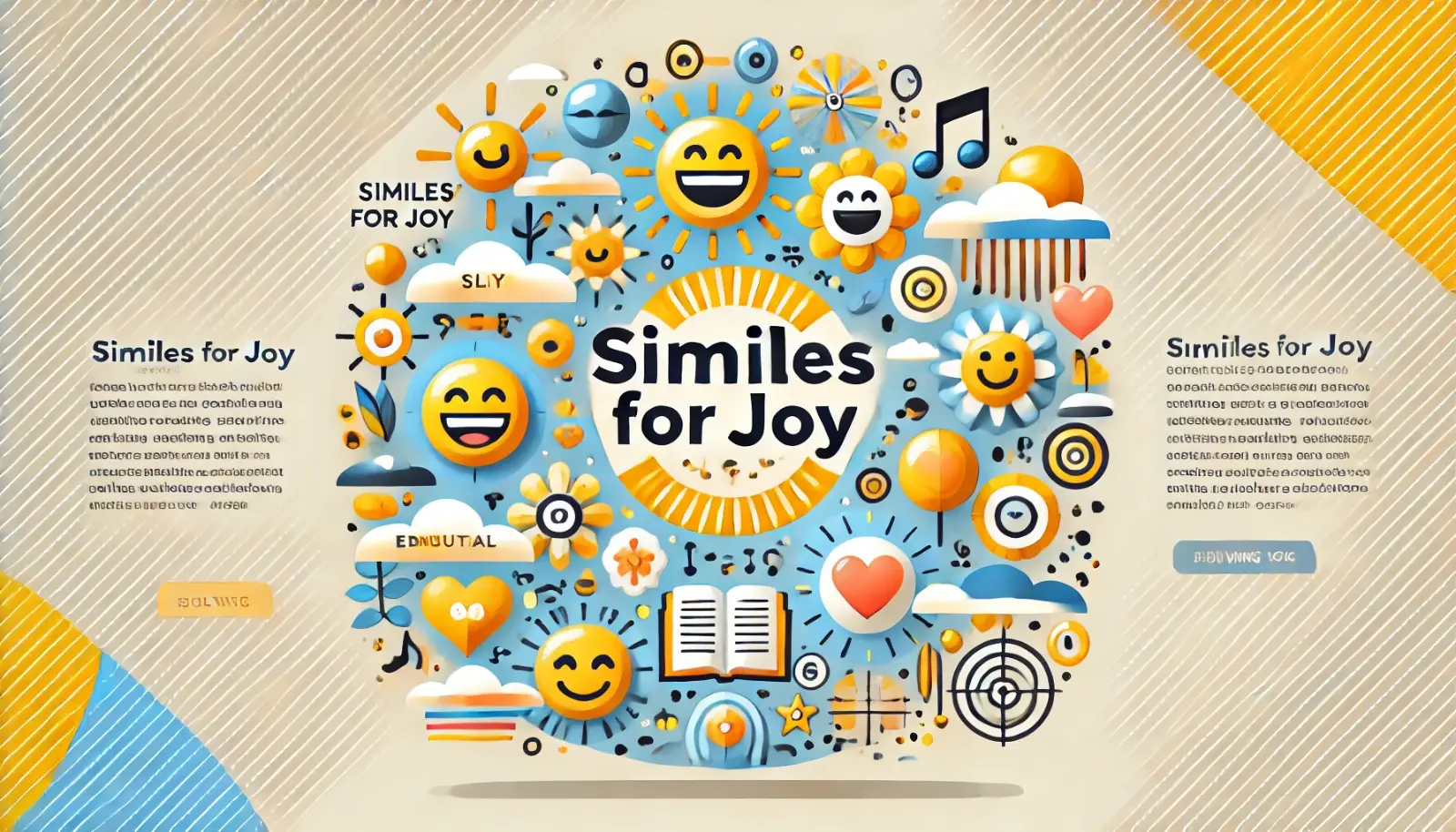
Joy is one of the most radiant and uplifting emotions, often filling moments with energy, warmth, and a sense of lightness that is hard to describe directly. In writing, simply stating that someone is “happy” or “joyful” can feel limited and flat. This is where similes for joy become powerful literary tools. They allow writers to express happiness through vivid and relatable comparisons that bring the emotion to life in the reader’s imagination.
By comparing joy to images such as sunlight breaking through clouds, birds soaring freely, or fireworks lighting up the sky, writers can capture both the beauty and intensity of this emotion. These similes not only enhance visual description but also deepen emotional impact, making scenes more engaging and memorable.
This guide explores creative similes for joy that help transform simple happiness into expressive, poetic, and meaningful writing that resonates with readers.
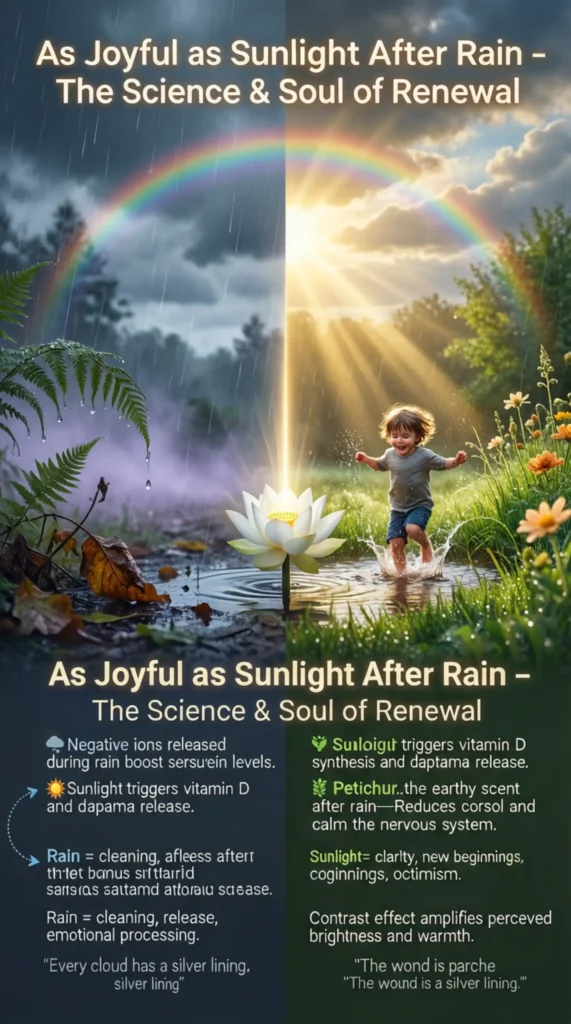
1. As joyful as sunlight after rain
Meaning: This simile describes joy that arrives after sadness or difficulty, bringing relief and clarity. Example in prose formal: The resolution of the conflict felt as joyful as sunlight after rain, restoring hope across the community. Casual: Seeing her again was as joyful as sunlight after rain. Example in poetry: Your smile breaks the lingering gray, as joyful as sunlight after rain, warming places sorrow once claimed, teaching my heart how to bloom again. Tip: Use this simile when joy follows struggle or emotional release.
2. As joyful as a child on their birthday
Meaning: This simile expresses pure excitement and unfiltered happiness. Example in prose formal: His reaction was as joyful as a child on their birthday, full of anticipation and wonder. Casual: She looked as joyful as a kid on their birthday. Example in poetry: Candles glow in widening eyes, as joyful as a child on their birthday, time pauses just to watch delight, untouched by age or doubt. Tip: Best used for visible, energetic joy.
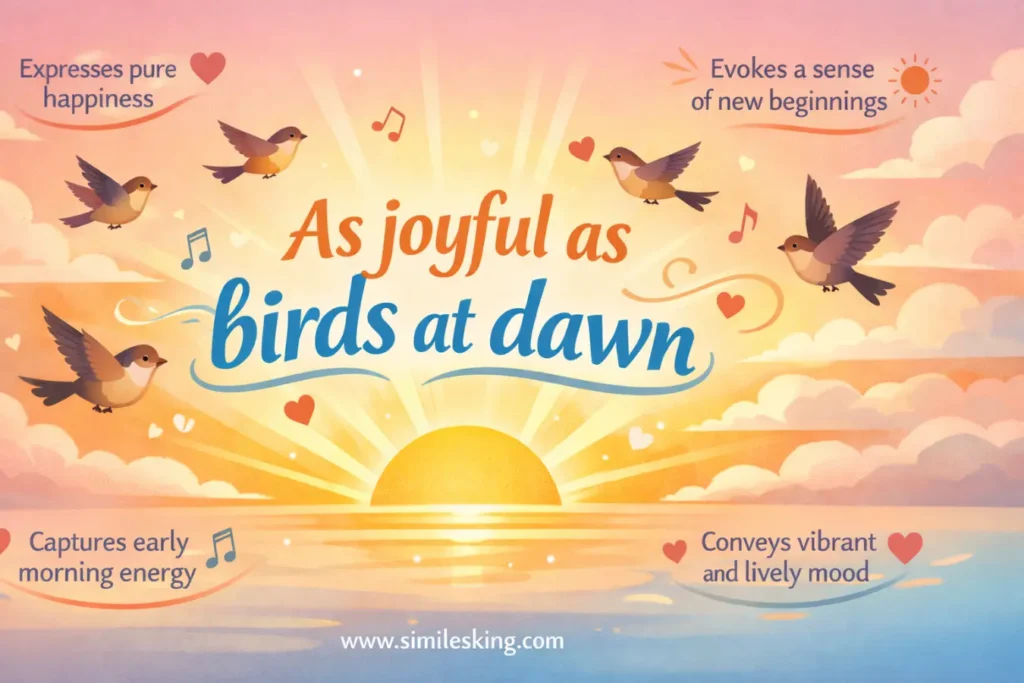
3. As joyful as birds at dawn
Meaning: Represents effortless and natural happiness. Example in prose formal: Her voice sounded as joyful as birds at dawn, signaling a hopeful beginning. Casual: He woke up as joyful as birds at dawn. Example in poetry: Morning sings before the sun, as joyful as birds at dawn, each note promising light, where night once lingered. Tip: Ideal for beginnings, mornings, and renewal scenes.
4. As joyful as laughter in an empty room
Meaning: Describes joy that feels amplified and impossible to ignore. Example in prose formal: Her optimism rang as joyful as laughter in an empty room. Casual: His happiness echoed like laughter in an empty room. Example in poetry: Walls lean closer to the sound, as joyful as laughter in an empty room, proof that happiness needs no crowd. Tip: Use to emphasize emotional impact.
5. As joyful as spring after winter
Meaning: Symbolizes rebirth, relief, and hope. Example in prose formal: Peace returned as joyful as spring after winter. Casual: Freedom felt as joyful as spring after winter. Example in poetry: Frozen hearts begin to sing, as joyful as spring after winter, hope pushes through hardened ground. Tip: Powerful in healing and survival narratives.
6. As joyful as music in the heart
Meaning: Expresses deep, internal joy. Example in prose formal: Her fulfillment resonated as joyful as music in the heart. Casual: The news felt like music in my heart. Example in poetry: A rhythm only I can hear, as joyful as music in the heart, steadying time itself. Tip: Best for introspective writing.
7. As joyful as waves dancing on shore
Meaning: Describes playful and energetic joy. Example in prose formal: The children were as joyful as waves dancing on shore. Casual: She moved like waves dancing on the beach. Example in poetry: Feet bare, spirits unrestrained, as joyful as waves dancing on shore. Tip: Works well in carefree scenes.
8. As joyful as a reunion after long absence
Meaning: Represents emotional, connection-based happiness. Example in prose formal: Their embrace was as joyful as a reunion after long absence. Casual: Seeing her again felt like a long-awaited reunion. Example in poetry: Time collapses into one breath, as joyful as reunion after absence. Tip: Ideal for family or love stories.
9. As joyful as fireflies at dusk
Meaning: Gentle, magical happiness. Example in prose formal: Their contentment was as joyful as fireflies at dusk. Casual: The moment felt like fireflies lighting the evening. Example in poetry: Soft sparks stitch the night, as joyful as fireflies at dusk. Tip: Use for subtle, nostalgic joy.
10. As joyful as winning after hardship
Meaning: Joy earned through effort and endurance. Example in prose formal: Success felt as joyful as winning after hardship. Casual: It was finally worth it. Example in poetry: Scars ache, yet smiles rise, as joyful as winning after hardship. Tip: Excellent for motivational writing.
11. As joyful as sunlight spilling through an open window
Meaning: This simile represents sudden, natural happiness that brightens everything it touches.
Example in prose formal: Her encouragement arrived as joyful as sunlight spilling through an open window, lifting the mood of the entire room.
Casual: That message felt as joyful as sunlight through an open window.
Example in poetry: Morning leans into my chest, as joyful as sunlight through an open window, dust dancing where worry once lived.
Tip: Use this simile to express emotional relief or reassurance.
12. As joyful as laughter shared among old friends
Meaning: Describes deep joy rooted in familiarity and trust.
Example in prose formal: Their reunion was as joyful as laughter shared among old friends.
Casual: It felt as joyful as laughing with people who know you well.
Example in poetry: Stories overlap and time bends, as joyful as laughter among old friends, years falling away in seconds.
Tip: Ideal for nostalgia, friendship, and memoir writing.
13. As joyful as a festival bursting into color
Meaning: Represents vibrant, collective happiness filled with celebration.
Example in prose formal: The crowd’s reaction was as joyful as a festival bursting into color.
Casual: The place felt like a full celebration.
Example in poetry: Drums rise and banners bloom, as joyful as a festival bursting into color, every heartbeat dancing.
Tip: Best used for public celebrations or achievements.
14. As joyful as the first sip of tea on a cold morning
Meaning: Symbolizes quiet comfort and contentment.
Example in prose formal: The calm that followed was as joyful as the first sip of tea on a cold morning.
Casual: That relief felt like warm tea on a cold day.
Example in poetry: Steam curls into silence, as joyful as the first sip of tea, warming more than hands.
Tip: Perfect for subtle, peaceful joy.
15. As joyful as a smile that needs no reason
Meaning: Expresses spontaneous, unexplainable happiness.
Example in prose formal: Her mood was as joyful as a smile that needs no reason.
Casual: He was smiling for no reason at all.
Example in poetry: Nothing earned, nothing proven, as joyful as a smile without reason.
Tip: Use when describing lighthearted characters.
16. As joyful as children running through rain
Meaning: Represents carefree, rule-free happiness.
Example in prose formal: Their freedom felt as joyful as children running through rain.
Casual: We felt like kids splashing in puddles.
Example in poetry: Shoes soaked, laughter louder, as joyful as children running through rain.
Tip: Works well for moments of release and rebellion.
17. As joyful as a long road finally ending
Meaning: Describes relief and satisfaction after endurance.
Example in prose formal: Completion felt as joyful as a long road finally ending.
Casual: It felt like finally reaching home.
Example in poetry: Feet ache but the door waits, as joyful as a long road ending.
Tip: Effective for success stories and journeys.
18. As joyful as dawn after a sleepless night
Meaning: Symbolizes renewal and reassurance.
Example in prose formal: Hope returned as joyful as dawn after a sleepless night.
Casual: Morning felt like a blessing.
Example in poetry: Light forgives the dark, as joyful as dawn after sleeplessness.
Tip: Ideal for emotional recovery scenes.
19. As joyful as applause rising unexpectedly
Meaning: Represents validation and shared happiness.
Example in prose formal: Her recognition felt as joyful as unexpected applause.
Casual: It felt amazing to be cheered like that.
Example in poetry: Sound lifts before thought, as joyful as applause unplanned.
Tip: Use when characters receive acknowledgment.
20. As joyful as being understood without explanation
Meaning: Expresses emotional safety and connection.
Example in prose formal: The moment was as joyful as being understood without explanation.
Casual: It felt great not having to explain myself.
Example in poetry: No words stand between us, as joyful as silent understanding.
Tip: Perfect for intimate emotional moments.
21. As joyful as a heart unburdened
Meaning: Represents emotional freedom and peace.
Example in prose formal: She felt as joyful as a heart unburdened.
Casual: It felt like a weight was lifted.
Example in poetry: Breath comes easier now, as joyful as a heart unburdened.
Tip: Use in healing or reflective writing.
22. As joyful as fresh air after confinement
Meaning: Describes relief and regained freedom.
Example in prose formal: Independence felt as joyful as fresh air after confinement.
Casual: It felt like finally breathing again.
Example in poetry: Doors open wide, as joyful as fresh air rushing in.
Tip: Ideal for transformation themes.
23. As joyful as finding light in a dark room
Meaning: Symbolizes hope and clarity.
Example in prose formal: The answer came as joyful as finding light in a dark room.
Casual: It felt like finally seeing clearly.
Example in poetry: Shadows loosen their grip, as joyful as light discovered.
Tip: Strong in problem-solving or realization scenes.
24. As joyful as hearing good news after waiting
Meaning: Expresses anticipation fulfilled.
Example in prose formal: The call felt as joyful as hearing good news after waiting.
Casual: The news finally came.
Example in poetry: Silence breaks into sound, as joyful as long-awaited words.
Tip: Effective for suspense resolution.
25. As joyful as a burden set down
Meaning: Represents release from responsibility or worry.
Example in prose formal: Rest felt as joyful as a burden set down.
Casual: It felt like letting go.
Example in poetry: Shoulders lower at last, as joyful as a burden released.
Tip: Use for closure scenes.
26. As joyful as laughter breaking tension
Meaning: Describes relief-driven happiness.
Example in prose formal: The joke landed as joyful as laughter breaking tension.
Casual: Everyone finally relaxed.
Example in poetry: Silence cracks into sound, as joyful as laughter breaking strain.
Tip: Good for dialogue-heavy scenes.
27. As joyful as seeing home after a long absence
Meaning: Represents belonging and comfort.
Example in prose formal: The sight was as joyful as seeing home after a long absence.
Casual: It felt great to be back.
Example in poetry: Familiar walls welcome me, as joyful as home remembered.
Tip: Works well in travel or reunion narratives.
28. As joyful as success earned through patience
Meaning: Symbolizes mature, meaningful happiness.
Example in prose formal: Achievement felt as joyful as success earned through patience.
Casual: It was worth the wait.
Example in poetry: Time bows to effort, as joyful as patience rewarded.
Tip: Ideal for inspirational writing.
29. As joyful as warmth after cold
Meaning: Describes simple, physical relief.
Example in prose formal: Comfort arrived as joyful as warmth after cold.
Casual: It felt so comforting.
Example in poetry: Heat returns to skin, as joyful as warmth reclaimed.
Tip: Useful for sensory descriptions.
30. As joyful as hope finally answered
Meaning: Represents emotional fulfillment.
Example in prose formal: The outcome felt as joyful as hope finally answered.
Casual: Everything worked out.
Example in poetry: Waiting loosens its grip, as joyful as hope fulfilled.
Tip: Perfect for conclusions and endings.
Why Similes for Joy Work So Well
Experienced writers understand that joy is not one-dimensional. It can be loud or quiet, sudden or earned. Similes allow writers to choose comparisons that match the specific type of joy they want to express. Literary experts consistently emphasize figurative language as a core storytelling tool because it transforms emotions into experiences readers can feel.
Practical Tips for Using Similes Effectively
Avoid overusing similes in a single paragraph. Choose imagery your audience can easily recognize. Match the tone of the simile to the mood of your writing. Revise clichés unless they serve a clear purpose.
Conclusion
Joy deserves language that captures its richness and variety. Similes for joy allow writers to move beyond simple labels and create emotional experiences readers can truly feel. Whether you are writing poetry, fiction, or personal reflections, the right simile can turn happiness into something vivid and unforgettable. Experiment with your own comparisons, draw from real-life moments, and let joy speak through imagery. See also: Similes for Happiness, Similes for Love, Figurative Language Examples, Creative Writing Techniques for Beginners.
FAQs;
What is a simile?
A simile is a literary device that compares two different things using the words “like” or “as” to make descriptions more vivid and relatable. Writers use similes to help readers clearly imagine emotions, actions, or qualities.
How do similes help describe joy?
Similes help describe joy by connecting happiness to familiar images such as sunlight, laughter, music, or nature. This makes the emotion more concrete and allows readers to feel the joy instead of simply reading about it.
What are some good examples of similes for joy?
Examples of similes for joy include as joyful as sunlight after rain, as joyful as a child on their birthday, as joyful as spring after winter, and as joyful as laughter shared among old friends.
How can I use similes for joy in writing?
You can use similes for joy in poetry, stories, essays, speeches, or personal writing. Place them where an emotional moment needs emphasis, such as a reunion, achievement, or moment of relief, and ensure the imagery fits the tone of your writing.
How many similes should I use in one paragraph?
It is best to use one strong simile per paragraph. Overusing similes can overwhelm readers, while a single well-chosen comparison keeps the writing clear, powerful, and engaging.
Are similes better than metaphors for expressing joy?
Both similes and metaphors are effective, but similes are often clearer because they make direct comparisons using “like” or “as.” Similes are especially helpful when you want your meaning to be immediately understood.
Can similes for joy be used in formal writing?
Yes, similes for joy can be used in formal writing when chosen carefully. Professional, nature-based, or subtle similes work well in speeches, academic essays, and reflective articles.
How do I create my own similes for joy?
To create your own similes for joy, think about moments when you felt truly happy and ask what that feeling resembled. Compare the emotion to something sensory or familiar, such as light, warmth, sound, or movement.

Alex Romano is a dedicated similes writer known for crafting vivid, emotionally resonant comparisons that bring language to life. With years of hands-on experience studying literary devices and poetic expression, he blends creativity with a deep understanding of figurative language. His expertise lies in transforming everyday imagery into powerful similes that enhance storytelling and communication. Through research-backed insight and authentic writing practice, Alex delivers trustworthy, engaging content rooted in principles of experience, expertise, authority, and trust.