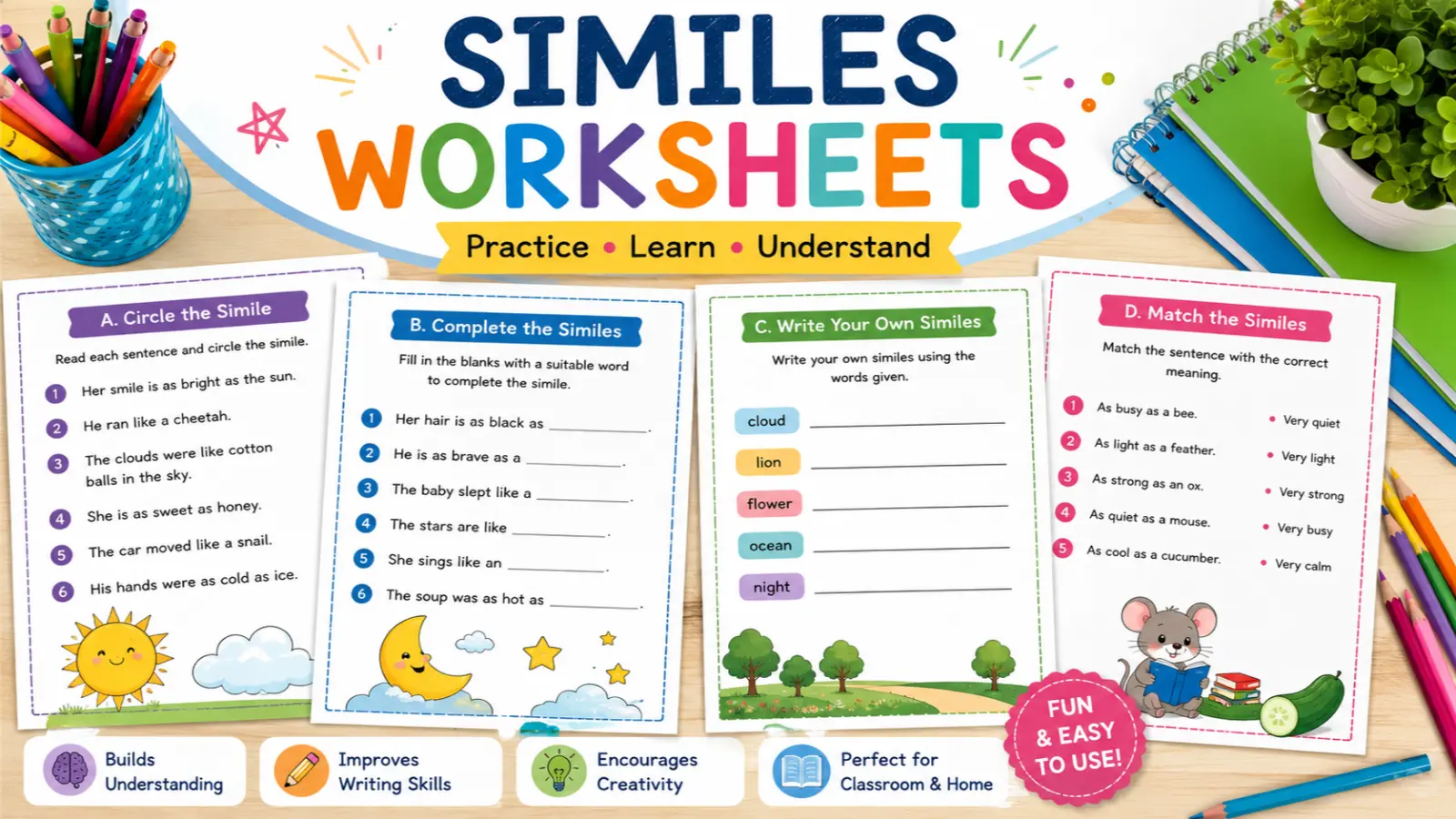
Similes are one of the easiest ways to make writing more colorful. Instead of saying something is “fast” o “happy,” a simile paints a picture by comparing one thing to another using like or as. Well-designed similes worksheets help students move beyond memorizing definitions. They encourage observation, imagination, and stronger descriptive writing. Whether you’re a teacher planning a language arts lesson, a homeschool parent, or a student practicing independently, the activities in this guide will help you create vivid comparisons with confidence. You’ll find printable-style exercises, original examples, writing challenges, and practical tips that can be adapted for elementary, middle school, or ESL learners.
Quick Answer
A similes worksheet is a learning activity that helps students recognize, complete, create, and improve similes. Effective worksheets combine reading, writing, creativity, and revision so learners understand not only what a simile is but also how to use one naturally in everyday writing.
What Is a Simile?
A simile compares two different things using like or as to create a clear mental image.
Examples:
- The clouds floated like quiet ships.
- Her ideas spread like ripples across a lake.
- The classroom buzzed like a busy workshop.
Rather than simply describing something, similes help readers experience it through familiar comparisons.
Why Use Similes Worksheets?
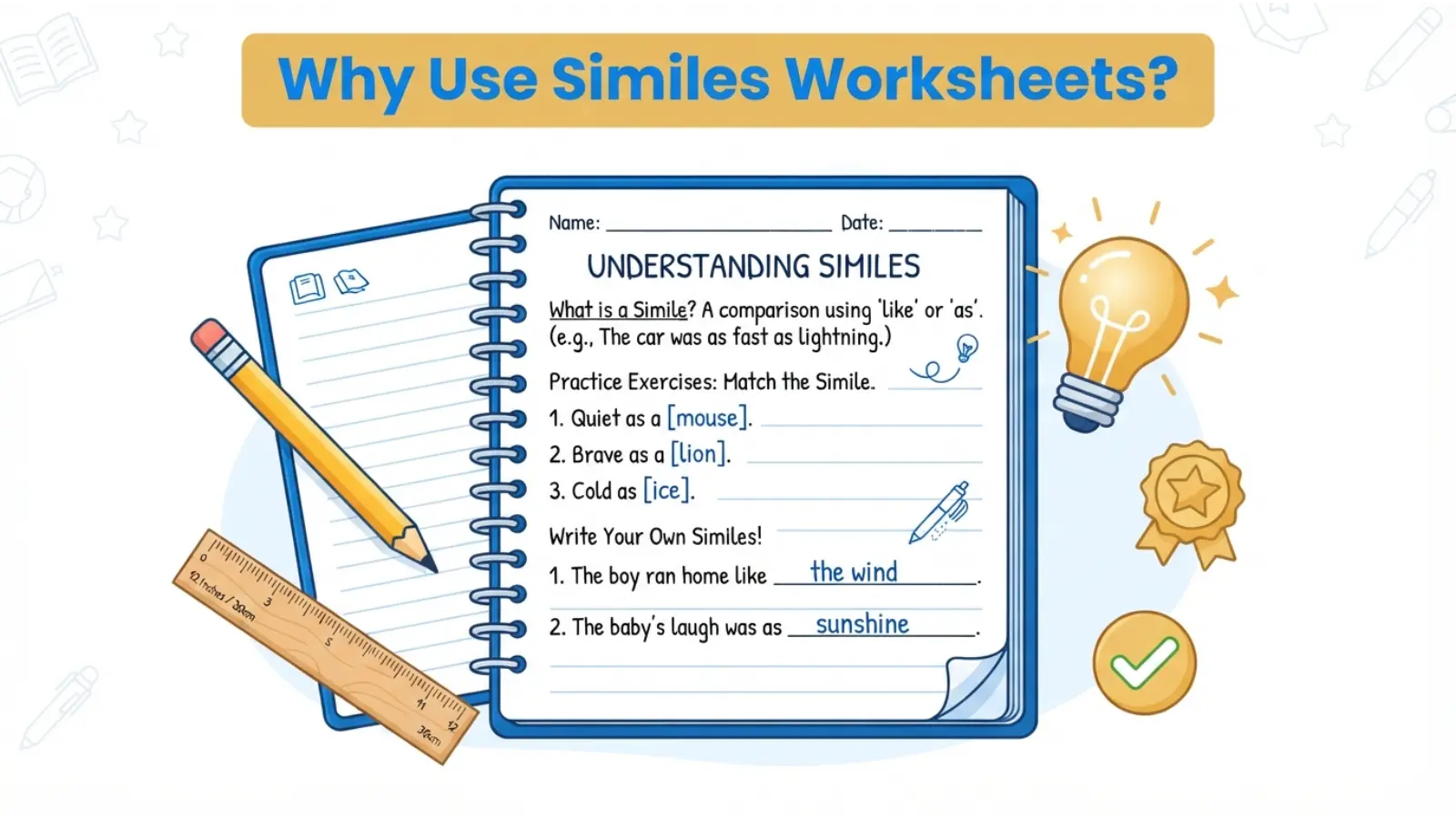
A worksheet gives students repeated opportunities to practice before using similes naturally in stories and essays.
Good similes worksheets help learners:
- recognize similes in reading passages
- understand why comparisons work
- expand vocabulary
- improve creative writing
- develop observation skills
- build confidence using figurative language
Instead of guessing, students learn to choose comparisons that fit the mood and meaning.
What Makes a Great Similes Worksheet?
The most useful worksheets do more than ask students to fill in blanks. They encourage thinking.
A balanced worksheet often includes:
Finding Similes
Students identify similes in sentences or short paragraphs.
Example:
The lantern glowed like a tiny sunrise.
Question:
Which words show the comparison?
Completing Similes
Students finish incomplete comparisons.
Example:
The river moved like __________.
Possible answers:
- silk in the wind
- flowing glass
- a winding ribbon
Notice there isn’t only one correct answer.
Matching Comparisons
Students connect descriptions with the best similes.
Example:
| Description | Simile |
|---|---|
| Calm | Like a sleeping forest |
| Bright | Like polished crystal |
| Busy | Like a crowded marketplace |
| Gentle | Like drifting feathers |
Writing Original Similes
Instead of copying examples, students invent their own.
Prompt:
Describe:
- rain
- homework
- excitement
- friendship
- music
using original similes.
25 Original Similes for Practice
1. As patient as a tree waiting for spring
Meaning: Calm endurance.
Writing Tip: Perfect for describing determination.
Story Example: She remained as patient as a tree waiting for spring.
2. Like sunlight slipping through curtains
Creates a peaceful mood.
Conversation: His smile arrived like sunlight slipping through curtains.
3. As steady as a lighthouse in fog
Suggests reliability.
Works well for trustworthy characters.
4. Like fresh paint brightening an old wall
Shows positive change.
Useful in personal narratives.
5. As curious as a bird exploring a new garden
Excellent for children or adventurous characters.
6. Like footprints appearing in fresh snow
Suggests something newly discovered.
Great in mystery stories.
7. As gentle as falling flower petals
Creates softness and warmth.
Ideal for poetry.
8. Like warm soup on a rainy afternoon
Expresses comfort.
Works in everyday writing.
9. As focused as an artist finishing a masterpiece
Highlights concentration.
Useful in school essays.
10. Like stars quietly gathering at dusk
Creates peaceful imagery.
Perfect for reflective writing.
11. As lively as popcorn in a hot pan
Captures excitement.
Conversation:
“The kids were as lively as popcorn in a hot pan.”
12. Like puzzle pieces finally fitting together
Shows understanding.
Ideal for educational writing.
13. As refreshing as cool shade on a summer walk
Suggests relief.
14. Like tiny lanterns lighting a dark path
Represents hope.
Wonderful in storytelling.
15. As fearless as the first wave reaching shore
Shows quiet courage.
16. Like music floating through an open window
Creates gentle imagery.
Ideal in descriptive paragraphs.
17. As flexible as young bamboo
Represents adaptability.
18. Like a sketch becoming a painting
Shows gradual improvement.
Useful for motivational writing.
19. As welcoming as an open garden gate
Describes kindness.
20. Like fresh pages waiting for new stories
Represents opportunity.
Excellent for classroom writing.
21. As thoughtful as a gardener planning every season
Shows careful planning.
22. Like gentle rain feeding thirsty flowers
Suggests encouragement.
Perfect for friendship themes.
23. As bright as an idea written in bold ink
Represents creativity.
24. Like waves smoothing rough stones
Shows gradual change.
Excellent for character development.
25. As hopeful as the first sunrise after a storm
Creates optimism.
Works beautifully in speeches and essays.
Classroom Activities Using Similes Worksheets
Observation Challenge
Choose an everyday object.
Write five different similes describing it from different perspectives.
Example object:
A pencil.
Possible ideas:
- Like a tiny bridge between ideas and paper.
- Like a key unlocking imagination.
Nature Walk Worksheet
Ask students to observe:
- clouds
- trees
- birds
- flowers
- wind
Then create one original simile for each.
This improves observation and vocabulary simultaneously.
Story Expansion Exercise
Start with a plain sentence:
The dog ran.
Improve it:
The dog ran like a leaf racing ahead of the wind.
Students quickly see how similes strengthen descriptions.
How Professional Writers Create Better Similes
Strong writers rarely choose the first comparison that comes to mind.
Instead they ask:
- What emotion should this create?
- What image will readers immediately recognize?
- Is the comparison fresh?
- Does it match the character or setting?
The goal isn’t to sound clever. It’s to make readers see the scene more clearly.
How to Create Your Own Similes
Step 1: Pick the Subject
Example:
A rainy day.
Step 2: Choose Its Strongest Quality
Maybe it’s:
- peaceful
- noisy
- cold
- refreshing
Step 3: Think of Something Similar
Peaceful:
A quiet library.
Step 4: Connect Them
The rain settled like whispers filling a library.
Step 5: Read It Aloud
If it sounds natural and creates a picture, you’ve written a successful simile.
Creative Similes Worksheet Exercises
Exercise 1
Complete the sentence.
The moon looked like __________.
Exercise 2
Rewrite without using “beautiful.”
Use a simile instead.
Exercise 3
Describe your classroom using three original similes.
Exercise 4
Write one simile for each emotion.
- excitement
- nervousness
- happiness
- disappointment
Exercise 5
Find one weak simile in your own writing and replace it with a stronger, more original comparison.
Common Mistakes Students Make
Using Overused Comparisons
Phrases such as “as busy as a bee” are familiar but often lack originality.
Try creating comparisons from personal observation instead.
Mixing Images
Avoid combining unrelated comparisons.
Weak:
Her voice was like silk and thunder swimming through sunshine.
The images compete instead of supporting each other.
Forcing Similes
Every sentence doesn’t need figurative language.
Use similes where they strengthen the description.
Confusing Similes and Metaphors
Simile:
The lake shimmered like polished glass.
Metaphor:
The lake was polished glass.
Knowing the difference helps students use both effectively.
Choosing Comparisons That Don’t Fit
The comparison should match the mood.
A serious scene usually needs thoughtful imagery rather than humorous comparisons.
Related Literary Devices
Metaphor
Makes a direct comparison without using like or as. It often creates stronger, more immediate imagery.
Imagery
Uses descriptive language that appeals to the senses. Similes are one way to build vivid imagery.
Personification
Gives human qualities to animals, objects, or ideas. It can work alongside similes for richer descriptions.
Hyperbole
Uses deliberate exaggeration for emphasis. A hyperbolic simile can be humorous when used carefully.
Symbolism
Allows an object or image to represent a deeper idea. A simile can reinforce symbolic meaning in stories and poems.
Frequently Asked Questions
What are similes worksheets?
They are educational activities that help students recognize, complete, analyze, and write similes through guided practice.
Who can use similes worksheets?
Teachers, homeschool families, ESL learners, elementary students, middle school students, and anyone improving creative writing.
Are similes worksheets useful for creative writing?
Yes. They teach writers how to create vivid descriptions that make stories and essays more engaging.
How often should students practice similes?
Short practice sessions once or twice a week are usually more effective than occasional long exercises.
What’s the difference between a worksheet and a writing prompt?
A worksheet teaches a specific skill through guided tasks, while a writing prompt encourages open-ended creative responses.
Can adults benefit from similes worksheets?
Absolutely. Many adult writers use figurative language exercises to improve storytelling, blogging, poetry, and professional writing.
Conclusion
Similes worksheets are more than classroom handouts—they’re practical tools for developing observation, imagination, and expressive writing. By reading, analyzing, revising, and creating original comparisons, learners gradually build the confidence to write with greater clarity and creativity. The best practice doesn’t come from memorizing famous similes. It comes from noticing the world around you and turning everyday experiences into fresh, meaningful comparisons. Keep experimenting, revise your ideas, and let each worksheet become a stepping stone toward stronger, more memorable writing.
I am Helena Frost, a writer captivated by the beauty of language and the art of comparison. Through my words, I explore the world by turning ordinary moments into vivid similes and reflections. I enjoy crafting phrases that spark imagination, evoke emotion, and linger in the mind. My writing celebrates the subtle connections between people, nature, and the stories we live. For me, every sentence is an opportunity to reveal the extraordinary in the everyday.