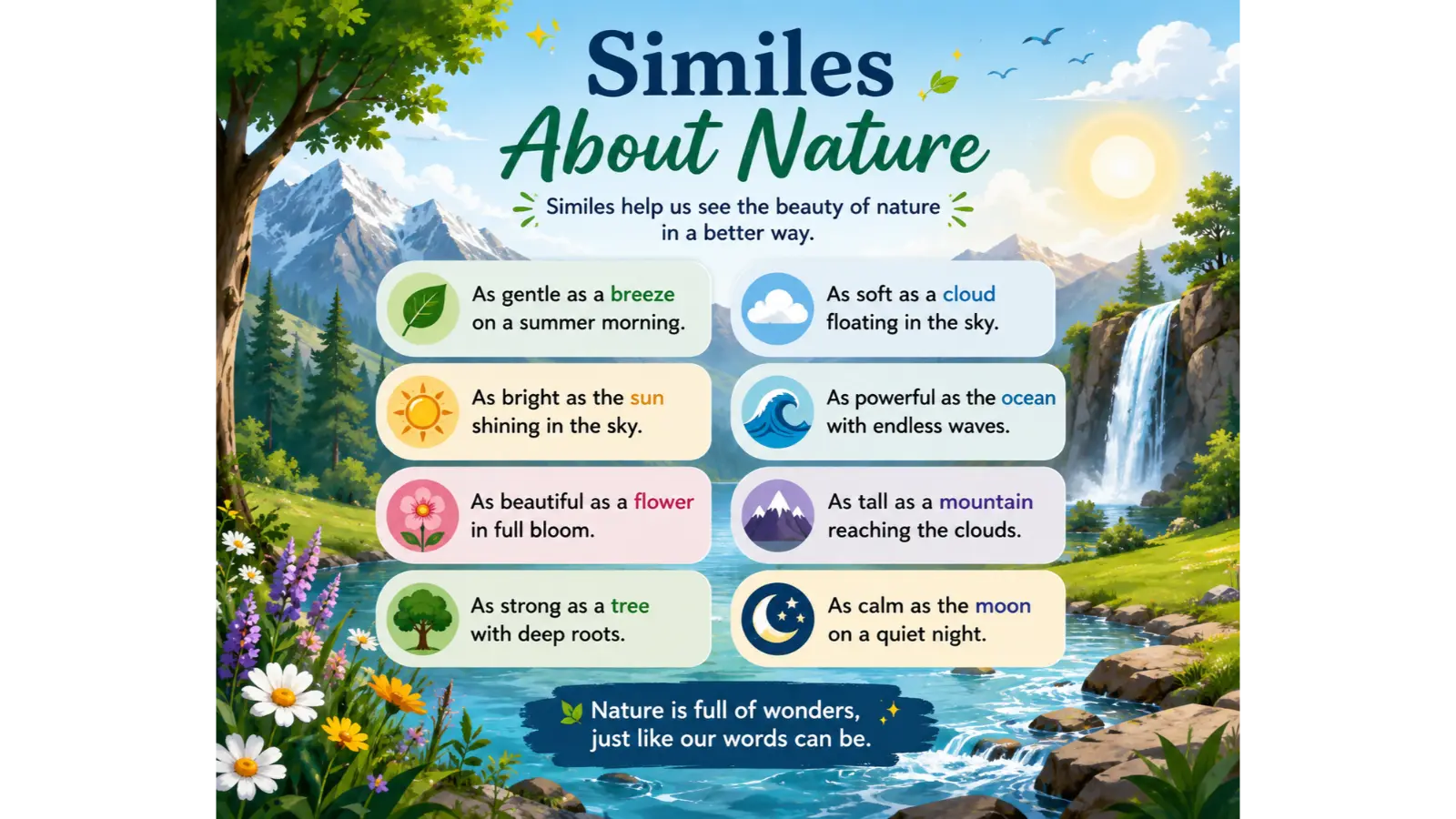
Nature has always inspired writers because it offers endless colors, sounds, textures, and emotions. A sunrise can symbolize hope, a storm can mirror anger, and a quiet forest can reflect peace. One of the easiest ways to bring these scenes to life is by using similes. A simile compares two different things using words such as like or as. It helps readers imagine a scene instead of simply reading about it. Whether you’re writing poetry, stories, essays, speeches, or social media captions, learning how to use similes about nature can make your words more vivid and memorable. In this guide, you’ll discover original nature-inspired similes, practical writing advice, common mistakes to avoid, and creative exercises to strengthen your descriptive writing.
Quick Answer
Similes about nature compare people, feelings, objects, or situations to natural elements using like or as. They create stronger imagery, evoke emotion, and help readers visualize scenes more clearly. Original similes often make writing more engaging than familiar comparisons.
Why Nature Makes Great Similes
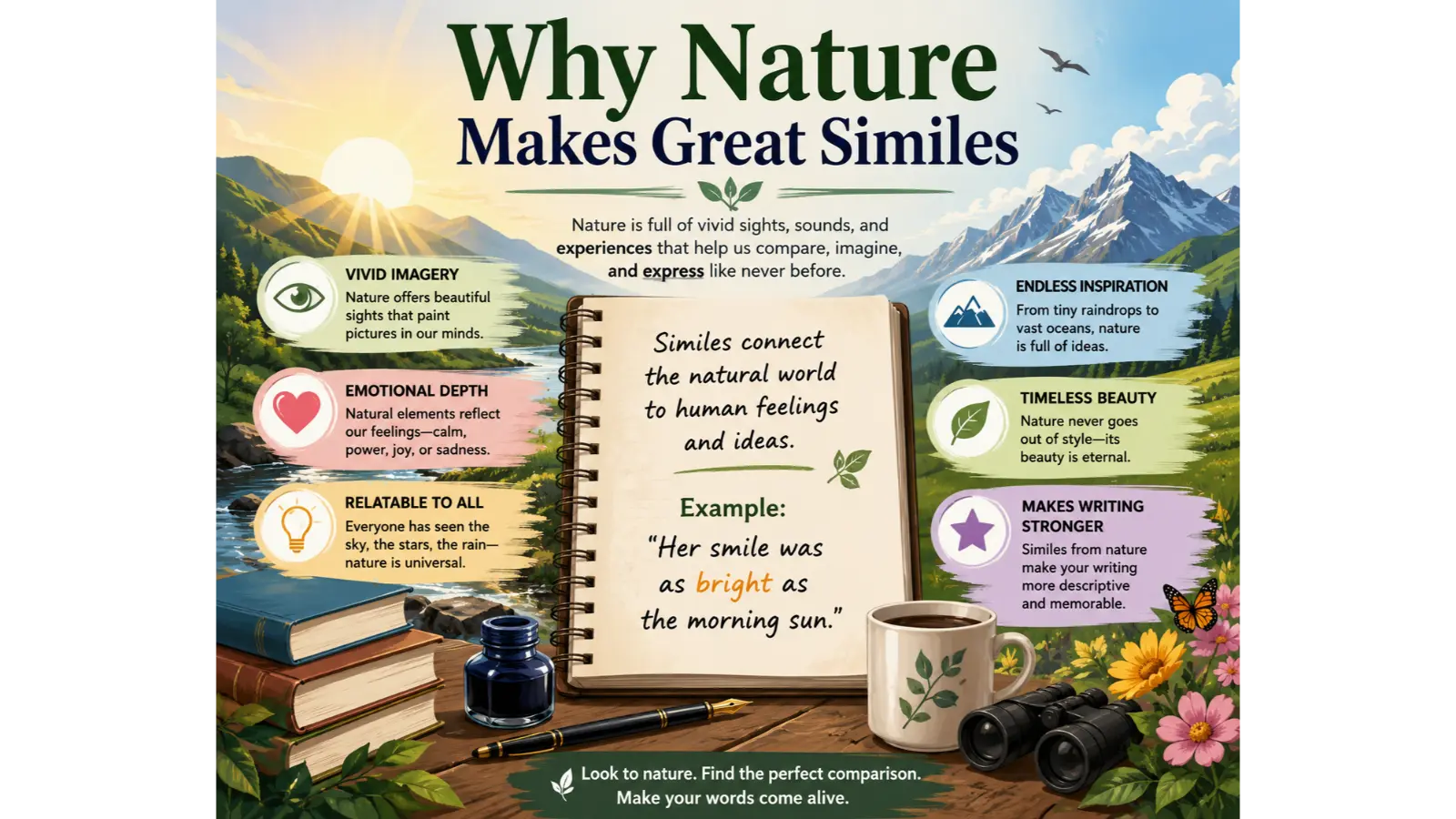
Nature constantly changes, making it one of the richest sources of comparison.
A flowing river can suggest persistence.
A mountain can represent strength.
Morning dew can symbolize freshness.
Thunder can reflect powerful emotions.
Because readers already understand these natural images, they quickly connect with the feelings behind your writing.
Original Similes About Nature
1. As patient as a river polishing stone
Meaning: Quiet persistence eventually creates change.
Story Example:
She stayed committed, as patient as a river polishing stone.
Best Use: Personal growth and determination.
2. Like sunlight slipping through old leaves
Creates a feeling of gentle hope.
Conversation:
Your smile felt like sunlight slipping through old leaves.
3. As fearless as lightning crossing the sky
Perfect for describing bold decisions.
4. Like a seed waiting beneath winter soil
Represents hidden potential before success arrives.
5. As calm as mist floating over a quiet lake
Excellent for peaceful characters or relaxing scenes.
6. Like waves teaching the shore patience
Shows repeated effort despite obstacles.
7. As bright as the first blossom after frost
Suggests fresh beginnings and optimism.
8. Like rain refreshing tired fields
Ideal for describing emotional healing.
9. As steady as an ancient oak in strong winds
Expresses reliability during difficult times.
10. Like moonlight painting silver paths
Creates soft, dreamy imagery.
Suitable for poetry and romance.
11. As gentle as falling pine needles
Useful when describing kindness or quiet movement.
12. Like clouds gathering forgotten dreams
Adds mystery to fantasy writing.
13. As curious as a stream finding new paths
Perfect for adventurous personalities.
14. Like wildflowers surprising an empty hillside
Represents unexpected happiness.
15. As refreshing as mountain air after rain
Works well when describing encouragement.
16. Like autumn leaves sharing old stories
Creates nostalgic emotion.
17. As graceful as snow drifting through silent woods
Ideal for elegant movement.
18. Like a waterfall refusing to stop singing
Represents unstoppable enthusiasm.
19. As hopeful as dawn touching distant hills
Excellent for inspirational writing.
20. Like roots quietly holding the earth together
Shows hidden strength and support.
21. As free as birds riding the ocean breeze
Suggests independence and adventure.
22. Like stars blooming across the night
Creates magical imagery.
23. As soft as moss covering forgotten stones
Perfect for peaceful descriptions.
24. Like thunder announcing change
Works well when introducing major story events.
25. As resilient as grass returning after fire
Represents recovery and perseverance.
26. Like morning fog hiding gentle secrets
Creates suspense without fear.
27. As lively as butterflies dancing over flowers
Ideal for cheerful scenes.
28. Like branches reaching for tomorrow’s sunlight
Suggests ambition and hope.
29. As colorful as a meadow after spring rain
Excellent for joyful celebrations.
30. Like an eagle reading invisible winds
Describes wisdom and sharp awareness.
Why These Similes Work
Strong similes don’t simply compare two objects—they connect emotions with images readers already understand.
For example, comparing resilience to grass after fire feels believable because nature regularly demonstrates recovery. Likewise, comparing hope to dawn immediately creates a visual picture that readers recognize.
The strongest similes are rooted in observation rather than exaggeration.
How to Create Your Own Nature Similes
Step 1: Observe Nature
Notice details instead of broad ideas.
Instead of “tree,” think about twisted branches, rough bark, or leaves moving in the wind.
Step 2: Choose an Emotion
Ask yourself:
- Peace
- Joy
- Fear
- Loneliness
- Courage
- Excitement
Step 3: Find a Natural Match
Think about which natural scene behaves in a similar way.
Example:
Emotion → Hope
Nature → Sunrise
Simile:
Hope spread like sunrise across the valley.
Step 4: Keep It Specific
Specific images are more memorable.
Instead of:
Like a flower
Try:
Like lavender blooming after gentle rain.
Writing Tips for Better Nature Similes
Use Fresh Observations
Avoid comparisons readers have seen hundreds of times.
Original details feel more authentic.
Match the Mood
Storm imagery fits conflict.
Gentle rain suits comfort.
Snow often creates stillness.
Sunrise naturally suggests new beginnings.
Don’t Overload a Paragraph
One powerful simile often creates more impact than several weak ones.
Let each comparison breathe.
Appeal to the Senses
Great similes involve more than sight.
Describe:
- Sound
- Texture
- Temperature
- Smell
- Movement
The more senses involved, the stronger the imagery becomes.
Nature Similes and Other Literary Devices
Metaphor
A metaphor makes a direct comparison without using like or as.
Simile: Her hope was like sunrise.
Metaphor: Her hope became sunrise.
Personification
Nature receives human qualities.
Example:
The forest whispered secrets.
Imagery
Imagery paints vivid sensory pictures.
Nature similes often strengthen imagery by making scenes easier to imagine.
Symbolism
Many natural elements carry symbolic meaning.
- River → Change
- Mountain → Strength
- Forest → Mystery
- Ocean → Freedom
- Seasons → Life stages
Common Mistakes to Avoid
Relying on Clichés
Readers have seen many familiar comparisons.
Try creating fresh observations from real life instead.
Mixing Images
Avoid combining unrelated comparisons.
Weak:
Her smile was like sunshine sailing underwater.
The images clash.
Using Similes Too Often
A page filled with similes becomes distracting.
Use them where they create the greatest emotional impact.
Confusing Similes with Metaphors
Remember:
Similes use like or as.
Metaphors make direct comparisons.
Choosing Comparisons That Don’t Fit
Every comparison should support the mood of the scene.
A playful image rarely fits a tragic moment.
Practice Exercise
Choose one emotion:
- Joy
- Fear
- Peace
- Excitement
- Curiosity
Now answer these questions:
- What natural scene matches that feeling?
- Which detail stands out most?
- Can you compare them using like or as?
- Does the comparison create a clear mental picture?
- Could you make it more specific?
Repeat this exercise with different seasons, landscapes, or weather conditions to develop your creativity.
Frequently Asked Questions
What are similes about nature?
They are comparisons that use like or as to connect people, emotions, or objects with elements from the natural world.
Why do writers use nature in similes?
Nature provides familiar images that help readers visualize ideas and experience emotions more vividly.
Are nature similes useful for poetry?
Yes. They add rhythm, imagery, and emotional depth, making poems more expressive and memorable.
Can students use nature similes in school assignments?
Absolutely. Original similes can improve descriptive essays, creative writing projects, and presentations.
How can I avoid cliché nature similes?
Observe real details in nature instead of relying on common comparisons. Specific images usually feel fresher and more engaging.
What’s the difference between a simile and a metaphor?
A simile uses like or as, while a metaphor states that one thing is another without those words.
Conclusion
Nature offers endless inspiration for creative writing because every landscape, season, and weather pattern carries its own mood and meaning. The best similes don’t just decorate a sentence—they help readers experience it. By observing the natural world closely and choosing thoughtful comparisons, you can create writing that feels vivid, original, and emotionally powerful. Keep experimenting, trust your observations, and let nature become one of your greatest creative tools.
I am Helena Frost, a writer captivated by the beauty of language and the art of comparison. Through my words, I explore the world by turning ordinary moments into vivid similes and reflections. I enjoy crafting phrases that spark imagination, evoke emotion, and linger in the mind. My writing celebrates the subtle connections between people, nature, and the stories we live. For me, every sentence is an opportunity to reveal the extraordinary in the everyday.