Poetry has a unique way of turning ordinary moments into unforgettable images. One of the simplest and most powerful tools poets use is the simile. A well-crafted simile helps readers see, hear, and feel an emotion through comparison.
If you’ve been searching for poems with similes, you’re probably looking for inspiration, classroom examples, or better ways to write your own poetry. This guide offers fresh, original similes, explains why they work, and shows how to use them naturally in poems.
Whether you’re a student, teacher, or aspiring poet, you’ll find practical ideas you can use immediately.
Quick Answer
Poems with similes use comparisons containing the words “like” or “as” to create vivid imagery and stronger emotions. A simile helps readers imagine scenes more clearly by comparing one thing to another in a meaningful and creative way.
Why Similes Make Poems More Powerful
Poems often rely on emotion rather than explanation. Instead of saying someone felt lonely, a poet might compare that loneliness to something readers can instantly picture.
A thoughtful simile can:
- Paint clearer mental images
- Add emotion without overexplaining
- Make poems easier to remember
- Give ordinary subjects fresh meaning
- Create rhythm and musical flow
The best similes feel surprising while still making perfect sense.
What Makes a Great Poetic Simile?
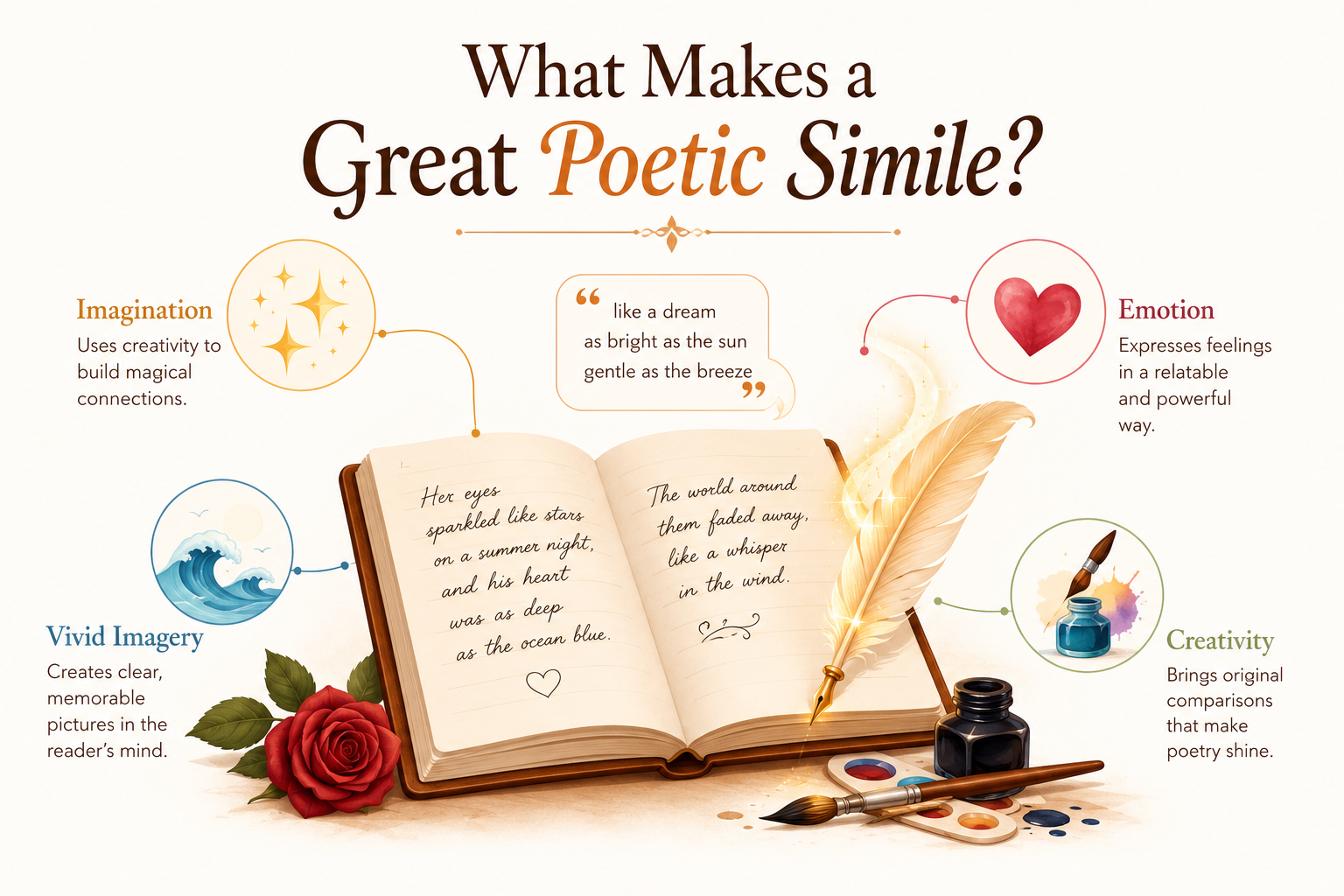
A memorable simile does more than compare two objects.
Strong poetic similes usually:
- Reveal an unexpected similarity
- Match the poem’s mood
- Create sensory imagery
- Feel natural instead of forced
- Support the poem’s theme
Instead of comparing everything to diamonds, stars, or roses, look for details readers haven’t seen before.
30 Original Poems with Similes and Creative Examples
1. Like dawn unfolding a hidden letter
Meaning: Hope slowly appears.
Poetry Example
Your smile arrived
like dawn unfolding a hidden letter,
quiet enough
to wake every sleeping dream.
2. As gentle as snow landing on pine needles
Creates peaceful imagery.
Conversation
“The room became as gentle as snow landing on pine needles.”
3. Like rain teaching dusty roads to breathe
Works beautifully in poems about renewal.
4. As bright as laughter spilling through open windows
Perfect for joyful poetry.
5. Like a lantern floating across silent water
Suggests hope during darkness.
6. As patient as an old tree waiting for spring
Excellent for poems about perseverance.
7. Like music stitched into the wind
Creates graceful movement.
8. As fearless as waves greeting the cliffs
Ideal for courage-themed poems.
9. Like feathers drifting through forgotten memories
Adds softness and nostalgia.
10. As warm as bread fresh from the oven
Creates comfort and home imagery.
11. Like moonlight polishing broken glass
Suggests beauty after hardship.
12. As quiet as unopened books at midnight
Works well in reflective poetry.
13. Like ivy climbing forgotten walls
Represents persistence.
14. As curious as a river searching for the sea
Expresses discovery and growth.
15. Like golden leaves writing farewell letters
A beautiful autumn comparison.
16. As steady as stars guiding lonely travelers
Represents guidance and trust.
17. Like mist wrapping sleepy hills
Creates peaceful scenery.
18. As light as wishes carried by balloons
Ideal for hopeful poems.
19. Like fireflies sewing tiny stars across the field
Adds magical imagery.
20. As clear as morning dew on fresh grass
Represents honesty or clarity.
21. Like waves folding secrets onto the shore
Works in emotional poetry.
22. As gentle as clouds hugging distant mountains
Creates calm emotional scenes.
23. Like autumn whispering through empty streets
Excellent for reflective poems.
24. As fearless as sunrise chasing away shadows
Represents confidence and optimism.
25. Like roots remembering every season
Shows resilience.
26. As soft as candlelight on old photographs
Perfect for nostalgic writing.
27. Like birds carrying tiny pieces of tomorrow
Suggests hope and new beginnings.
28. As endless as echoes across a canyon
Expresses lasting emotions.
29. Like rivers collecting forgotten dreams
Creates imaginative symbolism.
30. As calm as the last star before sunrise
A peaceful ending image for many poems.
Why These Similes Work
Each comparison focuses on a clear emotional experience rather than using familiar clichés.
For example:
- Rain teaching dusty roads to breathe suggests renewal.
- Lantern floating across silent water symbolizes hope in darkness.
- Roots remembering every season expresses quiet strength.
Notice that each comparison creates both a picture and a feeling.
How Professional Poets Build Strong Similes
Experienced poets rarely choose the first comparison that comes to mind.
Instead, they often:
- Observe nature carefully.
- Compare emotions with physical experiences.
- Use unexpected but believable images.
- Keep comparisons simple enough to understand immediately.
The goal isn’t complexity—it’s clarity with imagination.
How to Create Your Own Similes
Try this simple method.
Step 1: Choose your subject
Example:
- Love
- Rain
- Fear
- Childhood
- Silence
Step 2: Decide the feeling
Ask yourself:
- Is it peaceful?
- Heavy?
- Joyful?
- Lonely?
Step 3: Look for something that shares that feeling
Instead of searching for similar objects, search for similar emotions.
Example:
Loneliness → an empty train station at sunset
Now create:
“Loneliness settled like an empty train station at sunset.”
Step 4: Read it aloud
If it sounds natural, keep it.
If it feels forced, simplify it.
Common Mistakes When Writing Similes
Using Overused Comparisons
Readers have seen phrases like:
- Busy as a bee
- Cold as ice
- Brave as a lion
Fresh comparisons leave a stronger impression.
Mixing Unrelated Images
Avoid combining too many ideas.
Poor example:
“Her voice was like thunder floating softly through feathers.”
The images compete instead of supporting each other.
Comparing Things That Don’t Connect
Every simile should reveal a meaningful similarity.
Readers should understand why the comparison exists.
Confusing Similes with Metaphors
A simile uses:
- Like
- As
Example:
“Her hope was like morning sunlight.”
A metaphor removes those words.
“Her hope was morning sunlight.”
Both are useful, but they create different effects.
Related Literary Devices
Metaphor
A metaphor makes a direct comparison without using like or as.
Imagery
Imagery appeals to the senses and helps readers experience the poem.
Personification
Personification gives human qualities to non-human things.
Example:
“The wind welcomed the morning.”
Hyperbole
Hyperbole exaggerates for dramatic effect.
Use it carefully so it doesn’t overwhelm your poem.
Symbolism
Symbols allow ordinary objects to represent larger ideas.
For example:
- Birds may symbolize freedom.
- Rivers may symbolize life’s journey.
- Autumn may symbolize change.
Practice Exercises
Exercise 1
Write one poem using only nature-based similes.
Exercise 2
Describe happiness without mentioning the word “happy.”
Use three original similes.
Exercise 3
Choose an everyday object like a cup, window, or umbrella.
Write five different similes that compare it to emotions.
Exercise 4
Rewrite one old cliché into a completely fresh comparison.
Frequently Asked Questions
What are poems with similes?
They are poems that use comparisons with like or as to create stronger imagery and emotion.
Why do poets use similes?
They help readers visualize ideas, understand emotions, and connect with the poem more deeply.
Can children write poems with similes?
Yes. Similes are one of the easiest literary devices for young writers because they encourage imagination through simple comparisons.
What’s the difference between a simile and a metaphor?
A simile uses like or as, while a metaphor makes a direct comparison without those words.
How many similes should a poem have?
There is no fixed number. One memorable simile often has more impact than several weaker ones.
Can similes improve creative writing?
Absolutely. They make descriptions more vivid, memorable, and emotionally engaging across poems, stories, and essays.
Conclusion
Great poetry doesn’t depend on complicated language. It depends on meaningful images that readers can instantly picture and feel. Original similes give ordinary experiences new life, making poems richer, more emotional, and easier to remember. Experiment with different comparisons, observe the world closely, and don’t be afraid to rewrite your first ideas. The more unique your observations become, the more memorable your poetry will be.
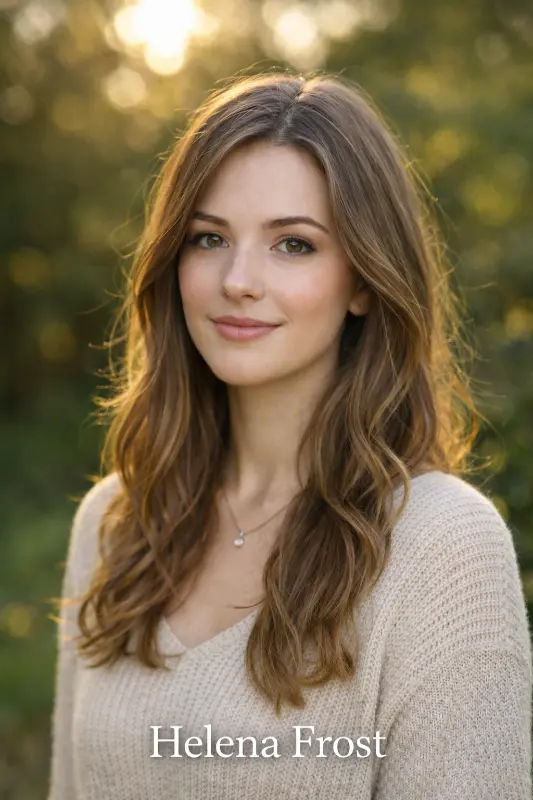
I am Helena Frost, a writer captivated by the beauty of language and the art of comparison. Through my words, I explore the world by turning ordinary moments into vivid similes and reflections. I enjoy crafting phrases that spark imagination, evoke emotion, and linger in the mind. My writing celebrates the subtle connections between people, nature, and the stories we live. For me, every sentence is an opportunity to reveal the extraordinary in the everyday.