Hate Similes: A Literary Guide To Expressing Intense Dislike Throug
Similes are among the most powerful tools a writer can use to transform abstract emotions into images readers can feel. Hate, in particular, is an emotion that often resists plain explanation. Saying a character “felt hate” is flat, but comparing that hatred to something sharp, corrosive, or destructive makes ...
Read more
Mad Similes

Similes are among the most powerful tools in a writer’s arsenal. They allow emotions, actions, and qualities to leap off the page, transforming abstract feelings into vivid, tangible imagery. When it comes to expressing madness, rage, or fury, similes are especially effective. A well-crafted simile can convey the explosive ...
Read more
Similes For Mad That Perfectly Describe Extreme Anger

Similes are among the most powerful tools in a writer’s craft because they translate invisible emotions into images readers can instantly feel. When we say someone is mad, we could leave it at that—but “mad” alone is flat. Compare that anger to a storm, a fire, or a snapping ...
Read more
Similes For Anger: A Literary Guide with 30 Vivid Examples
Anger is one of the most powerful human emotions—raw, explosive, and deeply personal. Yet, describing anger plainly often falls flat. Saying someone was “very angry” doesn’t let readers feel the heat, tension, or urgency of the moment. This is where similes for anger become essential tools for writers, students, ...
Read more
Hurt Similes: Powerful Comparisons For Pain
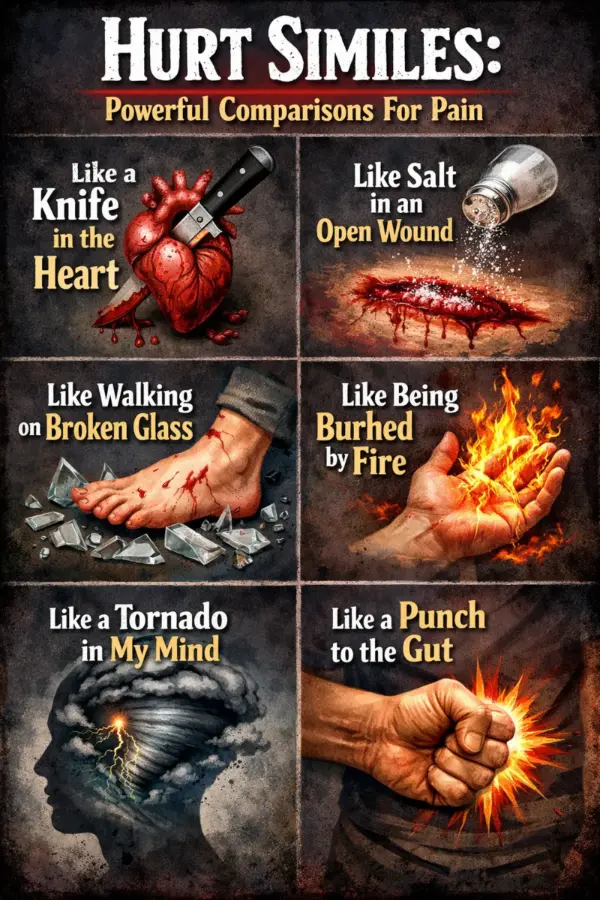
Similes are among the most powerful tools in creative writing because they transform abstract emotions into images readers can see, feel, and remember. Pain and emotional hurt, in particular, are difficult to describe plainly. Simply saying “he was hurt” or “she felt pain” rarely captures the depth of the ...
Read more
30+ Similes for Pain to Describe Deep Physical and Emotional Hurt

Pain is one of the most difficult feelings to put into words. Whether it’s sharp physical agony or deep emotional suffering, simple descriptions often fall short. That’s where similes come in. By comparing pain to familiar experiences, similes help make intense feelings more vivid, relatable, and easier to understand. ...
Read more
30 Similes For Pain and Suffering

Similes are among the most powerful tools in language because they transform abstract emotions into vivid, relatable images. By comparing one experience to another using “like” or “as,” similes help readers feel what a character feels rather than simply being told about it. When writing about pain and suffering, ...
Read more
Similes For Lonely: A Literary Guide with 30 Powerful Examples
Loneliness is one of the most universal human emotions, yet it can be one of the hardest to describe. That’s where similes become powerful tools in writing. By comparing loneliness to vivid, familiar imagery, similes transform an invisible feeling into something readers can see, sense, and emotionally understand. If ...
Read more
Similes For Stress
Stress is one of the most universal human experiences, yet it is often one of the hardest emotions to describe clearly in writing. Whether you are crafting poetry, fiction, essays, or personal narratives, simply saying “I was stressed” rarely captures the weight, texture, and emotional intensity of the moment. ...
Read more
Worried Similes
Similes are among the most powerful tools in writing because they transform abstract emotions into images readers can see, feel, and remember. When a writer says someone is worried, the idea is clear—but when that worry is described like a storm cloud hovering overhead, the emotion becomes vivid and ...
Read more