Bunk meaning slang can be confusing because the word has several meanings depending on how it is used.
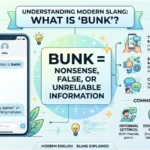
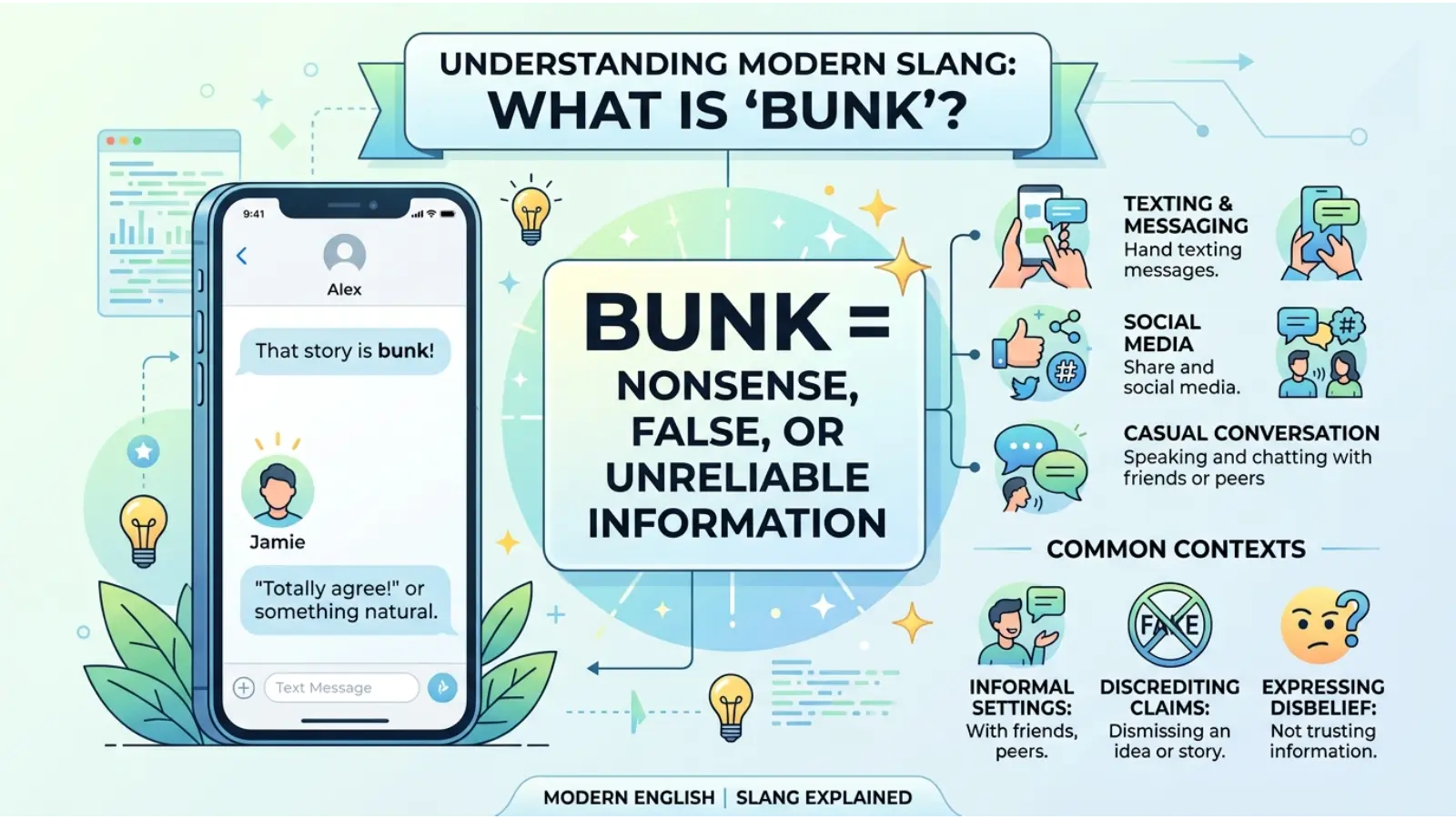
In everyday texting, social media, and casual conversations, “bunk” often means nonsense, something untrue, or something that is not worth believing.
For example, if someone says, “That story is bunk,” they mean the story is false, silly, or unreliable.
You may also see “bunk” used in phrases such as “bunk off,” especially in British English, where it means to skip school, work, or another responsibility. Because the word can have different meanings, context is important.
Quick Answer
Bunk meaning slang usually refers to nonsense, false information, or something considered worthless or untrue. In British slang, “bunk off” can also mean to skip school or work.
What Does Bunk Mean in Text?
In texting and informal conversations, bunk commonly means nonsense, rubbish, or something that is not true.
If someone calls an idea or statement “bunk,” they are saying they do not believe it or think it has any real value.
Examples
- “That excuse is bunk.” → That excuse is nonsense.
- “His explanation was complete bunk.” → His explanation was not believable.
- “Don’t listen to that. It’s bunk.” → Don’t believe it; it is false or silly.
The word is usually informal, so you are more likely to see it in casual conversations than in formal writing.
Bunk Full Form and Definition
People sometimes search for the “bunk full form” or ask “what does bunk stand for?”
Unlike many texting abbreviations, bunk does not have a standard full form. It is an ordinary English word that developed additional informal and slang meanings over time.
Depending on the context, bunk can mean:
- Nonsense
- False information
- Something worthless
- A lie or exaggerated claim
- A bed or sleeping space
- Skipping school or work when used in “bunk off”
So, the meaning cannot always be understood from the word alone.
Bunk Meaning in Different Contexts
The meaning of bunk changes according to the situation.
1. Bunk Meaning “Nonsense”
This is one of the most common informal meanings.
Example:
“That theory is bunk.”
Here, the speaker means the theory is nonsense or has no credibility.
2. Bunk Meaning “False”
Someone may use “bunk” to describe information they believe is untrue.
Example:
“The article was full of bunk.”
This means the article contained false or unreliable claims.
3. Bunk as a Bed
“Bunk” is also a normal English word for a narrow bed, especially one found on a ship, train, dormitory, hostel, or similar place.
Example:
“I slept on the top bunk.”
This meaning is not slang.
4. “Bunk Off” Meaning Skip
In British informal English, “bunk off” means to leave or avoid school, work, or another duty without permission.
Example:
“The students bunked off school.”
This means the students skipped school.
Is Bunk Rude, Offensive, or Neutral?
Bunk is generally not offensive. However, its tone can be dismissive.
If you tell someone, “Your idea is bunk,” you are directly saying that their idea is nonsense. The word itself is not a serious insult, but the statement may sound disrespectful.
Its tone depends on the situation:
| Use | Tone |
|---|---|
| “That claim is bunk.” | Critical |
| “This whole story is bunk.” | Dismissive |
| “I slept on the bunk.” | Neutral |
| “They bunked off school.” | Informal |
| “Don’t give me that bunk.” | Annoyed |
Where Is Bunk Commonly Used?
You may encounter bunk in:
- Text messages
- Social media comments
- Online discussions
- Casual conversations
- British English
- Informal American English
- Books and movies
- Discussions about false claims
The phrase “bunk off” is particularly associated with British informal speech.
The meaning “nonsense” can be understood more broadly in English, although it may sound somewhat old-fashioned or less common than words such as “nonsense,” “rubbish,” or “BS.”
Bunk Meaning Slang: Real-Life Conversation Examples
Friendly Conversation
Alex: “Tom says he can finish the project in ten minutes.”
Sam: “That sounds like bunk!”
Here, “bunk” means the claim sounds unrealistic or unbelievable.
Casual Conversation
A: “Did you hear that drinking coffee makes you grow taller?”
B: “That’s bunk.”
The speaker thinks the information is nonsense.
Argumentative Conversation
A: “Your explanation doesn’t make sense.”
B: “It’s not bunk. I have proof.”
Here, one person uses “bunk” to reject the other person’s claim.
British School Context
A: “Where were you yesterday?”
B: “I bunked off school.”
Here, bunked off means skipped school.
Sleeping Context
A: “Where are you sleeping?”
B: “I’m taking the bottom bunk.”
Here, “bunk” simply means a bed.
Emotional and Psychological Meaning of Bunk
When someone calls something “bunk,” they are usually expressing doubt, disbelief, annoyance, or rejection.
For example:
“I think all those promises are bunk.”
The speaker may feel disappointed and no longer trust the promises.
Similarly:
“That excuse is bunk.”
This communicates skepticism and suggests that the speaker does not accept the explanation.
The emotional meaning therefore comes mainly from tone and context, rather than from the word itself.
Origin and Background of the Slang
The word bunk has a long history in English. Its meanings connected with a bed or sleeping place developed separately from its informal meaning of nonsense.
The “nonsense” sense is commonly associated with “bunkum” or “buncombe,” a word that became associated with meaningless political speech. Over time, “bunk” developed as a shorter informal term for nonsense or empty talk.
This history helps explain why someone can say:
“That is just bunk.”
and mean:
“That is just meaningless or unreliable talk.”
Bunk vs. Similar Slang Terms
Several words can have a meaning similar to bunk, but they are not always interchangeable.
| Term | Meaning | Tone |
|---|---|---|
| Bunk | Nonsense or false information | Informal |
| BS | Nonsense or something untrue | Very informal |
| Rubbish | Nonsense or something worthless | Informal |
| Hogwash | Complete nonsense | Informal, sometimes humorous |
| Nonsense | Something unreasonable or untrue | Neutral |
| Fake | Not genuine or authentic | Casual/common |
Bunk vs. BS
“BS” is much more informal and can be considered mildly vulgar because it comes from a profanity.
Bunk is generally safer in ordinary conversation.
Bunk vs. Rubbish
“Rubbish” is especially common in British English and can mean nonsense, poor quality, or actual waste.
Bunk vs. Fake
“Fake” usually means something is not genuine. “Bunk” focuses more on the idea that something is nonsense, unreliable, or untrue.
When Should You Use Bunk?
You can use bunk when speaking casually with people who understand informal English.
Good situations include:
- Casual conversations
- Informal messages
- Social media discussions
- Talking about questionable claims
- Friendly debates
For example:
“I think that rumor is bunk.”
This is informal but understandable.
When Should You Avoid It?
Avoid “bunk” when you need very precise or formal language.
For example, instead of:
“The report is bunk.”
a professional writer might say:
“The report contains inaccurate information.”
This sounds clearer and more professional.
Polite Alternatives to Bunk
If you want to disagree without sounding harsh, try:
- “I don’t think that’s accurate.”
- “I’m not sure that’s true.”
- “That information may be incorrect.”
- “I don’t think the claim is reliable.”
- “There may be some misinformation there.”
- “I have doubts about that.”
These alternatives work better in professional or sensitive conversations.
Why Do People Use Bunk?
People use slang and informal words because they make communication:
- Shorter
- More expressive
- More conversational
- More humorous
- Easier among friends
Calling something “bunk” is a quick way to show skepticism without giving a long explanation.
Instead of saying:
“I believe that statement is completely unreliable and unsupported.”
someone might simply say:
“That’s bunk.”
The shorter version has a stronger casual feel.
Impact of Using Bunk in Communication
The word can make a conversation sound more relaxed, but it can also make your response sound dismissive.
Compare:
Soft:
“I don’t think that’s accurate.”
Stronger:
“That sounds like bunk.”
The second sentence clearly communicates disbelief. Therefore, consider your relationship with the person and the situation before using it.
Is Bunk Safe for Social Media?
Yes. “Bunk” is generally safe for social media because it is not normally considered a profanity or offensive slur.
However, using it to describe someone’s opinion can start an argument.
For example:
“Your post is bunk.”
may sound insulting even though the word itself is not offensive.
A softer alternative would be:
“I don’t think the information in this post is accurate.”
Common Misunderstandings About Bunk
Misunderstanding 1: Bunk Is Always Slang
Not necessarily. Bunk can simply mean a bed.
“She sleeps on the top bunk.”
That is a standard English usage.
Misunderstanding 2: Bunk Always Means “Lie”
Not exactly. It can mean nonsense or unreliable information, but it does not always mean someone deliberately lied.
Misunderstanding 3: Bunk Means the Same Thing Everywhere
No. “Bunk off” has a specific informal meaning, especially in British English, while “bunk” meaning nonsense has broader usage.
Variations and Types of Bunk
Here are some common forms:
Bunk
Meaning: nonsense or false information.
“That story is bunk.”
Bunk Off
Meaning: skip school, work, or another responsibility.
“They bunked off early.”
Bunked Off
Past tense of “bunk off.”
“He bunked off school yesterday.”
Bunk Bed
A bed arrangement with one bed above another.
“The children share a bunk bed.”
These expressions should not automatically be treated as the same slang meaning.
How to Respond When Someone Uses Bunk
Your response depends on what the person means.
If They Say Your Claim Is Bunk
You could respond:
“Why do you think it’s false?”
or:
“I have a source that supports it.”
If They Say Something Is Bunk as a Joke
You can respond casually:
“Haha, maybe you’re right.”
If They Say They Bunked Off
You might ask:
“You skipped school?”
The surrounding conversation usually makes the meaning clear.
Regional and Cultural Usage
The word bunk appears in several varieties of English, but certain uses are more regional.
The expression “bunk off” is strongly associated with British informal English, particularly when talking about skipping school or work.
In American English, people may be more likely to say:
- “skip school”
- “cut class”
- “ditch work”
- “skip work”
Meanwhile, bunk meaning nonsense can be understood in both British and American English, although it may sound somewhat dated or less common to some speakers.
FAQs About Bunk Meaning Slang
1. What does bunk mean in slang?
In slang or informal English, bunk can mean nonsense, false information, or something considered worthless or unbelievable.
2. What does bunk stand for?
Bunk does not have a standard full form. It is an English word with several meanings, including slang meanings.
3. Is bunk a bad word?
No. Bunk is generally not a swear word or offensive term. However, calling someone’s statement “bunk” can sound dismissive.
4. What does “bunk off” mean?
In British informal English, “bunk off” means to skip school, work, or another responsibility without permission.
5. Does bunk mean fake?
It can describe something that is false, unreliable, or nonsensical, but “fake” and “bunk” are not exact synonyms.
6. Does bunk mean a bed?
Yes. In standard English, a bunk can mean a narrow bed, especially on a ship, in a dormitory, or as part of a bunk bed.
Conclusion
Understanding bunk meaning slang is easier when you look at the context. In informal English, bunk commonly means nonsense, unreliable information, or something that is not worth believing. For example, “That story is bunk” means the speaker thinks the story is nonsense or untrue.
However, bunk can also have completely different meanings. A bunk can be a bed, while “bunk off” can mean skipping school or work, especially in British English.
The word is generally safe and not offensive, but it can sound dismissive when used to reject someone’s opinion. When you need to sound polite or professional, phrases such as “I don’t think that’s accurate” or “That information may be incorrect” are better choices.
Ultimately, the bunk meaning slang depends on the words around it, the speaker’s tone, and the regional variety of English being used.