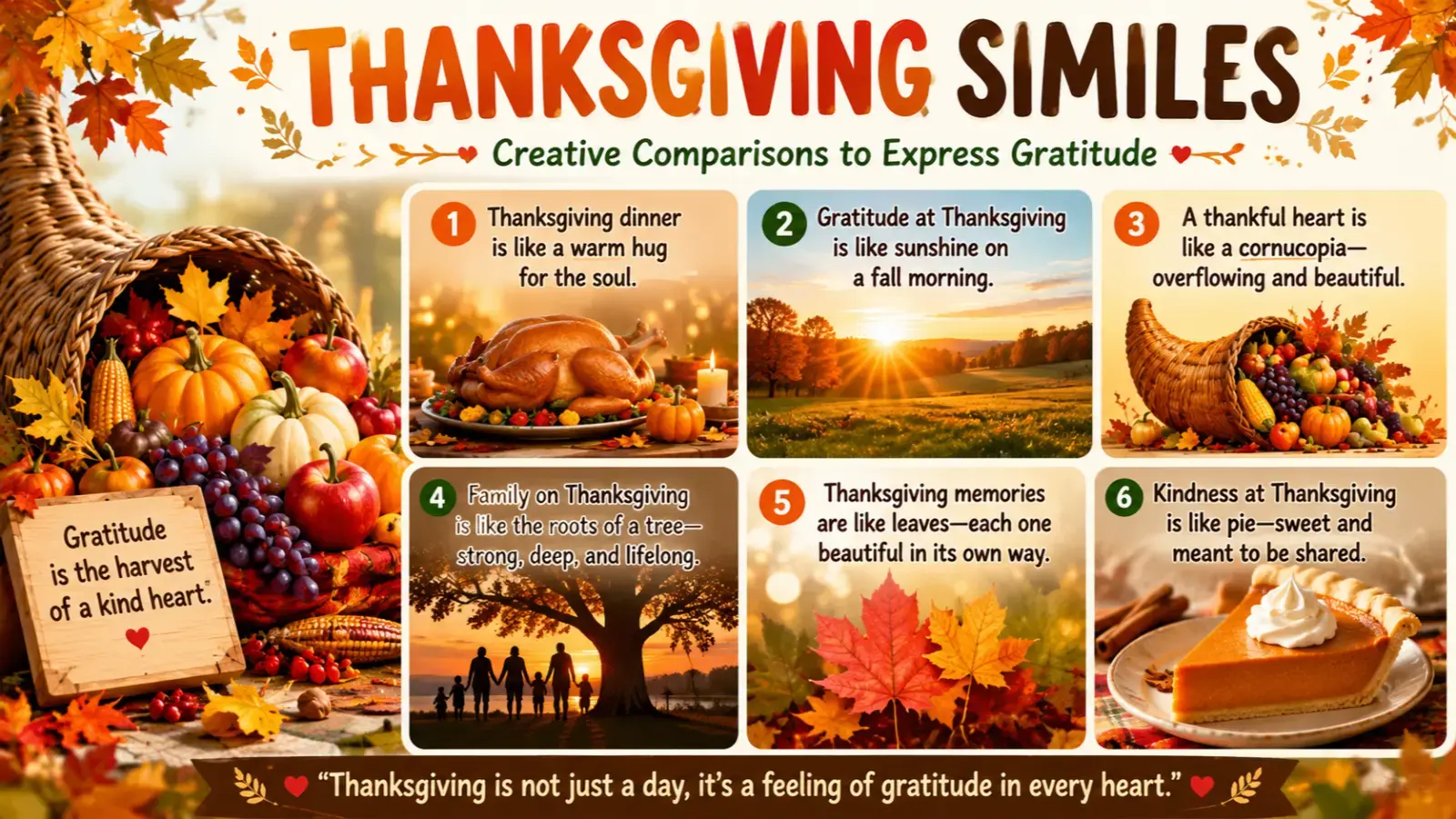
Thanksgiving is filled with warm meals, grateful hearts, family traditions, and memorable moments. Whether you’re writing a story, crafting a poem, preparing a speech, or simply adding color to your conversations, Thanksgiving similes can make your descriptions more vivid and meaningful. A simile compares two different things using the words “like” or “as.” Good similes help readers picture a scene, feel an emotion, or better understand an idea. In this guide, you’ll discover original Thanksgiving similes, learn why they work, and see how to use them naturally in different kinds of writing.
Quick Answer
Thanksgiving similes are comparisons that use “like” or “as” to describe the warmth, gratitude, food, family gatherings, traditions, and emotions associated with Thanksgiving. They make writing more expressive, memorable, and engaging.
Why Thanksgiving Is Perfect for Similes
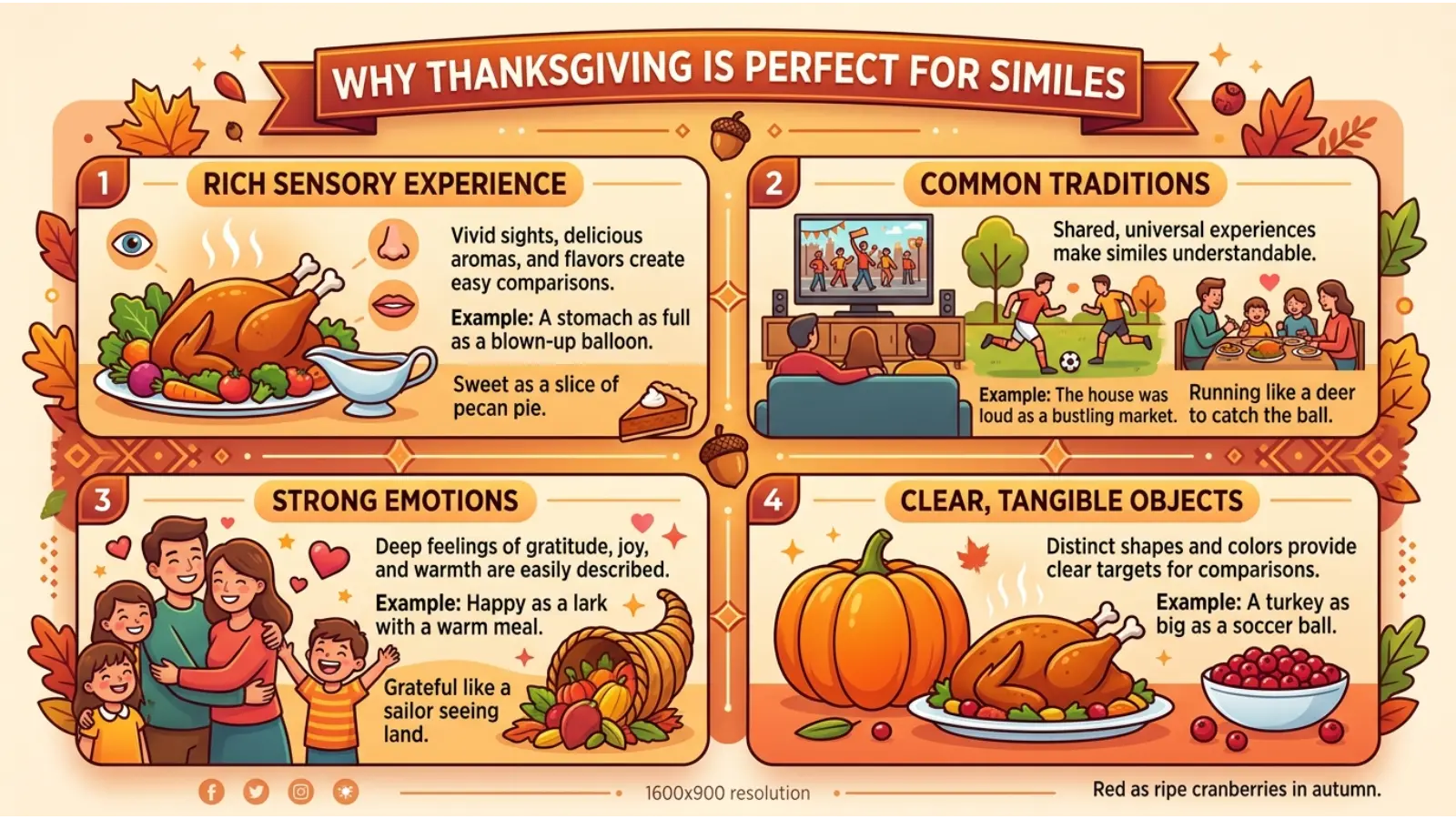
Thanksgiving naturally combines emotions, traditions, colors, sounds, and flavors. These rich details provide endless opportunities for creative comparisons.
Writers often describe:
- Family reunions
- Gratitude
- Autumn scenery
- Holiday meals
- Cozy homes
- Sharing and generosity
- Celebration and togetherness
Strong similes help readers experience these moments rather than simply read about them.
Original Thanksgiving Similes
Like a Fireplace Welcoming Winter
Meaning
Describes comforting warmth and kindness.
Example Sentences
- Grandma smiled like a fireplace welcoming winter.
- The family’s embrace felt like a fireplace welcoming winter.
Writing Effect
Creates emotional warmth.
Best For
Family stories and holiday essays.
Writing Tip
Pair it with sensory details like warmth, soft light, or comforting smells.
As Full as a Harvest Moon
Meaning
Feeling completely satisfied after a meal.
Examples
- We were as full as a harvest moon after dinner.
- Everyone laughed, as full as a harvest moon.
Conversation
“I’m as full as a harvest moon.”
Storytelling
The children leaned back, as full as a harvest moon after seconds.
Like Cinnamon Floating Through the House
Meaning
Represents comforting memories.
Examples
- Her kindness spread like cinnamon floating through the house.
- The holiday spirit arrived like cinnamon floating through the house.
Writing Purpose
Creates sensory imagery.
As Bright as Cranberries in Autumn
Meaning
Describes cheerful colors or personalities.
Examples
- Her scarf was as bright as cranberries in autumn.
- Their laughter sounded as bright as cranberries in autumn.
Poetry
Joy bloomed as bright as cranberries in autumn.
Like Leaves Dancing Before Sunset
Meaning
Gentle movement and happiness.
Examples
- The children ran like leaves dancing before sunset.
- Their excitement fluttered like leaves dancing before sunset.
As Warm as Fresh Pumpkin Bread
Meaning
Comfort, affection, and hospitality.
Examples
- His welcome was as warm as fresh pumpkin bread.
- Their friendship remained as warm as fresh pumpkin bread.
Like Steam Rising from Homemade Soup
Meaning
Quiet comfort and peace.
Examples
- Hope drifted like steam rising from homemade soup.
- The conversation settled like steam rising from homemade soup.
As Gentle as Falling Maple Leaves
Meaning
Softness and calm.
Examples
- Her voice was as gentle as falling maple leaves.
- The evening arrived as gentle as falling maple leaves.
Like Butter Melting on Warm Bread
Meaning
Something happens smoothly.
Examples
- Their conversation flowed like butter melting on warm bread.
- Forgiveness came like butter melting on warm bread.
As Golden as Thanksgiving Sunset
Meaning
Beauty and peaceful endings.
Examples
- The fields looked as golden as Thanksgiving sunset.
- Her memories glowed as golden as Thanksgiving sunset.
Like a Table Filled with Stories
Meaning
Rich in memories and conversation.
Examples
- Their home felt like a table filled with stories.
- Every visit became like a table filled with stories.
As Sweet as Homemade Apple Pie
Meaning
Kind and lovable.
Examples
- She remained as sweet as homemade apple pie.
- His words were as sweet as homemade apple pie.
Like Autumn Wind Carrying Laughter
Meaning
Joy spreading naturally.
Examples
- Happiness arrived like autumn wind carrying laughter.
- Good news traveled like autumn wind carrying laughter.
As Cozy as a Wool Blanket
Meaning
Comfort and security.
Examples
- The cabin felt as cozy as a wool blanket.
- Thanksgiving evening was as cozy as a wool blanket.
Like Candles Glowing at Dusk
Meaning
Quiet hope.
Examples
- Their smiles glowed like candles at dusk.
- Gratitude shined like candles glowing at dusk.
As Rich as Homemade Gravy
Meaning
Deep flavor or meaningful emotion.
Examples
- The memories were as rich as homemade gravy.
- Their traditions were as rich as homemade gravy.
Like Cornfields Waving Goodbye to Summer
Meaning
Seasonal transition.
Examples
- Autumn arrived like cornfields waving goodbye to summer.
- Change came like cornfields waving goodbye to summer.
As Colorful as an Autumn Basket
Meaning
Variety and celebration.
Examples
- The festival looked as colorful as an autumn basket.
- Their decorations were as colorful as an autumn basket.
Like Family Around One Table
Meaning
Unity and belonging.
Examples
- The community gathered like family around one table.
- Their friendship grew like family around one table.
As Thankful as Morning After Rain
Meaning
Deep gratitude.
Examples
- She felt as thankful as morning after rain.
- We stood as thankful as morning after rain.
Like Pie Cooling on the Window
Meaning
Patience and anticipation.
Examples
- Excitement waited like pie cooling on the window.
- Dreams rested like pie cooling on the window.
As Peaceful as an Empty Cornfield at Dawn
Meaning
Stillness.
Examples
- The morning felt as peaceful as an empty cornfield at dawn.
- His thoughts became as peaceful as an empty cornfield at dawn.
Like Oak Trees Holding Autumn Sky
Meaning
Strength and reliability.
Examples
- Grandpa stood like oak trees holding autumn sky.
- Their promises remained like oak trees holding autumn sky.
As Generous as a Shared Feast
Meaning
Kindness and giving.
Examples
- Her heart was as generous as a shared feast.
- The neighbors were as generous as a shared feast.
Like Warm Tea on a Cold Evening
Meaning
Comforting presence.
Examples
- Her advice arrived like warm tea on a cold evening.
- The letter felt like warm tea on a cold evening.
As Joyful as Children Gathering Leaves
Meaning
Pure excitement.
Examples
- They danced as joyful as children gathering leaves.
- The celebration became as joyful as children gathering leaves.
Like a Porch Filled with Evening Conversations
Meaning
Friendship and connection.
Examples
- Their reunion felt like a porch filled with evening conversations.
- The neighborhood welcomed everyone like a porch filled with evening conversations.
As Bright as Fresh Autumn Apples
Meaning
Youthful energy.
Examples
- His ideas were as bright as fresh autumn apples.
- Their smiles stayed as bright as fresh autumn apples.
Like Gratitude Blooming After Rain
Meaning
Growing appreciation.
Examples
- Hope grew like gratitude blooming after rain.
- Confidence returned like gratitude blooming after rain.
As Timeless as Grandma’s Thanksgiving Recipe
Meaning
Tradition and lasting value.
Examples
- Their friendship was as timeless as Grandma’s Thanksgiving recipe.
- Family traditions remained as timeless as Grandma’s Thanksgiving recipe.
Why These Similes Work
Effective Thanksgiving similes connect familiar holiday experiences with emotions readers instantly recognize.
Instead of saying someone was happy, compare their joy to something readers can picture, hear, smell, or taste. This transforms ordinary writing into memorable imagery.
Professional writers often rely on sensory experiences because readers remember scenes they can imagine.
Related Literary Devices
Metaphor
Unlike similes, metaphors make a direct comparison without using like or as.
Simile
Her smile was like autumn sunshine.
Metaphor
Her smile was autumn sunshine.
Imagery
Imagery appeals to the senses.
Thanksgiving naturally provides vivid imagery through:
- Roasting turkey
- Pumpkin spice
- Crunching leaves
- Crackling fireplaces
- Golden sunsets
Combining imagery with similes creates stronger descriptions.
Personification
Personification gives human qualities to non-human things.
Example:
“The autumn wind whispered through the trees.”
Pairing personification with similes can make scenes feel alive.
Symbolism
Many Thanksgiving elements symbolize larger ideas.
- Harvest = abundance
- Bread = sharing
- Fire = warmth
- Leaves = change
- Table = family
Using these symbols thoughtfully can deepen your writing.
How to Create Your Own Thanksgiving Similes
Follow these simple steps:
Step 1: Choose One Holiday Detail
Examples:
- Pie
- Turkey
- Corn
- Family dinner
- Candles
- Leaves
Step 2: Choose an Emotion
Examples:
- Gratitude
- Comfort
- Joy
- Excitement
- Nostalgia
- Peace
Step 3: Find a Shared Quality
Ask yourself:
- What do both things have in common?
- Is it warmth?
- Brightness?
- Calmness?
- Generosity?
Step 4: Write the Comparison
Use:
- Like…
- As…as…
Creative Exercise
Write five Thanksgiving similes describing:
- A family reunion
- A delicious meal
- Autumn weather
- Gratitude
- Childhood memories
Then revise each one by replacing ordinary words with sensory details.
Common Mistakes to Avoid
Using Overused Comparisons
Fresh comparisons leave a stronger impression than familiar clichés.
Mixing Images
Keep your comparison focused on one clear idea instead of combining unrelated images.
Forcing the Simile
A comparison should feel natural. If it distracts the reader, simplify it.
Confusing Similes and Metaphors
Remember that similes use like or as, while metaphors do not.
Ignoring the Senses
The strongest similes appeal to sight, sound, smell, taste, or touch.
Frequently Asked Questions
What are Thanksgiving similes?
They are comparisons using like or as that describe Thanksgiving traditions, food, gratitude, family, or autumn scenes.
Why should I use Thanksgiving similes?
They make writing more descriptive, emotional, and memorable.
Are Thanksgiving similes useful in poetry?
Yes. They add imagery, rhythm, and emotional depth to poems.
Can children use Thanksgiving similes?
Absolutely. They are an excellent way to build descriptive writing skills in school assignments and creative projects.
What’s the difference between a Thanksgiving simile and a metaphor?
A simile uses like or as, while a metaphor makes a direct comparison.
How can I make my similes sound original?
Draw inspiration from your own Thanksgiving experiences, focus on sensory details, and avoid relying on familiar expressions.
Can Thanksgiving similes be used in speeches?
Yes. They make holiday speeches, family toasts, and presentations more engaging and heartfelt.
Conclusion
Thanksgiving offers countless moments worth describing, from shared meals to heartfelt gratitude and colorful autumn landscapes. Thoughtful similes help transform those moments into vivid scenes that readers can easily imagine and emotionally connect with. The best Thanksgiving similes come from careful observation rather than familiar expressions. Notice the warmth of a crowded table, the scent of fresh baking, the sound of laughter, or the glow of an autumn evening. Those personal details will inspire comparisons that feel authentic and memorable. Keep experimenting with new ideas, revise your favorite comparisons, and let each holiday season inspire richer, more expressive writing.

I am Helena Frost, a writer captivated by the beauty of language and the art of comparison. Through my words, I explore the world by turning ordinary moments into vivid similes and reflections. I enjoy crafting phrases that spark imagination, evoke emotion, and linger in the mind. My writing celebrates the subtle connections between people, nature, and the stories we live. For me, every sentence is an opportunity to reveal the extraordinary in the everyday.