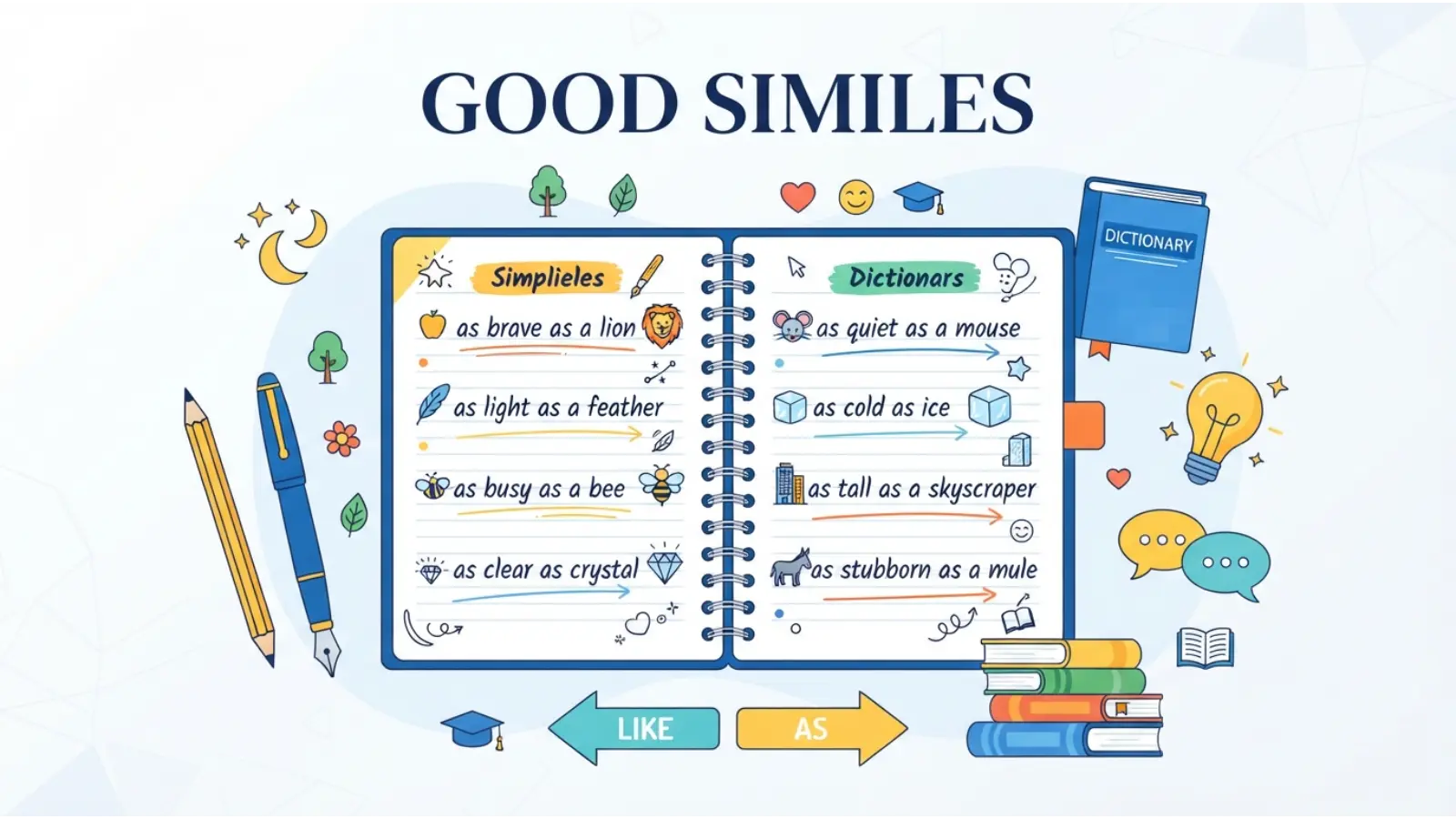
A good simile does more than compare two things. It helps readers see, hear, or feel an idea in a fresh way. Instead of simply saying someone is happy or a place is quiet, a well-crafted simile paints a memorable picture that stays with the reader. Writers use similes in stories, poems, speeches, essays,and conversations, and even advertising because they make language more engaging and expressive. The best good similes feel natural rather than forced, creating imagery that readers instantly understand.This guide explores original similes, explains why they work, and shows you how to create your own with confidence.
Quick Answer
Good similes compare two different things using “like” or “as” to create vivid imagery. Strong similes are clear, original, and meaningful. They help readers imagine emotions, actions, and descriptions more easily while making writing more memorable.
What Makes a Simile Good?
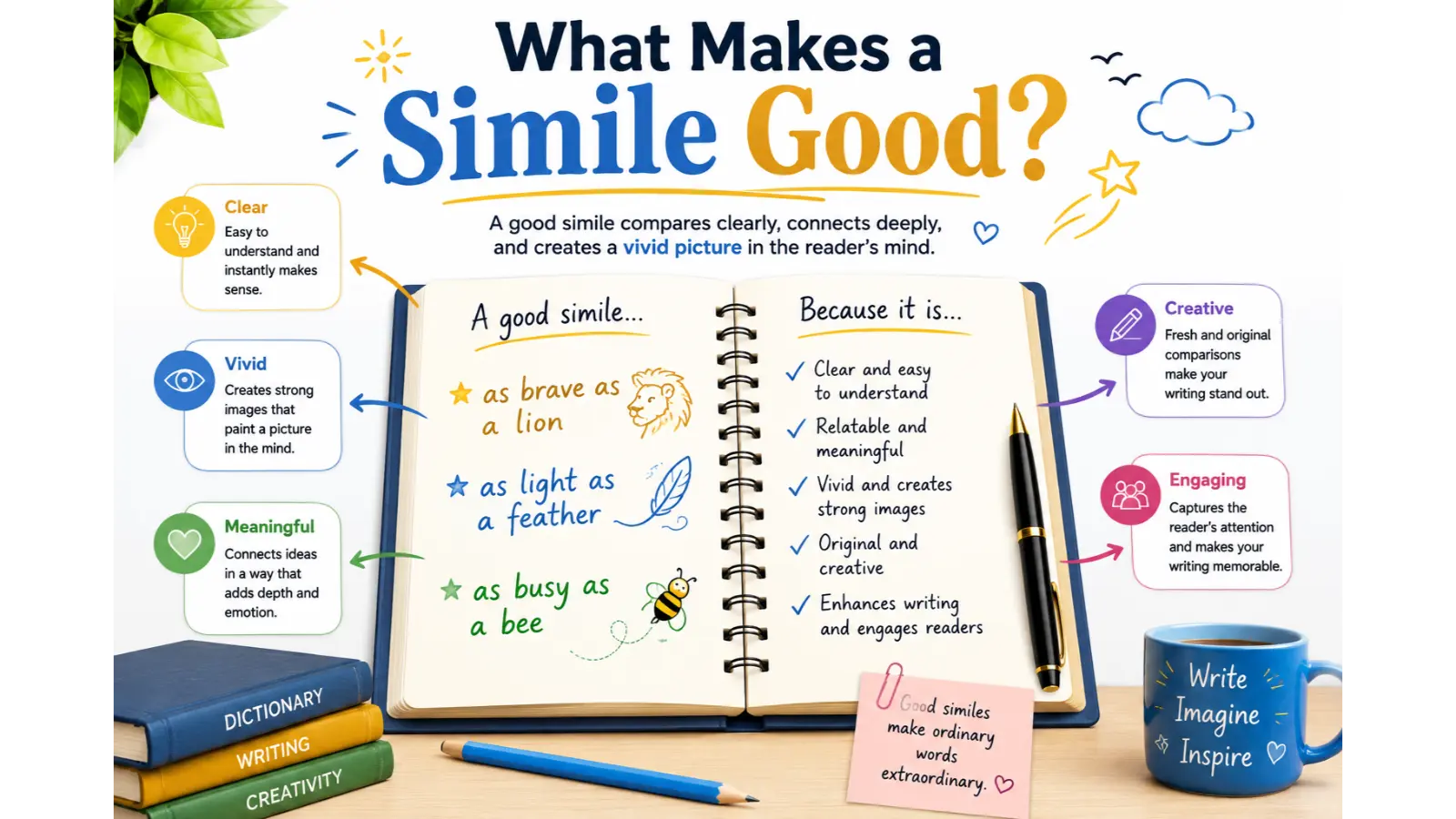
Not every comparison improves a sentence. A good simile does three important things.
- It creates a clear mental picture.
- It matches the tone of the writing.
- It feels fresh instead of overused.
Compare these examples:
Weak: The room was as quiet as a library.
Stronger: The room rested like snow before sunrise.
The second example surprises the reader while still communicating peaceful silence.
30 Original Good Similes with Examples
1. Bright like the first lantern at dusk
Meaning: Brings hope after darkness.
Formal: Her solution was bright like the first lantern at dusk.
Story: The tiny cottage glowed bright like the first lantern at dusk.
2. Calm as a lake before dawn
Meaning: Perfect peace.
Conversation: She stayed calm as a lake before dawn during the interview.
3. Curious like a sparrow exploring fresh footprints
Meaning: Eager to discover.
Writing Tip: Great for children and adventure stories.
4. Gentle as falling flower petals
Meaning: Kind and soft.
Poetry: His words drifted gentle as falling flower petals.
5. Brave like a lighthouse facing every storm
Meaning: Steady courage.
Storytelling: She stood brave like a lighthouse facing every storm.
6. Quick as rain finding a river
Meaning: Fast and effortless.
7. Quiet like moonlight on fresh snow
Meaning: Deep silence.
8. Cheerful as birds greeting the sunrise
Meaning: Full of happiness.
9. Strong like roots beneath an old oak
Meaning: Hidden strength.
10. Patient as a mountain waiting for spring
Meaning: Enduring without complaint.
11. Hopeful like a seed beneath warm soil
Meaning: Ready for growth.
12. Sharp as winter stars
Meaning: Intelligent or observant.
13. Warm like sunlight through a window
Meaning: Comforting and welcoming.
14. Steady as a drummer’s rhythm
Meaning: Reliable and consistent.
15. Free like a kite catching fresh wind
Meaning: Joyful independence.
16. Smooth as polished river stones
Meaning: Graceful and effortless.
17. Gentle like morning mist
Meaning: Soft and peaceful.
18. Joyful as children chasing bubbles
Meaning: Pure excitement.
19. Clear as fresh mountain air
Meaning: Easy to understand.
20. Bold like lightning across the horizon
Meaning: Powerful and unforgettable.
21. Graceful as a swan gliding across still water
Meaning: Elegant movement.
22. Honest like an open window
Meaning: Transparent and sincere.
23. Fresh as leaves after spring rain
Meaning: New beginnings.
24. Clever like a fox reading footprints
Meaning: Thoughtful problem-solving.
25. Soft as candlelight
Meaning: Warm and comforting.
26. Determined like water carving stone
Meaning: Quiet persistence.
27. Colorful as autumn leaves dancing together
Meaning: Full of life.
28. Gentle like feathers floating on the breeze
Meaning: Delicate movement.
29. Confident as an eagle riding the wind
Meaning: Self-assured.
30. Peaceful like stars watching over the night
Meaning: Calm and reassuring.
Why Original Similes Matter
Readers notice comparisons they’ve never encountered before. Original similes encourage imagination rather than relying on familiar expressions. Instead of repeating phrases like “busy as a bee,” look for comparisons inspired by nature, daily life, weather, music, travel, or personal experiences. Fresh imagery makes your writing feel authentic.
How Professional Writers Create Strong Similes
Experienced writers rarely begin with the comparison itself.
Instead, they ask:
- What feeling should the reader experience?
- What image naturally creates that feeling?
- Is the comparison specific enough?
- Does it fit the character or setting?
Choosing meaningful details creates stronger imagery than choosing unusual words.
How to Create Your Own Good Similes
Creating original similes becomes easier with practice.
Step 1: Identify the main quality
Think about the trait you want to describe.
Examples:
- Fast
- Quiet
- Happy
- Nervous
- Strong
Step 2: Brainstorm matching images
Ask yourself:
“What naturally reminds me of this feeling?”
For quiet, you might think of:
- Snowfall
- Moonlight
- Empty beaches
- Sleeping forests
Step 3: Build the comparison
Use like or as.
Example:
The hallway was quiet like moonlight settling over empty fields.
Step 4: Read it aloud
If it sounds awkward or distracting, simplify it.
Writing Tips for Better Similes
Focus on One Clear Image
Avoid combining several comparisons in one sentence.
Weak:
She was like sunshine, a lion, and a river.
Better:
She was steady like a river that never stopped flowing.
Avoid Overused Comparisons
Readers have seen these countless times:
- Busy as a bee
- Light as a feather
- Cold as ice
- White as snow
Try finding comparisons from your own experiences instead.
Match the Mood
A humorous scene deserves playful imagery.
A serious story benefits from thoughtful, subtle comparisons.
The tone should remain consistent.
Similes and Other Literary Devices
Metaphor
A metaphor states one thing is another.
Metaphor: Time is a river.
Simile: Time flows like a river.
Imagery
Imagery appeals to the senses.
A strong simile often strengthens imagery by making descriptions easier to picture.
Personification
Personification gives human qualities to non-human things.
Example:
The wind whispered through the trees.
Combined with similes, personification creates even richer descriptions.
Hyperbole
Hyperbole exaggerates for emphasis.
A simile can include exaggeration, but it should still create a believable image.
Creative Practice Exercises
Exercise 1
Describe happiness without using the word happy.
Create three similes inspired by:
Exercise 2
Look around your room.
Choose five objects.
Write one simile inspired by each object.
Exercise 3
Rewrite a simple sentence.
Original:
The dog ran quickly.
Improved:
The dog raced like wind slipping through tall grass.
Common Mistakes to Avoid
Using Too Many Similes
One strong comparison is usually enough.
Too many can overwhelm readers.
Mixing Images
Avoid comparisons that clash.
Example:
Her smile was like sunshine sailing across thunder.
The imagery feels confusing because the ideas compete.
Copying Familiar Expressions
Original writing leaves a stronger impression than recycled comparisons.
Confusing Metaphors and Similes
Remember:
- Similes use like or as.
- Metaphors do not.
Choosing Complicated Comparisons
Simple, meaningful imagery usually works better than comparisons that require lengthy explanations.
Frequently Asked Questions
What is a good simile?
A good simile creates a fresh, clear comparison using like or as that helps readers imagine an idea more vividly.
Why are similes important in writing?
They make descriptions more engaging, memorable, and emotionally expressive.
Can similes be used in formal writing?
Yes. Essays, speeches, and articles often use thoughtful similes to clarify complex ideas and keep readers interested.
How do I avoid cliché similes?
Draw inspiration from your own observations, experiences, and surroundings instead of relying on common expressions.
What is the difference between a simile and a metaphor?
A simile compares using like or as, while a metaphor makes a direct comparison without those words.
Should every paragraph contain a simile?
No. Similes are most effective when used intentionally rather than frequently.
Conclusion
Good similes help readers experience your writing instead of simply reading it. The strongest comparisons are clear, original, and connected to the emotion or idea you want to express. Rather than searching for unusual words, focus on meaningful images that feel natural. As you observe everyday life more closely, you’ll discover countless opportunities to create similes that are uniquely your own.
I am Helena Frost, a writer captivated by the beauty of language and the art of comparison. Through my words, I explore the world by turning ordinary moments into vivid similes and reflections. I enjoy crafting phrases that spark imagination, evoke emotion, and linger in the mind. My writing celebrates the subtle connections between people, nature, and the stories we live. For me, every sentence is an opportunity to reveal the extraordinary in the everyday.