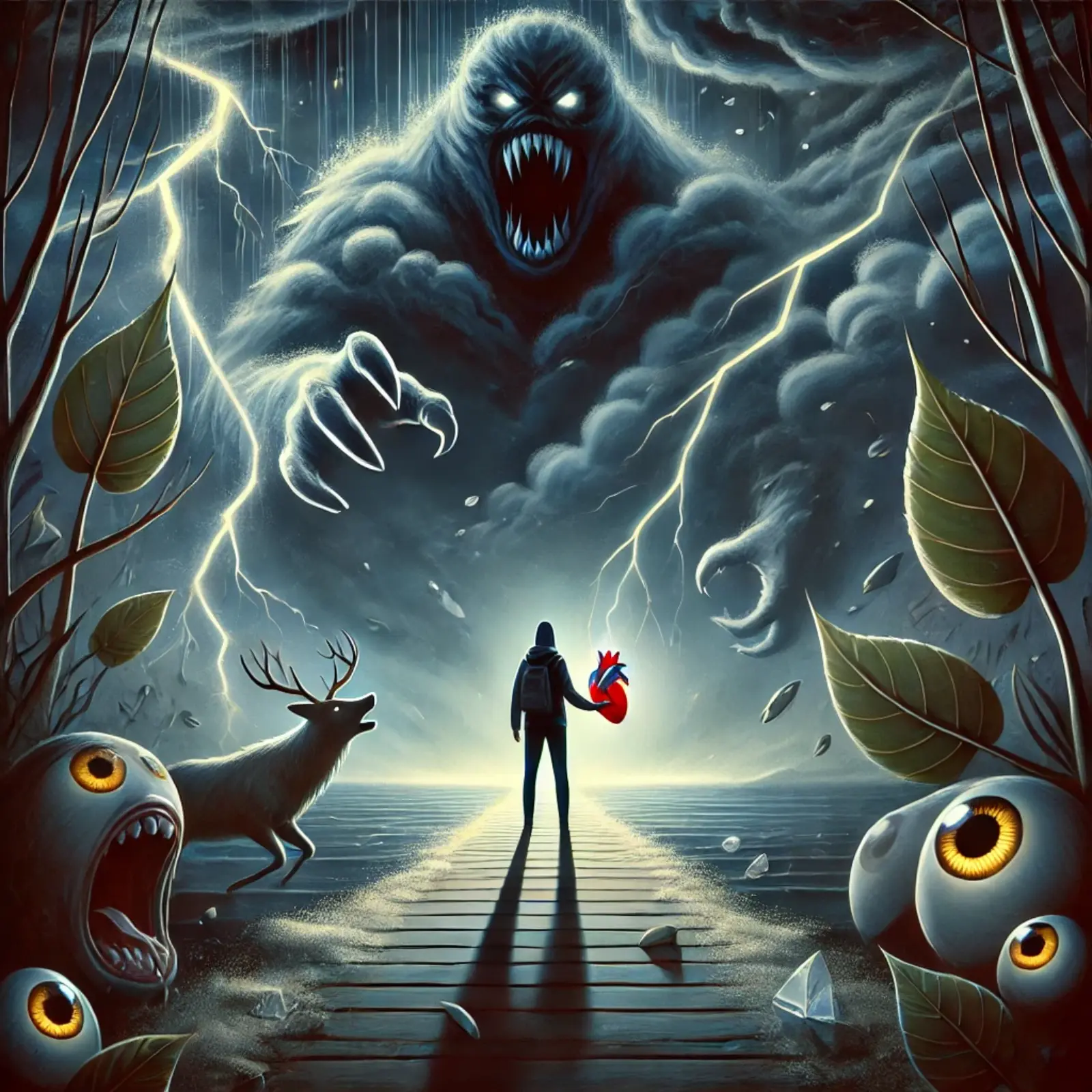
Fear is one of the most universal human emotions, and capturing it vividly in writing can transform ordinary storytelling into an immersive experience. Similes are a literary device that allows writers to express fear in relatable, tangible ways. By comparing fear to familiar sights, sounds, or sensations, writers can help readers feel the intensity of dread, suspense, or anxiety alongside their characters.
For example, describing someone as “as fearful as a rabbit in the headlights” immediately conveys vulnerability, tension, and heightened alertness. Similarly, fear can be depicted as “as chilling as a winter wind”, evoking a physical and emotional response simultaneously.
Whether in poetry, prose, or short stories, creative similes for fear give depth to characters’ experiences, elevate emotional resonance, and make narratives more memorable. In this guide, we will explore 30 unique and imaginative similes for fear, complete with examples, tips, and practical writing advice to help you craft compelling, fear-infused scenes.
Table of Contents
| # | Simile | Short Description |
|---|---|---|
| 1 | As fearful as a rabbit in the headlights | Sudden panic and vulnerability |
| 2 | As cold as a winter wind | Chilling, unsettling fear |
| 3 | As trembling as a leaf in a storm | Physical manifestation of fear |
| 4 | As shadowed as a moonless night | Fear rooted in darkness or the unknown |
| 5 | As stiff as a frozen statue | Paralysis due to terror |
| 6 | As jittery as a cat on a hot tin roof | Nervous, restless fear |
| 7 | As haunted as an abandoned house | Lingering, eerie dread |
| 8 | As tight as a drum | Internal tension and anxiety |
| 9 | As fleeting as a shadow | Fear that comes and goes suddenly |
| 10 | As sharp as a scream in the dark | Piercing, sudden fright |
| 11 | As hollow as an empty corridor | Loneliness and fearful emptiness |
| 12 | As choking as thick smoke | Suffocating, overwhelming fear |
| 13 | As shivering as a snowflake | Fragile, vulnerable fear |
| 14 | As restless as stormy seas | Agitation and inner turmoil |
| 15 | As lurking as a predator in the grass | Hidden, anticipatory fear |
| 16 | As quick as a startled deer | Instant reaction to danger |
| 17 | As tight-lipped as a terrified witness | Fear causing silence or suppression |
| 18 | As brittle as thin ice | Fear-induced fragility |
| 19 | As uneasy as a shadow at noon | Displacement and subtle anxiety |
| 20 | As echoing as empty halls | Fear magnified by isolation |
| 21 | As gripping as iron chains | Inescapable, suffocating fear |
| 22 | As sudden as a thunderclap | Shock and immediate panic |
| 23 | As watchful as a night owl | Fear creating hyper-awareness |
| 24 | As twisting as a labyrinth | Confusion and anxiety |
| 25 | As crawling as insects on skin | Creepy, visceral fear |
| 26 | As icy as a vampire’s stare | Cold, calculating fear |
| 27 | As pounding as a drum in the chest | Physical heartbeat response to terror |
| 28 | As clinging as morning mist | Lingering, subtle dread |
| 29 | As sharp-edged as shattered glass | Painful, piercing fear |
| 30 | As silent as a grave | Complete, paralyzing stillness |

1. As fearful as a rabbit in the headlights
Meaning: Fear that immobilizes and shocks the observer.
Example in Prose:
- Formal: The young soldier froze, as fearful as a rabbit in the headlights, unable to make a move as danger approached.
- Casual: I saw her as fearful as a rabbit in the headlights when the teacher called her name unexpectedly.
Example in Poetry:
Eyes wide, frozen in despair,
Like a rabbit caught unaware,
Heartbeats clash with the night’s harsh glare.
Tip/Use: Perfect for moments of sudden confrontation or panic. Use to show characters’ vulnerability.
2. As cold as a winter wind
Meaning: Fear that chills the body and mind.
Example in Prose:
- Formal: A sense of dread swept over him, as cold as a winter wind, chilling every thought.
- Casual: Walking down the dark alley, I felt as cold as a winter wind, wishing I had stayed home.
Example in Poetry:
Shadows crawl along the stone,
Fear bites deep, as cold as a winter wind.
Tip/Use: Evokes a physical and emotional response; great for suspenseful or horror scenes.
3. As trembling as a leaf in a storm
Meaning: Fear expressed through involuntary, visible shaking.
Example in Prose:
- Formal: She held the letter, as trembling as a leaf in a storm, afraid of its contents.
- Casual: He was as trembling as a leaf in a storm before his first performance.
Example in Poetry:
Fragile hands, a quivering fate,
As trembling as a leaf in a storm,
Awaiting what the dark may take.
Tip/Use: Ideal for physical depictions of fear, showing vulnerability and tension.
4. As shadowed as a moonless night
Meaning: Fear linked to the unknown, hidden, or unseen.
Example in Prose:
- Formal: The path ahead seemed endless, as shadowed as a moonless night, evoking deep unease.
- Casual: His thoughts were as shadowed as a moonless night, not knowing what to expect next.
Example in Poetry:
Darkened corners hide my plight,
As shadowed as a moonless night,
Fear whispers in absence of light.
Tip/Use: Use in psychological horror or mystery writing to heighten tension.

5. As stiff as a frozen statue
Meaning: Fear so intense it freezes a person physically and mentally.
Example in Prose:
- Formal: Confronted by the intruder, she stood as stiff as a frozen statue, unable to move or speak.
- Casual: When the dog lunged, I went as stiff as a frozen statue, wishing the ground would swallow me.
Example in Poetry:
Fear held me tight, unmoving and gray,
As stiff as a frozen statue, I could not sway.
Tip/Use: Use this simile to portray moments of complete immobility under terror or shock.
6. As jittery as a cat on a hot tin roof
Meaning: Nervous, restless, or high-strung fear.
Example in Prose:
- Formal: The student was as jittery as a cat on a hot tin roof before the exam results were posted.
- Casual: I felt as jittery as a cat on a hot tin roof waiting for the call back.
Example in Poetry:
My heart leaps, my mind on edge,
As jittery as a cat on a hot tin roof,
Each second stretches, a trembling pledge.
Tip/Use: Ideal for showing nervous anticipation or anxiety-driven restlessness.
7. As haunted as an abandoned house
Meaning: Lingering, eerie fear that seems to follow someone everywhere.
Example in Prose:
- Formal: Memories of the accident left him as haunted as an abandoned house.
- Casual: After the scary movie, I felt as haunted as an abandoned house all night.
Example in Poetry:
Shadows whisper in corners,
As haunted as an abandoned house,
My heart trembles with unseen mourners.
Tip/Use: Perfect for creating a ghostly, lingering, or psychological tension.
8. As tight as a drum
Meaning: Intense internal tension caused by fear.
Example in Prose:
- Formal: Her stomach knotted as tight as a drum when the results were announced.
- Casual: Before my first speech, my chest felt as tight as a drum.
Example in Poetry:
Every breath a constricted song,
As tight as a drum, my fear prolongs.
Tip/Use: Great for building suspense or showing anticipation and inner strain.
9. As fleeting as a shadow
Meaning: Fear that appears suddenly and vanishes quickly.
Example in Prose:
- Formal: His panic was as fleeting as a shadow, gone as soon as the truth emerged.
- Casual: The fright I felt when the phone rang was as fleeting as a shadow.
Example in Poetry:
A chill runs, then fades away,
As fleeting as a shadow, fear does not stay.
Tip/Use: Use for brief, transient fear or suspenseful moments.
10. As sharp as a scream in the dark
Meaning: Piercing, immediate terror.
Example in Prose:
- Formal: The warning shot echoed as sharp as a scream in the dark, jolting everyone.
- Casual: I jumped; the noise was as sharp as a scream in the dark!
Example in Poetry:
Darkness broken by a sudden cry,
As sharp as a scream in the dark,
Fear cuts deep, unseen by the eye.
Tip/Use: Best for sudden fright or shock in horror scenes.
11. As hollow as an empty corridor
Meaning: Fear amplified by isolation or emptiness.
Example in Prose:
- Formal: Walking alone, she felt as hollow as an empty corridor, each echo feeding anxiety.
- Casual: In the abandoned mall, it felt as hollow as an empty corridor.
Example in Poetry:
Silence stretches, walls confide,
As hollow as an empty corridor,
Fear drifts with the echoing tide.
Tip/Use: Effective for lonely or abandoned settings, enhancing psychological fear.
12. As choking as thick smoke
Meaning: Overwhelming fear that suffocates.
Example in Prose:
- Formal: Anxiety rose as choking as thick smoke, making it hard to breathe.
- Casual: Panic hit me as choking as thick smoke when I saw the spider.
Example in Poetry:
Breath is stolen, sight is blurred,
As choking as thick smoke, fear is stirred.
Tip/Use: Works well for intense, claustrophobic situations.
13. As shivering as a snowflake
Meaning: Fragile, delicate fear.
Example in Prose:
- Formal: Her hands were as shivering as a snowflake when opening the cursed book.
- Casual: I felt as shivering as a snowflake on that cold, dark night.
Example in Poetry:
Gentle tremors, whispers small,
As shivering as a snowflake, fear enthralls.
Tip/Use: Use when portraying delicate, almost poetic vulnerability.
14. As restless as stormy seas
Meaning: Agitation and inner turmoil caused by fear.
Example in Prose:
- Formal: Thoughts churned as restless as stormy seas, keeping sleep at bay.
- Casual: My mind was as restless as stormy seas before the exam.
Example in Poetry:
Waves of worry crash and roar,
As restless as stormy seas, fear implores.
Tip/Use: Ideal for anxiety, suspense, or long-lasting tension.
15. As lurking as a predator in the grass
Meaning: Hidden, anticipatory fear.
Example in Prose:
- Formal: Danger felt as lurking as a predator in the grass, ready to strike unseen.
- Casual: That eerie feeling was as lurking as a predator in the grass.
Example in Poetry:
Shadows twist, I sense the pass,
As lurking as a predator in the grass,
Fear creeps slow, silent and fast.
Tip/Use: Great for suspense or foreshadowing impending threat.
16. As quick as a startled deer
Meaning: Immediate reaction to fear.
Example in Prose:
- Formal: He jumped as quick as a startled deer when the window shattered.
- Casual: I ran as quick as a startled deer when the dog barked.
Example in Poetry:
Eyes wide, muscles tense,
As quick as a startled deer,
Fear ignites with sudden sense.
Tip/Use: Excellent for action-driven narratives or sudden scares.
17. As tight-lipped as a terrified witness
Meaning: Fear causing silence or suppression of words.
Example in Prose:
- Formal: He remained as tight-lipped as a terrified witness, unwilling to reveal anything.
- Casual: I was as tight-lipped as a terrified witness when mom asked who broke the vase.
Example in Poetry:
Silence coats the trembling lips,
As tight-lipped as a terrified witness,
Words vanish in fear’s eclipse.
Tip/Use: Use for suspense, secrecy, or fear-induced muteness.
18. As brittle as thin ice
Meaning: Fragile and vulnerable under pressure.
Example in Prose:
- Formal: Her confidence was as brittle as thin ice, ready to crack.
- Casual: I felt as brittle as thin ice when giving my presentation.
Example in Poetry:
One misstep, and all will fall,
As brittle as thin ice, fear enthralls.
Tip/Use: Perfect for depicting emotional fragility.
19. As uneasy as a shadow at noon
Meaning: Subtle, disorienting fear or discomfort.
Example in Prose:
- Formal: He felt as uneasy as a shadow at noon, like something was out of place.
- Casual: Walking into the quiet room, I was as uneasy as a shadow at noon.
Example in Poetry:
Light betrays the hidden truth,
As uneasy as a shadow at noon,
Fear whispers in silent proof.
Tip/Use: Use for mild anxiety or unsettling moments.
20. As echoing as empty halls
Meaning: Fear magnified by isolation.
Example in Prose:
- Formal: Her footsteps felt as echoing as empty halls, amplifying her dread.
- Casual: I ran through the old building, as echoing as empty halls making me jump.
Example in Poetry:
Every sound returns to me,
As echoing as empty halls,
Fear repeats eternally.
Tip/Use: Effective in large, empty, or abandoned settings.
21. As gripping as iron chains
Meaning: Inescapable, suffocating fear.
Example in Prose:
- Formal: Anxiety held him as gripping as iron chains, preventing rational thought.
- Casual: The fear of failing felt as gripping as iron chains.
Example in Poetry:
Hands bound, breath restrained,
As gripping as iron chains,
Fear’s relentless reign.
Tip/Use: Great for oppressive, overwhelming fear.
22. As sudden as a thunderclap
Meaning: Shock and immediate panic.
Example in Prose:
- Formal: The news hit as sudden as a thunderclap, leaving everyone frozen.
- Casual: That surprise was as sudden as a thunderclap!
Example in Poetry:
Sky splits, hearts race,
As sudden as a thunderclap,
Fear seizes every space.
Tip/Use: Use for instant shocks or startling moments.
23. As watchful as a night owl
Meaning: Hyper-aware and cautious due to fear.
Example in Prose:
- Formal: He prowled the house as watchful as a night owl, wary of intruders.
- Casual: I stayed as watchful as a night owl while babysitting.
Example in Poetry:
Eyes wide through the dark,
As watchful as a night owl,
Fear guides every spark.
Tip/Use: Use to show alertness, caution, or suspicion.
24. As twisting as a labyrinth
Meaning: Confusion and anxiety caused by fear.
Example in Prose:
- Formal: His thoughts were as twisting as a labyrinth, unable to find calm.
- Casual: I felt as twisting as a labyrinth trying to figure out her message.
Example in Poetry:
Paths entangle, turns confound,
As twisting as a labyrinth, fear surrounds.
Tip/Use: Ideal for internal conflict or psychological suspense.
25. As crawling as insects on skin
Meaning: Creepy, visceral fear.
Example in Prose:
- Formal: The haunted house made her skin feel as crawling as insects on skin.
- Casual: Watching that horror scene, my arms felt as crawling as insects on skin.
Example in Poetry:
Tiny fears on trembling skin,
As crawling as insects, creeping within.
Tip/Use: Works well for horror or body-focused fear.
26. As icy as a vampire’s stare
Meaning: Cold, unfeeling, and intimidating fear.
Example in Prose:
- Formal: The villain’s gaze was as icy as a vampire’s stare, freezing her courage.
- Casual: His look was as icy as a vampire’s stare, and I froze.
Example in Poetry:
Gaze pierces, cold and bare,
As icy as a vampire’s stare,
Fear lingers in the air.
Tip/Use: Perfect for intimidating characters or chilling encounters.
27. As pounding as a drum in the chest
Meaning: Physical heartbeat response to fear.
Example in Prose:
- Formal: Her heart was as pounding as a drum in the chest as the elevator stalled.
- Casual: I was as pounding as a drum in the chest before the roller coaster dropped.
Example in Poetry:
Thump, thump, the rhythm beats,
As pounding as a drum in the chest,
Fear’s relentless feats.
Tip/Use: Use to describe physical responses to tension or terror.
28. As clinging as morning mist
Meaning: Lingering, subtle dread.
Example in Prose:
- Formal: Anxiety remained as clinging as morning mist, persistent and inescapable.
- Casual: That uneasy feeling was as clinging as morning mist all day.
Example in Poetry:
Whispering fog, soft and gray,
As clinging as morning mist,
Fear refuses to stray.
Tip/Use: Best for subtle, ongoing tension or dread.
29. As sharp-edged as shattered glass
Meaning: Painful, piercing fear.
Example in Prose:
- Formal: Panic cut as sharp-edged as shattered glass, leaving him breathless.
- Casual: The insult felt as sharp-edged as shattered glass, and I froze.
Example in Poetry:
Cuts invisible, pain immense,
As sharp-edged as shattered glass,
Fear slices without pretense.
Tip/Use: Great for emotional or psychological pain triggered by fear.
30. As silent as a grave
Meaning: Complete, paralyzing stillness caused by terror.
Example in Prose:
- Formal: The forest lay as silent as a grave, and every crack of a branch was terrifying.
- Casual: The room went as silent as a grave, and I felt my heart stop.
Example in Poetry:
No sound to break the night,
As silent as a grave,
Fear’s embrace, cold and tight.
Tip/Use: Perfect for high-tension, suspenseful, or horror scenes.
Final Notes & Writing Tips
- Mix & Match: Combine similes with other literary devices for greater effect (metaphors, personification, onomatopoeia).
- Observe Real Life: Nervous gestures, body responses, and environmental cues can inspire fresh similes.
- Use Sparingly: One or two vivid similes per scene can intensify fear without overwhelming readers.
- Tone Appropriately: Align similes with your story’s mood—subtle or dramatic.
FAQS;
Q1: What are similes and why are they effective for fear?
A: Similes are comparisons using “like” or “as.” They make fear tangible by linking it to familiar images, intensifying the reader’s emotional response.
Q2: How can I create my own similes for fear?
A: Observe everyday life, nature, and human reactions. Connect those experiences to fear. For instance, trembling hands or cold winds can be starting points.
Q3: Can similes for fear be used in poetry and prose alike?
A: Absolutely. In poetry, they enhance rhythm and imagery; in prose, they deepen character and atmosphere.
Q4: Are similes for fear only for horror writing?
A: No. They work in suspense, drama, thrillers, and even psychological narratives. Fear is universal, so similes are widely applicable.
Q5: How do I avoid clichés in fear similes?
A: Combine unexpected imagery with emotion. For example, instead of “scared as a cat,” use “as jittery as a cat on a hot tin roof” for a fresh effect.
Conclusion
Similes for fear are a powerful tool for writers, giving words emotional weight and making characters’ experiences relatable. By comparing fear to tangible, sensory images, authors can evoke suspense, anxiety, and terror in readers. From the paralyzing shock of “as fearful as a rabbit in the headlights” to the lingering dread of “as clinging as morning mist”, similes enrich storytelling by blending imagination with observation.
Writers should experiment with these similes, adapting them to their narratives, whether in poetry, short stories, or novels. Observe life, nature, and human reactions, and let your fear imagery resonate authentically. Fear is universal, and through creative similes, it becomes palpable, memorable, and deeply engaging for readers.

Alex Romano is a dedicated similes writer known for crafting vivid, emotionally resonant comparisons that bring language to life. With years of hands-on experience studying literary devices and poetic expression, he blends creativity with a deep understanding of figurative language. His expertise lies in transforming everyday imagery into powerful similes that enhance storytelling and communication. Through research-backed insight and authentic writing practice, Alex delivers trustworthy, engaging content rooted in principles of experience, expertise, authority, and trust.