Depression is an emotion that can be as invisible as it is heavy, a shadow that colors thoughts and clouds perception. As writers, conveying such profound feelings with authenticity can be challenging. This is where similes for depression become powerful tools. By comparing the intangible weight of sadness to tangible imagery, similes breathe life into words, allowing readers to feel, understand, and empathize. A simple line like “as empty as a forgotten room” can instantly evoke the isolation of depression, creating a bridge between the writer’s inner world and the audience’s imagination.
In creative writing—whether poetry, prose, or memoir—similes transform abstract emotions into sensory experiences. Imagine describing a character’s despair not just as “sad” but as “as cold as winter’s first frost,” immediately invoking both chill and stillness. Real-life anecdotes show that readers respond more deeply when they can visualize the emotion: a friend sharing how writing her depression “felt like carrying a backpack filled with stones” illustrates the same concept. By mastering similes, writers can communicate the nuanced reality of depression with honesty, subtlety, and artistic depth.
Table of Similes for Depression
| Simile | Meaning |
|---|---|
| As heavy as a leaden sky | The overwhelming, inescapable weight of depression |
| As dark as a cave at midnight | Feeling lost, alone, or engulfed in hopelessness |
| As empty as a hollow tree | Emptiness, numbness, or lack of emotional connection |
| As cold as winter’s first frost | Emotional chill, isolation, or detachment |
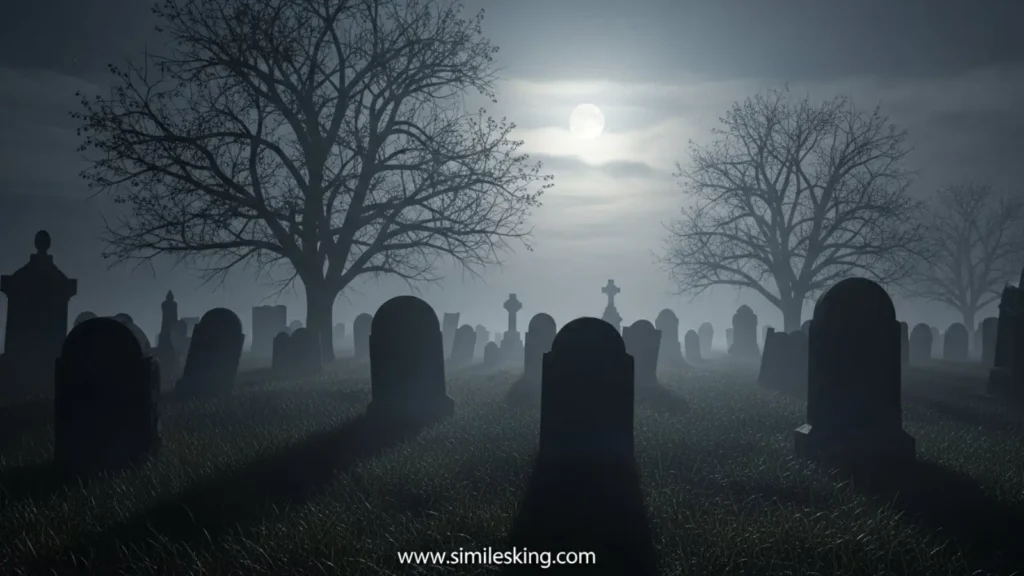
| As silent as a graveyard | Suppressed feelings, loneliness, or internalized sorrow |
| As tangled as thorny vines | Confusion, entrapment, or mental struggle |
| As slow as molasses | Sluggishness, inertia, or lack of motivation |
| As fragile as a shattered mirror | Vulnerability and the delicate state of mental health |
| As invisible as fog | Feeling unseen or overlooked by the world |
| As endless as a night without stars | Hopelessness or a sense of interminable suffering |
1. As heavy as a leaden sky
Meaning: This simile captures the suffocating weight depression can place on the mind, akin to a sky burdened with thick clouds.
Example in Prose:
Formal: The writer described the protagonist’s despair as “as heavy as a leaden sky,” crushing even the smallest joys.
Casual: Some days, getting out of bed felt as heavy as a leaden sky, and nothing seemed worth the effort.
Example in Poetry:
Beneath the clouds, I drag my soul,
As heavy as a leaden sky,
Each breath a thunder’s toll,
And dreams too weary to fly.
Tip/Use: Use this simile when conveying overwhelming mental weight or pervasive sadness, especially in reflective or introspective passages.
2. As dark as a cave at midnight
Meaning: Suggests isolation, fear, and the consuming nature of depressive thoughts.
Example in Prose:
Formal: Her mind was as dark as a cave at midnight, each thought echoing emptiness.
Casual: After the argument, my emotions felt as dark as a cave at midnight, and I couldn’t find the light.
Example in Poetry:
In the hollow of my chest,
As dark as a cave at midnight,
Hope hides where shadows rest,
And laughter forgets the light.
Tip/Use: Ideal for creating a mood of isolation or when exploring the depth of a character’s internal struggle.
3. As empty as a hollow tree
Meaning: Highlights emotional void or the sense of numbness that often accompanies depression.
Example in Prose:
Formal: He wandered through life as empty as a hollow tree, stripped of joy and purpose.
Casual: Lately, I feel as empty as a hollow tree, like nothing inside me is real.
Example in Poetry:
Branches sway, yet bear no leaves,
As empty as a hollow tree,
Whispered sighs the only reprieve,
From a heart that longs to be free.
Tip/Use: Best for illustrating emotional emptiness or loss of meaning in a subtle yet powerful way.
4. As cold as winter’s first frost
Meaning: Depicts emotional chill, alienation, and detachment.
Example in Prose:
Formal: His words were as cold as winter’s first frost, cutting through any warmth in the conversation.
Casual: After the breakup, I felt as cold as winter’s first frost, numb and withdrawn.
Example in Poetry:
Breath lingers in the air,
As cold as winter’s first frost,
Hearts encased in despair,
Counting every warmth lost.
Tip/Use: Effective for describing emotional distance or the numbing effect of depression.
5. As silent as a graveyard
Meaning: Evokes loneliness, suppression, and an internalized struggle.
Example in Prose:
Formal: The room felt as silent as a graveyard, mirroring her silent suffering.
Casual: Sitting alone, the house was as silent as a graveyard, and I felt every second drag.
Example in Poetry:
Voices once bright now fade,
As silent as a graveyard,
In the shadows, hearts degrade,
Under sorrow’s heavy guard.
Tip/Use: Ideal when emphasizing suppressed emotions or the eerie quietness of loneliness.
6. As tangled as thorny vines
Meaning: Represents confusion, entrapment, and the complicated nature of depressive thoughts.
Example in Prose:
Formal: Her feelings were as tangled as thorny vines, twisting through her mind relentlessly.
Casual: Thoughts hit me as tangled as thorny vines, and I couldn’t think straight.
Example in Poetry:
Mind entangled, heart confined,
As tangled as thorny vines,
Hope slips through cracks defined,
By fear that silently entwines.
Tip/Use: Use for illustrating mental confusion, indecision, or being emotionally ensnared.
7. As slow as molasses
Meaning: Captures the sluggishness and lack of motivation often accompanying depression.
Example in Prose:
Formal: Each morning, he moved as slow as molasses, weighed down by apathy.
Casual: Getting ready today was as slow as molasses; I couldn’t shake off the heaviness.
Example in Poetry:
Hours drip as slow as molasses,
Days stretch like endless strings,
Inertia locks my glasses,
Blurring all the little things.
Tip/Use: Perfect for illustrating physical or emotional lethargy.
8. As fragile as a shattered mirror
Meaning: Represents vulnerability and the delicate state of mental health.
Example in Prose:
Formal: After the loss, she felt as fragile as a shattered mirror, ready to break at any wrong touch.
Casual: I’m feeling as fragile as a shattered mirror today, like one wrong word could shatter me completely.
Example in Poetry:
Pieces scattered on the floor,
As fragile as a shattered mirror,
Once whole, now nevermore,
Reflections tremble nearer.
Tip/Use: Best for conveying emotional vulnerability or the sense that someone’s mental state is delicate.
9. As invisible as fog
Meaning: Captures feelings of being overlooked, unseen, or disconnected from the world.
Example in Prose:
Formal: In a crowded room, he felt as invisible as fog, unnoticed and unheard.
Casual: Some days, I feel as invisible as fog, like no one even sees me.
Example in Poetry:
Drifting silently through streets,
As invisible as fog,
Heartbeats lost in quiet beats,
Words dissolve in heavy smog.
Tip/Use: Useful when portraying social isolation or emotional invisibility.
10. As endless as a night without stars
Meaning: Evokes hopelessness or the feeling of prolonged suffering.
Example in Prose:
Formal: Her despair seemed as endless as a night without stars, stretching beyond comprehension.
Casual: Waiting for relief felt as endless as a night without stars; no light, no hope in sight.
Example in Poetry:
No dawn to break the gloom,
As endless as a night without stars,
Shadows stretch across the room,
Marking time with invisible scars.
Tip/Use: Ideal for emphasizing a deep, persistent sense of hopelessness.
11. As heavy as wet clay
Meaning: Conveys the feeling of being weighed down, stuck, and unable to move freely.
Example in Prose:
Formal: Each task felt as heavy as wet clay, suffocating his energy and resolve.
Casual: Getting out of bed today was as heavy as wet clay, every movement a struggle.
Example in Poetry:
Feet sink into the morning gray,
As heavy as wet clay,
Dreams dissolve in mud’s sway,
Hope buried deep away.
Tip/Use: Use this when describing the physical or emotional lethargy depression imposes.
12. As hollow as a drum
Meaning: Suggests emptiness, echoing thoughts, or a sense of internal void.
Example in Prose:
Formal: Her laughter was as hollow as a drum, concealing the pain beneath.
Casual: Talking didn’t help; my words felt as hollow as a drum.
Example in Poetry:
Sound bounces in the empty hall,
As hollow as a drum,
Echoes of a life grown small,
Chasing shadows that come.
Tip/Use: Best for expressing internal emptiness or the performative mask people with depression may wear.
13. As gray as unwashed linen
Meaning: Evokes dullness, monotony, and lifelessness in mood or environment.
Example in Prose:
Formal: His days felt as gray as unwashed linen, devoid of color or warmth.
Casual: Everything seemed as gray as unwashed linen, like the world had lost its vibrancy.
Example in Poetry:
Sky draped in endless gray,
As gray as unwashed linen,
Joy faded in disarray,
And light refused to spin in.
Tip/Use: Use for describing depressive monotony or emotional numbness.
14. As brittle as autumn leaves
Meaning: Highlights fragility, vulnerability, or the ease with which emotions break.
Example in Prose:
Formal: She felt as brittle as autumn leaves, ready to crumble at the slightest touch.
Casual: Today, I’m as brittle as autumn leaves; one wrong word could shatter me.
Example in Poetry:
Wind whispers through my chest,
As brittle as autumn leaves,
Memories fall and never rest,
A fragile heart that grieves.
Tip/Use: Perfect for illustrating emotional vulnerability or sensitivity.
15. As quiet as snowfall
Meaning: Captures the subdued, muted presence depression can have over daily life.
Example in Prose:
Formal: The office felt as quiet as snowfall, mirroring his withdrawn state.
Casual: Everything was as quiet as snowfall, like even the world was holding its breath.
Example in Poetry:
Softly drifts the silent snow,
As quiet as snowfall,
Covering all I used to know,
In a blanket, pale and small.
Tip/Use: Effective for conveying stillness, suppression, or emotional withdrawal.
16. As heavy as a sinking anchor
Meaning: Depicts feeling weighed down by responsibilities, guilt, or emotional pain.
Example in Prose:
Formal: The grief made him feel as heavy as a sinking anchor, dragging him under.
Casual: That mistake felt as heavy as a sinking anchor, impossible to shake off.
Example in Poetry:
Chains below, I cannot flee,
As heavy as a sinking anchor,
Tides of sorrow swallowing me,
In depths where lights grow darker.
Tip/Use: Ideal for portraying burdens or depressive weight.
17. As cloudy as a stormy sky
Meaning: Suggests confusion, unpredictability, and emotional turbulence.
Example in Prose:
Formal: Her thoughts were as cloudy as a stormy sky, storming without warning.
Casual: My mind feels as cloudy as a stormy sky—nothing seems clear today.
Example in Poetry:
Winds clash in shadowed flight,
As cloudy as a stormy sky,
Hope drifts far beyond my sight,
While tears like raindrops cry.
Tip/Use: Use to depict mental fog, emotional turmoil, or uncertainty.
18. As trapped as a bird in a cage
Meaning: Evokes a sense of confinement, helplessness, and restriction caused by depression.
Example in Prose:
Formal: He felt as trapped as a bird in a cage, unable to escape his thoughts.
Casual: Some days, I feel as trapped as a bird in a cage, stuck inside my head.
Example in Poetry:
Wings beat against invisible bars,
As trapped as a bird in a cage,
Dreams flicker like dying stars,
Bound by sorrow’s page.
Tip/Use: Ideal for portraying feelings of entrapment or helplessness.
19. As dry as desert sand
Meaning: Suggests emotional barrenness, exhaustion, and lack of nourishment for the soul.
Example in Prose:
Formal: His creativity lay as dry as desert sand, barren from months of depression.
Casual: After everything, I feel as dry as desert sand, like nothing can revive me.
Example in Poetry:
Cracked earth beneath my feet,
As dry as desert sand,
Hope retreats in endless heat,
No oasis close at hand.
Tip/Use: Use when describing emotional emptiness or stagnation.
20. As shadowed as a moonless night
Meaning: Depicts hopelessness, fear, and a world devoid of guidance or light.
Example in Prose:
Formal: Her thoughts were as shadowed as a moonless night, concealing all clarity.
Casual: Walking through life felt as shadowed as a moonless night, dark and uncertain.
Example in Poetry:
Stars hide behind the endless black,
As shadowed as a moonless night,
Paths vanish, never coming back,
Hope extinguished from my sight.
Tip/Use: Best for illustrating hopelessness, darkness, or despair.
21. As stiff as frozen branches
Meaning: Suggests emotional rigidity, numbness, or inability to move forward.
Example in Prose:
Formal: She stood as stiff as frozen branches, unable to act under the weight of depression.
Casual: I feel as stiff as frozen branches, like I can’t bend or adapt to life today.
Example in Poetry:
Wind shakes the silent trees,
As stiff as frozen branches,
Life slows in a frozen breeze,
Caught in winter’s glances.
Tip/Use: Useful for portraying numbness, rigidity, or emotional paralysis.
22. As hidden as roots underground
Meaning: Evokes suppressed emotions or unseen suffering beneath the surface.
Example in Prose:
Formal: Her pain was as hidden as roots underground, invisible yet persistent.
Casual: I’m hurting as hidden as roots underground, but no one sees it.
Example in Poetry:
Beneath the soil, unseen and deep,
As hidden as roots underground,
Emotions silently creep,
In shadows where they’re bound.
Tip/Use: Perfect for illustrating secret pain or internalized struggle.
23. As fragile as morning dew
Meaning: Highlights transience, delicacy, and the fleeting nature of comfort or happiness.
Example in Prose:
Formal: Her fleeting moments of joy were as fragile as morning dew, vanishing by noon.
Casual: Happiness feels as fragile as morning dew; it disappears before I even notice.
Example in Poetry:
Shimmering briefly in the sun,
As fragile as morning dew,
Moments of joy undone,
Slipping silently from view.
Tip/Use: Best for capturing delicate or temporary emotional states.
24. As heavy as a stone in the chest
Meaning: Suggests intense emotional burden, anxiety, or depression pressing down.
Example in Prose:
Formal: A wave of grief hit him as heavy as a stone in the chest, suffocating and relentless.
Casual: My sadness felt as heavy as a stone in the chest, making breathing hard.
Example in Poetry:
Each heartbeat a weighted plea,
As heavy as a stone in the chest,
Sorrow anchors endlessly,
In this unwelcome guest.
Tip/Use: Use for visceral, physical metaphors of depression.
25. As endless as a rainstorm
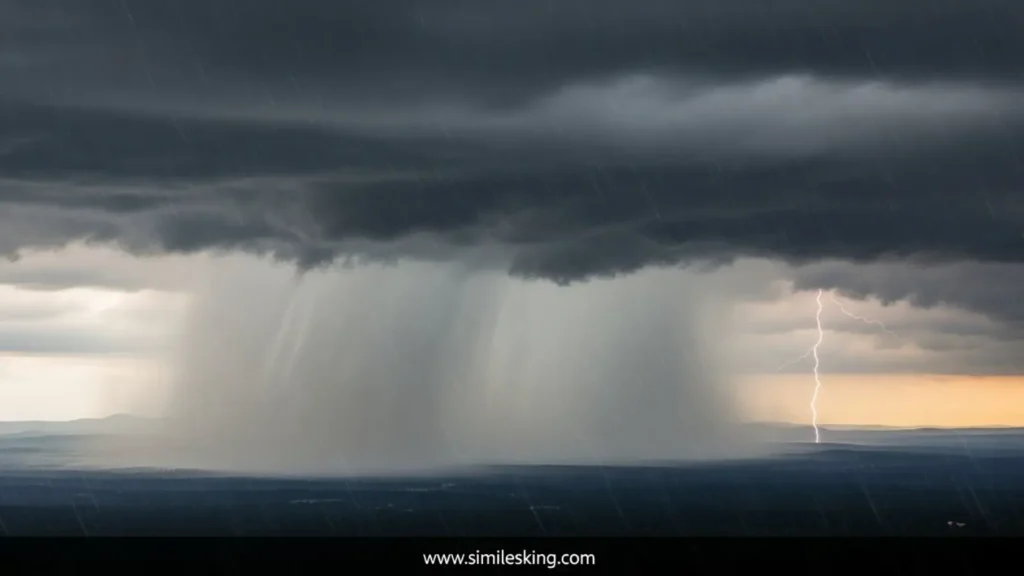
Meaning: Evokes the feeling of unrelenting sadness or melancholy.
Example in Prose:
Formal: Her grief seemed as endless as a rainstorm, persistent and drenching.
Casual: The sadness feels as endless as a rainstorm, never letting up.
Example in Poetry:
Raindrops blur the windowpane,
As endless as a rainstorm,
Tears mirror all my pain,
Under clouds that swarm.
Tip/Use: Perfect for depicting prolonged or persistent sadness.
26. As brittle as old porcelain
Meaning: Suggests fragility and the constant risk of emotional breakage.
Example in Prose:
Formal: After months of struggle, she felt as brittle as old porcelain, ready to crack at the slightest pressure.
Casual: I feel as brittle as old porcelain; one wrong comment could break me.
Example in Poetry:
Trembling hands cannot hold,
As brittle as old porcelain,
Moments of strength turned cold,
Shattered by unseen pain.
Tip/Use: Use for delicate emotional states or vulnerability.
27. As empty as an abandoned house
Meaning: Conveys deep loneliness and the feeling of being forgotten.
Example in Prose:
Formal: After losing her friends, she felt as empty as an abandoned house.
Casual: Walking around the empty apartment, I felt as empty as an abandoned house.
Example in Poetry:
Windows stare with hollow eyes,
As empty as an abandoned house,
Walls echo silent cries,
And shadows roam like a mouse.
Tip/Use: Great for evoking desolation or profound isolation.
28. As shadowed as foggy mornings
Meaning: Suggests confusion, gloom, and obscured clarity.
Example in Prose:
Formal: Her mind was as shadowed as foggy mornings, clouded and uncertain.
Casual: I feel as shadowed as foggy mornings, like I can’t see anything clearly.
Example in Poetry:
Mist drifts low across the land,
As shadowed as foggy mornings,
Paths unknown beneath my hand,
Hopes buried in silent warnings.
Tip/Use: Useful for depicting mental cloudiness or emotional obscurity.
29. As cold as a tombstone
Meaning: Evokes emotional detachment, numbness, or despair.
Example in Prose:
Formal: His words felt as cold as a tombstone, devoid of warmth or comfort.
Casual: She looked at me as cold as a tombstone, and I knew nothing could reach her.
Example in Poetry:
Stone etched with silent grief,
As cold as a tombstone,
Life fades with no relief,
Leaving hearts to mourn alone.
Tip/Use: Ideal for portraying numbness or hopeless emotional states.
30. As hidden as a star behind clouds
Meaning: Suggests hope or happiness that feels unreachable or obscured.
Example in Prose:
Formal: Her joy was as hidden as a star behind clouds, distant yet present.
Casual: Lately, my happiness feels as hidden as a star behind clouds, somewhere out of reach.
Example in Poetry:
Light above obscured by gray,
As hidden as a star behind clouds,
Dreams flicker but cannot stay,
Lost amidst the shrouding shrouds.
Tip/Use: Use for subtle glimmers of hope or joy that feel distant or blocked by depression.
Tips for Using Similes for Depression in Writing
- Pair imagery with emotion to make abstract feelings tangible.
- Vary tone and context—some similes work better in formal prose, others in casual or poetic forms.
- Avoid clichés—aim for unique, relatable comparisons drawn from nature, daily life, and universal human experiences.
- Use similes to enhance empathy, helping readers connect with characters or your own experiences.
FAQS;
What is a simile?
A simile is a figure of speech comparing two different things using “like” or “as” to highlight similarities, often used to clarify or intensify emotions and imagery.
How to use similes in writing?
Similes are most effective when they are vivid, relatable, and contextually appropriate. Use them to deepen emotional resonance or create strong visual impressions.
What are examples of similes to describe depression?
Examples include “as heavy as a leaden sky,” “as dark as a cave at midnight,” and “as invisible as fog.” Each evokes a different aspect of depressive experience.
Can similes improve poetry and prose?
Absolutely. Similes make abstract emotions tangible, enrich imagery, and help readers connect with the writer’s perspective.
How do I create my own similes for depression?
Observe your emotions, relate them to sensory experiences, and experiment with comparisons from nature, everyday life, or personal memories.
Conclusion
Similes for depression are more than literary tools—they are bridges between inner experience and external understanding. By comparing abstract feelings to tangible images, writers can communicate the depth, complexity, and nuance of depressive states with clarity and empathy. Experimenting with similes encourages both introspection and creativity, helping writers capture emotion authentically in poetry, prose, or storytelling. Whether using as heavy as a leaden sky or as fragile as a shattered mirror, the right simile can transform words into a resonant, memorable experience for readers.

Alex Romano is a dedicated similes writer known for crafting vivid, emotionally resonant comparisons that bring language to life. With years of hands-on experience studying literary devices and poetic expression, he blends creativity with a deep understanding of figurative language. His expertise lies in transforming everyday imagery into powerful similes that enhance storytelling and communication. Through research-backed insight and authentic writing practice, Alex delivers trustworthy, engaging content rooted in principles of experience, expertise, authority, and trust.