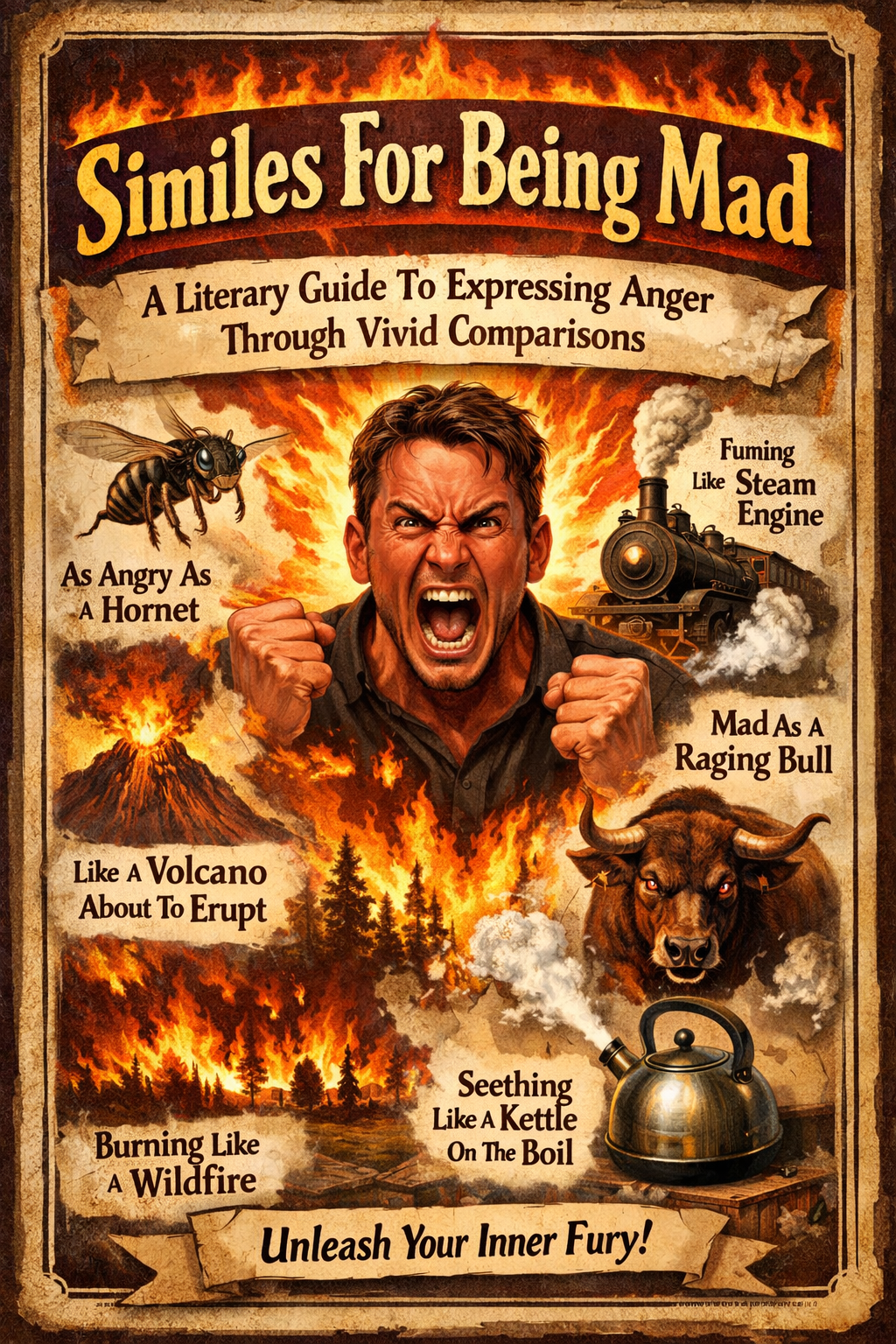
Anger is one of the most powerful human emotions—and one of the most difficult to portray convincingly in writing. Simply saying a character is “mad” often falls flat. This is where similes shine. By comparing anger to vivid, familiar images, writers can show readers what rage feels like rather than merely tell them. I still remember revising an early short story where my editor circled the line “he was very angry” and wrote in the margin, What does that look like? That moment changed how I approached emotional writing.
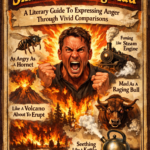
Similes for being mad bring heat, motion, pressure, and intensity into poetry, prose, and storytelling. They transform abstract emotion into sensory experience—thunderstorms, boiling kettles, snapping wires. In this literary guide, you’ll find creative similes for being mad, practical examples, and expert tips to help you describe anger with clarity, credibility, and emotional punch.
Similes For Being Mad
| # | Simile | Short Meaning |
|---|---|---|
| 1 | Mad as a hornet | Sharp, aggressive anger |
| 2 | Mad as a thunderstorm | Loud, explosive rage |
| 3 | Mad as a boiling kettle | Anger building to a whistle |
| 4 | Mad as a shaken soda can | Ready to explode |
| 5 | Mad as a snapped wire | Sudden, dangerous anger |
| 6 | Mad as a caged animal | Trapped, feral fury |
| 7 | Mad as a wildfire | Fast-spreading rage |
| 8 | Mad as a stormy sea | Turbulent, emotional anger |
| 9 | Mad as a struck match | Quick flare of temper |
| 10 | Mad as a clenched fist | Controlled but intense |
| 11 | Mad as a red-hot iron | Burning, sustained anger |
| 12 | Mad as a volcano | Long-brewing eruption |
| 13 | Mad as a barking dog | Loud, reactive anger |
| 14 | Mad as a rattlesnake | Defensive, warning anger |
| 15 | Mad as a slammed door | Final, decisive fury |
| 16 | Mad as a boiling pot | Overflowing irritation |
| 17 | Mad as a lightning bolt | Instant, shocking anger |
| 18 | Mad as a kicked anthill | Chaotic, swarming rage |
| 19 | Mad as a grinding storm | Relentless anger |
| 20 | Mad as a trapped wasp | Frenzied frustration |
| 21 | Mad as a snapped leash | Loss of restraint |
| 22 | Mad as a cracked dam | Pressure finally released |
| 23 | Mad as a furnace | Deep, constant heat |
| 24 | Mad as a scalded cat | Startled, violent anger |
| 25 | Mad as a siren | Piercing, alarming rage |
| 26 | Mad as a clenched jaw | Silent, internalized anger |
| 27 | Mad as a burning fuse | Inevitable explosion |
| 28 | Mad as a storm cloud | Dark, looming ange |
1. Mad as a hornet
Meaning: Sharp, aggressive anger that reacts instantly.
Example in Prose
Formal: The manager was mad as a hornet, responding to the error with stinging precision.
Casual: She was mad as a hornet when she saw the dent in her car.
Example in Poetry:
She buzzed with words that cut the air,
A striped fury, swift and fair.
Tip/Use: Ideal for sudden confrontations or sharp dialogue scenes.
2. Mad as a thunderstorm
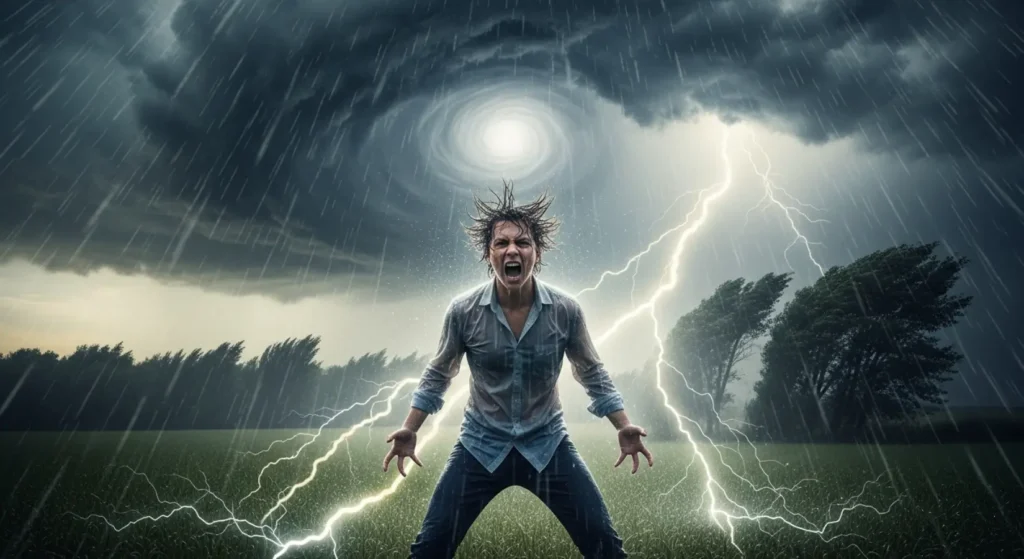
Meaning: Loud, dramatic, and emotionally explosive anger.
Prose
Formal: His response rolled in mad as a thunderstorm, shaking the room.
Casual: Dad came home mad as a thunderstorm after work.
Poetry:
Clouds of anger split the sky,
His voice the thunder passing by.
Tip/Use: Works well in high-stakes arguments or climactic moments.
3. Mad as a boiling kettle
Meaning: Anger steadily building toward release.
Prose
Formal: She grew mad as a boiling kettle, nearing her breaking point.
Casual: I was mad as a boiling kettle waiting in that line.
Poetry:
Steam rose from unspoken thought,
A whistle waiting to be caught.
Tip/Use: Excellent for slow-burn tension.
4. Mad as a shaken soda can
Meaning: Pressurized anger ready to explode unexpectedly.
Prose
Formal: He sat mad as a shaken soda can, silent but volatile.
Casual: Don’t poke her—she’s mad as a shaken soda can.
Poetry:
Fizz beneath the metal skin,
One small tap—eruption wins.
Tip/Use: Use to show restrained but dangerous emotion.
5. Mad as a snapped wire
Meaning: Sudden loss of emotional control.
Prose
Formal: The insult left him mad as a snapped wire.
Casual: I just snapped—mad as a wire gone loose.
Poetry:
Tension held, then torn apart,
Sparks flew from a broken heart.
Tip/Use: Great for moments of shock or betrayal.
6. Mad as a caged animal
Meaning: Trapped, feral rage seeking escape.
Prose
Formal: He paced mad as a caged animal, eyes blazing.
Casual: She felt mad as a caged animal at that job.
Poetry:
Bars of silence, breath of fire,
Freedom fed the rising ire.
Tip/Use: Effective for oppressive situations or power imbalance.
7. Mad as a wildfire
Meaning: Anger that spreads quickly and uncontrollably.
Prose
Formal: Rumors left the crowd mad as a wildfire.
Casual: That post got people mad like wildfire.
Poetry:
One spark leapt across the land,
Rage in every trembling hand.
Tip/Use: Perfect for group anger or social conflict.
8. Mad as a stormy sea
Meaning: Turbulent, emotional, and unpredictable anger.
Prose
Formal: Her thoughts churned mad as a stormy sea.
Casual: I was mad as the ocean in a storm.
Poetry:
Waves of fury rise and fall,
No calm horizon left at all.
Tip/Use: Ideal for internal conflict.
9. Mad as a struck match
Meaning: Quick, fiery temper.
Prose
Formal: He flared mad as a struck match.
Casual: She got mad like a match—fast.
Poetry:
One sharp scrape, a flash of flame,
Gone as quick as it came.
Tip/Use: Use for impulsive characters.
10. Mad as a clenched fist
Meaning: Controlled but intense anger.
Prose
Formal: He stood mad as a clenched fist, silent.
Casual: I was mad, fists tight in my pockets.
Poetry:
Knuckles white with words unspoken,
Peace held tight, but nearly broken.
Tip/Use: Excellent for quiet tension.
11. Mad as a red-hot iron
Meaning: Intense, burning anger that stays heated for a long time.
Example in Prose
Formal: He remained mad as a red-hot iron, his temper refusing to cool.
Casual: I was mad as a red-hot iron all afternoon.
Example in Poetry:
Anger glowed without a sound,
Heat pressed deep, unbreaking, bound.
Tip/Use: Best for sustained resentment or moral outrage.
12. Mad as a volcano
Meaning: Anger that brews silently before erupting violently.
Prose
Formal: Years of injustice left her mad as a volcano.
Casual: He went quiet—then blew up, mad as a volcano.
Poetry:
Silence slept beneath the stone,
Till fire claimed its final throne.
Tip/Use: Effective for long-term conflict or betrayal arcs.
13. Mad as a barking dog
Meaning: Loud, reactive, and confrontational anger.
Prose
Formal: He responded mad as a barking dog, drawing attention instantly.
Casual: She was mad as a barking dog over nothing.
Poetry:
Words snapped sharp against the air,
Noise was rage’s open stare.
Tip/Use: Useful in arguments or public disputes.
14. Mad as a rattlesnake
Meaning: Defensive anger—warning before striking.
Prose
Formal: Cornered and afraid, he grew mad as a rattlesnake.
Casual: Don’t push her—she’s mad as a rattlesnake right now.
Poetry:
A warning hum, a coiled stare,
Step too close—beware, beware.
Tip/Use: Ideal for threatened or vulnerable characters.

15. Mad as a slammed door
Meaning: Sudden, final, and decisive anger.
Prose
Formal: His resignation came mad as a slammed door.
Casual: I left mad as a slammed door, no goodbye.
Poetry:
One sharp sound, the ending clear,
Anger shut the room with fear.
Tip/Use: Great for endings, exits, or emotional boundaries.
16. Mad as a boiling pot
Meaning: Anger overflowing after prolonged irritation.
Prose
Formal: Stress left her mad as a boiling pot.
Casual: I’m mad as a boiling pot today.
Poetry:
Bubbles burst from quiet strain,
Patience lost in rising pain.
Tip/Use: Perfect for everyday frustrations.
17. Mad as a lightning bolt
Meaning: Sudden, shocking anger.
Prose
Formal: His reply struck mad as a lightning bolt.
Casual: I got mad like lightning—fast.
Poetry:
One bright flash split calm in two,
Anger fell like rain anew.
Tip/Use: Best for surprises or emotional reversals.
18. Mad as a kicked anthill
Meaning: Chaotic, frantic anger spreading everywhere.
Prose
Formal: The office erupted mad as a kicked anthill.
Casual: Everyone got mad like a kicked anthill.
Poetry:
Fury swarmed with scattered cries,
No single face, no calm replies.
Tip/Use: Excellent for crowd reactions or chaos.
19. Mad as a grinding storm
Meaning: Relentless, wearing anger.
Prose
Formal: His bitterness lingered mad as a grinding storm.
Casual: I stayed mad like a storm that won’t quit.
Poetry:
Wind returned night after night,
Anger outlasted fading light.
Tip/Use: Ideal for grudges or ongoing conflict.
20. Mad as a trapped wasp
Meaning: Frenzied frustration with no escape.
Prose
Formal: He lashed out mad as a trapped wasp.
Casual: I felt mad like a wasp in a jar.
Poetry:
Glass held close, the buzzing plea,
Rage beat wings that couldn’t flee.
Tip/Use: Works well for claustrophobic or powerless scenes.
21. Mad as a snapped leash
Meaning: Sudden loss of restraint.
Prose
Formal: Control vanished mad as a snapped leash.
Casual: I just lost it—mad as a snapped leash.
Poetry:
Tension broke, restraint undone,
Anger ran where it would run.
Tip/Use: Effective for transformation moments.
22. Mad as a cracked dam
Meaning: Long-held pressure finally released.
Prose
Formal: Tears and fury followed, mad as a cracked dam.
Casual: Everything spilled out—mad like a cracked dam.
Poetry:
Stone gave way to roaring sound,
Anger flooded all around.
Tip/Use: Powerful for emotional catharsis.
23. Mad as a furnace
Meaning: Deep, constant, internal heat of anger.
Prose
Formal: His silence burned mad as a furnace.
Casual: I stayed mad like a furnace inside.
Poetry:
No flame in sight, yet heat endured,
Anger sealed, intense, secured.
Tip/Use: Ideal for quiet resentment.
24. Mad as a scalded cat
Meaning: Startled, violent anger.
Prose
Formal: He reacted mad as a scalded cat.
Casual: She jumped up mad like a scalded cat.
Poetry:
Pain leapt sharp without a sound,
Rage sprang fast from sudden ground.
Tip/Use: Best for shock-driven reactions.
25. Mad as a siren
Meaning: Piercing, alarming anger demanding attention.
Prose
Formal: Her warning rang mad as a siren.
Casual: He was yelling mad like a siren.
Poetry:
Sharp cries split the waiting street,
Anger sang in shrill defeat.
Tip/Use: Useful for urgent or public scenes.
26. Mad as a clenched jaw
Meaning: Silent, restrained fury.
Prose
Formal: He listened, mad as a clenched jaw.
Casual: I stayed quiet, mad with my jaw tight.
Poetry:
Words locked fast behind the bone,
Anger chewed its rage alone.
Tip/Use: Excellent for subtle emotional tension.
27. Mad as a burning fuse
Meaning: Anger counting down to explosion.
Prose
Formal: He waited, mad as a burning fuse.
Casual: I’m mad like a fuse right now.
Poetry:
Sparks ran short along the line,
Anger kept relentless time.
Tip/Use: Perfect for suspense-building scenes.
28. Mad as a storm cloud
Meaning: Dark, looming anger not yet released.
Prose
Formal: He stood mad as a storm cloud, heavy with threat.
Casual: She looked mad like a storm cloud.
Poetry:
Shadow swelled across the sky,
Anger waited, drawing nigh.
Tip/Use: Ideal for foreshadowing conflict.
29. Mad as a cornered bear
Meaning: Fierce, defensive anger driven by fear and survival instinct.
Example in Prose
Formal: When accused unfairly, he became mad as a cornered bear, responding with raw force.
Casual: Don’t push him—he’s mad as a cornered bear right now.
Example in Poetry:
No path left, no place to flee,
Rage rose wild for all to see.
Tip/Use: Best used when a character feels trapped, threatened, or forced to defend themselves.
30. Mad as a breaking wave
Meaning: Powerful anger that crashes outward, overwhelming everything in its path.
Example in Prose
Formal: Her words came mad as a breaking wave, leaving silence behind.
Casual: He snapped, mad like a wave crashing in.
Example in Poetry:
Crested high with borrowed might,
Anger broke and stole the light.
Tip/Use: Ideal for emotional releases, confrontations, or moments when restraint finally gives way to force.
Why Similes Matter: Practical Writing Advice
As creative writing teachers often note, emotion becomes memorable when it becomes visible. Similes to describe being mad help readers feel anger through shared experience—heat, pressure, sound, movement. In my own editing work, replacing abstract emotion with concrete comparison consistently strengthens narrative voice and reader immersion.
Best practices for using similes in writing:
- Match the simile’s intensity to the scene.
- Avoid overloading sentences with multiple comparisons.
- Choose imagery your audience can easily visualize.
FAQS:
What is a simile?
A simile is a figure of speech that compares two unlike things using “like” or “as” to create vivid imagery.
How do similes improve writing?
They show emotion instead of telling it, making scenes more engaging and memorable.
What are some creative similes for being mad?
Examples include mad as a volcano, mad as a shaken soda can, and mad as a clenched jaw.
Can similes be used in formal writing?
Yes—when used sparingly, similes add clarity and emphasis even in professional prose.
Conclusion:
Similes for being mad give writers a powerful toolkit for expressing one of humanity’s strongest emotions. Whether you’re crafting poetry, fiction, or narrative nonfiction, these comparisons transform anger from a flat label into a living force readers can see and feel. By experimenting with creative similes for being mad, you’ll sharpen your voice, deepen emotional impact, and build trust with your audience through clear, evocative language. Try inventing your own—draw from nature, daily life, or personal experience. The more specific the image, the more unforgettable the emotion.
See Also:
Similes For Shaking With Fear: A Complete Literary Guide For Writers