Similes are among the most powerful tools a writer can wield. By comparing emotions to vivid images using “like” or “as,” similes transform abstract feelings into tangible experiences. They allow readers to see, hear, and feel what a character or narrator is experiencing, whether in poetry, prose, or storytelling. For instance, describing anxiety as “as jittery as a hummingbird in a storm” immediately conveys nervous energy in a way plain words cannot. In real life, writers and speakers often use such comparisons to make feelings relatable—like telling a friend, “I’m as nervous as a cat on a hot tin roof.” Similes not only enhance imagery but also strengthen emotional connection, making your writing memorable, immersive, and deeply human.
Table of Contents
| # | Simile Phrase | Short Description |
|---|---|---|
| 1 | As anxious as a cat on a hot tin roof | Nervous and uneasy anticipation |
| 2 | As happy as birds at dawn | Pure, uplifting joy and freshness |
| 3 | As lonely as a lighthouse in a storm | Solitude and isolation |
| 4 | As brave as a lion facing the hunter | Courage in the face of danger |
| 5 | As sad as raindrops on a windowpane | Quiet, reflective sorrow |
| 6 | As restless as waves against rocks | Constant agitation or impatience |
| 7 | As excited as a child on Christmas morning | Anticipation and delight |
| 8 | As frustrated as a locked door | Feeling blocked or hindered |
| 9 | As proud as a peacock displaying feathers | Confidence and self-assurance |
| 10 | As overwhelmed as a storm-tossed ship | Emotional or mental overload |
| 11 | As peaceful as a meadow at sunrise | Calm and serenity |
| 12 | As jealous as a shadow in the sun | Envious or covetous feelings |
| 13 | As shy as a deer in the forest | Timid and cautious behavior |
| 14 | As grateful as a traveler finding shelter | Appreciation and relief |
| 15 | As hopeful as a seed in spring | Optimism and potential growth |
| 16 | As curious as a cat exploring | Inquisitiveness and wonder |
| 17 | As frustrated as an untuned piano | Discord and irritation |
| 18 | As determined as a river carving stone | Persistence and focus |
| 19 | As confident as a star in the night sky | Inner assurance and brilliance |
| 20 | As confused as fog on a mountain | Uncertainty or bewilderment |
| 21 | As loving as a mother’s embrace | Affection and warmth |
| 22 | As lonely as an abandoned house | Isolation and emptiness |
| 23 | As nervous as a first-time speaker | Anxiety before a challenge |
| 24 | As cheerful as sunlight on snow | Bright, infectious happiness |
| 25 | As restless as fire in dry wood | Impatience or agitation |
| 26 | As sorrowful as a fallen leaf | Melancholy and gentle sadness |
| 27 | As energized as a stormy sea | Vigorous excitement or drive |
| 28 | As tender as morning dew | Soft, gentle affection |
| 29 | As playful as a puppy in spring | Lighthearted, joyful behavior |
| 30 | As anxious as standing on thin ice | Fear and uncertainty in tense situations |
1. As anxious as a cat on a hot tin roof
Meaning: This simile expresses intense nervousness or agitation.
Example in Prose:
Formal: She awaited the exam results, as anxious as a cat on a hot tin roof, pacing her room relentlessly.
Casual: I felt as anxious as a cat on a hot tin roof before giving my speech.
Example in Poetry:
Her heartbeat leaps, paws on fire,
As anxious as a cat on a hot tin wire,
Eyes darting, ears pricked to the sound,
Restless, yet nowhere to be found.
Tip/Use: Use this simile to convey tension and anticipation in characters, especially in high-stakes moments.

2. As happy as birds at dawn
Meaning: Captures pure, uplifting joy and the freshness of morning.
Example in Prose:
Formal: She smiled, as happy as birds at dawn, basking in the first sunlight of spring.
Casual: After hearing the good news, I felt as happy as birds at dawn.
Example in Poetry:
Songs flutter through the morning air,
As happy as birds at dawn without a care,
Notes of gold and soft delight,
Filling hearts with pure sunlight.
Tip/Use: Ideal for moments of sudden happiness, optimism, or triumph in writing.
3. As lonely as a lighthouse in a storm
Meaning: Evokes solitude, isolation, and quiet endurance.
Example in Prose:
Formal: On the deserted coast, he felt as lonely as a lighthouse in a storm, standing resilient yet unseen.
Casual: After moving to the new city, I felt as lonely as a lighthouse in a storm.
Example in Poetry:
Winds howl, waves crash and moan,
As lonely as a lighthouse in a storm alone,
Its light a beacon, steadfast, true,
A solitary guide through night’s dark hue.
Tip/Use: Perfect for scenes highlighting isolation, introspection, or resilience in solitude.
4. As brave as a lion facing the hunter
Meaning: Illustrates courage, strength, and boldness under pressure.
Example in Prose:
Formal: The firefighter charged into the blaze, as brave as a lion facing the hunter.
Casual: I felt as brave as a lion facing the hunter when I finally confronted my fear.
Example in Poetry:
Eyes aflame, heart untamed,
As brave as a lion facing the hunter named,
No shadow can dim the fearless roar,
Strength within, ready to soar.
Tip/Use: Use in stories to dramatize heroic actions or internal courage.
5. As sad as raindrops on a windowpane
Meaning: Conveys gentle, reflective sorrow or melancholy.
Example in Prose:
Formal: She watched the sky darken, as sad as raindrops on a windowpane.
Casual: I felt as sad as raindrops on a windowpane after hearing the news.
Example in Poetry:
Tears fall softly, whispers of pain,
As sad as raindrops on a windowpane,
Each droplet mirrors a heart’s lament,
Silent, slow, and heaven-sent.
Tip/Use: Perfect for subtle emotional scenes or introspective moments.
6. As restless as waves against rocks
Meaning: Conveys constant agitation, impatience, or uncontainable energy.
Example in Prose:
Formal: His thoughts churned, as restless as waves against rocks, refusing to settle.
Casual: I was as restless as waves against rocks before my vacation finally started.
Example in Poetry:
Crashing, tossing, never still,
As restless as waves against rocks at will,
Energy surges, uncontained,
A wild spirit cannot be chained.
Tip/Use: Great for depicting anxiety, impatience, or restless characters in motion-heavy scenes.
7. As excited as a child on Christmas morning
Meaning: Captures joyful anticipation and eagerness.
Example in Prose:
Formal: She opened the envelope, as excited as a child on Christmas morning, heart racing with delight.
Casual: I was as excited as a child on Christmas morning waiting for my package.
Example in Poetry:
Eyes wide, breath caught tight,
As excited as a child on Christmas morning bright,
Every gift a secret, every sound a cheer,
Joy bursting forth, ringing clear.
Tip/Use: Perfect for moments of elation, surprise, or happy anticipation.
8. As frustrated as a locked door
Meaning: Illustrates feelings of blockage, hindrance, or exasperation.
Example in Prose:
Formal: He tried to solve the puzzle, as frustrated as a locked door, each attempt futile.
Casual: I felt as frustrated as a locked door when my computer froze mid-assignment.
Example in Poetry:
Knock, twist, push in vain,
As frustrated as a locked door’s strain,
Patience wears thin, tension grows,
Till solution’s light softly shows.
Tip/Use: Ideal for expressing irritation or mental roadblocks in character-driven writing.
9. As proud as a peacock displaying feathers
Meaning: Represents confidence, self-assurance, or showing off achievements.
Example in Prose:
Formal: She accepted the award, as proud as a peacock displaying feathers.
Casual: He strutted into the room, as proud as a peacock displaying feathers after finishing his project.
Example in Poetry:
Colors shine in golden light,
As proud as a peacock displaying feathers bright,
Grace and glory in every stride,
Confidence blooming, far and wide.
Tip/Use: Use to illustrate self-confidence, achievement, or characters basking in admiration.
10. As overwhelmed as a storm-tossed ship
Meaning: Depicts being engulfed by emotions or responsibilities.
Example in Prose:
Formal: Facing deadlines and expectations, she felt as overwhelmed as a storm-tossed ship.
Casual: I was as overwhelmed as a storm-tossed ship when the emails kept piling up.
Example in Poetry:
Waves crash high, winds roar strong,
As overwhelmed as a storm-tossed ship all along,
No anchor holds, no refuge near,
Yet courage whispers, calm appears.
Tip/Use: Works well in emotional or chaotic situations where characters feel swept away by events.
11. As peaceful as a meadow at sunrise
Meaning: Conveys calm, serenity, and tranquility.
Example in Prose:
Formal: She sat by the lake, as peaceful as a meadow at sunrise, breathing in morning stillness.
Casual: I felt as peaceful as a meadow at sunrise while sipping tea on the porch.
Example in Poetry:
Soft light spreads, dew-laced ground,
As peaceful as a meadow at sunrise found,
Birds chirp gently, wind whispers slow,
Serenity bathes all below.
Tip/Use: Perfect for reflective or serene moments, nature descriptions, or emotional calm.
12. As jealous as a shadow in the sun
Meaning: Illustrates envy, covetousness, or comparison with others.
Example in Prose:
Formal: Watching her colleague praised, he felt as jealous as a shadow in the sun.
Casual: I was as jealous as a shadow in the sun when my friend got the promotion.
Example in Poetry:
Darkness clings where light should be,
As jealous as a shadow in the sun, you see,
Longing for what shines so bright,
Yet hidden in eternal night.
Tip/Use: Useful in character-driven narratives where envy or desire motivates actions.
13. As shy as a deer in the forest
Meaning: Represents timidity, caution, or nervousness.
Example in Prose:
Formal: She entered the room, as shy as a deer in the forest, eyes downcast and voice soft.
Casual: I was as shy as a deer in the forest at my first dance class.
Example in Poetry:
Footsteps light, ears alert,
As shy as a deer in the forest, hurt,
Hiding from the world’s loud glare,
Yet beauty lingers everywhere.
Tip/Use: Works for delicate, introverted characters or moments of vulnerability.
14. As grateful as a traveler finding shelter
Meaning: Expresses relief, appreciation, or gratitude after difficulty.
Example in Prose:
Formal: After weeks of searching, he felt as grateful as a traveler finding shelter from the storm.
Casual: I was as grateful as a traveler finding shelter when the rain finally stopped.
Example in Poetry:
Storms behind, roof overhead,
As grateful as a traveler finding shelter, said,
Heart warmed, tears gently fall,
Thanks whispered, embracing all.
Tip/Use: Effective in moments of relief, gratitude, or profound appreciation.
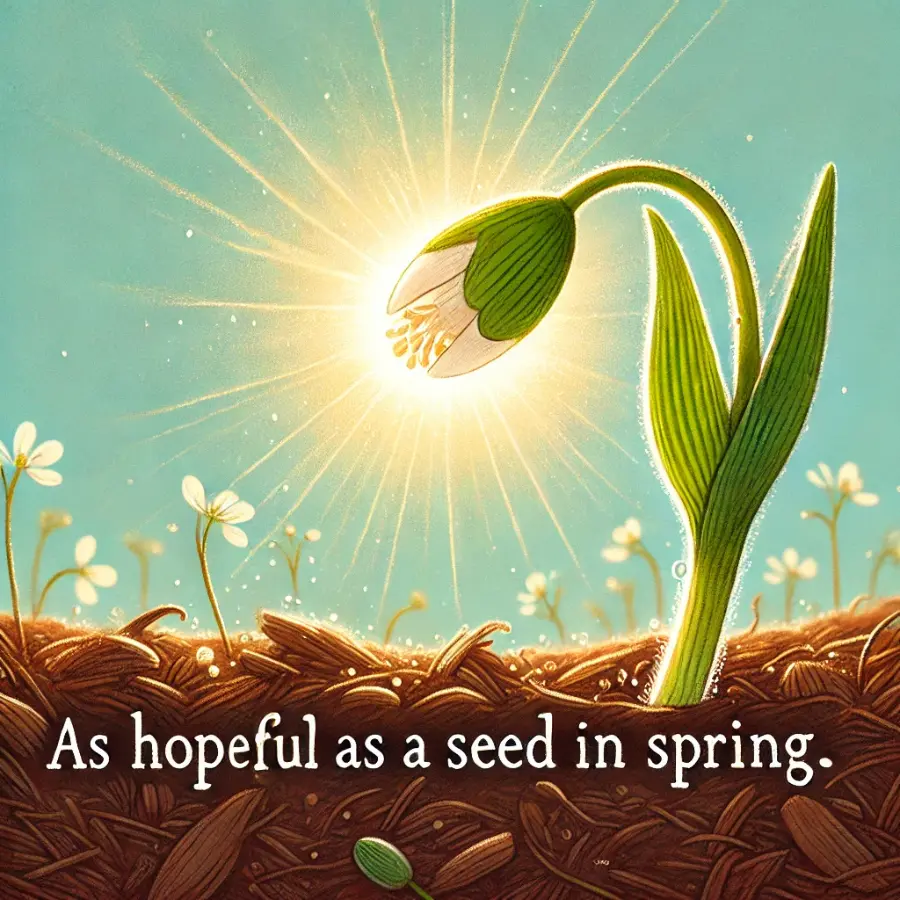
15. As hopeful as a seed in spring
Meaning: Captures optimism, potential, and anticipation for growth.
Example in Prose:
Formal: She began her new job, as hopeful as a seed in spring, eager to grow and flourish.
Casual: I felt as hopeful as a seed in spring starting my new adventure.
Example in Poetry:
Beneath the soil, dreams awake,
As hopeful as a seed in spring’s gentle shake,
Sunlight warms, roots entwine,
Life unfolds, bright and divine.
Tip/Use: Perfect for new beginnings, character growth, or inspirational contexts.
16. As curious as a cat exploring
Meaning: Represents inquisitiveness, wonder, and investigation.
Example in Prose:
Formal: He approached the ancient library, as curious as a cat exploring every corner.
Casual: I was as curious as a cat exploring when I peeked into the old attic.
Example in Poetry:
Paws tread soft, eyes wide,
As curious as a cat exploring, eyes open,
Every shadow, every nook,
Whispers stories that books forsook.
Tip/Use: Use for inquisitive characters, exploration, or discovery moments.
17. As frustrated as an untuned piano
Meaning: Depicts irritation, dissonance, or emotional tension.
Example in Prose:
Formal: The plan failed repeatedly, leaving him as frustrated as an untuned piano.
Casual: I felt as frustrated as an untuned piano trying to play that song.
Example in Poetry:
Notes clash, discord flies,
As frustrated as an untuned piano’s cries,
Harmony lost, patience frays,
Yet practice brings brighter days.
Tip/Use: Great for expressing irritation in creative or artistic settings.
18. As determined as a river carving stone
Meaning: Represents persistence, patience, and relentless effort.
Example in Prose:
Formal: She pursued her goals, as determined as a river carving stone over centuries.
Casual: I felt as determined as a river carving stone to finish my project.
Example in Poetry:
Water flows, unyielding might,
As determined as a river carving stone’s sight,
Obstacles bend, edges smooth,
Strength persists, its steady truth.
Tip/Use: Use to highlight persistence, endurance, or long-term dedication.
19. As confident as a star in the night sky
Meaning: Illustrates inner assurance and brilliance.
Example in Prose:
Formal: She walked into the interview, as confident as a star in the night sky.
Casual: I felt as confident as a star in the night sky during my performance.
Example in Poetry:
Shining bright, alone yet bold,
As confident as a star in the night sky told,
Guiding wanderers through darkened night,
Radiance glowing, pure and bright.
Tip/Use: Effective for highlighting poise, self-assurance, or standout moments.
20. As confused as fog on a mountain
Meaning: Conveys uncertainty, bewilderment, or lack of clarity.
Example in Prose:
Formal: He read the instructions, as confused as fog on a mountain.
Casual: I felt as confused as fog on a mountain when the directions changed.
Example in Poetry:
Mist wraps tight, vision blurred,
As confused as fog on a mountain stirred,
Path unknown, steps unsure,
Yet hope whispers, guide secure.
Tip/Use: Use for moments of mental fog, uncertainty, or character hesitation.
21. As loving as a mother’s embrace
Meaning: Represents deep affection, warmth, and unconditional love.
Example in Prose:
Formal: She comforted the child, as loving as a mother’s embrace.
Casual: I felt as loving as a mother’s embrace holding my little sister.
Example in Poetry:
Arms enfold, heart beats near,
As loving as a mother’s embrace sincere,
Soft whispers, care profound,
Warmth and solace all around.
Tip/Use: Ideal for emotional, tender moments between characters or depicting deep bonds.
22. As lonely as an abandoned house
Meaning: Evokes feelings of emptiness, neglect, and isolation.
Example in Prose:
Formal: After the party ended, the hall felt as lonely as an abandoned house.
Casual: I felt as lonely as an abandoned house after everyone left.
Example in Poetry:
Windows dark, halls cold,
As lonely as an abandoned house untold,
Echoes whisper, floorboards creak,
Solitude reigns, shadows speak.
Tip/Use: Perfect for scenes emphasizing solitude, loss, or introspection.
23. As nervous as a first-time speaker
Meaning: Illustrates anxiety, jitters, or self-consciousness.
Example in Prose:
Formal: He stepped onto the stage, as nervous as a first-time speaker, palms sweaty.
Casual: I was as nervous as a first-time speaker before presenting my idea.
Example in Poetry:
Heart races, knees may shake,
As nervous as a first-time speaker awake,
Words stumble, courage tries,
Until confidence slowly flies.
Tip/Use: Use for anxiety-inducing situations, public speaking, or new experiences.
24. As cheerful as sunlight on snow
Meaning: Captures bright, infectious happiness.
Example in Prose:
Formal: Her smile lit the room, as cheerful as sunlight on snow.
Casual: I felt as cheerful as sunlight on snow after hearing the good news.
Example in Poetry:
Glints of gold on icy white,
As cheerful as sunlight on snow so bright,
Joy reflects in every glance,
Inviting hearts to dance.
Tip/Use: Ideal for uplifting moods, joyful characterizations, or positive scenes.
25. As restless as fire in dry wood
Meaning: Depicts impatience, urgency, or intense energy.
Example in Prose:
Formal: He could not sit still, as restless as fire in dry wood.
Casual: I felt as restless as fire in dry wood waiting for the party to start.
Example in Poetry:
Sparks leap, embers fly,
As restless as fire in dry wood nearby,
Energy crackles, cannot be tamed,
Life’s desires fiercely inflamed.
Tip/Use: Works well for energetic, impatient, or driven characters.
26. As sorrowful as a fallen leaf
Meaning: Represents gentle melancholy, loss, or grief.
Example in Prose:
Formal: He watched autumn leaves drift, as sorrowful as a fallen leaf.
Casual: I felt as sorrowful as a fallen leaf remembering old times.
Example in Poetry:
Softly drifting, pale and torn,
As sorrowful as a fallen leaf, forlorn,
Carried by wind, fading light,
Echoes of grief in quiet night.
Tip/Use: Perfect for reflective sadness, gentle mourning, or seasonal symbolism.
27. As energized as a stormy sea
Meaning: Captures dynamic energy, passion, or excitement.
Example in Prose:
Formal: She tackled the project, as energized as a stormy sea.
Casual: I felt as energized as a stormy sea after my morning run.
Example in Poetry:
Waves collide with booming might,
As energized as a stormy sea in flight,
Currents swirl, power untamed,
Life bursts forth, wild and famed.
Tip/Use: Use for high-energy scenes, motivation, or dramatic action.
28. As tender as morning dew
Meaning: Represents gentle affection, delicacy, or subtle care.
Example in Prose:
Formal: He held the newborn, as tender as morning dew.
Casual: I handled the fragile flowers, as tender as morning dew.
Example in Poetry:
Soft drops on leaves of green,
As tender as morning dew, unseen,
A touch so gentle, fleeting grace,
Nature’s kiss upon the place.
Tip/Use: Ideal for delicate, intimate moments or gentle emotional expression.
29. As playful as a puppy in spring
Meaning: Conveys lighthearted joy, fun, and carefree energy.
Example in Prose:
Formal: Children ran across the park, as playful as a puppy in spring.
Casual: I felt as playful as a puppy in spring while splashing in puddles.
Example in Poetry:
Bounding, leaping, chasing sun,
As playful as a puppy in spring begun,
Laughter echoes, hearts take wing,
Joyful echoes, spirits sing.
Tip/Use: Use for cheerful, whimsical, or carefree scenes and characters.
30. As anxious as standing on thin ice
Meaning: Captures fear, tension, and uncertainty in precarious situations.
Example in Prose:
Formal: He waited for the verdict, as anxious as standing on thin ice.
Casual: I felt as anxious as standing on thin ice before my job interview.
Example in Poetry:
Beneath my feet, a fragile line,
As anxious as standing on thin ice, confined,
Heart thuds, breath held tight,
Hope and fear entwined in night.
Tip/Use: Perfect for high-stakes tension, fear, or nervous anticipation.
Writer Tips For Using Feelings Similes Effectively
- Observe Real Life Closely
- Everyday experiences, gestures, and emotions are gold mines for similes. Watch how people react, how nature behaves, or how everyday objects move—it can inspire comparisons like “as restless as waves against rocks” or “as tender as morning dew.”
- Match the Emotion to the Imagery
- Strong similes connect the intensity of the feeling with the strength of the image. For example, don’t compare deep anxiety to something trivial; “as anxious as standing on thin ice” conveys real tension.
- Balance Freshness and Familiarity
- Avoid clichés like “as busy as a bee” unless it fits your tone. Try slightly unexpected imagery for originality—like “as nervous as a cat in a crowded café.”
- Use Similes Sparingly for Impact
- Overusing similes can dilute their effect. Place them strategically in emotional peaks or reflective moments for maximum resonance.
- Combine Prose and Poetry Techniques
- Similes work in both styles. A sentence in prose can describe a feeling vividly, while the same simile in a poetic structure can create rhythm and musicality.
- Consider the Character or Speaker
- Tailor your similes to match personality and context. A child’s perspective might use playful imagery (“as playful as a puppy in spring”), whereas an adult’s internal monologue might require subtler comparisons (“as lonely as an abandoned house”).
- Layer Sensory Details
- Don’t just compare feelings visually—include sound, touch, or movement: “as restless as fire in dry wood” conveys not only energy but crackling intensity.
- Experiment Across Emotions
- Similes aren’t just for happy or sad emotions. Fear, frustration, curiosity, and love can all be enriched with creative comparisons. This makes your writing richer and more engaging.
- Revise for Clarity and Flow
- Ensure that your similes fit naturally into sentences. A forced or awkward simile can distract readers, while a smooth one deepens immersion.
- Use Similes to Strengthen Storytelling
- In narratives, similes reveal inner emotions, set tone, or foreshadow events. For instance, “as anxious as a cat on a hot tin roof” can hint at upcoming tension or conflict.
Conclusion:
Similes are invaluable for bringing emotions to life. From anxiety to joy, loneliness to love, the right simile transforms abstract feelings into vivid, memorable images. Using feelings similes enriches your prose, poetry, or storytelling, making readers experience the emotion rather than just read about it. Writers are encouraged to experiment, combining daily life, nature, and universal experiences to craft creative similes that resonate.
FAQS:
Q1: What are feelings similes?
A: Feelings similes are comparisons using “like” or “as” to describe emotions, making them vivid and relatable.
Q2: How can similes enhance my writing?
A: They transform abstract emotions into sensory experiences, deepening reader engagement and emotional connection.
Q3: Can I create my own similes?
A: Absolutely! Observe nature, gestures, and daily life, then connect them creatively to emotions.
Q4: Are similes only for poetry?
A: No, similes enhance prose, essays, storytelling, dialogue, and even speeches—any writing that conveys emotion.
Q5: How do I avoid clichéd similes?
A: Use fresh imagery, personal observations, and specific details to create originality.
Similes For Kind: Powerful Comparisons To Express Kindness
Similes For Snow Bring Winter To Life
Similes for Feeling Happy: A Literary Guide to Expressing Joy
Similes For Being Happy: A Literary Guide to Expressing Joy Through Vivid Comparisons

Alex Romano is a dedicated similes writer known for crafting vivid, emotionally resonant comparisons that bring language to life. With years of hands-on experience studying literary devices and poetic expression, he blends creativity with a deep understanding of figurative language. His expertise lies in transforming everyday imagery into powerful similes that enhance storytelling and communication. Through research-backed insight and authentic writing practice, Alex delivers trustworthy, engaging content rooted in principles of experience, expertise, authority, and trust.