Similes are among the most powerful tools in a writer’s craft because they transform abstract emotions into concrete, memorable images. Instead of simply telling readers that a character feels something, similes show it—engaging the senses and imagination at once. This is especially important when writing about intense emotions like hate, which can feel overwhelming, complex, and difficult to articulate.
In my experience as both a reader and writer, the most unforgettable moments in stories often hinge on a single comparison: hatred described as a fire, a poison, or a storm. These images linger because they echo real life. We’ve all felt anger simmer, resentment harden, or bitterness spread quietly over time. In poetry, prose, and storytelling, similes for hate give shape to those feelings, helping writers express them with clarity, depth, and emotional truth.
Table of Contents: Similes for Hate
| # | Simile Phrase | Short Description |
|---|---|---|
| 1 | Hate like a burning coal | Slow, consuming resentment |
| 2 | Hate like acid on metal | Corrosive, destructive feeling |
| 3 | Hate like a storm cloud | Heavy, threatening emotion |
| 4 | Hate like a clenched fist | Tense, controlled anger |
| 5 | Hate like wildfire | Fast-spreading hostility |
| 6 | Hate like poison in veins | Toxic and harmful |
| 7 | Hate like a frozen lake | Cold, unmoving resentment |
| 8 | Hate like grinding teeth | Suppressed rage |
| 9 | Hate like a loaded gun | Dangerous potential |
| 10 | Hate like a swarm of wasps | Irritating, aggressive |
| 11 | Hate like smoke in lungs | Suffocating emotion |
| 12 | Hate like rust on iron | Gradual decay |
| 13 | Hate like a snarling dog | Animalistic aggression |
| 14 | Hate like broken glass | Sharp and cutting |
| 15 | Hate like boiling water | Unstable anger |
| 16 | Hate like a ticking bomb | Imminent explosion |
| 17 | Hate like a shadow | Ever-present bitterness |
| 18 | Hate like sand in wounds | Painful irritation |
| 19 | Hate like a locked door | Emotional refusal |
| 20 | Hate like an unhealed scar | Lingering resentment |
| 21 | Hate like thorns in the heart | Persistent emotional pain |
| 22 | Hate like a bitter taste | Lingering displeasure |
| 23 | Hate like a drought | Emotional dryness |
| 24 | Hate like a cracked mirror | Distorted perception |
| 25 | Hate like chains | Binding, restrictive emotion |
Similes for Hate: Meanings, Examples, and Writing Tips
1. As hate as a burning coal
Meaning: Hate that glows quietly, sustained over time.
Formal Prose: His hatred smoldered, as hate as a burning coal, never flaring but never dying.
Casual: I tried to ignore it, but the feeling sat there, hot and stubborn.
Poetry:
A coal in the chest,
Red without flame,
Hate warming itself on memory.
Tip/Use: Ideal for long-term grudges or quiet resentment in character-driven narratives.
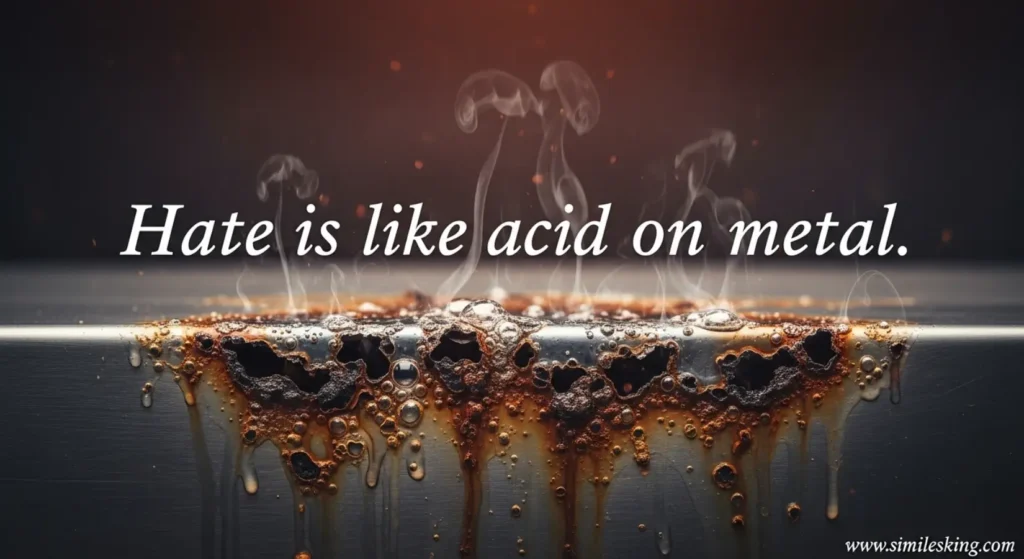
2. As hate as acid on metal
Meaning: Hate that corrodes and destroys gradually.
Formal Prose: Her resentment ate through reason, as hate as acid on metal.
Casual: It just kept eating away at me.
Poetry:
Drop by drop it fell,
Hissing through thought and trust,
Leaving holes where hope lived.
Tip/Use: Effective for illustrating emotional damage over time.
3. As hate as a storm cloud
Meaning: Ominous, heavy hatred ready to break.
Formal Prose: The room thickened, his mood as hate as a storm cloud.
Casual: You could feel it coming.
Poetry:
Darkness gathers,
Thunder waiting on a breath,
Hate hums in the sky.
Tip/Use: Great for foreshadowing conflict.
4. As hate as a clenched fist
Meaning: Controlled but tense anger.
Formal Prose: She spoke calmly, though her heart was as hate as a clenched fist.
Casual: I was holding it all in.
Poetry:
Knuckles white with silence,
Words swallowed whole,
Hate folded tight.
Tip/Use: Use when characters suppress emotion.
5. As hate as wildfire
Meaning: Fast-spreading, uncontrollable hate.
Formal Prose: Rumors spread, as hate as wildfire through dry grass.
Casual: It blew up fast.
Poetry:
Spark to spark it leapt,
Leaving only ash behind,
Hate racing the wind.
Tip/Use: Perfect for social conflict or mob mentality.
6. As hate as poison in veins
Meaning: Toxic hatred that harms the bearer.
Formal Prose: His bitterness moved, as hate as poison in his veins.
Casual: It was hurting me more than them.
Poetry:
Dark liquid memory,
Coursing where love once lived,
Hate learns the body.
Tip/Use: Emphasizes self-destructive emotion.
7. As hate as a frozen lake
Meaning: Cold, hardened resentment.
Formal Prose: Her silence was as hate as a frozen lake.
Casual: She shut down completely.
Poetry:
No ripples left,
Only ice and old reflections,
Hate holding winter.
Tip/Use: Works well for emotional withdrawal.
8. As hate as grinding teeth
Meaning: Suppressed, irritating anger.
Formal Prose: He endured the insult, as hate as grinding teeth.
Casual: It made my jaw ache.
Poetry:
Night chews on thought,
Molars worrying memory,
Hate tastes bitter.
Tip/Use: Use for endurance under pressure.
9. As hate as a loaded gun
Meaning: Dangerous hatred waiting to act.
Formal Prose: His silence was as hate as a loaded gun.
Casual: One wrong word and it’d explode.
Poetry:
Metal breath held,
Finger curled on the past,
Hate waits to speak.
Tip/Use: Ideal for suspense and tension.
10. As hate as a swarm of wasps
Meaning: Aggressive, relentless hostility.
Formal Prose: Criticism descended, as hate as a swarm of wasps.
Casual: It felt like everyone was attacking.
Poetry:
Buzzing accusations,
Stings layered on skin,
Hate learns to fly.
Tip/Use: Useful for collective or verbal attacks.
11. As hate as smoke in lungs
Meaning: Suffocating emotional weight.
Formal Prose: The room filled with unspoken words, as hate as smoke in lungs.
Casual: I couldn’t breathe around it.
Poetry:
Every breath burns,
Air thick with what was said,
Hate chokes the light.
Tip/Use: Effective in claustrophobic scenes.
12. As hate as rust on iron
Meaning: Gradual, unnoticed decay.
Formal Prose: Trust eroded, as hate as rust on iron.
Casual: It slowly ruined everything.
Poetry:
Orange veins creep,
Eating strength in silence,
Hate loves patience.
Tip/Use: Good for long-term relationship breakdowns.
13. As hate as a snarling dog
Meaning: Raw, instinctive hostility.
Formal Prose: His glare was as hate as a snarling dog.
Casual: He looked ready to bite.
Poetry:
Teeth bared to memory,
Growl stitched to breath,
Hate remembers hunger.
Tip/Use: Ideal for primal confrontations.
14. As hate as broken glass
Meaning: Sharp, cutting hatred.
Formal Prose: Her words were as hate as broken glass.
Casual: Everything she said hurt.
Poetry:
Shards of syllables,
Glittering in the air,
Hate cuts clean.
Tip/Use: Perfect for verbal cruelty.
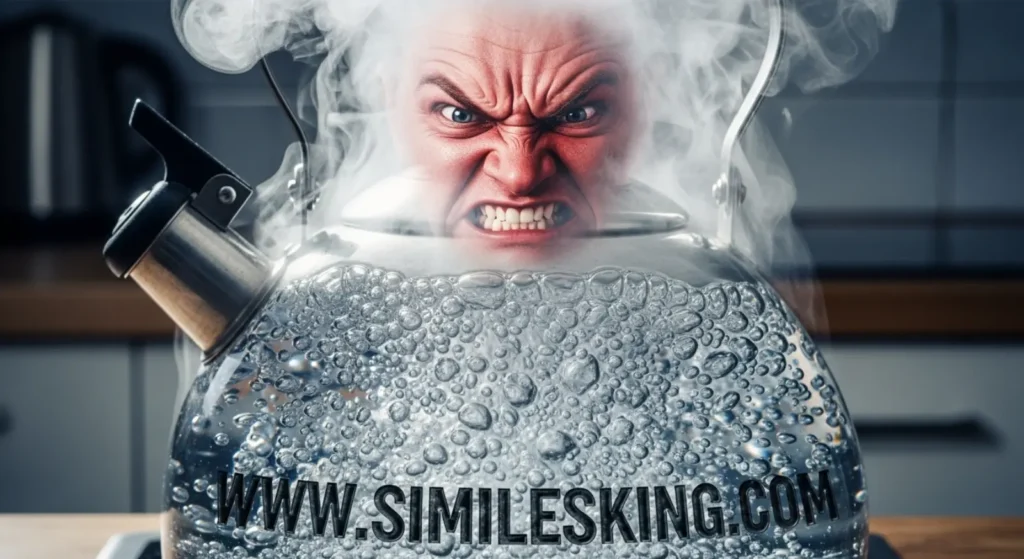
15. As hate as boiling water
Meaning: Unstable, overheated anger.
Formal Prose: His temper rose, as hate as boiling water.
Casual: I was about to blow.
Poetry:
Bubbles scream upward,
Surface trembling with heat,
Hate forgets calm.
Tip/Use: Use for moments nearing explosion.
16. As hate as a ticking bomb
Meaning: Imminent emotional detonation.
Formal Prose: The silence grew, as hate as a ticking bomb.
Casual: Everyone knew it’d go off.
Poetry:
Seconds stack like breath,
Time tightens its grip,
Hate counts down.
Tip/Use: Excellent for pacing suspense.
17. As hate as a shadow
Meaning: Constant, lingering resentment.
Formal Prose: It followed him, as hate as a shadow.
Casual: I couldn’t shake it.
Poetry:
Light walks ahead,
But darkness keeps pace,
Hate knows the way.
Tip/Use: Good for internal conflict.
18. As hate as sand in wounds
Meaning: Painful irritation that worsens injury.
Formal Prose: The reminder was as hate as sand in wounds.
Casual: It just made it hurt more.
Poetry:
Grains grind memory raw,
Healing interrupted again,
Hate rubs saltless pain.
Tip/Use: Use when revisiting trauma.
19. As hate as a locked door
Meaning: Refusal, emotional denial.
Formal Prose: Forgiveness met a wall, as hate as a locked door.
Casual: I shut him out.
Poetry:
Knuckles bruise on wood,
No echo answers back,
Hate keeps the key.
Tip/Use: Ideal for estrangement themes.
20. As hate as an unhealed scar
Meaning: Old pain that still aches.
Formal Prose: The memory throbbed, as hate as an unhealed scar.
Casual: It still hurt after all this time.
Poetry:
Skin remembers cuts,
Even when blood is gone,
Hate keeps the map.
Tip/Use: Effective for past conflicts.
21. As hate as thorns in the heart
Meaning: Persistent emotional pain.
Formal Prose: His jealousy pressed in, as hate as thorns in the heart.
Casual: It hurt nonstop.
Poetry:
Petals never bloom,
Only pricks where love should rest,
Hate grows wild.
Tip/Use: Use for inner turmoil.
22. As hate as a bitter taste
Meaning: Lingering displeasure.
Formal Prose: Victory felt hollow, as hate as a bitter taste.
Casual: It left a bad taste in my mouth.
Poetry:
Tongue remembers wrong,
Even after sweetness fades,
Hate lingers still.
Tip/Use: Good for moral ambiguity.
23. As hate as a drought
Meaning: Emotional barrenness.
Formal Prose: Compassion withered, as hate as a drought.
Casual: Nothing good could grow there.
Poetry:
Cracked ground of feeling,
Prayers unanswered by rain,
Hate steals water.
Tip/Use: Ideal for desolation.
24. As hate as a cracked mirror
Meaning: Distorted perception.
Formal Prose: He saw only fragments, as hate as a cracked mirror.
Casual: Everything looked wrong.
Poetry:
Faces split by lines,
Truth bent into angles,
Hate breaks sight.
Tip/Use: Use for unreliable narrators.
25. As hate as chains
Meaning: Binding, imprisoning emotion.
Formal Prose: He lived bound, as hate as chains around his will.
Casual: I felt stuck in it.
Poetry:
Links rattle with breath,
Freedom rusts in reach,
Hate holds tight.
Tip/Use: Excellent for character arcs toward release.
Conclusion;
Similes for hate allow writers to explore one of humanity’s most intense emotions with nuance, precision, and imagination. By comparing hate to fire, poison, storms, or shadows, we make it visible and relatable—something readers can feel rather than simply understand. Whether you’re crafting poetry, deepening character psychology, or sharpening narrative tension, these creative similes for hate provide flexible tools for expressive writing.
Experiment with them. Adapt them. Better yet, let them inspire your own comparisons drawn from personal experience. Some of the strongest similes come from moments you’ve lived through and learned from.
FAQS:
What is a simile?
A simile is a literary device that compares two unlike things using “like” or “as” to highlight a shared quality.
How do similes improve writing?
They add clarity, imagery, and emotional impact, helping readers visualize and feel abstract ideas.
What are good examples of similes to describe hate?
Examples include hate like wildfire, hate like poison in veins, and hate like a ticking bomb.
Can similes be used in formal writing?
Yes. When used carefully, similes enhance essays, speeches, and professional prose without reducing credibility.
How can I create my own similes for hate?
Observe how hate feels physically or emotionally, then compare it to something concrete from nature, objects, or daily life.
30 Similes For Pain and Suffering
Similes For Lonely: A Literary Guide with 30 Powerful Examples
Similes For Stress: A Literary Guide to Describing Pressure, Tension, and Mental Overload
Similes For Nervous: A Literary Guide with 30 Creative Examples

Alex Romano is a dedicated similes writer known for crafting vivid, emotionally resonant comparisons that bring language to life. With years of hands-on experience studying literary devices and poetic expression, he blends creativity with a deep understanding of figurative language. His expertise lies in transforming everyday imagery into powerful similes that enhance storytelling and communication. Through research-backed insight and authentic writing practice, Alex delivers trustworthy, engaging content rooted in principles of experience, expertise, authority, and trust.