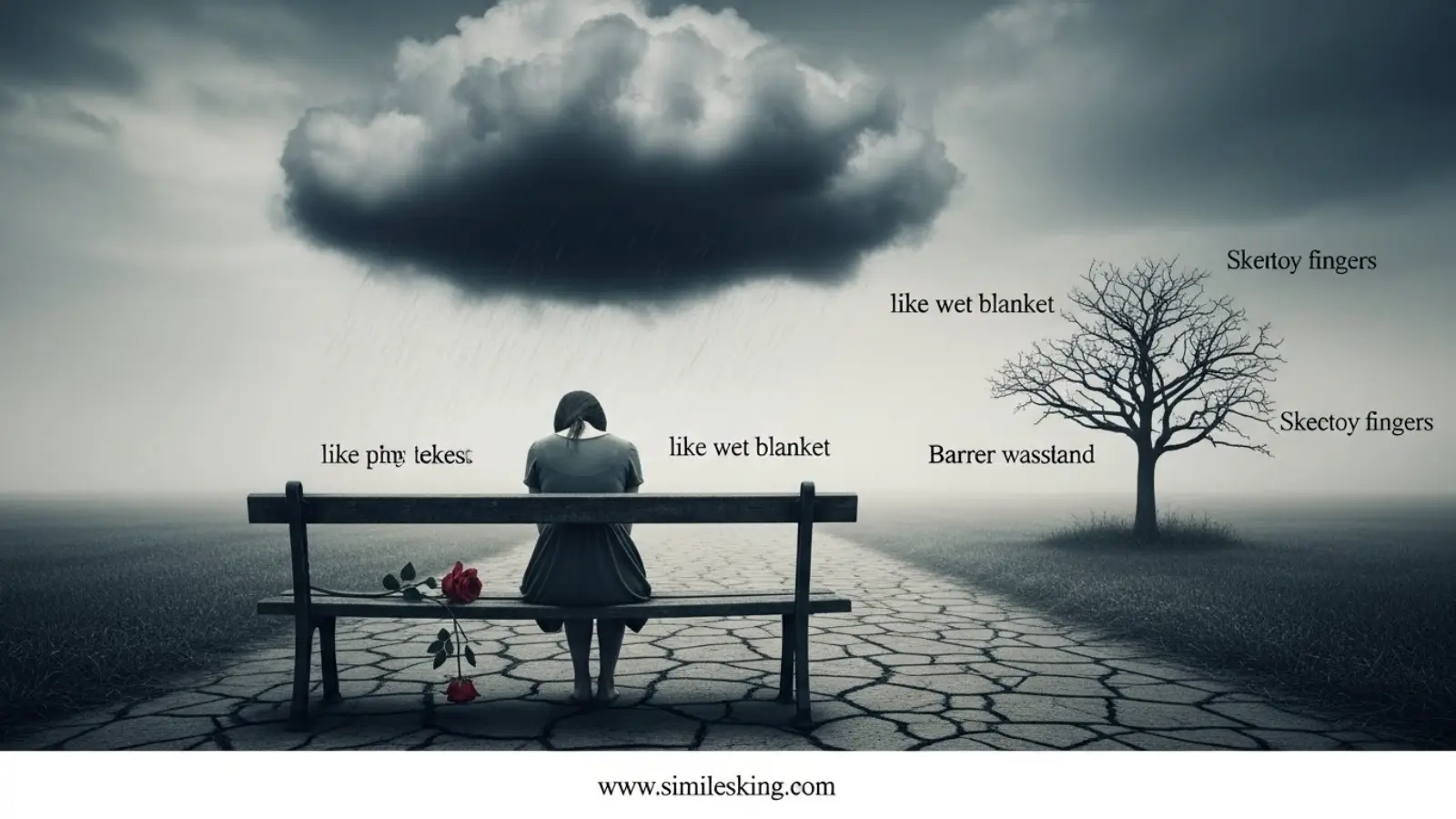
Sadness is one of the most universal human emotions, yet it is also one of the hardest to describe in words. Simply stating that a character is sad often feels flat or incomplete. This is where similes become powerful tools in writing. By comparing sadness to familiar images, sensations, or experiences, similes transform an abstract emotion into something readers can see, feel, and understand deeply.
Think about moments in real life when sadness felt heavy, quiet, or overwhelming. Perhaps it lingered like a grey sky that refused to clear, or perhaps it struck suddenly, like cold rain soaking through clothes. Writers instinctively reach for comparisons like these because they mirror how the mind processes emotion. In poetry, prose, storytelling, and even everyday communication, similes for being sad add emotional texture and authenticity. As creative writing teachers often note, “show, don’t tell” is best achieved through imagery. Similes help writers show sadness in ways that resonate long after the sentence ends.
Quick Reference Table: Similes for Being Sad
| No. | Simile Phrase | Short Meaning |
|---|---|---|
| 1 | As sad as a rain-soaked evening | Quiet, lingering sorrow |
| 2 | As sad as a wilted flower | Loss of vitality or hope |
| 3 | As sad as an empty house | Loneliness and absence |
| 4 | As sad as a fading photograph | Nostalgia mixed with loss |
| 5 | As sad as a broken violin | Pain expressed without harmony |
| 6 | As sad as a child left waiting | Abandonment or disappointment |
| 7 | As sad as winter sunlight | Cold, pale, and restrained sorrow |
| 8 | As sad as unanswered letters | Unresolved emotions |
| 9 | As sad as fallen autumn leaves | Gentle, inevitable loss |
| 10 | As sad as a dimming candle | Slow emotional exhaustion |
| 11 | As sad as a locked door | Emotional isolation |
| 12 | As sad as a silent phone | Longing and neglect |
| 13 | As sad as a forgotten song | Being overlooked or erased |
| 14 | As sad as a cracked mirror | Fractured identity or self-worth |
| 15 | As sad as a sleepless night | Restless, persistent sorrow |
| 16 | As sad as a lost glove | Small but personal loss |
| 17 | As sad as a cloudy horizon | Uncertain, looming sadness |
| 18 | As sad as a fading echo | Emotions slowly disappearing |
| 19 | As sad as a bird with clipped wings | Powerless grief |
| 20 | As sad as a deserted playground | Absence of joy |
Similes for Being Sad: Detailed Examples and Usage
1. As sad as a rain-soaked evening
Meaning: This simile conveys quiet, persistent sadness that settles in slowly and stays.
Example in Prose:
Formal: The atmosphere in the room was as sad as a rain-soaked evening, heavy with unspoken regrets.
Casual: I felt as sad as a rain-soaked evening, just sitting there with my thoughts.
Example in Poetry:
As sad as a rain-soaked evening,
Grey hours pooled around my feet,
Each drop remembering something lost.
Tip/Use: Use this simile when you want to express melancholy that feels calm but deeply emotional, especially in reflective writing.
2. As sad as a wilted flower
Meaning: This simile suggests sadness caused by neglect, loss of care, or emotional exhaustion.
Example in Prose:
Formal: Her smile had faded, leaving her as sad as a wilted flower.
Casual: He looked as sad as a wilted flower after the bad news.
Example in Poetry:
As sad as a wilted flower,
I bent beneath the weight of days,
Petals falling without a sound.
Tip/Use: Ideal for describing characters who have lost hope or emotional energy over time.
3. As sad as an empty house
Meaning: This simile reflects loneliness, absence, and emotional silence.
Example in Prose:
Formal: The hallway felt as sad as an empty house after the children moved away.
Casual: The place felt as sad as an empty house once everyone left.
Example in Poetry:
As sad as an empty house,
My footsteps echoed unanswered,
Walls holding memories instead of voices.
Tip/Use: Effective for scenes dealing with separation, loss, or abandonment.
4. As sad as a fading photograph
Meaning: This simile combines sadness with nostalgia and the pain of time passing.
Example in Prose:
Formal: His expression was as sad as a fading photograph from another life.
Casual: Looking back, the memory felt as sad as a fading photograph.
Example in Poetry:
As sad as a fading photograph,
Edges curled by passing years,
Smiles dissolving into dust.
Tip/Use: Best used when writing about memories, aging, or lost relationships.
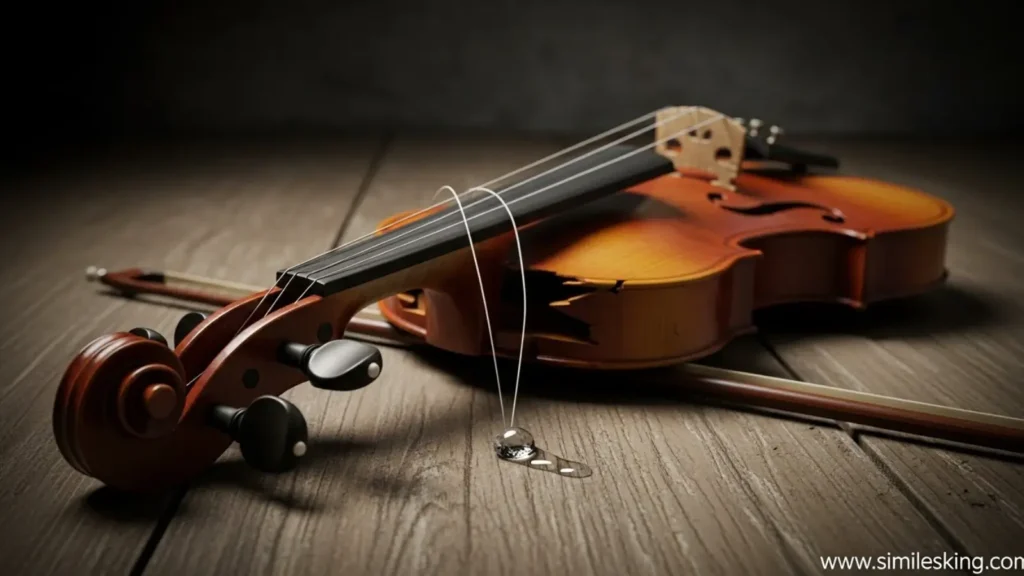
5. As sad as a broken violin
Meaning: This simile represents pain that wants to be expressed but cannot find harmony.
Example in Prose:
Formal: Her voice sounded as sad as a broken violin.
Casual: He felt as sad as a broken violin, all noise and no music.
Example in Poetry:
As sad as a broken violin,
My heart strained for melody,
Strings snapping under silence.
Tip/Use: Perfect for emotional scenes involving frustration or unexpressed grief.
6. As sad as a child left waiting
Meaning: This simile conveys vulnerability, disappointment, and unmet expectations.
Example in Prose:
Formal: He stood there, as sad as a child left waiting after school.
Casual: I felt as sad as a kid waiting for someone who never came.
Example in Poetry:
As sad as a child left waiting,
Eyes fixed on an empty road,
Hope thinning with daylight.
Tip/Use: Use when portraying emotional neglect or broken promises.
7. As sad as winter sunlight
Meaning: This simile suggests sadness that is pale, restrained, and emotionally cold.
Example in Prose:
Formal: Her laughter was thin, as sad as winter sunlight.
Casual: The day felt as sad as winter sunlight.
Example in Poetry:
As sad as winter sunlight,
I warmed nothing I touched,
Only traced pale shadows.
Tip/Use: Works well in atmospheric descriptions and subtle emotional moments.
8. As sad as unanswered letters
Meaning: This simile reflects unresolved feelings and emotional distance.
Example in Prose:
Formal: Their relationship became as sad as unanswered letters.
Casual: It felt as sad as sending messages that never get replies.
Example in Poetry:
As sad as unanswered letters,
Words waited without purpose,
Ink drying on longing.
Tip/Use: Ideal for themes of communication breakdown and emotional neglect.
9. As sad as fallen autumn leaves
Meaning: This simile expresses gentle, inevitable sadness rather than sharp pain.
Example in Prose:
Formal: His goodbye was as sad as fallen autumn leaves.
Casual: The ending felt as sad as autumn leaves on the ground.
Example in Poetry:
As sad as fallen autumn leaves,
I drifted toward acceptance,
Letting go without protest.
Tip/Use: Use when sadness is tied to change or natural endings.
10. As sad as a dimming candle
Meaning: This simile suggests slow emotional fading or exhaustion.
Example in Prose:
Formal: Her spirit seemed as sad as a dimming candle.
Casual: I felt as sad as a candle burning out.
Example in Poetry:
As sad as a dimming candle,
Hope flickered against the dark,
Breath by breath, less light remained.
Tip/Use: Effective in stories about burnout, illness, or long-term grief.
11. As sad as a locked door
Meaning: This simile reflects emotional isolation and inability to connect.
Example in Prose:
Formal: He appeared as sad as a locked door, closed to the world.
Casual: She felt as sad as a locked door no one knocks on.
Example in Poetry:
As sad as a locked door,
I waited for a hand,
Knowing none would turn the key.
Tip/Use: Best for portraying guarded or emotionally withdrawn characters.
12. As sad as a silent phone
Meaning: This simile represents loneliness and longing for connection.
Example in Prose:
Formal: His evenings were as sad as a silent phone.
Casual: My night felt as sad as my phone not buzzing once.
Example in Poetry:
As sad as a silent phone,
I checked the darkened screen,
Hoping for a name to appear.
Tip/Use: Very relatable in modern, contemporary writing.
13. As sad as a forgotten song
Meaning: This simile conveys being overlooked or emotionally erased.
Example in Prose:
Formal: She felt as sad as a forgotten song from another era.
Casual: I felt as sad as a song nobody remembers anymore.
Example in Poetry:
As sad as a forgotten song,
I hummed myself into silence,
Waiting for memory to return.
Tip/Use: Works beautifully in reflective or nostalgic writing.
14. As sad as a cracked mirror
Meaning: This simile reflects broken self-image or fractured identity.
Example in Prose:
Formal: His confidence was as sad as a cracked mirror.
Casual: I felt as sad as a cracked mirror, not liking what I saw.
Example in Poetry:
As sad as a cracked mirror,
I met myself in pieces,
Each shard telling a different truth.
Tip/Use: Ideal for emotional introspection and character development.
15. As sad as a sleepless night
Meaning: This simile conveys persistent sadness that offers no rest.
Example in Prose:
Formal: Her grief was as sad as a sleepless night.
Casual: I felt as sad as being awake all night with my thoughts.
Example in Poetry:
As sad as a sleepless night,
Time stretched without mercy,
Thoughts circling like ghosts.
Tip/Use: Use when sadness feels repetitive and inescapable.
16. As sad as a lost glove
Meaning: This simile reflects a small but personal sense of loss.
Example in Prose:
Formal: The moment felt as sad as a lost glove in winter.
Casual: It was as sad as losing one glove and never finding it.
Example in Poetry:
As sad as a lost glove,
One hand colder than the other,
Missing what once fit perfectly.
Tip/Use: Perfect for subtle, understated sadness.
17. As sad as a cloudy horizon
Meaning: This simile suggests uncertainty and approaching emotional heaviness.
Example in Prose:
Formal: The future looked as sad as a cloudy horizon.
Casual: Everything ahead felt as sad as dark clouds far away.
Example in Poetry:
As sad as a cloudy horizon,
I walked toward unanswered days,
Unsure where light would break.
Tip/Use: Useful for foreshadowing emotional struggles.
18. As sad as a fading echo
Meaning: This simile represents sadness that is slowly disappearing but still felt.
Example in Prose:
Formal: His grief lingered as sad as a fading echo.
Casual: It felt as sad as hearing something slowly disappear.
Example in Poetry:
As sad as a fading echo,
Your name dissolved in air,
Still shaping the silence.
Tip/Use: Ideal for writing about healing after loss.
19. As sad as a bird with clipped wings
Meaning: This simile conveys helplessness and restrained freedom.
Example in Prose:
Formal: She felt as sad as a bird with clipped wings.
Casual: I felt as sad as a bird that can’t fly anymore.
Example in Poetry:
As sad as a bird with clipped wings,
I dreamed of open skies,
While standing still.
Tip/Use: Strong imagery for emotional confinement or lost opportunities.
20. As sad as a deserted playground
Meaning: This simile reflects the absence of joy where it once existed.
Example in Prose:
Formal: The laughter faded, leaving the space as sad as a deserted playground.
Casual: The place felt as sad as an empty playground.
Example in Poetry:
As sad as a deserted playground,
Swings creaked in the wind,
Waiting for joy to return.
Tip/Use: Excellent for evoking contrast between past happiness and present sadness.
21. As sad as a sky without stars
Meaning: This simile expresses emptiness and the loss of hope or guidance.
Example in Prose:
Formal: His thoughts were as sad as a sky without stars, vast and directionless.
Casual: I felt as sad as a sky with no stars to look at.
Example in Poetry:
As sad as a sky without stars,
I searched the dark for meaning,
Finding only endless night.
Tip/Use: Use this simile when sadness feels expansive and tied to hopelessness or uncertainty.
22. As sad as a goodbye left unsaid
Meaning: This simile conveys regret, missed chances, and emotional incompleteness.
Example in Prose:
Formal: The moment was as sad as a goodbye left unsaid.
Casual: It felt as sad as not getting to say goodbye.
Example in Poetry:
As sad as a goodbye left unsaid,
Words trembled on my tongue,
Too late to be heard.
Tip/Use: Ideal for stories involving loss, sudden endings, or unresolved relationships.
23. As sad as a clock ticking in an empty room
Meaning: This simile reflects loneliness and the slow passage of time during sorrow.
Example in Prose:
Formal: The silence was as sad as a clock ticking in an empty room.
Casual: It felt as sad as hearing a clock tick when no one’s around.
Example in Poetry:
As sad as a clock ticking alone,
Seconds echoed like footsteps,
Going nowhere.
Tip/Use: Works well in introspective scenes or moments of waiting and reflection.
24. As sad as a tear caught before it falls
Meaning: This simile represents restrained emotion and unexpressed pain.
Example in Prose:
Formal: Her composure was as sad as a tear caught before it falls.
Casual: I felt as sad as holding back tears.
Example in Poetry:
As sad as a tear held still,
Pain shimmered behind my eyes,
Refusing release.
Tip/Use: Perfect for subtle, emotionally controlled characters or quiet grief.
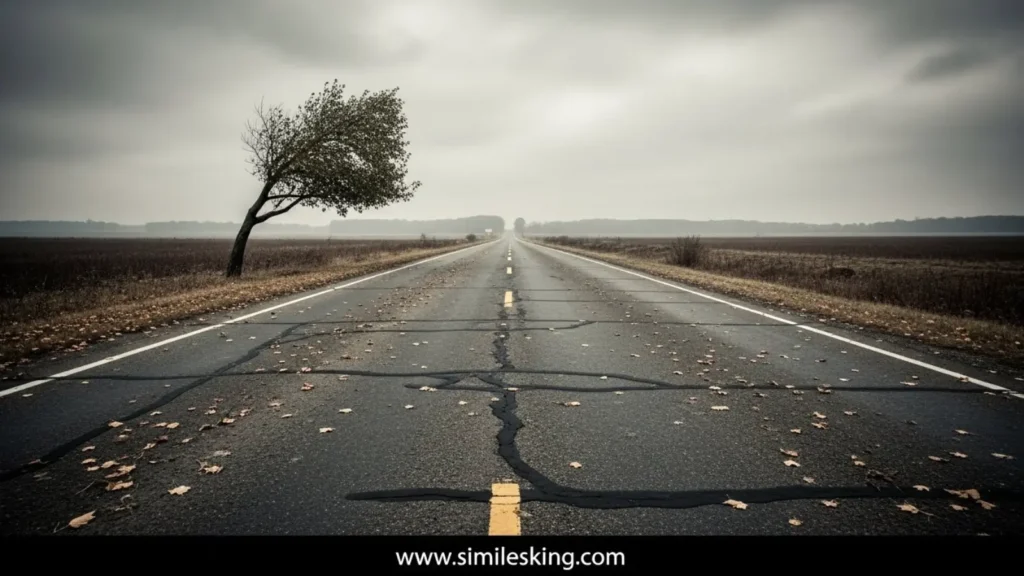
25. As sad as a road with no destination
Meaning: This simile suggests emotional aimlessness and lack of purpose.
Example in Prose:
Formal: His life felt as sad as a road with no destination.
Casual: I felt as sad as walking without knowing where I’m going.
Example in Poetry:
As sad as a road without an end,
I walked beneath heavy thoughts,
Each step unsure.
Tip/Use: Effective for themes of confusion, loss of direction, or identity struggles.
26. As sad as a song played too softly to hear
Meaning: This simile conveys muted pain and emotions that go unnoticed.
Example in Prose:
Formal: Her sorrow was as sad as a song played too softly to hear.
Casual: It felt as sad as music you can’t quite hear.
Example in Poetry:
As sad as a song too soft,
My feelings hummed unheard,
Fading into silence.
Tip/Use: Use this when sadness is present but ignored or misunderstood by others.
27. As sad as a bench after sunset
Meaning: This simile reflects quiet loneliness after activity or connection has ended.
Example in Prose:
Formal: The park felt as sad as a bench after sunset.
Casual: I felt as sad as sitting alone when everyone’s gone home.
Example in Poetry:
As sad as a bench after sunset,
I waited with folded hands,
Remembering shared laughter.
Tip/Use: Great for visual, atmospheric storytelling and reflective moments.
28. As sad as a dream forgotten at dawn
Meaning: This simile expresses fleeting loss and emotional disappointment.
Example in Prose:
Formal: His hopes felt as sad as a dream forgotten at dawn.
Casual: It was as sad as forgetting a good dream.
Example in Poetry:
As sad as a dream at dawn,
Promise slipped from memory,
Leaving only feeling behind.
Tip/Use: Ideal for writing about lost ambitions or unrealized desires.
29. As sad as shoes left by the door
Meaning: This simile symbolizes waiting, absence, and someone who never returned.
Example in Prose:
Formal: The hallway felt as sad as shoes left by the door.
Casual: It felt as sad as seeing someone’s shoes when they’re gone.
Example in Poetry:
As sad as shoes by the door,
Time paused in their shape,
Expecting footsteps that never came.
Tip/Use: Powerful for subtle storytelling around grief and absence.
30. As sad as a window watching the rain
Meaning: This simile conveys quiet observation of sorrow without escape.
Example in Prose:
Formal: She felt as sad as a window watching the rain fall endlessly.
Casual: I felt as sad as staring out the window in the rain.
Example in Poetry:
As sad as a window in rain,
I stood between warmth and cold,
Unable to move.
Tip/Use: Excellent for reflective writing, emotional stillness, and introspection.
Conclusion
Similes for being sad give writers the ability to transform a deeply personal emotion into a shared experience. Instead of simply stating sorrow, similes invite readers to feel it through imagery drawn from nature, daily life, memory, and human connection. Whether you are crafting poetry, fiction, or reflective prose, creative similes for sadness add depth, authenticity, and emotional resonance. As many literature experts suggest, strong imagery is what makes writing memorable. By experimenting with similes to describe sadness, you develop a richer emotional vocabulary and a more engaging voice. Try creating your own similes based on moments you have lived through. The most powerful comparisons often come from real experiences.
FAQS;
What is a simile?
A simile is a figure of speech that compares two different things using “like” or “as” to highlight a shared quality.
How do similes help in writing?
Similes help writers show emotions, settings, and ideas through vivid imagery rather than direct statements.
What are good similes to describe sadness?
Good similes for sadness include comparisons to rain, empty spaces, fading light, or lost objects that readers easily relate to.
How can I create my own similes for being sad?
Think about how sadness feels to you physically or emotionally, then compare it to something familiar from daily life or nature.
Are similes better than metaphors for emotions?
Both are useful. Similes are often clearer and more direct, making them especially effective for emotional clarity in writing.

Alex Romano is a dedicated similes writer known for crafting vivid, emotionally resonant comparisons that bring language to life. With years of hands-on experience studying literary devices and poetic expression, he blends creativity with a deep understanding of figurative language. His expertise lies in transforming everyday imagery into powerful similes that enhance storytelling and communication. Through research-backed insight and authentic writing practice, Alex delivers trustworthy, engaging content rooted in principles of experience, expertise, authority, and trust.