Similes For Ocean: A Literary Guide to Vast and Vivid Comparisons
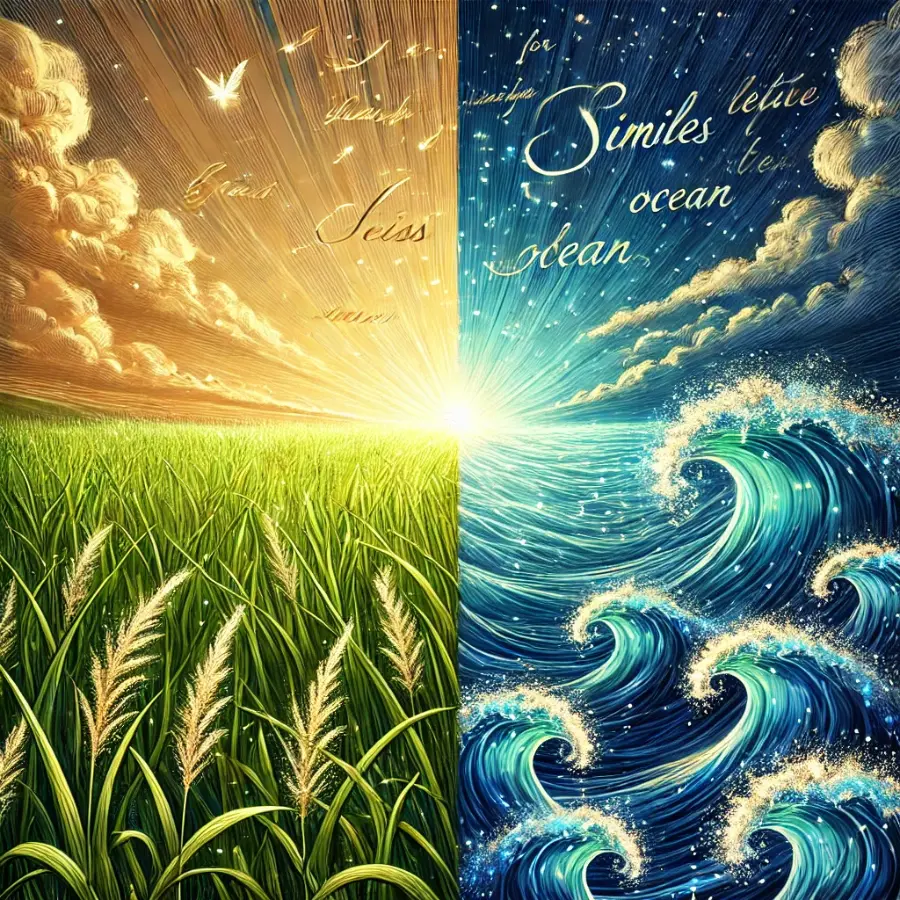
Similes are among the most powerful tools in a writer’s craft. By comparing one thing to another using “like” or “as,” similes create vivid mental images and emotional resonance. When used effectively, they transform ordinary descriptions into immersive experiences. Instead of merely stating that something is large, mysterious, or ...
Read more
Water Similes: A Literary Guide to Fluid and Vivid Comparisons
Water is one of the most powerful symbols in language. It can be gentle or fierce, calm or chaotic, life-giving or destructive. Because of its versatility, writers often turn to water similes to express emotions, describe settings, and deepen storytelling. From ancient poetry to modern novels, water flows through ...
Read more
Similes For Grass: A Literary Guide to Vivid and Grounded Comparisons
Introduction Similes are among the most powerful tools in a writer’s craft. By comparing one thing to another using “like” or “as,” similes create instant imagery, emotional depth, and sensory richness. When we describe something as soft as velvet or as bright as the sun, readers don’t just understand ...
Read more
Similes For Sand: A Literary Guide to Vivid and Evocative Comparisons
Introduction Similes are among the most powerful tools in a writer’s craft. By comparing one thing to another using “like” or “as,” a simile transforms the ordinary into something vivid and memorable. When describing landscapes, memories, time, or emotion, few images are as versatile as sand. From sunlit beaches ...
Read more
Similes For Water: A Literary Guide to Fluid and Vivid Comparisons
Water is one of the most powerful symbols in language. It can soothe, destroy, cleanse, nourish, reflect, and overwhelm. Because it is so essential to life and emotion, writers often search for the most creative similes for water to bring scenes alive. In my own experience teaching creative writing ...
Read more
Similes For Cold Weather
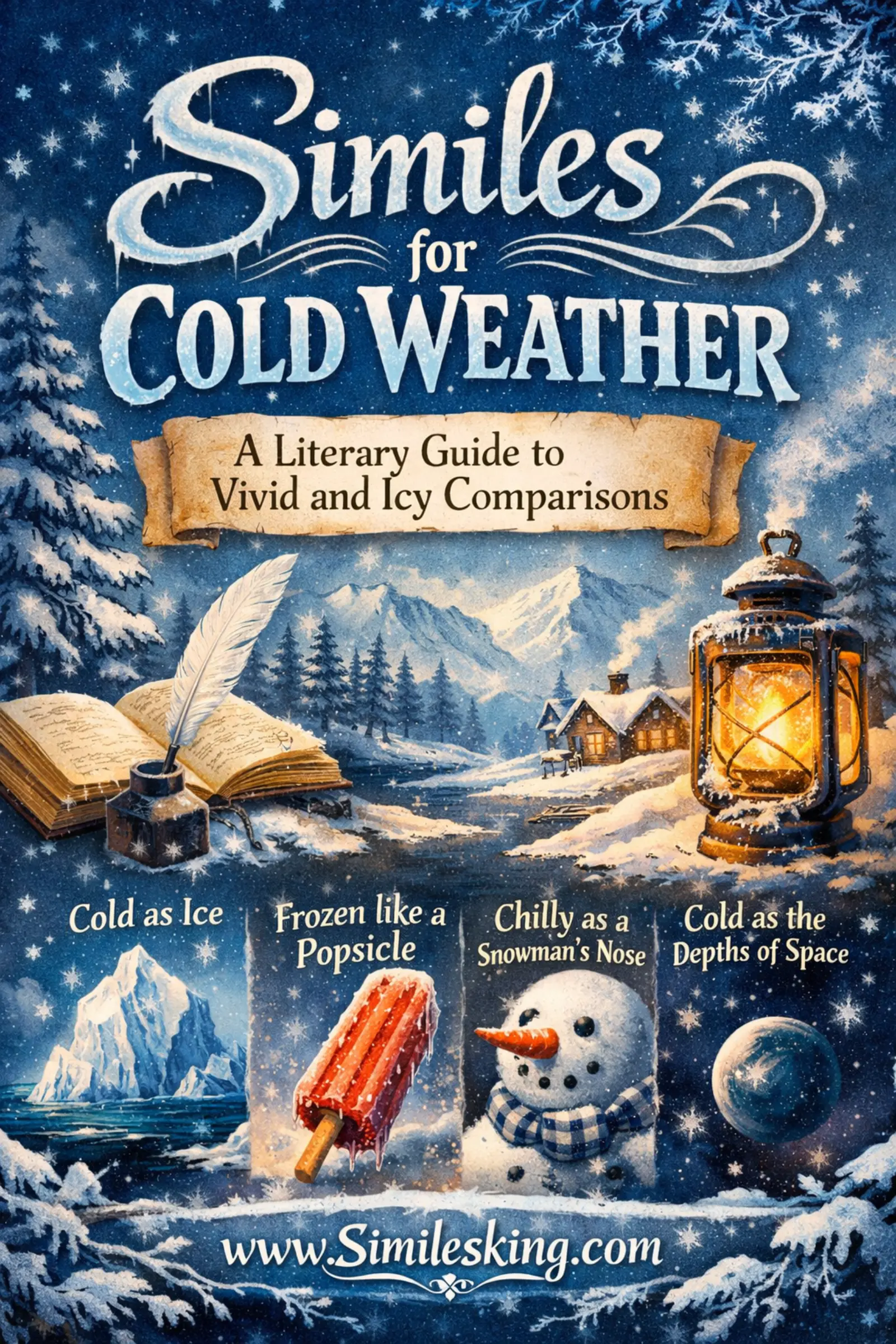
Cold weather has a personality of its own. It can nip like a playful child, bite like a wild animal, or settle quietly over a city like a heavy quilt of frost. As writers, we often struggle to describe that biting chill in a way that feels fresh and ...
Read more
Similes for Hot Weather: A Literary Guide to Vivid and Scorching Comparisons
Similes are among the most powerful tools in a writer’s craft. By comparing one thing to another using “like” or “as,” they transform ordinary description into vivid imagery. When describing extreme temperatures, especially during summer’s peak, writers often struggle to capture the physical discomfort, emotional intensity, and visual distortion ...
Read more
Sunsets Similes: A Literary Guide To Vivid And Emotional Comparisons
Similes are one of the most powerful literary devices in creative writing. They allow writers to compare one experience to another using words like “as” and “like,” instantly creating imagery that feels alive and relatable. When we explore similes for sunsets, we tap into deep emotion, beauty, nostalgia, and ...
Read more
Similes For The Sun Shining: A Literary Guide To Radiant And Vivid Comparisons
The sun has inspired poets, storytellers, and songwriters for centuries. From ancient myths to modern novels, writers have searched for the perfect words to capture its brilliance. One of the most powerful tools they use is the simile. Similes for the sun shining help transform an ordinary description into ...
Read more
Similes For Trees: A Literary Guide To Vivid, Rooted Comparisons
Trees have always stood at the crossroads of language and life. From ancient myths carved into oak bark to modern poems whispered beneath city maples, writers have long searched for similes for trees that capture their strength, grace, resilience, and quiet wisdom. A simile is one of the most ...
Read more