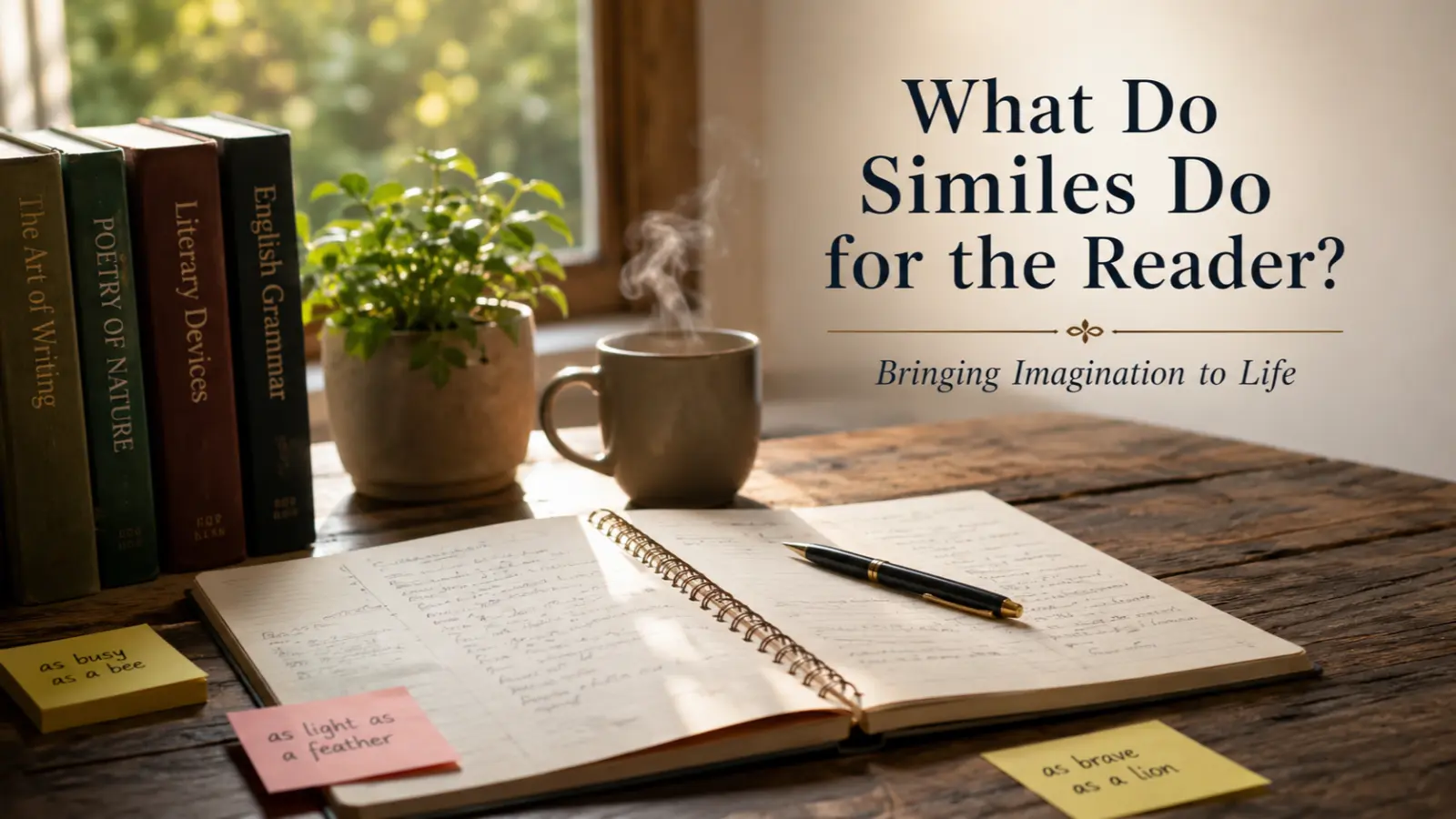
Similes are one of the most powerful tools in writing because they help readers see, feel, and experience ideas rather than just read them. By comparing one thing to another using “like” or “as,” similes turn ordinary descriptions into vivid mental pictures. Whether in poetry, novels, or everyday storytelling, they bring clarity and emotional depth to language. For example, saying “the night was as silent as a closed book” instantly creates mood and imagery that plain description cannot achieve. Writers, teachers, and storytellers rely on similes to make abstract emotions and scenes more relatable, engaging, and memorable for readers of all ages.
Quick Overview Table: How Similes Help Readers
| Simile Example | What It Helps the Reader Understand |
|---|---|
| As clear as glass | Clarity and transparency |
| As fast as lightning | Speed and urgency |
| As quiet as a whisper | Silence and calmness |
| As heavy as stone | Emotional or physical weight |
| As bright as the sun | Energy, happiness, intensity |
Why Similes Matter in Reading Experience
Similes are not just decorative language—they are cognitive bridges. According to widely accepted literary theory, figurative language helps readers process abstract ideas through familiar comparisons. When a writer says something is “like” something else, the brain immediately connects two known experiences.
From classrooms to novels and advertising copy, similes:
- Enhance imagination and visualization
- Improve emotional engagement
- Simplify complex descriptions
- Create rhythm and flow in writing
- Make ideas more memorable
As literary expert Aristotle once emphasized in Poetics, effective comparison is central to powerful storytelling because it transforms perception into experience.
30 Creative Similes That Enhance Reading Experience
Below are carefully crafted similes for clarity, emotion, imagination, and storytelling impact. Each includes meaning, prose, poetry, and usage tips.
1. As clear as glass
Meaning: Represents complete transparency or easy understanding.
i. Example in Prose (Formal):
The instructions were as clear as glass, leaving no room for confusion in the project guidelines.
ii. Example in Prose (Casual):
Her explanation was as clear as glass—I understood everything instantly.
iii. Example in Poetry:
Truth stood still in morning air,
As clear as glass, beyond compare.
Tip/Use: Use when describing clarity in communication, vision, or thought.
2. As fast as lightning
Meaning: Extremely quick or sudden action.
Formal:
The response time of the system was as fast as lightning, ensuring efficiency.
Casual:
He ran as fast as lightning to catch the bus.
Poetry:
Across the sky, a silver line,
As fast as lightning, pure and fine.
Tip: Best for action scenes or urgency.
3. As quiet as a whisper
Meaning: Very soft or silent atmosphere.
Formal:
The library remained as quiet as a whisper during the examination.
Casual:
The room was as quiet as a whisper after the lights went out.
Poetry:
Night fell soft on sleeping land,
As quiet as a whisper’s hand.
Tip: Ideal for peaceful or suspenseful scenes.
4. As heavy as stone
Meaning: Emotionally or physically burdensome.
Formal:
The decision felt as heavy as stone for the committee.
Casual:
My heart felt as heavy as stone after hearing the news.
Poetry:
In silence deep where shadows groan,
My thoughts were heavy as cold stone.
Tip: Use for emotional weight or pressure.
5. As bright as the sun
Meaning: Extremely bright or full of joy.
Formal:
Her presentation was as bright as the sun, capturing everyone’s attention.
Casual:
He looked as bright as the sun after hearing the good news.
Poetry:
Morning broke with golden hue,
As bright as sun in endless blue.
Tip: Perfect for positivity or illumination.
6. As cold as ice
Meaning: Emotionally distant or physically cold.
Formal:
Her tone remained as cold as ice throughout the negotiation.
Casual:
The water was as cold as ice.
Poetry:
A silent heart, a frozen throne,
As cold as ice, untouched, alone.
Tip: Use for emotional detachment or winter imagery.
7. As soft as a feather
Meaning: Extremely gentle or delicate.
Formal:
The fabric was as soft as a feather, ideal for luxury clothing.
Casual:
This pillow is as soft as a feather!
Poetry:
Dreams drift down from skies above,
As soft as feather, light as love.
Tip: Great for describing comfort or touch.
8. As strong as an oak
Meaning: Very strong or resilient.
Formal:
The structure was as strong as an oak, built to withstand storms.
Casual:
He’s as strong as an oak after months of training.
Poetry:
Roots that deepen through the land,
As strong as oak, forever stand.
Tip: Use for resilience and durability.
9. As smooth as silk
Meaning: Very smooth or refined.
Formal:
The customer experience was as smooth as silk.
Casual:
Her voice is as smooth as silk.
Poetry:
Words that flow in gentle stream,
As smooth as silk within a dream.
Tip: Ideal for elegance and fluidity.
10. As sharp as a blade
Meaning: Very precise, intelligent, or cutting.
Formal:
His analysis was as sharp as a blade.
Casual:
Her comeback was as sharp as a blade!
Poetry:
A mind that cuts through night and day,
As sharp as blade that clears the way.
Tip: Great for intelligence or criticism.
11. As warm as sunlight
Meaning: Represents comfort, kindness, or emotional safety.
Formal: The hospitality of the host was as warm as sunlight, making guests feel instantly welcome.
Casual: Her smile is as warm as sunlight on a cold morning.
Poetry:
A golden touch on weary skin,
As warm as sunlight, calm within.
Tip/Use: Use this when describing kindness, love, or comforting environments.
12. As cold as winter wind
Meaning: Very emotionally distant or physically cold.
Formal: His response was as cold as winter wind during the discussion.
Casual: That room feels as cold as winter wind!
Poetry:
Through empty streets the silence cries,
As cold as winter wind that flies.
Tip/Use: Best for emotional distance or harsh environments.
13. As bright as stars
Meaning: Full of inspiration, beauty, or hope.
Formal: Her idea was as bright as stars in a dark sky of confusion.
Casual: That moment was as bright as stars!
Poetry:
In endless night they softly gleam,
As bright as stars within a dream.
Tip/Use: Use for hope, inspiration, or beauty.
14. As slow as a snail
Meaning: Very slow movement or progress.
Formal: The project progressed as slow as a snail due to delays.
Casual: Traffic is as slow as a snail today.
Poetry:
Each second drips in heavy air,
As slow as snail that crawls somewhere.
Tip/Use: Ideal for frustration or delay descriptions.
15. As deep as the ocean
Meaning: Very mysterious, emotional, or profound.
Formal: His thoughts were as deep as the ocean, difficult to interpret.
Casual: That secret is as deep as the ocean.
Poetry:
Where silence sleeps beneath the tide,
As deep as ocean far and wide.
Tip/Use: Use for emotions, secrets, or complexity.
16. As light as air
Meaning: Very light, free, or effortless.
Formal: The fabric felt as light as air during use.
Casual: I feel as light as air after the exam ended.
Poetry:
No weight to hold, no chains to bind,
As light as air, I leave behind.
Tip/Use: Best for freedom or ease.
17. As hard as rock
Meaning: Extremely strong or unbreakable.
Formal: The material was as hard as rock, suitable for construction.
Casual: This table is as hard as rock!
Poetry:
No storm can break what stands alone,
As hard as rock in silent stone.
Tip/Use: Use for strength or resilience.
18. As sweet as honey
Meaning: Very pleasant or kind.
Formal: Her tone was as sweet as honey during the conversation.
Casual: That dessert is as sweet as honey!
Poetry:
A voice that melts the heart inside,
As sweet as honey, soft and wide.
Tip/Use: Great for affection or pleasant experiences.
19. As dark as midnight
Meaning: Very dark or mysterious.
Formal: The corridor was as dark as midnight.
Casual: It’s as dark as midnight outside!
Poetry:
No single star to guide the way,
As dark as midnight holds the day.
Tip/Use: Use for mystery or fear.
20. As gentle as rain
Meaning: Soft, calming, or soothing.
Formal: Her words were as gentle as rain during the meeting.
Casual: That music is as gentle as rain.
Poetry:
It falls in whispers soft and slow,
As gentle as rain in twilight glow.
Tip/Use: Ideal for calm emotions or peaceful scenes.
21. As loud as thunder
Meaning: Extremely loud or powerful.
Formal: His voice was as loud as thunder in the hall.
Casual: That noise was as loud as thunder!
Poetry:
Across the sky the echoes roll,
As loud as thunder shakes the soul.
Tip/Use: Use for impact or intensity.
22. As quick as a fox
Meaning: Very fast and clever.
Formal: The strategist was as quick as a fox in decision-making.
Casual: He moved as quick as a fox on the field.
Poetry:
Through shadows swift, through forests deep,
As quick as fox where secrets sleep.
Tip/Use: Perfect for intelligence and speed.
23. As old as time
Meaning: Extremely ancient or timeless.
Formal: The tradition is as old as time itself.
Casual: That story feels as old as time.
Poetry:
Before the world had name or line,
It stood as old as endless time.
Tip/Use: Use for history or timeless ideas.
24. As green as grass
Meaning: Fresh, natural, or inexperienced.
Formal: The field was as green as grass after rainfall.
Casual: He’s as green as grass in this job.
Poetry:
New life awakens every blade,
As green as grass in sunlight laid.
Tip/Use: Good for freshness or inexperience.
25. As dry as desert sand
Meaning: Very dry or lifeless.
Formal: The region remained as dry as desert sand.
Casual: My throat feels as dry as desert sand!
Poetry:
No drop of life, no gentle hand,
As dry as desert endless sand.
Tip/Use: Use for dryness or emptiness.
26. As soft as clouds
Meaning: Extremely soft or comforting.
Formal: The bedding felt as soft as clouds in the hotel.
Casual: This pillow is as soft as clouds!
Poetry:
Above the world where silence grows,
As soft as clouds the heaven flows.
Tip/Use: Great for comfort descriptions.
27. As wild as a storm
Meaning: Chaotic, unpredictable, or intense.
Formal: The debate became as wild as a storm.
Casual: The crowd was as wild as a storm at the match.
Poetry:
No path to follow, no calm in sight,
As wild as storm that owns the night.
Tip/Use: Use for chaos or emotion.
28. As pure as water
Meaning: Innocent, clean, or honest.
Formal: Her intentions were as pure as water.
Casual: That child’s heart is as pure as water.
Poetry:
No stain, no shadow, nothing more,
As pure as water on the shore.
Tip/Use: Use for honesty or innocence.
29. As sharp as memory
Meaning: Very clear, precise, or unforgettable.
Formal: His analysis was as sharp as memory itself.
Casual: That moment is as sharp as memory.
Poetry:
It cuts through time, it never fades,
As sharp as memory softly trades.
Tip/Use: Great for strong recollection.
30. As steady as heartbeat
Meaning: Constant, reliable, or stable.
Formal: The system remained as steady as heartbeat during operation.
Casual: Her support is as steady as heartbeat.
Poetry:
Through every rise, through every fall,
As steady as heartbeat guides us all.
Tip/Use: Use for reliability and consistency.
Why Readers Remember Similes
Readers don’t remember plain facts—they remember images. Similes activate sensory imagination. A sentence like “he was sad” fades quickly, but “he was as silent as an empty house” stays in memory because it builds a scene.
Writers across journalism, fiction, and poetry use similes to anchor meaning in emotion and visualization.
Tips for Using Similes Effectively in Writing
- Avoid overuse—too many similes weaken impact
- Match simile tone with context (serious vs playful)
- Use familiar comparisons for clarity
- Combine with strong verbs for best effect
- Test readability: if it confuses, simplify it
FAQs
1. What is a simile?
A simile is a figure of speech that compares two different things using “like” or “as” to create meaning and imagery.
2. How do similes help readers?
They help readers visualize ideas, understand emotions, and connect abstract concepts with real-world experiences.
3. What are examples of similes in writing?
Examples include “as fast as lightning,” “as cold as ice,” and “as soft as a feather.”
4. How can I use similes in storytelling?
Use them to describe emotions, settings, or actions in a way that creates vivid mental images for the reader.
5. Are similes used in poetry?
Yes, poets frequently use similes to add rhythm, emotion, and depth to their work.
Conclusion
Similes are more than decorative language—they are essential tools that shape how readers experience writing. By comparing one idea to another, they transform simple descriptions into vivid mental images that stay in memory. Whether describing emotion, movement, or atmosphere, similes help bridge the gap between language and imagination. For writers, mastering similes means learning how to make readers feel the story rather than just read it.
As you continue your writing journey, experiment with your own comparisons. Observe nature, people, and daily life—you’ll find endless inspiration for creative similes. The more you practice, the more naturally your writing will come alive with meaning and imagery.
See Also
- Metaphors vs Similes: Key Differences
- How to Use Figurative Language in Creative Writing
- Imagery Techniques for Storytelling
- Poetry Writing for Beginners
- Emotional Expression in Literature

I am Helena Frost, a writer captivated by the beauty of language and the art of comparison. Through my words, I explore the world by turning ordinary moments into vivid similes and reflections. I enjoy crafting phrases that spark imagination, evoke emotion, and linger in the mind. My writing celebrates the subtle connections between people, nature, and the stories we live. For me, every sentence is an opportunity to reveal the extraordinary in the everyday.